```html
For years, parents have grappled with the ever-present question: how much screen time is too much for our kids? It's a daily battle in many homes, a source of endless debate in parenting groups, and frankly, a huge source of anxiety for most of us trying to raise healthy, well-adjusted humans in a hyper-connected world. We've seen the headlines, heard the warnings, and dutifully tried to enforce those hourly limits, often feeling like we were fighting a losing battle against glowing screens and captivating digital worlds.
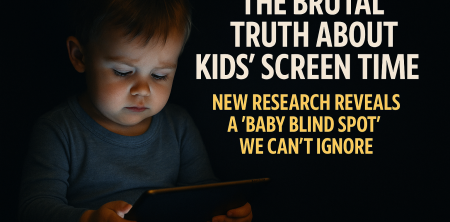
But what if those strict hourly limits weren't telling the whole story? What if the real danger, and the real opportunity, lay not just in the quantity of screen time, but in its quality and context? That's precisely the shift we're seeing in the latest thinking from leading experts. The American Academy of Pediatrics (AAP), long considered the authoritative voice on child health, made a significant move in January 2026, updating its screen time guidelines for kids. This wasn't just a tweak; it was a fundamental rethinking, moving away from rigid time caps to a much more nuanced, holistic approach. They're urging us to look beyond the clock and focus on what our children are actually doing online, who they're doing it with, and what it might be displacing in their lives. And while this shift offers some much-needed breathing room for older kids, a recent landmark study has thrown a sobering spotlight on our youngest, revealing a 'baby blind spot' that demands our immediate attention, particularly concerning screen time guidelines for kids under two. We covered developmental delays and screen time in more detail.
The AAP's Evolving Stance: Beyond the Stopwatch
Let's be honest, the old guidelines felt a bit like trying to fit a square peg into a round hole. "Two hours a day, max!" we were told, and we tried. Oh, how we tried. But in a world where school assignments are often digital, where grandparents live across continents and connect via video calls, and where even a quick recipe search involves a screen, those limits felt increasingly out of touch with modern family life. The AAP recognized this growing disconnect, acknowledging that the digital landscape children navigate today is far more complex than it was even a decade ago.
Their updated January 2026 recommendations signal a maturation in our understanding of technology's role in child development. Instead of a blanket ban or a one-size-fits-all hourly cap, the AAP is now advocating for a framework that prioritizes content quality, the context in which screens are used, and critically, whether screen time is displacing other vital activities like sleep, physical play, or face-to-face social interaction. This is a massive shift, and it puts more onus on parents to be discerning, thoughtful curators of their children's digital experiences, rather than just strict enforcers of time limits. It's less about the 'how long' and more about the 'what and why.'
Quality Over Quantity: A New Lens for Screen Time Guidelines for Kids
Think about it: is an hour spent on an interactive educational app, collaborating with a sibling on a creative project, or video chatting with a distant relative the same as an hour passively consuming mindless, fast-paced content? The AAP argues, quite rightly, that it's not. The new guidelines encourage parents to evaluate the educational value, the interactive nature, and the overall developmental appropriateness of the content their children are engaging with. This means asking questions like: Is this content engaging my child's mind? Is it fostering creativity or problem-solving skills? Is it something we can talk about together?
This qualitative approach also extends to co-viewing. The AAP strongly advocates for parents to watch and interact with their children during screen time, especially for younger kids. When you're watching together, you can explain what's happening, discuss characters, and connect the on-screen action to real-world concepts. This transforms a potentially passive experience into an active, shared learning opportunity. It’s about making screen time a bridge, not a barrier, to connection and learning. (See: CDC resources on youth media use.)
The Context of Use: Where and How Screens Fit In
Beyond content, the AAP's updated screen time guidelines for kids also emphasize the context of screen use. Is the screen being used as a constant pacifier, a background noise, or a distraction at the dinner table? Or is it a tool used purposefully for specific tasks or shared experiences? The environment in which screens are consumed matters immensely. For instance, using a tablet for a school project at a desk is different from aimlessly scrolling through videos in bed right before sleep.
The guidelines encourage parents to establish 'screen-free zones' and 'screen-free times' within the home. This might mean no screens at mealtimes, in bedrooms, or during family gatherings. These boundaries help ensure that technology doesn't infiltrate every aspect of family life, preserving spaces and moments for essential human interaction, reflection, and rest. It’s about intentionality – integrating technology thoughtfully rather than letting it dictate the rhythm of our days. See also edtech guidelines for kids.
The Displacement Factor: What Are Screens Pushing Out?
Perhaps the most crucial aspect of the AAP's revised recommendations is the focus on displacement. This is where the real danger of excessive or poorly managed screen time often lies. It's not just about what kids are doing on screens, but what they're *not* doing because they're on screens. Are they missing out on outdoor play, which is vital for physical development, motor skills, and even eyesight? Are they getting enough sleep, which is fundamental for brain development, mood regulation, and learning? Are they engaging in face-to-face conversations, which are crucial for developing social-emotional skills, empathy, and language?
When screen time pushes out these essential activities, that's when we see the potential for negative impacts. The AAP stresses that parents should continually assess whether digital engagement is infringing upon these foundational aspects of childhood. If a child is consistently choosing a screen over playing outside with friends, reading a book, or helping with chores, it’s a clear signal that the balance is off. This aspect of the screen time guidelines for kids forces us to consider the bigger picture of a child's day and development.
The 'Baby Blind Spot': A Sobering New Revelation
While the AAP's updated guidelines for older children offer a more flexible, nuanced framework, a recent landmark study has cast a chilling light on our understanding of screen time for the very youngest among us. This research points to a significant 'baby blind spot' in current policy and parental practices, suggesting that screen time for babies and toddlers under two years old should be avoided almost entirely. The study highlights potential long-term negative effects on health and quality of life that are only now beginning to be fully understood.
This isn't about educational apps or video calls with Grandma; this is about any significant exposure to screens for infants and toddlers. Their developing brains are uniquely vulnerable during these formative years. Rapid brain growth, the development of crucial neural pathways, and the acquisition of fundamental social and motor skills are all happening at an astonishing pace. Introducing screens during this period, even for short durations, may have consequences we are only just beginning to grasp.
Why Babies and Toddlers Are Different: Understanding Brain Development
To truly understand the implications of this 'baby blind spot,' we need to look at early childhood brain development. From birth to age two, a child's brain undergoes an explosion of growth and connection-making. Sensory experiences – touching, tasting, smelling, seeing in three dimensions, and hearing real-world sounds – are the fuel for this development. Interactions with caregivers, including eye contact, responsive vocalizations, and physical play, build the foundation for language, social skills, and emotional regulation. (See: NIH information on screen time effects.)
Screens, by their very nature, offer a two-dimensional, often overstimulating, and largely passive experience. They don't provide the rich, multi-sensory input that a baby's brain needs to form robust neural networks. The rapid-fire imagery and sounds can be overwhelming, potentially hindering the development of sustained attention. Moreover, screen time often replaces those crucial face-to-face interactions with caregivers, which are the bedrock of secure attachment and early communication skills. This new research underscores that our screen time guidelines for kids, especially the youngest, must reflect these unique developmental vulnerabilities.
Potential Long-Term Impacts on Health and Quality of Life
The landmark study linking early screen exposure to long-term negative effects is a stark reminder that our choices today can echo for years to come. While the full scope is still emerging, researchers are pointing to several areas of concern. For instance, there's growing evidence that early screen time can be associated with language delays, as babies aren't getting the reciprocal 'serve and return' conversations they need to develop robust vocabulary and conversational skills. They might hear words, but they aren't practicing using them in context. This builds on balancing screen time effectively.
Beyond language, there are concerns about attention span and executive function development. The constant, immediate gratification offered by many digital interfaces may make it harder for children to develop the patience and focus required for sustained learning in later years. Physical health is another factor; sedentary screen time can contribute to a lack of physical activity, potentially impacting motor skill development and contributing to childhood obesity. Even sleep patterns can be disrupted, as blue light emitted from screens can interfere with melatonin production, making it harder for little ones to fall asleep and stay asleep.
Navigating the Viral Debate: Societal Anxiety and Parental Guilt
This evolving discussion around screen time guidelines for kids hits hard because it's so deeply intertwined with daily parenting decisions. It sparks widespread debate among parents, often fueled by a mix of genuine concern, personal experience, and societal anxiety about technology's ever-growing influence. We live in a culture that simultaneously embraces technology as a tool for progress and fears its potential downsides, especially when it comes to our children. This creates a fertile ground for viral discussions, passionate arguments, and, let's be honest, a good dose of parental guilt.
Many parents feel caught between a rock and a hard place. They understand the warnings but also face the realities of modern life: the need for a few minutes of quiet to cook dinner, the desire to connect kids with distant relatives, or simply the sheer allure of captivating content. The 'baby blind spot' research, in particular, is likely to amplify this anxiety, as it introduces a new, potentially devastating layer of concern for the earliest stages of development. It forces us to confront whether convenience today is truly worth potential long-term risks for our children's future well-being.
The Role of Expert Perspectives and Research
In this swirling vortex of opinions and anxieties, it's crucial to lean on expert perspectives and robust scientific research. Organizations like the AAP don't just pull guidelines out of thin air; their recommendations are the result of extensive literature reviews, consultations with developmental psychologists, pediatricians, and educators, and a deep understanding of child health. The shift in their screen time guidelines for kids reflects a commitment to adapting to new evidence and the changing digital landscape. Similarly, the 'baby blind spot' study wasn't a casual observation; these are often longitudinal studies tracking children over years, trying to isolate variables and understand true cause-and-effect relationships. While no single study is the final word, a growing body of evidence, especially concerning early brain development, really strengthens the argument for minimal to no screen exposure for infants and toddlers. These experts are trying to provide clarity, not just add to the noise, helping parents make informed decisions based on the best available science.
Balancing Digital Citizenship with Childhood Protection
As children grow, the conversation around screen time guidelines for kids needs to expand beyond just limits and into digital citizenship. We're not raising children who will live in a world without screens; we're raising children who need to navigate a complex digital environment responsibly and safely. This involves teaching them media literacy – how to critically evaluate information, understand online advertising, and recognize potential dangers. It also means fostering empathy and respectful communication online. For older kids, screen time can be a powerful tool for learning, creativity, and connection, if used thoughtfully. The goal isn't just to protect them from screens, but to equip them to thrive with technology, understanding its power for good and its potential pitfalls. This balance is tricky, requiring ongoing conversations, trust, and a willingness to adapt as children mature and their digital needs change.
Practical Strategies for Parents: Implementing Nuanced Screen Time Guidelines for Kids
So, what's a parent to do with all this information? It's clear that the days of simplistic, one-size-fits-all rules are over. We need to become more intentional, more informed, and more adaptive in our approach to screen time. Here are some practical strategies to help you navigate these evolving screen time guidelines for kids:
- For Babies and Toddlers (Under 2): The message here is clear: aim for no screen time at all, beyond occasional video calls with family. Prioritize face-to-face interaction, responsive play, reading, and exploration of the physical world. This is the period for building foundational neural connections, and screens don't offer the multi-sensory richness needed.
- For Preschoolers (Ages 2-5): If screens are introduced, they should be used sparingly and always with a parent. Focus on high-quality, interactive, educational content. Think about apps or shows that encourage participation, problem-solving, or creative expression. Co-viewing is crucial here – talk about what you're seeing, ask questions, and connect it to real life. Keep sessions short and ensure they don't displace active play, reading, or social interaction.
- For School-Aged Children (Ages 6+): This is where the AAP's nuanced approach really comes into play. Shift your focus from strict hourly limits to evaluating content, context, and displacement. Discuss media choices with your children, helping them understand what makes content 'good' or 'bad.' Teach them critical thinking skills about what they see online.
- Establish Family Media Plans: This is a powerful tool. Sit down as a family and decide together on rules about screen-free zones (e.g., bedrooms, dinner table), screen-free times (e.g., an hour before bed), and agreed-upon content. Involve your children in creating these rules; they're more likely to follow them if they have a say.
- Model Healthy Screen Habits: This is perhaps the most important point. Our children are watching us. If we're constantly glued to our phones, checking notifications during conversations, or scrolling endlessly, we can't expect them to do otherwise. Put your phone away during family time, engage in real-world activities, and show them that there's a rich life beyond the screen.
- Prioritize Real-World Experiences: Ensure your children have ample opportunities for outdoor play, creative activities, reading physical books, and face-to-face social interactions. These are the building blocks of healthy development, and no screen can truly replace them.
- Stay Informed and Adapt: Research on screen time is constantly evolving. What we know today might be refined tomorrow. Stay open to new information, observe your child's behavior and development, and be willing to adjust your family's approach as needed.
Frequently Asked Questions About Screen Time Guidelines for Kids
- Q: Why did the AAP change its screen time guidelines for kids?
- A: The AAP updated its guidelines because the digital landscape has changed dramatically. The old, rigid hourly limits felt out of touch with how families actually use technology today, especially with school assignments often being digital and video calls connecting distant relatives. The new guidelines reflect a more nuanced understanding, focusing on the quality and context of screen time, and whether it displaces other important activities, rather than just the total hours spent.
- Q: What does "quality over quantity" mean for screen time?
- A: It means evaluating what your child is doing on a screen, not just how long they're doing it. High-quality screen time might involve interactive educational apps, creative projects with siblings, or video calls with family. Low-quality screen time is typically passive, mindless consumption of fast-paced, non-educational content. The idea is to prioritize content that engages their mind, fosters creativity, or promotes problem-solving.
- Q: What is the "baby blind spot" and why is it so concerning?
- A: The "baby blind spot" refers to recent research highlighting the unique vulnerability of babies and toddlers (under two years old) to screen exposure. During these formative years, their brains are developing rapidly, and they need rich, multi-sensory experiences and face-to-face interactions to build crucial neural pathways. Screens offer a two-dimensional, often overstimulating, and passive experience that can hinder language development, attention span, and social-emotional skills. The concern is that even short durations of screen time for this age group can have significant long-term negative impacts.
- Q: How can I create a "Family Media Plan"?
- A: A Family Media Plan is a collaborative agreement on how your family will use screens. Sit down together and discuss things like screen-free zones (e.g., bedrooms, dinner table), screen-free times (e.g., an hour before bed), and types of content that are acceptable. Involving your children in the creation of these rules makes them more likely to buy in and follow them. Many online resources and the AAP website offer templates to help you get started.
- Q: Is there any "good" screen time for babies under two?
- A: The current consensus, especially following the "baby blind spot" research, is to aim for no screen time at all for children under two, with one notable exception: occasional video calls with family members. These calls are often interactive and serve a social connection purpose, which is different from passive content consumption. Otherwise, prioritize real-world interactions, play, and exploration for optimal brain development.
The Future of Screen Time Guidelines for Kids: A Continuous Conversation
The move by the AAP and the findings of the recent 'baby blind spot' study are not the end of the conversation; they are pivotal moments in an ongoing, vital dialogue about technology and childhood. As technology continues to evolve at breakneck speed, so too must our understanding and our guidance. We're moving away from a punitive, restrictive mindset to one that emphasizes thoughtful integration, critical discernment, and protective measures, particularly for the most vulnerable among us. For more on this, see unintended screen time effects.
For parents, this means taking on a more active role as media mentors and digital navigators. It's less about being the 'screen time police' and more about being guides who help our children develop healthy relationships with technology, understand its power, and harness it for positive purposes, all while safeguarding the irreplaceable magic of childhood. The brutal truth for our youngest isn't just a guideline; it's a call to action, reminding us that for some developmental stages, no screen time at all is the safest, most nurturing path.
```
Trending Now
Frequently Asked Questions
What are the new screen time guidelines for kids from the AAP?
The American Academy of Pediatrics (AAP) has updated its guidelines, moving away from strict hourly limits to a focus on the quality and context of screen time. They emphasize understanding what children are doing online, who they are with, and the potential impact on their lives, particularly for children under two.
How does screen time affect young children's development?
Recent research highlights a 'baby blind spot' regarding screen time for children under two, suggesting that excessive screen use may contribute to developmental delays. The AAP encourages parents to monitor not just the amount of time spent on screens but also the nature of the content and interactions.
Why is quality of screen time more important than quantity?
Experts suggest that the context and quality of screen time are crucial for child development. Engaging in educational or social activities can be beneficial, while passive consumption may be harmful. The shift in guidelines reflects this understanding, urging parents to focus on meaningful interactions rather than just limiting hours.
What should parents consider when managing screen time for their kids?
Parents should evaluate the type of content their children are engaging with, the social aspects of their screen time, and what activities might be displaced by excessive use. The AAP's new approach encourages a more holistic view of screen time rather than simply enforcing time limits.
What is the impact of screens on children under two years old?
Research indicates that children under two may be particularly vulnerable to the negative effects of screen time, including potential developmental delays. The AAP stresses the importance of reducing screen exposure for this age group and focusing on interactive and enriching experiences instead.
Have you experienced this yourself? We'd love to hear your story in the comments.

