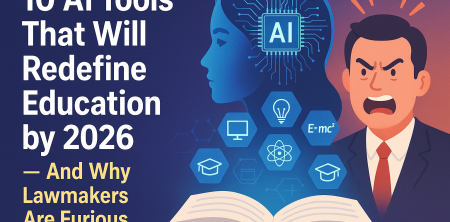
Alright, let's talk about artificial intelligence in education. It's not just a buzzword anymore; it's here, it's evolving at lightning speed, and it's fundamentally changing how students learn and how educators teach. By 2026, we're going to see even more widespread adoption, but not without some serious conversations and, yes, some heated debates. You've probably heard about the recent bipartisan letter from U.S. Senators Josh Hawley (R-Mo.) and Richard Blumenthal (D-Conn.) to Google CEO Sundar Pichai. They're genuinely worried about big tech pushing AI products into schools, asking tough questions about student well-being and academic integrity. And honestly, they've got a point. We have to be thoughtful about how we integrate these powerful tools. But here’s the thing: when used correctly, the best AI tools for student learning in 2026 aren't just novelties; they're transformative. They offer personalized learning experiences, streamline administrative tasks, and open up new avenues for engagement. The trick is finding the right balance and understanding what each tool brings to the table, while also keeping those ethical considerations front and center. So, let’s dive into some of the most impactful AI tools that are poised to make a real difference in classrooms over the next couple of years, all while acknowledging the guardrails being put in place by states like Idaho, Maryland, Oklahoma, and Virginia.
1. Personalized Learning Platforms: Tailoring Education to Every Child
One of the most profound promises of AI in education is its ability to personalize learning on an unprecedented scale. Think about it: in a traditional classroom, a teacher might have 25 or 30 students, each with their unique learning style, pace, and areas of struggle. It's practically impossible for one human to cater to all those individual needs simultaneously. This is where AI-powered personalized learning platforms truly shine.
These platforms use sophisticated algorithms to assess a student's current knowledge, identify gaps, and then adapt the curriculum and teaching methods accordingly. They might offer different explanations, provide additional practice problems, or even suggest alternative resources based on how a student is progressing. Imagine a student struggling with algebra getting extra, focused practice problems designed just for them, while another student who's acing it gets challenged with more advanced concepts. This isn't just about differentiation; it's about creating a truly dynamic learning path for every single student, ensuring nobody is left behind or held back. This kind of individual attention, previously only available through one-on-one tutoring, becomes scalable and accessible, making them some of the best AI tools for student learning in 2026.
2. Intelligent Tutoring Systems (ITS): Your Always-On Academic Coach
Building on the idea of personalization, intelligent tutoring systems take it a step further by mimicking the role of a human tutor. These aren't just glorified flashcards; they're designed to engage students in a dialogue, offering hints, explanations, and constructive feedback as they work through problems. They can pinpoint exactly where a student went wrong, not just that they got the answer incorrect, and then guide them toward understanding the underlying concept.
Consider a student trying to solve a complex physics problem. An ITS might notice they're consistently making a specific conceptual error and then provide a mini-lesson or a different example to address that exact misconception. This immediate, targeted feedback is incredibly powerful for solidifying understanding and preventing bad habits from forming. For educators, ITS can free up valuable time that would otherwise be spent on repetitive instruction, allowing them to focus on more complex pedagogical tasks and individual student support. The ongoing debate about academic integrity, highlighted by the Brown University professor's 2026 cheating controversy, certainly raises questions about how students might use these tools. However, when integrated thoughtfully as learning aids rather than answer providers, ITS can be an invaluable asset to student development.
3. Automated Assessment and Feedback Tools: Streamlining the Grading Process
Let's be honest, grading can be a massive time sink for educators. Essays, reports, complex problem sets – it all takes hours. Automated assessment tools, powered by AI, are rapidly evolving to take some of that burden off teachers' shoulders. These tools can grade multiple-choice questions, fill-in-the-blank, and even increasingly sophisticated short-answer responses with remarkable accuracy. But it's not just about speed; it's about consistency and providing immediate feedback to students.
Beyond simple correctness, some advanced AI systems can analyze student writing for grammar, spelling, style, and even logical coherence, offering suggestions for improvement. While they won't replace a human's nuanced understanding of complex arguments, they can handle the initial pass, highlighting common errors and allowing students to revise before a final submission. This instant feedback loop means students don't have to wait days or weeks to understand where they went wrong, enabling them to learn from their mistakes more effectively. This efficiency makes them some of the best AI tools for student learning in 2026, freeing teachers to focus on deeper, more analytical feedback.
4. Content Curation and Creation Tools: Dynamic Learning Resources
Finding high-quality, relevant educational content can be a challenge. The internet is vast, and sifting through it all to find resources that align with curriculum goals and student needs is a full-time job in itself. AI-powered content curation tools can help by intelligently searching, filtering, and recommending educational materials – articles, videos, simulations, interactive exercises – based on specific learning objectives and student profiles.
Even more exciting are AI tools that can actually generate new content. Imagine an AI that can create practice quizzes on demand, summarize complex texts into simpler language for struggling readers, or even generate diverse examples to illustrate a concept. This doesn't mean AI is writing textbooks entirely (yet!), but it can certainly augment the creation process, providing educators with a customizable library of resources tailored to their specific classroom needs. This capability is particularly useful for teachers trying to provide differentiated materials without spending hours developing them from scratch. (See: U.S. Department of Education on technology.)
5. Language Learning Applications: Mastering New Tongues with AI
Learning a new language is tough, and practice is paramount. AI-powered language learning applications have made incredible strides in providing immersive and personalized experiences. These tools go far beyond simple vocabulary drills, offering features like speech recognition to correct pronunciation, conversational AI partners for practice, and adaptive exercises that focus on areas where a learner struggles. For more context, see AI is Quietly Killing College Admin Jobs.
Think about an app that can simulate a real-world conversation, responding intelligently to a student's input and identifying grammatical errors or awkward phrasing in real-time. This kind of immediate, non-judgmental feedback is invaluable for building confidence and fluency. Furthermore, AI can tailor content to a learner's interests, making the process more engaging. If a student loves sports, the app might introduce sports-related vocabulary and scenarios. This personalized approach makes language acquisition more effective and enjoyable, cementing these as some of the best AI tools for student learning in 2026.
6. Accessibility Tools: Breaking Down Barriers to Learning
One of the most ethically sound and genuinely impactful applications of AI in education is in creating more accessible learning environments. AI can help students with various disabilities engage more fully with educational content. This includes tools for text-to-speech and speech-to-text conversion, making written materials accessible to those with visual impairments or reading difficulties, and allowing students with motor impairments to dictate their thoughts.
Beyond these foundational elements, AI can power advanced features like real-time captioning for videos and lectures, translation services for English language learners, and even smart assistants that can help students organize their thoughts or navigate complex interfaces. These tools ensure that physical or cognitive barriers don't prevent students from accessing the information and participating in classroom activities. For educators, implementing such AI-driven accessibility features means creating a truly inclusive classroom where every student has the opportunity to succeed.
7. Virtual Reality (VR) and Augmented Reality (AR) with AI: Immersive Learning Experiences
While VR and AR aren't strictly AI, when combined with artificial intelligence, they unlock incredibly immersive and dynamic learning experiences. Imagine dissecting a virtual frog without any mess, exploring ancient Roman ruins in a fully interactive 3D environment, or conducting complex chemistry experiments in a safe, simulated lab. AI enhances these environments by making them responsive and intelligent.
For example, an AI could guide a student through a virtual dissection, providing real-time feedback on their technique or adapting the scenario based on their choices. In an AR application, AI could overlay interactive information onto real-world objects, turning a simple school trip into an enriched learning adventure. These technologies can make abstract concepts tangible and bring subjects to life in ways that traditional textbooks simply can't, fostering deeper engagement and understanding. These futuristic tools are rapidly becoming some of the best AI tools for student learning in 2026.
8. AI-Powered Analytics for Educators: Data-Driven Instruction
While many AI tools directly benefit students, a significant portion are designed to empower educators with better insights. AI-powered analytics platforms can collect and analyze vast amounts of student data – performance on assignments, engagement levels, time spent on tasks, common errors – and present it to teachers in an actionable format. This isn't about surveillance; it's about understanding trends and identifying areas where intervention might be needed.
An AI system could flag a student who is suddenly disengaging or consistently struggling with a particular concept across multiple assignments, allowing the teacher to reach out proactively. It can also help teachers evaluate the effectiveness of different teaching strategies or curriculum materials. By providing a clearer, data-driven picture of student progress and challenges, these tools enable educators to make more informed decisions, tailor their instruction more effectively, and ultimately improve learning outcomes for everyone. Of course, this raises data privacy concerns, which is precisely why senators Hawley and Blumenthal are asking Google tough questions about how student data is handled.
9. AI for Administrative Tasks: Freeing Up Teacher Time
Beyond direct instruction, teachers spend a considerable amount of time on administrative tasks – scheduling, communication, record-keeping, and managing resources. AI can significantly streamline many of these mundane but necessary duties, giving educators more time to focus on what they do best: teaching. (See: New York Times on AI in education.)
Think about AI-powered tools that can automate class scheduling, manage student attendance records, or even help draft routine communications to parents. Chatbots powered by AI can answer frequently asked questions from students and parents, reducing the volume of inquiries teachers need to address personally. While not directly impacting learning content, freeing up teacher time is a crucial indirect benefit. When educators are less burdened by paperwork, they have more energy and focus to dedicate to lesson planning, student interaction, and professional development. This efficiency makes them indispensable, even if they aren't 'learning tools' in the traditional sense, thereby enhancing the overall educational environment.
10. Generative AI for Creative Exploration: A Double-Edged Sword
Generative AI, the kind that can create text, images, and even code from simple prompts, is perhaps the most talked-about and controversial category. On one hand, it offers incredible potential for creative exploration and idea generation. Students could use AI to brainstorm essay topics, generate different artistic styles for a project, or even help them understand complex coding concepts by generating examples. It can be a powerful tool for accelerating the creative process and overcoming writer's block. For more context, see The AI Revolution in Higher Education.
However, this is also where the ethical concerns really hit home. The ability of AI to write coherent essays or solve complex problems raises serious questions about academic integrity. How do we distinguish between a student's genuine learning and AI assistance? This is precisely why New York City Public Schools are blocking student-facing generative AI for younger grades and why the Brown University controversy is so resonant. The key here is not to ban it outright, but to teach students how to use these tools responsibly and ethically, as collaborators rather than substitutes for their own thinking. Educators will need to adapt assignments to focus more on critical thinking, analysis, and synthesis that AI can't easily replicate, while also teaching students the responsible use of these powerful generative technologies. It's a challenging but necessary balance to strike as these become some of the best AI tools for student learning in 2026.
The Evolving Role of the Educator in an AI-Enhanced Classroom
As AI tools become more prevalent, the role of the educator isn't diminished; it transforms. Teachers won't be replaced by AI; they'll become orchestrators of AI-enhanced learning experiences. Instead of spending hours on repetitive grading or delivering generic instruction, teachers can dedicate their energy to higher-order pedagogical tasks. This means more time for one-on-one mentorship, facilitating collaborative projects, fostering critical thinking debates, and addressing the social-emotional needs of students. An AI might identify a student struggling with a concept, but it's the teacher who understands the underlying emotional or external factors affecting that student's learning and can provide the nuanced human support needed. Educators will also play a vital role in curating and integrating the right AI tools, ensuring they align with learning objectives and ethical guidelines. They become guides in navigating the complex digital landscape, teaching students not just how to use AI, but how to think critically about its outputs and biases. This shift requires ongoing professional development for teachers to truly harness the potential of these tools, ensuring they remain at the heart of the learning process.
Addressing Ethical Concerns: Privacy, Bias, and Equity
It's impossible to talk about the best AI tools for student learning in 2026 without a frank discussion of the ethical tightropes we're walking. Data privacy is a huge one. When AI platforms collect vast amounts of student data – their progress, their struggles, their learning styles – who owns that data? How is it secured? And for what purposes will it be used? The bipartisan concerns from Senators Hawley and Blumenthal are spot on; schools and parents need absolute transparency and control over student data. Then there's the issue of algorithmic bias. AI systems are only as unbiased as the data they're trained on. If historical educational data reflects societal inequalities, AI could inadvertently perpetuate or even amplify those biases, leading to unfair assessments or limited opportunities for certain student groups. Ensuring equity in access is another critical challenge. While AI tools promise personalization, we have to make sure they don't widen the digital divide. Schools in underfunded districts might not have the resources to implement cutting-edge AI, leaving their students behind. We need policies and funding initiatives to ensure that the benefits of AI in education are available to all, not just a privileged few. These aren't minor details; they are foundational issues that must be proactively addressed as AI becomes more deeply embedded in our schools.
The Future Classroom: A Glimpse into 2026 and Beyond
Looking ahead to 2026, the classroom will likely be a hybrid environment where AI tools are seamlessly integrated into daily learning. Imagine a student starting their day with an AI-powered personalized learning dashboard, reviewing concepts they struggled with yesterday through interactive exercises. During a science lesson, they might use an AR app to explore the human circulatory system in 3D, guided by an AI tutor that adapts to their questions. For a writing assignment, they could use generative AI for brainstorming initial ideas, then refine their arguments with feedback from an AI grammar checker, before submitting a polished piece for their teacher's human touch. Teachers, freed from routine tasks, would spend more time facilitating dynamic group projects, engaging in Socratic seminars, and providing individualized emotional support. The physical classroom might even evolve, with smart boards connecting to AI-driven content libraries and AI-powered robots assisting with tasks like lab setup or material distribution. The emphasis will shift from rote memorization to critical thinking, problem-solving, and creativity, all amplified by intelligent technologies working in concert with human educators. It's a future where learning is truly adaptive, engaging, and deeply personal.
Frequently Asked Questions About AI in Student Learning
Q1: Will AI replace teachers?
No, AI will not replace teachers. Instead, AI tools are designed to augment the teacher's role, taking over repetitive tasks like grading certain assignments, providing basic tutoring, and managing administrative duties. This frees up teachers to focus on higher-level instruction, mentorship, and addressing the unique social-emotional needs of their students. Teachers will become facilitators and guides in an AI-enhanced learning environment.
Q2: How does AI personalize learning for students?
AI personalizes learning by analyzing a student's individual progress, learning style, and knowledge gaps through algorithms. Based on this data, the AI platform can adapt the curriculum, provide tailored exercises, offer different explanations, and suggest specific resources. This ensures each student receives content and support that matches their specific needs and pace, preventing them from being bored or overwhelmed. For more context, see Online Teacher Training Revolution. (See: Research on AI in educational settings.)
Q3: What are the main ethical concerns with using AI in education?
The primary ethical concerns include data privacy (how student data is collected, stored, and used), algorithmic bias (AI systems potentially perpetuating existing inequalities if trained on biased data), and equity of access (ensuring all students, regardless of socioeconomic status, have access to these advanced tools). Academic integrity is also a significant concern, especially with generative AI tools.
Q4: How can schools ensure academic integrity with generative AI tools?
Ensuring academic integrity requires a multi-faceted approach. This includes educating students on the ethical and responsible use of AI, adapting assignments to focus on critical thinking, analysis, and synthesis that AI can't easily replicate, and developing clear school policies on AI usage. Teachers will need to design projects that require original thought, personal reflection, or real-world application, making it harder for AI to simply provide a ready-made answer.
Q5: Is AI only beneficial for older students, or can younger children use it too?
AI tools can be beneficial for students of all ages. For younger children, AI can power adaptive games that teach foundational skills, interactive storytelling apps, and personalized early literacy programs. For older students, AI supports more complex tasks like research assistance, advanced tutoring, and creative content generation. The key is age-appropriate design and careful oversight.
Q6: What kind of training will teachers need to effectively use AI in the classroom?
Teachers will need professional development focused on several areas: understanding how different AI tools work and their pedagogical applications, learning to integrate AI into lesson plans, interpreting AI-generated student data, and addressing the ethical implications of AI. Training should also cover how to teach students responsible AI use and critical evaluation of AI outputs.
Q7: How can parents get involved in their child's AI-enhanced education?
Parents can get involved by staying informed about the AI tools their child's school is using, understanding the school's data privacy policies, and discussing responsible AI use with their children. Attending school workshops on educational technology and communicating with teachers about their child's progress within AI platforms can also be very helpful.
The integration of AI into education is an exciting, rapidly evolving landscape. As we look towards 2026, these tools promise to personalize learning, enhance accessibility, and free up educators to focus on deeper pedagogical work. However, the concerns raised by lawmakers and the ongoing debates about academic integrity are legitimate and necessary. We absolutely must establish clear guardrails, as states like Idaho, Maryland, Oklahoma, and Virginia are doing, and engage in thoughtful discussions about data privacy, ethical use, and the true purpose of education in an AI-powered world. The goal isn't just to adopt new technology for its own sake, but to leverage it intelligently to create richer, more equitable, and more effective learning experiences for every student.
Trending Now
Frequently Asked Questions
What are the benefits of AI tools in education?
AI tools in education offer personalized learning experiences, tailored to individual student needs, which can enhance understanding and engagement. They also streamline administrative tasks for educators, allowing teachers to focus more on instruction and student interaction, ultimately leading to a more effective learning environment.
Why are lawmakers concerned about AI in schools?
Lawmakers, including Senators Josh Hawley and Richard Blumenthal, express concerns about the potential negative impacts of AI in schools, particularly regarding student well-being and academic integrity. They worry about the implications of big tech pushing AI products into educational settings without sufficient oversight and ethical considerations.
How will AI change education by 2026?
By 2026, AI is expected to lead to more widespread adoption of personalized learning platforms, enhancing the educational experience for students. These tools will provide tailored educational paths and increase engagement while also requiring careful integration to address ethical considerations and maintain academic integrity.
What are personalized learning platforms?
Personalized learning platforms are AI-driven tools that adapt to each student's unique learning style and pace. They analyze data to provide customized educational experiences, making it easier for students to grasp concepts and for teachers to meet diverse learning needs within the classroom.
What ethical considerations are involved with AI in education?
Ethical considerations include ensuring student data privacy, maintaining academic integrity, and preventing bias in AI algorithms. It’s crucial for educators and policymakers to address these issues as AI tools become more integrated into the educational landscape to protect student well-being.
Agree or disagree? Drop a comment and tell us what you think.

