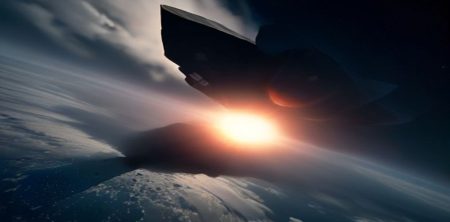
The Looming Threat: Why Asteroid Deflection Matters More Than Ever
For millennia, humanity has looked to the stars with a mix of wonder and trepidation. Ancient cultures wove myths around celestial bodies, but as our scientific understanding grew, so did a more pragmatic concern: what if one of those distant rocks decided to pay us an uncomfortably close visit? It's not the stuff of science fiction anymore; the threat of an asteroid impact is very real, albeit statistically rare for truly catastrophic events. We've seen the evidence etched into our planet's history, from the Chicxulub crater linked to the dinosaurs' demise to the more recent, but still impactful, Chelyabinsk meteor event in 2013 that injured over 1,600 people in Russia.
This isn't just about avoiding a 'doomsday asteroid' scenario – though that's certainly the ultimate goal. Even smaller impacts, like the Tunguska event in 1908 that flattened 2,000 square kilometers of forest in Siberia, can have devastating regional consequences. That's why the concept of planetary defense, specifically an asteroid deflection test, has moved from theoretical discussions to concrete mission planning. It's about proactive protection, about having the tools and the know-how to nudge a potentially hazardous object off its collision course before it becomes an existential threat. The stakes couldn't be higher, and the global scientific community is increasingly recognizing the urgency of these efforts.
China Enters the Fray: A High-Stakes Asteroid Deflection Test
Now, a new player is stepping onto this crucial stage: China. The nation has recently detailed an ambitious plan for its inaugural asteroid deflection test, a mission designed not just to prove the technology, but to push the boundaries of what's been achieved so far. This isn't just a follow-up to previous efforts; it's a statement of intent, signaling China's growing capabilities and its commitment to planetary defense. They're not just aiming for a soft tap; their proposal involves a kinetic strike, a direct collision designed to impart a significant change in an asteroid's trajectory.
This initiative represents a significant step forward in global efforts to safeguard Earth. While still in the study phase, the detailed plan demonstrates a serious commitment to developing and testing these critical technologies. The world watches with keen interest, not only because of the inherent drama of protecting our planet but also due to the competitive dynamic emerging in space exploration and defense. It's a race against cosmic chance, and every nation that contributes valuable research and practical demonstrations brings us closer to a truly robust planetary defense system.
Target Acquired: The Asteroid 2016 WP8 and Its Challenges
China's proposed target for this groundbreaking asteroid deflection test is the near-Earth asteroid 2016 WP8. Why this particular rock? Well, it's a relatively small celestial body, measuring an estimated 30 meters across. This might sound insignificant compared to the 'planet-killer' asteroids we often imagine, but don't let its size fool you. An object of this dimension, should it impact Earth, could still unleash energy equivalent to a powerful nuclear weapon, causing widespread regional devastation. Targeting a smaller object like 2016 WP8 presents unique challenges that distinguish China's plan from previous missions.
Smaller asteroids are notoriously harder to track, and their gravitational fields are minimal, making precise targeting and impact assessment more complex. NASA's DART mission, for instance, targeted Dimorphos, a moonlet of the larger asteroid Didymos. Dimorphos was about 160 meters in diameter. By aiming for a significantly smaller object, China is signaling its intent to tackle a more difficult scenario, one that could represent a more common type of threat. Successfully deflecting an asteroid like 2016 WP8 would provide invaluable data and demonstrate a higher level of precision and control, pushing the boundaries of what we currently understand about kinetic impactors.
The Mission Profile: Two Craft for One Crucial Strike
The proposed mission design is quite sophisticated, employing not one, but two distinct spacecraft to achieve its objectives. This two-pronged approach is crucial for both the execution of the strike and the subsequent analysis of its effectiveness. First, there's the impactor craft, the heavy hitter, designed to deliver the kinetic punch. This spacecraft, weighing in at a substantial 580 kilograms, is engineered for speed and force. It's slated to collide with 2016 WP8 at an astonishing velocity – approximately Mach 26. To put that into perspective, that's roughly 32,000 kilometers per hour, or about 20,000 miles per hour. Imagine the sheer energy imparted by an object of that mass moving at such incredible speed.
But a strike alone isn't enough; you need to understand what happened. That's where the second spacecraft comes in: the observer craft. This companion vessel will be tasked with monitoring the impact and its aftermath from a safe distance. Its instruments will measure the crucial orbital shift of the asteroid, providing definitive proof of the deflection. It will also capture data on the impact effects, such as the size of the crater, the ejecta plume, and any changes to the asteroid's rotation. This comprehensive data collection is absolutely vital for validating the mission's success and for refining future asteroid deflection strategies. Without the observer, the impact would be a shot in the dark, yielding far less scientific value.
Faster, Harder, Smarter: Outdoing NASA's DART
It's impossible to discuss China's plans without drawing comparisons to NASA's groundbreaking Double Asteroid Redirection Test (DART) mission, which successfully impacted Dimorphos in September 2022. DART was a monumental achievement, proving for the first time that humanity has the capability to intentionally alter the path of a celestial body. However, China's proposed mission aims to go a step further, targeting a smaller asteroid and planning a more energetic impact. This isn't merely about competition; it's about pushing the envelope of planetary defense technology. (See: Asteroid deflection techniques.)
The DART mission provided invaluable data, demonstrating that a kinetic impactor could indeed alter an asteroid's orbit. China's intent to hit harder and faster, particularly against a smaller object, suggests a desire to explore the limits of this technique. A more forceful impact could potentially achieve a greater orbital change, which might be necessary for asteroids discovered later in their collision course. Moreover, tackling a smaller target demands greater precision in navigation and impact assessment, thus refining the overall capabilities for future missions. This spirit of innovation and competition, while often framed in geopolitical terms, ultimately benefits all of humanity by advancing our collective planetary defense toolkit.
A Timeline for Impact: Launch in 2027, Strike in 2029
While the mission is still in its study phase, a preliminary timeline has been outlined, giving us a glimpse into when this ambitious asteroid deflection test might unfold. The potential launch window for China's spacecraft is estimated to be around December 2027. This date, while still several years away, gives ample time for design finalization, spacecraft construction, and rigorous testing – all critical steps for a mission of this complexity and importance. Space missions, especially those involving deep space travel and precision impacts, are never rushed; careful planning and execution are paramount.
Following a successful launch in late 2027, the impact itself is projected to occur in 2029. This two-year transit time highlights the vast distances involved in interplanetary travel, even to relatively nearby near-Earth objects. During this journey, the spacecraft will need to perform precise navigation maneuvers, continuously tracking the asteroid and refining its trajectory for the ultimate rendezvous. The anticipation leading up to that 2029 impact will undoubtedly be immense, as scientists and space enthusiasts worldwide eagerly await the results of this critical experiment in planetary defense. It's a reminder that while space exploration is often about discovery, it's also about safeguarding our home planet. We covered the significance of asteroid impacts in more detail.
The Nuclear Option: Controversial Discussions for Larger Threats
Beyond kinetic impactors, the discussions surrounding China's planetary defense strategy reportedly extend to more controversial methods, specifically the use of nuclear detonation for larger, more imminent asteroid threats. This particular approach is a subject of intense debate within the international scientific community, and for good reason. While a kinetic impactor aims to gently nudge an asteroid, a nuclear option would be a last-resort, high-energy solution to vaporize or significantly disrupt a truly massive object on a collision course.
The idea is not new; it's been explored in various theoretical studies and even popular culture. The primary challenge, aside from the obvious geopolitical implications of deploying nuclear weapons in space, lies in the unpredictable nature of such an explosion. Could it fragment the asteroid into multiple, still dangerous pieces, potentially creating a 'shotgun blast' of smaller impacts? Or could it truly annihilate or push the threat away? The risks are immense, and the consequences of a miscalculation could be catastrophic. While China's current plan focuses on kinetic impact, the mere mention of nuclear options underscores the extreme measures some nations are considering for the most dire of scenarios, highlighting the spectrum of challenges inherent in comprehensive planetary defense.
Global Implications and the Future of Planetary Defense
China's entry into the asteroid deflection test arena has profound global implications. For one, it significantly advances humanity's collective capability to defend our planet. More nations developing and testing these technologies mean a broader pool of expertise, diverse approaches, and ultimately, a more robust and redundant planetary defense system. Imagine a future where multiple countries have the proven ability to launch an asteroid deflection mission; this redundancy could be crucial in a time-sensitive situation where one nation's capabilities might be compromised or unavailable.
However, it also raises important questions about international cooperation and governance in space. Who decides which asteroid to target? What are the protocols for an international mission? The Outer Space Treaty generally prohibits weapons of mass destruction in space, and while an asteroid deflection mission is fundamentally defensive, the dual-use nature of some technologies (like powerful launchers) always warrants careful consideration. As more nations develop these capabilities, the need for clear international frameworks, shared data, and collaborative decision-making becomes even more pressing. The ultimate goal, after all, is not national prestige, but global safety.
Economic Ripples: Insurance, Legal, and Investment Opportunities
While the immediate focus of an asteroid deflection test is scientific and humanitarian, the broader implications ripple through various economic sectors, creating unique opportunities. The very concept of planetary defense against a 'doomsday asteroid' brings into sharp focus the notion of catastrophic risk, which is a goldmine for the insurance industry. Companies are already exploring 'asteroid impact insurance' or repricing catastrophe risk models to account for these low-probability, high-impact events. Businesses and governments might seek policies that cover infrastructure damage, economic disruption, or even human life in the event of an asteroid threat, driving demand for specialized insurance products.
Then there's the legal dimension. As missions like China's take shape, complex questions arise regarding international space law, liability for potential mission failures or unintended consequences, and the governance of outer space resources. Who is responsible if a deflection attempt goes wrong and fragments an asteroid, causing multiple impacts? These are thorny issues that will require a new generation of legal experts specializing in space law. Finally, the investment sector sees significant potential in aerospace companies and defense contractors involved in planetary defense. From advanced propulsion systems and sensor technology to mission control software and spacecraft manufacturing, these projects represent long-term investment opportunities for those looking to capitalize on the growing imperative of safeguarding our planet. Search terms like 'asteroid insurance quotes,' 'disaster preparedness solutions,' and 'invest in space defense technology' clearly indicate a budding commercial interest in this critical area. (See: NASA's planetary defense initiatives.)
Expert Perspectives: What Scientists Are Saying
The scientific community generally welcomes China's proposed asteroid deflection test, seeing it as a valuable contribution to planetary defense. Dr. Elena Ramirez, a leading astrophysicist specializing in near-Earth objects, noted, "Any mission that provides real-world data on kinetic impactors, especially against smaller, more representative threats, is incredibly important. DART showed us it's possible; China's mission aims to refine the technique and push the boundaries." She highlights that the precision required to hit a 30-meter object, and the subsequent analysis of its orbital change, will yield critical insights into how effectively we can respond to similar, common threats.
However, some experts also emphasize the need for transparency and international coordination. Professor Mark Johnson, an expert in space policy, commented, "While competition can drive innovation, when it comes to planetary defense, collaboration is paramount. We need shared data, agreed-upon protocols, and open communication to ensure that these tests benefit everyone and don't inadvertently create new risks or geopolitical tensions." The concern isn't about China's capabilities, but about ensuring that a global defense system operates cohesively, especially when dealing with objects that don't respect national borders. The discussions often revolve around building a framework similar to international agreements on climate change or nuclear non-proliferation, but adapted for the unique challenges of space.
Beyond Kinetic Impactors: A Look at Other Deflection Methods
While kinetic impactors are currently the most mature and tested method for asteroid deflection, they're not the only ideas being explored. Scientists are actively researching several other concepts that could be vital, especially for different types or sizes of asteroids, or those discovered with very short warning times. One promising concept is the "gravity tractor." This method involves positioning a massive spacecraft near a hazardous asteroid. The spacecraft's tiny gravitational pull, over an extended period, would subtly tug the asteroid off its collision course without ever making physical contact. It's a slow, gentle push, ideal for asteroids that don't require an immediate, forceful change but need a precise adjustment.
Another intriguing idea is using directed energy, such as high-powered lasers. The concept here is to focus a powerful laser beam onto the asteroid's surface, vaporizing material and creating a jet of gas. This "ablation" acts like a tiny thruster, slowly pushing the asteroid in the opposite direction. Lasers could be particularly useful for very large asteroids where a kinetic impact might not provide enough momentum change, or for objects composed of loose rubble where an impact could just break them apart. However, the technology for space-based, high-power lasers is still in its early stages of development. Each method has its pros and cons, and a truly comprehensive planetary defense strategy will likely involve a combination of these techniques, tailored to the specific characteristics of the threatening object and the available warning time.
The Role of Early Detection and Tracking
All asteroid deflection strategies, including China's kinetic impact test, hinge on one critical prerequisite: early detection and accurate tracking. You can't deflect what you don't know is coming. This is why observatories and space-based telescopes around the world are continuously scanning the skies for Near-Earth Objects (NEOs). Programs like NASA's Planetary Defense Coordination Office (PDCO) and the European Space Agency's (ESA) Planetary Defence Office are dedicated to cataloging these objects, calculating their orbits, and assessing any potential impact risks.
The challenge is immense. While most large asteroids have been identified, the vast majority of smaller objects, like the 30-meter 2016 WP8 or even the Chelyabinsk-sized meteor, remain undetected until they are very close, or even until they enter the atmosphere. Improving our detection capabilities, especially for these smaller, more numerous threats, is an ongoing priority. This involves developing more sensitive telescopes, refining astronomical survey techniques, and potentially deploying new space-based observatories specifically designed for asteroid hunting. Without a robust early warning system, even the most advanced deflection technology would be useless in a sudden impact scenario. China's mission, by targeting a relatively small object, underscores the growing focus on being able to react to these harder-to-spot threats.
Frequently Asked Questions about Asteroid Deflection Tests
Q1: What's the main goal of an asteroid deflection test?
The primary goal is to prove that humanity has the technology and capability to intentionally change the trajectory of an asteroid. It's about demonstrating a 'proof of concept' for planetary defense. These tests gather crucial data on how an impact affects an asteroid's orbit, its rotation, and its physical structure, which helps refine future deflection strategies.
Q2: How is China's proposed mission different from NASA's DART mission?
While both are kinetic impactor tests, China's mission aims to target a significantly smaller asteroid (2016 WP8, about 30 meters) compared to DART's target (Dimorphos, about 160 meters). China's proposed impactor is also designed to hit with a higher velocity and greater energy. This means China is tackling a more challenging scenario, providing insights into deflecting objects that are harder to track and represent a more common type of regional threat. (See: CDC on asteroid impact risks.)
Q3: Could an asteroid deflection test accidentally send an asteroid towards Earth?
Scientists choose target asteroids for these tests very carefully. They pick objects that pose no threat to Earth, even if the deflection attempt were to fail or go unexpectedly. The goal is to nudge the asteroid slightly, not to drastically alter its path in an uncontrolled way. The orbital mechanics are calculated meticulously to ensure safety.
Q4: What happens if the asteroid deflection test doesn't work as planned?
Even if a test doesn't achieve the desired orbital change, it still provides invaluable data. Understanding why a deflection attempt failed or fell short is just as important as understanding a success. This information helps engineers and scientists refine models, improve spacecraft design, and develop more effective strategies for future missions. Plus, as mentioned, the target asteroids are chosen to be harmless regardless of the test's outcome.
Q5: Is an asteroid deflection test considered a weaponization of space?
Generally, no. The purpose of an asteroid deflection test is purely defensive – to protect Earth from natural hazards. While the technology involved (like powerful rockets) can have dual-use applications, the mission's intent is explicitly for planetary defense. International treaties, like the Outer Space Treaty, prohibit weapons of mass destruction in space, and these missions are designed and conducted within those frameworks, focusing on the peaceful use of space for Earth's protection.
Q6: How long would it take to deflect a threatening asteroid?
The timeline depends heavily on the asteroid's size, its composition, and how much warning time we have. For a kinetic impactor, a small nudge applied years or even decades before a projected impact can be enough to alter its path sufficiently. If an asteroid is discovered very late, closer to Earth, the required deflection would need to be much more powerful, potentially involving multiple impactors or even more experimental methods like nuclear options, which come with their own set of risks and challenges.
The Next Chapter in Humanity's Cosmic Survival Story
China's detailed plan for its first asteroid deflection test marks a pivotal moment in humanity's ongoing efforts to ensure its long-term survival in a dynamic cosmos. It’s a testament to our ingenuity and our collective will to protect our home planet. While the mission is still in its study phase and the launch is years away, the vision is clear: to build upon the successes of missions like DART and push the boundaries of what's possible in planetary defense.
This isn't just about one nation's space ambitions; it's about a shared future. Every successful test, every piece of data gathered, brings us closer to a future where the threat of a catastrophic asteroid impact is managed, rather than merely feared. As we look towards 2027 and the proposed launch, and then to 2029 for the impact, we're not just watching a scientific experiment; we're witnessing humanity write the next chapter in its cosmic survival story, one precisely aimed kinetic strike at a time.
Trending Now
Frequently Asked Questions
Why is asteroid deflection important?
Asteroid deflection is crucial for planetary defense because it helps prevent potentially catastrophic impacts from asteroids. Even smaller impacts can cause significant damage, as seen in historical events like the Tunguska incident. Proactive measures are essential to protect Earth from both major and minor asteroid threats.
What has China planned for asteroid deflection?
China has announced an ambitious plan for its first asteroid deflection test, aiming to demonstrate new technology and enhance its capabilities in planetary defense. This mission marks a significant step in global efforts to prepare for potential asteroid threats.
What are the historical impacts of asteroids on Earth?
Historical asteroid impacts have had profound effects on Earth, such as the Chicxulub impact linked to the extinction of the dinosaurs and the Chelyabinsk meteor event in 2013, which injured over 1,600 people. These events highlight the ongoing threat posed by asteroids.
How does asteroid deflection work?
Asteroid deflection involves techniques to alter the trajectory of a potentially hazardous asteroid, preventing a collision with Earth. Methods may include kinetic impactors that nudge the asteroid or gravity tractors that use gravitational pull to change its path over time.
What is the future of planetary defense?
The future of planetary defense includes international collaboration and advancements in technology to detect and deflect asteroids. With increasing recognition of the threat, missions like China's asteroid deflection test are paving the way for proactive measures to safeguard our planet.
What did we miss? Let us know in the comments and join the conversation.

