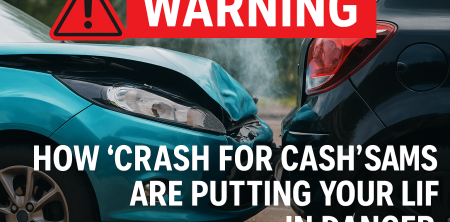
Imagine this: you're driving along, minding your own business, perhaps humming along to the radio, when suddenly, the car in front of you slams on its brakes for no apparent reason. Before you can react, you've rear-ended them. It feels like a genuine accident, a momentary lapse of concentration on your part. But what if it wasn't? What if that sudden brake check, that confusing signal, or that seemingly innocent lane change was all part of a calculated, sinister plot to defraud an insurance company – and you're the unwitting pawn?
This isn't some far-fetched movie plot; it's the chilling reality of 'crash for cash' scams, and they are becoming terrifyingly common and increasingly aggressive. Police forces, particularly the UK's Insurance Fraud Enforcement Department (IFED), are sounding the alarm, warning drivers that these schemes are no longer just about opportunistic bumps. They're evolving into sophisticated, dangerous operations designed to ensnare innocent motorists, costing the industry – and by extension, all of us – millions. We're talking about more than £25 million in payouts over the last five years alone, a staggering sum that ultimately translates into higher premiums for every honest driver.
But the financial toll is just one piece of the puzzle. The true horror of crash for cash scams lies in the deliberate endangerment of lives. These aren't accidents; they are staged collisions, engineered for profit, and they put you, your passengers, and everyone else on the road at immense risk. It's a high-stakes game where criminals gamble with your safety for their financial gain, and understanding how they operate is your first line of defense.
The Alarming Rise of Aggressive 'Crash for Cash' Scams
For years, the concept of insurance fraud has conjured images of exaggerated claims or perhaps minor damage being inflated. But 'crash for cash' scams are a beast of a different stripe entirely. These aren't accidents; they are meticulously planned events where criminals deliberately induce or stage collisions to file fraudulent insurance claims. And according to Detective Chief Inspector Nik Jethwa, who heads up IFED, the tactics are becoming significantly more aggressive.
What does 'aggressive' mean in this context? It means fraudsters aren't just waiting for an opportunity; they're actively creating them. They might slam on their brakes suddenly at a roundabout or junction, leaving you no time to react. They might pull into the wrong lane with misleading signals, forcing a collision. Or they could slow down inexplicably on a motorway, inviting a rear-end shunt. These aren't mistakes; they are calculated maneuvers designed to make you the at-fault driver, even when you've done nothing wrong. The audacity is staggering, and the potential for serious injury is very real.
The financial motivations are clear: these criminals are looking to claim for vehicle damage, fabricated personal injuries – often whiplash or other soft tissue injuries that are hard to disprove immediately – and even bogus recovery and storage costs. Each element adds to the total payout, and they'll leverage every opportunity to inflate the claim. It's a cynical exploitation of the insurance system, turning everyday driving into a minefield for unsuspecting motorists.
How These Schemes Work: A Deeper Dive into the Tactics
To protect yourself, it's crucial to understand the playbook of these fraudsters. While the specifics can vary, most crash for cash scams follow a similar pattern, designed to shift blame onto the innocent driver. Let's break down some of the most common methods:
The 'Brake Slam': This is perhaps the most common and terrifying tactic. A fraudster's vehicle, often older and already damaged, will pull in front of you and then, without warning or reason, slam on its brakes. This usually happens at junctions, roundabouts, or even on busy main roads where following distances are naturally tighter. They count on your inability to stop in time, making a rear-end collision almost inevitable. Often, an accomplice might be driving behind you, preventing you from changing lanes or swerving. The 'innocent' driver in front then claims whiplash and extensive vehicle damage.
The 'Flash-for-Cash': You're waiting to turn right (or left, depending on traffic laws) and an oncoming driver flashes their headlights, signaling you to go. You proceed, only for them to accelerate and collide with you, claiming you pulled out in front of them. The flashing headlights are denied, and you're left looking like the reckless driver. This is particularly insidious because it exploits common courtesies on the road.
The 'Staged Side Swipe': This often occurs at roundabouts or multi-lane junctions. A fraudster will pull alongside you, perhaps slightly ahead, then deliberately drift into your lane, causing a side-on collision. They'll then claim you failed to maintain your lane or merged unsafely. The confusion of a busy junction plays right into their hands, making it difficult to ascertain who was truly at fault without clear evidence. (See: BBC report on crash for cash scams.)
The 'Ghost Accident': This is a variation where no actual collision occurs with an innocent party. Instead, fraudsters will claim a collision happened with a phantom vehicle or stage a minor collision among themselves, then falsely claim an innocent party was involved or responsible. This relies heavily on fabricated evidence and witness statements, and it's harder for insurers to detect without a strong investigative arm.
These schemes aren't always carried out by individuals; often, they involve organized crime groups, complete with 'witnesses' who are actually accomplices, and even corrupt garages or medical professionals who inflate repair costs or confirm fake injuries. It's a complex web of deceit, all designed to maximize the fraudulent payout.
Beyond the Wallet: The Real Human Cost of Crash for Cash Scams
While the financial implications of crash for cash scams are significant – higher insurance premiums, increased operational costs for insurers, and the drain on public resources for investigations – the true cost extends far beyond money. These criminal enterprises have a profound and deeply disturbing human toll.
First and foremost is the immediate danger. Deliberately causing a car accident, even a minor one, carries inherent risks. At best, you might experience a jolt, a scare, and minor damage. At worst, these staged collisions can lead to serious injuries, lifelong disabilities, or even fatalities for innocent drivers and their passengers. Imagine being involved in a crash, not because of a genuine mistake, but because someone intentionally put your life in jeopardy for a few thousand pounds. The psychological trauma alone can be long-lasting, leaving victims with anxiety, fear of driving, and a deep sense of betrayal.
Then there's the emotional distress and inconvenience. Dealing with the aftermath of an accident is stressful enough when it's genuine. When you suspect you've been targeted by a scam, the stress is compounded by feelings of anger, frustration, and powerlessness. You're suddenly embroiled in an insurance claim that might be protracted, battling allegations of fault that aren't true, and potentially facing increased premiums or even loss of your no-claims bonus, all while trying to prove your innocence against a coordinated criminal effort.
Adding another layer of horror, these scammers are becoming more brazen in their attempts to gather information. There have been reports of fraudsters demanding to photograph innocent drivers' licenses at the scene of the 'accident.' This isn't just about collecting insurance details; it's a terrifying potential pathway to identity theft, opening up a whole new world of financial pain and personal compromise for victims.
The Financial Fallout: How Everyone Pays the Price
When we talk about £25 million in payouts over five years, it's easy to dismiss that as 'the insurance company's problem.' But that couldn't be further from the truth. Insurance companies don't simply absorb these losses; they pass them on. And who do they pass them on to? You, the honest policyholder.
Every fraudulent claim that gets paid contributes to the overall pool of claims that insurers must cover. To maintain profitability and solvency, they factor these losses into their pricing models. This means that year after year, a portion of your insurance premium goes towards covering the cost of these criminal activities. It's a hidden tax on every driver, levied by fraudsters who operate with seemingly little regard for the consequences.
Beyond the direct impact on premiums, there's a broader economic effect. Insurance fraud strains the resources of law enforcement agencies like IFED, diverting police time and funding away from other critical areas. It also impacts the efficiency of the claims process for legitimate accidents, as insurers become more cautious and investigative, potentially slowing down payouts for those who genuinely need them. The entire ecosystem of automotive insurance is made less trustworthy and more expensive because of these pervasive crash for cash scams.
Spotting the Red Flags: What to Look Out For
Vigilance is your best defense against crash for cash scams. While you can't predict every scenario, knowing the common indicators can help you identify a suspicious situation immediately. Here's what to watch for: (See: NHTSA resources on crash prevention.)
- Unusual Driving Behavior: Does the car in front suddenly slow down or brake aggressively for no clear reason (no pedestrian, no animal, no traffic light change)? Do they swerve erratically or signal incorrectly at a roundabout, then change their mind mid-maneuver?
- Occupant Behavior: After a collision, do the occupants of the other vehicle seem overly calm, perhaps even rehearsed? Do they immediately start complaining of injuries that seem disproportionate to the perceived impact? Are there too many occupants for the type of vehicle, or do they all appear to know each other unusually well?
- Pre-Existing Damage: Does the other vehicle have older, unrelated damage that seems to be 'activated' by the collision, or perhaps damage that doesn't quite match the impact point?
- Overly Eager Witnesses: Do 'witnesses' appear out of nowhere, seemingly too keen to offer their version of events, which always implicates you? Do their statements sound identical or too polished?
- Immediate Demands for Information: While exchanging details is normal, be wary if the other party is overly insistent on taking photos of your driver's license, especially if they try to hold onto it or pressure you excessively for personal details beyond what's legally required.
- Suspicious Locations: Many staged accidents occur at low-speed junctions, roundabouts, or areas with clear visibility, making it easier for fraudsters to execute their plan and harder for you to argue fault.
- Unsolicited Legal or Medical Advice: In the days or weeks following an accident, if you receive unsolicited calls or messages from claims management companies or personal injury solicitors who seem to know about your accident, it's a major red flag.
Trust your gut feeling. If something feels off, it probably is. Don't let the shock of an accident override your critical thinking.
Your Immediate Actions After a Suspected Scam
If you suspect you've been targeted by a crash for cash scam, your actions in the immediate aftermath are crucial. These steps can significantly strengthen your position and aid in the investigation:
- Prioritize Safety: First and foremost, ensure everyone is safe. Move vehicles to a safe location if possible, and check for injuries. If anyone is injured, call emergency services immediately.
- Do NOT Admit Fault: Even if you feel you might be partially to blame, never admit fault at the scene. This can be used against you. Simply state the facts as you understand them.
- Gather Evidence Meticulously:
- Photos and Videos: Use your phone to take extensive photos and videos of the accident scene. Capture the position of both vehicles, damage to both vehicles (from multiple angles, including any pre-existing damage on the other car), road conditions, traffic signs, and any relevant surroundings. Don't forget to photograph the other driver and their passengers, and their license plate.
- Dash Cam Footage: If you have a dash cam, ensure the footage is saved and secure. This is often the most powerful piece of evidence against fraudsters.
- Witness Details: Independently seek out any genuine, impartial witnesses. Do not rely on witnesses provided by the other party. Get their names, contact numbers, and a brief statement.
- Exchange Information Carefully: Obtain the other driver's name, contact details, vehicle registration number, and insurance information. Do NOT hand over your physical driver's license for them to photograph; offer to show it and let them write down the details if they wish. Be wary of anyone demanding excessive personal information.
- Note Occupants: Make a mental note, or even better, write down the number of occupants in the other vehicle and their approximate ages or descriptions. Fraudsters often pack extra people into the car to claim more personal injury compensation.
- Report to Police and Insurer: Report the incident to the police, explaining your suspicion of a scam. Then, contact your insurance company immediately. Be upfront about your suspicions and provide all the evidence you've gathered.
- Seek Medical Attention: Even if you feel fine, it's wise to get checked by a medical professional, as some injuries may not be immediately apparent.
Remember, the more information you can provide, the stronger your case will be in proving you were the victim of a fraudulent scheme.
The Indispensable Role of Dash Cams
In the escalating battle against crash for cash scams, the dash cam has emerged as an indispensable tool. It's no longer just a gadget for enthusiasts; it's a vital piece of safety equipment, a silent, unbiased witness that records everything that happens on the road ahead (and sometimes behind).
A high-quality dash cam provides irrefutable video evidence. In a 'brake slam' scenario, for instance, the footage will clearly show the vehicle in front braking sharply without cause, often with no obstruction ahead. It can capture misleading signals, sudden lane changes, or even the suspicious behavior of occupants before and after the collision. This objective evidence can completely dismantle a fraudster's fabricated story and prevent you from being wrongly assigned fault.
Beyond simply proving your innocence, dash cam footage acts as a powerful deterrent. While fraudsters won't know you have one until after the fact, the increasing prevalence of dash cams makes their schemes riskier. Many criminals will back down or admit fault once confronted with the undeniable proof of a dash cam. For insurers, this footage significantly speeds up the claims process and reduces the need for lengthy investigations, saving time and money.
Investing in a good dash cam is a small price to pay for peace of mind and powerful protection against these dangerous and costly scams. Look for models with good resolution, wide-angle lenses, and features like loop recording and G-sensors that automatically save footage upon impact.
Law Enforcement's Fight Against Insurance Fraud
The fight against crash for cash scams isn't just up to individual drivers; dedicated police units like the Insurance Fraud Enforcement Department (IFED) are at the forefront of tackling this pervasive problem. Detective Chief Inspector Nik Jethwa's warnings underscore the seriousness with which these crimes are being treated.
IFED, established in 2012 and funded by the insurance industry, works in close collaboration with insurers to investigate serious and organized insurance fraud. Their remit covers all types of fraud, but crash for cash scams are a significant focus due to their high financial cost and the danger they pose to the public. They employ a range of investigative techniques, from analyzing suspicious claims data and vehicle damage reports to surveillance and intelligence gathering.
Their work often leads to arrests, charges, and convictions, sending a clear message that these crimes will not be tolerated. However, the scale of the problem is immense, and fraudsters are constantly adapting their methods. This is why public awareness and proactive reporting are so vital. Every piece of information, every suspicious incident reported, helps IFED build a clearer picture of the criminal networks operating and brings them closer to dismantling these dangerous schemes. Their efforts are a crucial component in maintaining the integrity of the insurance system and, more importantly, keeping our roads safer.
The Broader Impact on Trust and Community
Beyond the immediate financial and physical harms, crash for cash scams erode a fundamental element of our society: trust. They sow seeds of suspicion on our roads, making drivers wary of others, questioning intentions, and fostering an environment of fear. What should be a shared space of mutual respect and adherence to rules becomes a potential battleground where one wrong move, or even one right move, can be exploited.
This erosion of trust extends to institutions as well. When insurance premiums rise due to fraud, it fosters resentment towards insurance companies, even though they are also victims. It can make people feel like the system is rigged, that they are constantly being exploited, and that honest behavior is penalized. This cynicism can bleed into other areas of public life, diminishing our collective sense of community and fairness.
Furthermore, the resources diverted to combating fraud could otherwise be used for improving road safety, lowering insurance costs for everyone, or investing in other community services. These scams are not victimless crimes; they impact the fabric of our society, making it less safe, less fair, and more expensive for everyone.
Staying Safe and Driving Smart in a Risky World
Given the increasing aggression and prevalence of crash for cash scams, a defensive driving mindset is more important than ever. It's not about driving slowly or timidly, but about being aware, anticipating potential hazards, and giving yourself ample time and space to react.
Here are some practices to integrate into your daily driving:
- Maintain Generous Following Distances: This is your single most effective defense against 'brake slam' scams. The more space you leave between your car and the one in front, the more time you have to react to sudden braking.
- Be Wary of Erratic Drivers: If a car in front is behaving unusually – speeding up, slowing down, drifting, or signaling incorrectly – give them a wide berth. Change lanes if safe to do so, or increase your following distance significantly.
- Approach Junctions and Roundabouts with Caution: These are prime locations for scams. Be extra vigilant for unexpected maneuvers, and don't assume a flashed headlight means you have a clear path. Always double-check.
- Install a Dash Cam: As emphasized, this is your best witness. Ensure it's always recording and functioning correctly.
- Keep Your Wits About You: In the event of an accident, even a minor one, stay calm. Assess the situation, gather evidence, and remember the red flags. Don't be pressured into admitting fault or giving away too much personal information.
Ultimately, driving in today's world requires a blend of skill, awareness, and a healthy dose of skepticism. While the idea that someone would deliberately cause an accident for financial gain is deeply unsettling, understanding the threat and equipping yourself with the right tools and knowledge is your best defense. Stay vigilant, drive smart, and let's work together to make our roads a safer place for everyone.
Trending Now
Frequently Asked Questions
What are 'crash for cash' scams?
'Crash for cash' scams involve staged car accidents where fraudsters deliberately cause collisions to file false insurance claims. The perpetrators often create dangerous situations, such as sudden stops or erratic driving, to trick innocent drivers into causing accidents, thereby profiting from insurance payouts.
How can I identify a 'crash for cash' scam?
Signs of a 'crash for cash' scam include erratic driving behavior, sudden braking without cause, and multiple vehicles involved in the incident. If you feel the accident was orchestrated, gather evidence like dashcam footage and witness statements to report it to authorities.
What should I do if I suspect a 'crash for cash' scam?
If you suspect a 'crash for cash' scam, remain calm and do not admit fault. Collect as much evidence as possible, including photographs and witness details. Report the incident to the police and your insurance company, providing them with all relevant information.
Are 'crash for cash' scams common?
'Crash for cash' scams are increasingly common, with police reports indicating a rise in these dangerous schemes. They are becoming more aggressive, putting innocent drivers at risk and costing the insurance industry millions, which ultimately affects all drivers through higher premiums.
What are the dangers of 'crash for cash' scams?
'Crash for cash' scams pose significant dangers as they involve orchestrated accidents that can lead to serious injuries or fatalities. The deliberate endangerment of lives for financial gain makes these scams not just a financial issue but a critical safety concern for all road users.
What did we miss? Let us know in the comments and join the conversation.

