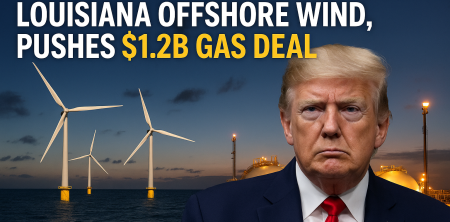
You might have thought the future of energy was all about wind turbines gracefully turning offshore, especially with the growing clamor for climate action. But if you've been following the news, you know things are rarely that simple, especially when politics and billions of dollars are involved. A recent development has thrown a wrench into the gears of renewable energy progress, particularly right here in the Gulf Coast. We're talking about a move that saw the German energy giant RWE walk away from significant offshore wind leases, including a pivotal Louisiana offshore wind project, after striking a massive $1.22 billion settlement with the Trump administration.
This isn't just a dry financial transaction; it's a dramatic pivot with far-reaching implications. Instead of harnessing the powerful winds off our coasts, RWE is now pouring its considerable resources into liquefied natural gas (LNG) and other natural gas ventures, including a hefty $900 million stake in a Louisiana LNG project. This shift isn't happening in a vacuum; it’s part of a broader, politically charged effort to roll back federal climate regulations. It’s a story that’s ignited fierce debate, not just among energy experts and environmentalists, but across the political spectrum, raising critical questions about our energy future, climate commitments, and the very direction of national policy. Let's dig into what this all means.
The $1.2 Billion Betrayal: RWE's Offshore Wind Retreat
It sounds almost unbelievable, doesn't it? A major global energy player, RWE, known for its significant investments in renewables, suddenly pulls out of promising offshore wind projects. But that's precisely what happened. The Trump administration, in a move that’s been described as controversial even by its supporters, finalized a settlement worth a staggering $1.22 billion with RWE. This agreement effectively bought out RWE’s federal offshore wind leases in three key locations: Louisiana, New York, and California. For those of us who've been watching the slow, deliberate march towards a cleaner energy grid, this felt like a punch to the gut, especially concerning the potential for a robust Louisiana offshore wind industry.
The settlement itself is a complex beast. On one hand, RWE receives a substantial sum, which they're now free to reinvest. On the other hand, the public loses the immediate prospect of three large-scale offshore wind farms, projects that would have generated clean electricity, created jobs, and contributed to climate goals. This isn't just about a single company or a few leases; it's about the broader signal this sends to the renewable energy sector, both domestically and internationally. Does it suggest that federal support for offshore wind is wavering? Or is it a strategic maneuver with a different endgame in mind? The answers depend heavily on who you ask, but the immediate consequence is clear: less offshore wind development, at least from RWE, in the near future.
From Turbines to Tankers: RWE's Pivot to LNG
Perhaps the most striking aspect of this entire saga is where RWE plans to redirect its newly acquired capital. Instead of doubling down on wind, the company is making a decisive pivot towards liquefied natural gas (LNG) and other natural gas projects. This isn't a small-scale reallocation; we're talking about a significant investment, including a reported $900 million stake in a specific LNG project located right here in Louisiana. Think about that for a moment: money that was earmarked for harnessing the Gulf's powerful winds will now fuel the expansion of fossil fuel infrastructure in the same region.
For those living along the Gulf Coast, this isn't just an abstract energy policy shift. It means continued, and potentially increased, industrial activity associated with natural gas extraction, processing, and export. While LNG is often touted as a 'bridge fuel' to a greener future, it's still a fossil fuel, contributing to greenhouse gas emissions, albeit often less intensely than coal. This strategic redirection by RWE, facilitated by the federal settlement, highlights a fundamental tension in global energy policy: the push for renewables versus the continued reliance on, and investment in, traditional fossil fuels. It raises critical questions about energy security, economic development, and environmental stewardship, particularly for states like Louisiana that are already on the front lines of climate change impacts.
The Political Undercurrents: Dismantling Climate Regulations
It would be naive to view this settlement and RWE's subsequent pivot as merely a business decision. This move is deeply embedded in a broader political agenda, one that has sought to systematically dismantle federal climate regulations. The Trump administration has been quite open about its skepticism regarding aggressive climate action and its preference for what it calls 'energy dominance' – a strategy heavily reliant on fossil fuel production. This settlement, therefore, aligns perfectly with that overarching philosophy. This builds on Cleaner air efforts in Louisiana.
One of the most significant pieces of this regulatory rollback puzzle is the repeal of the Environmental Protection Agency's (EPA) 2009 'Endangerment Finding.' For years, this finding served as the legal cornerstone for regulating greenhouse gas emissions under the Clean Air Act. By concluding that greenhouse gases endanger public health and welfare, it provided the EPA with the authority to set limits on emissions from various sources. Its repeal, or at least the effort to undermine it, removes a critical legal basis for federal climate action. This isn't just bureaucratic maneuvering; it has real-world consequences, potentially weakening the government's ability to mandate reductions in emissions and shape a cleaner energy future. The RWE settlement, in this context, looks less like an isolated event and more like a tactical move in a much larger campaign to redefine America's environmental policy.
Louisiana's Dilemma: Energy Hub or Renewable Leader?
Louisiana, my friends, finds itself at a fascinating and often frustrating crossroads. For decades, it has been an undisputed energy hub, a powerhouse of oil and gas production, refining, and export. This industry has shaped its economy, culture, and even its landscape. The idea of a significant Louisiana offshore wind project, with its promise of new jobs and clean power, represented a potential diversification, a step towards a more sustainable future that could complement, rather than completely replace, its traditional energy strengths.
But with RWE's withdrawal and its subsequent investment in LNG within the state, that path becomes more complicated. Does Louisiana double down on its fossil fuel identity, embracing the immediate economic benefits of increased gas production and export? Or does it continue to pursue the long-term vision of becoming a leader in renewable energy, leveraging its immense natural resources for both wind and solar? This isn't an easy choice, and it's one that involves balancing economic realities, environmental concerns, and political pressures. The RWE decision, while stemming from federal policy, will undoubtedly ripple through state-level discussions and investments, forcing a re-evaluation of Louisiana's energy identity. (See: Biden's climate change policies.)
The Ripple Effect: Impact on Renewable Energy Investment
When a major player like RWE pulls out of multiple offshore wind leases, it sends a powerful signal throughout the global renewable energy investment community. For those looking to put their capital into clean energy, such moves can create uncertainty. Does it mean that the political will for offshore wind isn't as strong as once thought? Are there unforeseen regulatory hurdles that make these projects riskier than they appear? Related reading: Historic shifts in energy dynamics.
While one company's decision doesn't dictate the entire market, it certainly influences perceptions. Investors thrive on stability and predictable regulatory environments. When a $1.22 billion settlement leads to the cancellation of projects, it can make others think twice. This isn't to say that offshore wind is dead in the water; far from it. Many other companies and governments remain committed. However, the RWE case might prompt a more cautious approach, a deeper dive into political risk assessments, and perhaps a demand for stronger, more consistent policy signals from federal authorities. The long-term health of the renewable energy sector relies on a clear, stable path forward, and events like this introduce an element of doubt that the industry could certainly do without.
Legal Ramifications and the 'Endangerment Finding' Debate
Let's get a bit into the legal weeds, because the repeal of the EPA's 2009 'Endangerment Finding' is more than just a footnote; it's a foundational shift. This finding, established during the George W. Bush administration and finalized under Obama, declared that greenhouse gases pose a threat to public health and welfare. Why is this so crucial? Because under the Clean Air Act, once the EPA makes such a finding, it is legally obligated to regulate those substances. It provided the legal teeth for policies aimed at reducing emissions from power plants, vehicles, and other industrial sources. It was, in essence, the bedrock of federal climate regulation.
The Trump administration's efforts to dismantle or severely weaken this finding represent a profound legal challenge to environmental protection. If the government can successfully argue that greenhouse gases don't 'endanger' public health, then a vast swathe of climate regulations could lose their legal basis. This isn't just academic; it affects everything from vehicle emission standards to industrial pollution controls. The legal battles surrounding this issue are far from over, and their outcomes will profoundly shape the future of environmental law and the government's ability to address climate change. It's a high-stakes game, and the RWE settlement can be seen as a strategic play within this larger legal and political contest.
The Global Context: Energy Security and Climate Commitments
It's important to remember that energy policy doesn't exist in a vacuum. It's intertwined with global geopolitics, energy security, and international climate commitments. The war in Ukraine, for instance, dramatically underscored Europe's reliance on Russian natural gas, prompting a frantic search for alternative sources. In this context, American LNG exports have become a significant factor in global energy security, offering European nations a way to diversify their supply.
However, this push for LNG also clashes with global climate commitments, particularly those made under the Paris Agreement, which aims to limit global warming to well below 2 degrees Celsius. While natural gas burns cleaner than coal, it's still a significant source of greenhouse gas emissions, especially when considering methane leaks throughout the supply chain. The RWE pivot, therefore, isn't just about domestic energy policy; it has global ramifications. It complicates the narrative of a rapid transition to renewables and highlights the difficult balancing act between ensuring energy security in a volatile world and meeting urgent climate goals. How nations, and indeed companies like RWE, navigate this tension will define the energy landscape for decades to come.
What Does This Mean for the Future of Offshore Wind?
So, where does this leave the Louisiana offshore wind project, and indeed, offshore wind development across the U.S.? Is this a fatal blow, or merely a setback? The truth, as always, is somewhere in the middle. While RWE's withdrawal from specific leases is undoubtedly a loss, it doesn't mean the end of offshore wind in these regions. The federal government could, for instance, re-auction these leases to other developers who might still be interested. The potential for offshore wind in the Gulf of Mexico, with its shallow waters and strong, consistent winds, remains immense.
However, the incident does underscore the need for greater policy stability and a clearer, more consistent vision from federal authorities. Developers need assurance that their significant investments won't be derailed by shifting political winds (pun intended). States like Louisiana, which have been exploring the potential of offshore wind, will need to weigh the risks and benefits more carefully, perhaps even seeking stronger state-level protections and incentives to attract and retain developers. The future of offshore wind is still bright, but this episode serves as a powerful reminder that the path to a clean energy future is rarely smooth and often fraught with political and economic hurdles.
Navigating the Energy Transition: Challenges and Opportunities
The RWE settlement and its aftermath perfectly encapsulate the complex, often contentious journey of the global energy transition. It's not a simple switch from old to new; it's a messy, multi-faceted process involving colossal investments, political will, technological innovation, and societal adaptation. On one side, we have the undeniable urgency of climate change, pushing us towards decarbonization and the rapid deployment of renewables. On the other, we have deeply entrenched industries, economic realities, and the persistent need for reliable, affordable energy.
For individuals, businesses, and policymakers, this means navigating a landscape filled with both immense challenges and incredible opportunities. Opportunities for new technologies, new jobs, and new forms of economic prosperity. Challenges in overcoming political resistance, managing economic dislocations, and ensuring a just transition for communities reliant on traditional energy sources. The story of the Louisiana offshore wind project, or rather its cancellation, is a stark reminder that the energy transition isn't just about engineering; it's about people, politics, and the difficult choices we make about our collective future. (See: The future of offshore wind energy.)
The Economic Stakes: Jobs and Local Impact
Let's talk about jobs, because that's often the most tangible impact for local communities. When you talk about a Louisiana offshore wind project, you're not just talking about turbines; you're talking about manufacturing, installation, maintenance, and a whole supply chain that creates well-paying jobs. Estimates from various studies on offshore wind development often project thousands of direct and indirect jobs per gigawatt of installed capacity. These aren't just temporary construction gigs; many are long-term, skilled positions that could provide a new economic backbone for coastal communities.
Conversely, the expansion of LNG facilities also promises jobs, primarily in construction and operations. However, the long-term job creation potential of fossil fuel infrastructure, once built, is often lower than the ongoing operational needs of a renewable energy fleet. For Louisiana, a state with a rich history in energy but also facing significant economic challenges and coastal erosion, the choice between these two paths has profound implications for its workforce and local economies. A pivot towards renewables could offer diversification and resilience against volatile fossil fuel markets, while leaning harder into LNG ties the state's economic fate more closely to global gas prices and demand fluctuations. The RWE decision effectively pushed Louisiana further down the LNG path, at least for now, potentially delaying the significant job creation benefits a robust offshore wind industry could have brought.
Environmental Justice and Community Engagement
It's crucial to consider the human element in these energy shifts, especially through the lens of environmental justice. Communities along the Gulf Coast, particularly in Louisiana, have historically borne a disproportionate burden of pollution and environmental degradation from fossil fuel industries. Many of these are low-income communities and communities of color that have faced generations of health impacts and diminished quality of life. The prospect of a Louisiana offshore wind project offered a chance to develop clean energy infrastructure that could potentially mitigate these impacts, offering a pathway to cleaner air and water.
The RWE pivot to increased LNG investment, however, raises concerns for these same communities. New or expanded LNG facilities often mean increased industrial activity, potential for air and water pollution, and the perpetuation of existing environmental injustices. Effective community engagement and robust environmental impact assessments are paramount in these situations, but historically, the voices of frontline communities have often been marginalized. This energy transition isn't just about megawatts and dollars; it's about ensuring that the benefits are broadly shared and that the burdens aren't unfairly concentrated on those who can least afford them. The RWE settlement brings these environmental justice considerations sharply into focus. There's a fuller look at Climate Week 2026 overview.
The Role of State-Level Policy and Incentives
While federal policy looms large, state-level actions play a critical role in shaping energy landscapes. Even with federal headwinds, a state like Louisiana could still aggressively pursue offshore wind development through its own policies and incentives. This might involve setting ambitious renewable portfolio standards, offering tax credits for renewable energy projects, or streamlining permitting processes for offshore wind. Other states, particularly in the Northeast, have already demonstrated how state-level commitments can drive significant offshore wind investment, even in the face of broader federal uncertainty.
For a Louisiana offshore wind project to truly flourish, strong state leadership and a clear, long-term vision would be essential. This means moving beyond the immediate economic allure of fossil fuels and making strategic investments in infrastructure and workforce development tailored for renewables. The RWE withdrawal serves as a stark reminder that states cannot solely rely on federal policy to advance their clean energy goals; they must also cultivate their own supportive regulatory and economic environments. Without such a commitment, the potential for offshore wind in the Gulf might remain largely untapped, regardless of federal shifts.
Expert Perspectives: Diverse Views on the Settlement
The RWE settlement didn't happen quietly; it sparked immediate and diverse reactions from experts across the energy, environmental, and economic sectors. Environmental groups, as you might expect, largely condemned the move as a significant setback for climate action and a betrayal of renewable energy goals, especially given the urgent need to decarbonize the grid. They often pointed to the long-term environmental costs of increased fossil fuel reliance.
Conversely, some energy industry analysts and proponents of fossil fuels might view the settlement as a pragmatic decision, reflecting market realities and the ongoing importance of natural gas for energy security and grid stability. They might argue that the timing of the settlement, amidst global energy supply concerns, made LNG a more attractive and viable investment. Legal experts also weighed in, dissecting the implications of the 'Endangerment Finding' debate, with some expressing deep concern about the precedent set for federal environmental regulation. The lack of a unified consensus highlights the deep divisions in how different stakeholders perceive the balance between economic interests, energy security, and environmental protection.
FAQ: Understanding the Louisiana Offshore Wind Project and RWE Settlement
What exactly was the RWE settlement about?
The settlement involved the German energy company RWE agreeing to accept $1.22 billion from the U.S. government (under the Trump administration) to relinquish its federal offshore wind leases in Louisiana, New York, and California. This effectively cancelled RWE's plans for offshore wind development in those areas. (See: Federal review delays for offshore wind.)
Why did RWE agree to give up its offshore wind leases?
While the company didn't explicitly state all its reasons, the substantial financial settlement likely played a key role. It allowed RWE to redirect its capital, which it then chose to invest in liquefied natural gas (LNG) and other natural gas projects, including a significant stake in an LNG project in Louisiana.
What does this mean for the potential of a Louisiana offshore wind project?
RWE's withdrawal means that particular developer won't be building offshore wind farms in Louisiana in the near future. However, it doesn't eliminate the potential for offshore wind in Louisiana entirely. The federal government could re-auction these leases, or other companies could pursue new leases. The Gulf of Mexico still holds significant wind energy potential.
What is the 'Endangerment Finding' and why is its repeal significant?
The EPA's 2009 'Endangerment Finding' declared that greenhouse gases endanger public health and welfare. Under the Clean Air Act, this finding legally obligates the EPA to regulate these emissions. Efforts to repeal or weaken it aim to remove the legal basis for many federal climate regulations, potentially hindering the government's ability to mandate emissions reductions.
How does RWE's pivot to LNG impact Louisiana?
RWE's investment in a Louisiana LNG project means increased development and activity related to natural gas extraction, processing, and export in the state. While this can bring some immediate jobs and economic activity, it also ties Louisiana's energy future more closely to fossil fuels, raising environmental concerns for local communities and potentially delaying a transition to cleaner energy sources. We covered Philippines' renewable energy push in more detail.
Is offshore wind development completely dead in the U.S. after this?
Absolutely not. While this settlement was a setback, many other companies and state governments remain committed to offshore wind. Several large-scale projects are still moving forward in other regions, particularly on the East Coast. This incident highlights the political and economic hurdles, but the long-term potential for offshore wind in the U.S. remains strong.
What are the economic benefits of offshore wind for states like Louisiana?
Offshore wind projects can create thousands of jobs across manufacturing, installation, operations, and maintenance. They can also attract significant private investment, diversify a state's energy portfolio, and provide a stable source of clean electricity, reducing reliance on volatile fossil fuel markets.
Ultimately, the RWE settlement is more than a financial transaction; it's a powerful symbol of the ongoing battle for the future of energy. It highlights the deeply divided approaches to climate action and energy policy within the U.S. government and the profound impact these decisions have on both local economies and global efforts to combat climate change. As we move forward, the debates sparked by this decision will undoubtedly continue to shape how we power our homes, fuel our industries, and protect our planet.
Trending Now
- our breakdown of the brutal truth about ai in education: it’s exposing our system’s biggest flaws
- read the full story
- This Game-Changing Act Could Finally Revolutionize Support for New Parents
- Shocking Truth: Why America’s Paid Leave…
- this guide on why your child’s ai tutor choice in 2026 could be a game-changer
Frequently Asked Questions
Why did RWE pull out of the Louisiana offshore wind project?
RWE withdrew from the Louisiana offshore wind project after finalizing a $1.22 billion settlement with the Trump administration, which effectively bought out its federal offshore wind leases in key locations, shifting focus to liquefied natural gas ventures instead.
What is the significance of the $1.2 billion deal with RWE?
The $1.2 billion deal is significant as it represents a major pivot in energy policy, with RWE redirecting investments from renewable offshore wind projects to liquefied natural gas, highlighting the political and financial complexities surrounding energy decisions.
How does the Trump administration's deal affect renewable energy?
The Trump administration's deal with RWE is seen as a setback for renewable energy initiatives, particularly offshore wind projects, as it signals a shift in focus towards fossil fuels and a rollback of federal climate regulations.
What are the implications of RWE's investment in LNG?
RWE's investment in liquefied natural gas (LNG), including a substantial stake in a Louisiana project, indicates a strategic shift towards fossil fuels, raising concerns about future climate commitments and the direction of national energy policy.
What does this mean for the future of offshore wind energy?
This development casts uncertainty on the future of offshore wind energy in the U.S., as significant investments are redirected towards gas projects, potentially stalling progress in renewable energy expansion and climate action efforts.
Have you experienced this yourself? We'd love to hear your story in the comments.

