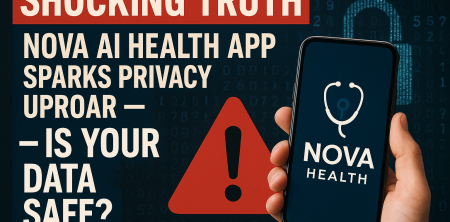
When a global pop sensation like Nova announces a new venture, the world usually stops and listens. Her influence is undeniable, her reach astronomical, and her brand, until now, seemingly unblemished. So, when she unveiled her highly anticipated AI-powered wellness application, 'AuraSync,' just yesterday, the buzz was, predictably, deafening. Promising nothing short of hyper-personalized fitness and nutrition plans, all driven by advanced artificial intelligence, it sounded like the dream solution for anyone looking to optimize their health journey. Yet, before the initial hype could even fully settle, a very different kind of buzz began to emerge – one laced with alarm, skepticism, and a growing sense of betrayal.
It turns out that beneath the sleek interface and celebrity endorsement, the Nova AI health app, AuraSync, is facing intense scrutiny from the very people dedicated to protecting our digital lives: cybersecurity and privacy advocates. These aren't just a few disgruntled users; we're talking about established experts and institutions sounding a serious alarm. This rapid shift from widespread excitement to fervent concern has ignited a fierce debate across social media and beyond, forcing us all to confront a critical question: how much personal data are we truly willing to trade for technological convenience, especially when it comes to something as intimate as our health?
The AuraSync Promise: A Glimpse into the Future of Wellness
Let's be fair, the concept behind AuraSync is incredibly appealing. Imagine an app that doesn't just offer generic workout routines or diet tips, but truly understands your body, your habits, and your unique needs. That's the vision Nova and her team presented. The allure of an AI capable of crafting bespoke plans, adapting in real-time to your progress, mood, and even your location, feels like a leap into the future of personal health management. For years, we've been told that data is the new oil, and in the context of personalized wellness, it certainly feels like it could fuel unprecedented advancements. For more on this, see privacy concerns in the lawsuit.
The marketing for the Nova AI health app emphasized its 'sync' capabilities – hence the name AuraSync – suggesting a seamless integration into every facet of a user's life. Think about it: an AI that could potentially learn your sleep patterns from your smartwatch, correlate them with your daily caloric intake logged in the app, track your gym sessions via GPS, and then suggest a perfectly tailored recovery meal, all while considering your stress levels based on biometric data. It sounds revolutionary, doesn't it? For many, the promise of such a comprehensive, intelligent health companion was enough to overlook any potential downsides, at least initially. The idea of having a digital guru, endorsed by a figure as aspirational as Nova, was simply too tempting to resist.
The Alarms Begin to Ring: Experts Speak Out
However, the enthusiasm was quickly tempered by the sobering voices of cybersecurity and privacy experts. One of the most prominent figures to raise serious concerns is Dr. Evelyn Reed from the Digital Privacy Institute. Her institute is a highly respected authority in the field, known for its rigorous analysis of digital products and policies. Dr. Reed didn't mince words, highlighting the app's 'extensive data collection' as a primary point of concern. And when she says 'extensive,' she's not just talking about your height and weight.
Specifically, Dr. Reed and others have pointed to AuraSync's collection of 'biometric information' and 'real-time location data.' Let's unpack that for a moment. Biometric data can include anything from your heart rate and respiration patterns to your gait, facial recognition data, or even fingerprint scans if the app integrates deeply enough with device hardware. Real-time location, as the name suggests, means the app knows exactly where you are, all the time. This isn't just about knowing you're at the gym; it's about knowing where you live, where you work, where you commute, and every stop in between. This kind of granular data, when combined, paints an incredibly detailed and intimate picture of your life, far beyond what most people might expect from a fitness app. The Nova AI health app, it seems, wants to know *everything*.
Understanding the Data Demands of AI
It's important to understand *why* an AI-powered app like AuraSync might demand such a vast ocean of personal data. Artificial intelligence, particularly the kind designed for personalization, thrives on data. The more information it has about you, the better it can, theoretically, tailor its recommendations. If the AI is to truly understand your individual metabolic rate, your stress response, your sleep cycles, and your activity levels, it needs a continuous stream of relevant inputs. This often includes data points that might seem innocuous on their own but become incredibly powerful when aggregated and analyzed by sophisticated algorithms.
For instance, to generate a truly 'hyper-personalized' nutrition plan, the AI might process data about your eating habits (logged meals), activity levels (step counts, workout intensity), sleep quality (from connected devices), and even stress indicators (heart rate variability). To recommend a running route, it needs your location. To adjust your workout based on your recovery, it might need biometric markers of fatigue. So, while the data collection seems intrusive, from a purely technical standpoint, it's often presented as necessary for the AI to deliver on its promise. The challenge, of course, lies in balancing this technical necessity with fundamental human rights to privacy, a balance the Nova AI health app appears to be struggling with.
The Opaque Policies: What Happens to Your Data?
Beyond the sheer volume of data being collected, another major red flag raised by privacy experts concerns the Nova AI health app's 'opaque data sharing policies.' This is where things gets truly murky. It's one thing for an app to collect data for its internal functions; it's an entirely different, and often more problematic, issue when that data is shared with third parties. 'Opaque' here means that the terms and conditions, or the privacy policy, are either incredibly vague, buried in legalese, or simply don't clearly state who gets access to your highly sensitive personal and health information.
Think about it: could your biometric data be shared with insurance companies? Could your real-time location be sold to advertisers? What about your dietary habits being anonymized (or not-so-anonymized) and used for market research? Without clear, explicit, and easily understandable language, users are essentially signing away their data rights without truly knowing the implications. This lack of transparency is a critical point of contention, as it undermines trust and leaves users vulnerable to potential misuse of their most private information. The Digital Privacy Institute, through Dr. Reed, has specifically called out this lack of clarity, demanding greater accountability from AuraSync's developers. (See: CDC on privacy and health data.)
The Celebrity Factor: Betrayal and Trust
The controversy surrounding the Nova AI health app has been amplified dramatically by Nova's celebrity endorsement. For millions of fans, Nova isn't just an entertainer; she's a role model, an aspirational figure. Her endorsement carries immense weight, fostering a sense of trust and legitimacy that a lesser-known app might struggle to achieve. When privacy concerns emerge with an app backed by such a beloved figure, it can feel like a profound betrayal.
Social media has become a hotbed of discussion, with many users expressing their disappointment and anger. Comments range from 'I trusted Nova, how could she let this happen?' to 'Is my health data just another product to sell?' This emotional response is entirely understandable. When we invest our trust in a public figure, we expect them to uphold certain standards, especially when it comes to products that delve into something as personal as our health. The perception that Nova might have prioritized profit or innovation over her fans' data security is a damaging blow to her brand and highlights the complex ethical responsibilities that come with celebrity endorsements in the digital age.
The Broader Debate: Innovation vs. Privacy
This whole incident with the Nova AI health app isn't just about one celebrity or one app; it's a microcosm of a much larger, ongoing debate: how do we balance the incredible potential of technological innovation, particularly in AI-driven personal health, with fundamental individual data security and privacy rights? On one hand, AI offers unprecedented opportunities to revolutionize healthcare, making it more personalized, proactive, and preventative. Imagine early detection of health issues, highly optimized treatment plans, and truly individualized wellness strategies.
On the other hand, the very data required to fuel these advancements is intensely personal. Our health data, biometric information, and location history are not just data points; they are reflections of our very being. Misuse, breaches, or even just opaque sharing of this information can have severe consequences, from targeted discrimination by insurance companies to identity theft or even more insidious forms of manipulation. The AuraSync controversy forces us to confront this tension head-on, urging developers, celebrities, and users alike to consider the ethical frameworks and regulatory guardrails needed to navigate this rapidly evolving landscape responsibly.
Protecting Your Digital Health: Practical Steps
So, what can you do if you're concerned about your digital privacy, especially in the wake of controversies like the Nova AI health app? Taking proactive steps is crucial. First and foremost, always read the privacy policy and terms of service for any app, especially those dealing with sensitive health data. Yes, it's often tedious legal jargon, but try to find the key sections on data collection, storage, and sharing. Look for clear language about who has access to your data and for what purposes.
Consider using secure VPNs (Virtual Private Networks) when accessing health apps or other sensitive online services, as they encrypt your internet connection and mask your IP address, adding an extra layer of privacy. Regularly review the app permissions on your device; many apps ask for far more access than they actually need to function. You can often revoke permissions for things like location or microphone access if you're uncomfortable. Finally, be mindful of what information you voluntarily input into these apps. If an app asks for something that feels overly intrusive and isn't clearly explained as essential, think twice before providing it. Your digital health is in your hands, literally.
The Future of Health Tech and Data Governance
The AuraSync situation serves as a stark reminder that as health technology advances, so too must our understanding of data governance and digital ethics. We're likely to see increased regulatory pressure on health tech companies to be more transparent about their data practices. Laws like GDPR in Europe and CCPA in California are just the beginning, and we can expect more comprehensive data privacy legislation globally. These regulations aim to give individuals more control over their personal data, including the right to know what data is being collected, how it's used, and the ability to request its deletion. (data privacy issues with apps)
Moreover, there's a growing call for industry standards and certifications that specifically address health data privacy in AI applications. This could involve independent audits of AI algorithms to ensure fairness and prevent bias, as well as clear, standardized privacy labels that make it easy for consumers to compare apps based on their data practices, much like nutritional labels on food. The Nova AI health app controversy, while damaging for Nova and her team, might ultimately serve as a catalyst for these much-needed reforms, pushing the entire health tech sector towards greater accountability and user-centric privacy design.
Beyond the Hype: A Call for Greater Scrutiny
Ultimately, the saga of the Nova AI health app, AuraSync, underscores a crucial lesson for all of us: never take technological promises at face value, especially when they come wrapped in celebrity glamour. The initial excitement for a cutting-edge, AI-powered wellness solution quickly gave way to genuine concern when the practical implications of its data demands were brought to light by vigilant privacy experts. This swift turn of events, fueled by Nova's massive following and the inherently sensitive nature of personal health data, has certainly become a viral story.
It’s a powerful illustration of the tightrope walk between innovation and privacy in our increasingly digital lives. While the potential of AI in health is immense and exciting, it must always be balanced with robust data security, transparent policies, and a deep respect for individual autonomy. As consumers, we have a vital role to play: to question, to scrutinize, and to demand better. Because in the end, our health data isn't just data; it's a part of us, and it deserves the highest level of protection. (See: WHO on data privacy in health.)
The Evolving Landscape of Digital Health Ethics
The Nova AI health app incident isn't an isolated case; it's a symptom of a much broader, rapidly evolving ethical landscape in digital health. Historically, medical data was siloed and protected by strict regulations like HIPAA in the United States. However, the rise of consumer-grade health apps, wearables, and direct-to-consumer genetic testing has blurred these lines. Many of these newer technologies fall outside traditional medical regulations, creating a "wild west" scenario where data collection practices vary wildly and consumer protections can be weaker. We covered AI cybersecurity threats revealed in more detail.
We're seeing a push and pull between the desire for innovative health solutions and the fundamental right to privacy. Companies argue that extensive data collection is essential for delivering highly personalized and effective services. Privacy advocates, on the other hand, contend that this often comes at the expense of user control and security. The ethical dilemma is complex: can we harness the power of AI to improve health without creating new avenues for exploitation or discrimination? This debate isn't going away; it's only becoming more central as AI becomes more integrated into our daily lives, particularly in areas as sensitive as personal health.
Case Studies: When Health Data Goes Wrong
To truly grasp the potential dangers highlighted by the AuraSync controversy, it helps to look at past incidents where health data was mishandled or misused. Remember the mental health app that shared user data with advertisers without consent? Or the period tracking apps that were found to be selling highly intimate information, including pregnancy statuses, to third parties? These aren't hypothetical fears; they are real-world examples of how sensitive health data, even seemingly innocuous details, can be exploited.
Beyond direct data selling, there's also the risk of data breaches. Even the most secure systems can be vulnerable. When health data, especially biometric or genetic information, is compromised, the consequences can be far-reaching. It's not just about identity theft; it could lead to discrimination in employment, insurance coverage, or even social stigmatization. The Nova AI health app, by collecting such a broad spectrum of personal and biometric data, places itself at the center of these potential risks, making transparent and robust security practices not just good business, but an ethical imperative.
Expert Perspectives: Beyond Dr. Reed
While Dr. Evelyn Reed's insights are crucial, the concerns around the Nova AI health app are echoed by a wider chorus of experts. Legal scholars specializing in technology law are questioning the enforceability of vague privacy policies when applied to celebrity-backed products, suggesting that the "trust factor" Nova brings might mislead users into accepting terms they wouldn't otherwise. Ethicists are debating the moral responsibility of public figures when endorsing products that handle sensitive data, arguing for a higher standard of due diligence.
Moreover, computer scientists and AI researchers are weighing in on the necessity of such extensive data collection. Many argue that while AI benefits from data, there are often privacy-preserving techniques, like federated learning or differential privacy, that can allow AI models to learn from data without directly exposing individual user information. The question then becomes: is AuraSync truly leveraging these advanced privacy-enhancing technologies, or is it simply opting for the path of least resistance by collecting as much data as possible?
The Role of Government and Regulation
The AuraSync controversy also highlights the crucial, yet often lagging, role of government and regulation. Existing privacy laws, while important, often struggle to keep pace with the rapid advancements in AI and data collection technologies. There's a growing consensus that we need more specific legislation tailored to AI in health, addressing issues like algorithmic bias, data anonymization standards, and clear accountability frameworks for data breaches.
Consider the European Union's GDPR, which has set a global benchmark for data protection. It mandates explicit consent for data collection, grants users the right to access and delete their data, and imposes hefty fines for non-compliance. While the US has state-level initiatives like CCPA, a comprehensive federal privacy law similar to GDPR for health data outside of HIPAA would significantly strengthen consumer protections. Incidents like the Nova AI health app provide strong evidence for the urgent need for such regulatory evolution. impact on cybersecurity legislation offers useful background here.
FAQ: Nova AI Health App and Data Privacy
Q1: What exactly is AuraSync, the Nova AI health app?
AuraSync is an AI-powered wellness application endorsed by global pop sensation Nova. It promises hyper-personalized fitness and nutrition plans, leveraging advanced artificial intelligence to adapt to a user's progress, mood, and location for an optimized health journey. (See: NY Times on privacy in health apps.)
Q2: Why are privacy experts concerned about AuraSync?
Privacy experts, like Dr. Evelyn Reed from the Digital Privacy Institute, are concerned about AuraSync's extensive collection of highly sensitive data, including biometric information (like heart rate, respiration patterns) and real-time location data. They also highlight the app's opaque data sharing policies, which don't clearly explain how user data is used or with whom it might be shared.
Q3: What kind of data does AuraSync reportedly collect?
Reports indicate AuraSync collects a wide range of personal data, going beyond basic fitness metrics. This includes biometric information (such as heart rate, sleep patterns, potentially even gait or facial recognition data if integrated), real-time location data, dietary habits, activity levels, and stress indicators.
Q4: How does Nova's endorsement impact the controversy?
Nova's celebrity endorsement significantly amplifies the controversy. Many fans trust Nova and her brand, making the privacy concerns feel like a betrayal. Her endorsement lends an air of legitimacy to the app, potentially leading users to overlook privacy warnings they might otherwise heed. This raises ethical questions about celebrity responsibility in promoting products handling sensitive data.
Q5: What are the potential risks of sharing sensitive health data with apps like AuraSync?
The potential risks include targeted discrimination by insurance companies based on health profiles, identity theft if personal data is breached, and the sale of intimate health information to advertisers or other third parties without explicit user knowledge or consent. There's also the broader concern of losing control over deeply personal information.
Q6: What can users do to protect their privacy when using health apps?
Users can take several proactive steps: carefully read privacy policies and terms of service, especially sections on data collection and sharing; review and adjust app permissions on their devices; be selective about the information they voluntarily input; consider using secure VPNs; and stay informed about privacy news and regulatory changes in health tech.
Q7: What is the broader implication of the AuraSync situation for health tech?
The AuraSync situation underscores the ongoing tension between technological innovation and individual privacy rights in digital health. It highlights the need for stronger data governance, more transparent data practices from tech companies, increased regulatory oversight (like more comprehensive data privacy laws), and a greater emphasis on ethical AI design that incorporates privacy-preserving techniques.
Q8: Are there regulations in place to protect health data in consumer apps?
While strict regulations like HIPAA (Health Insurance Portability and Accountability Act) protect data handled by healthcare providers in the US, many consumer-grade health apps, including some AI wellness apps, can fall outside these traditional medical regulations. This creates gaps in protection, though new state-level laws like CCPA and international regulations like GDPR offer broader data privacy rights that can apply to these apps.
Trending Now
- this guide on the brutal truth about ai in education: it’s exposing our system’s biggest flaws
- this guide on the crucial hr software you need to master paid family leave in 2026
- this guide on this game-changing act could finally revolutionize support for new parents
- Shocking Truth: Why America’s Paid Leave System Is Failing Parents
- our breakdown of why your child’s ai tutor choice in 2026 could be a game-changer
Frequently Asked Questions
Is the Nova AI health app AuraSync safe to use?
The safety of the Nova AI health app, AuraSync, has come under scrutiny from cybersecurity and privacy advocates. Concerns revolve around how much personal data users must share and the potential risks associated with data privacy in health applications.
What are the privacy concerns with AuraSync?
Privacy concerns regarding AuraSync include the collection and handling of sensitive personal health data. Experts warn that users may unknowingly trade their privacy for the convenience of hyper-personalized fitness and nutrition plans offered by the app.
What features does the AuraSync app offer?
AuraSync promises hyper-personalized fitness and nutrition plans powered by AI. It aims to understand users' unique needs, adapting in real-time based on their progress, mood, and location, making it a potentially revolutionary tool for health management.
How does AuraSync use personal data?
AuraSync utilizes personal data to create tailored fitness and nutrition plans. This data-driven approach aims to enhance user experience, but it raises significant concerns about privacy and data security, prompting a debate on the balance between convenience and privacy.
What are experts saying about the AuraSync app?
Experts and privacy advocates have expressed serious concerns about AuraSync, highlighting the risks of data sharing and the implications for user privacy. Their warnings have sparked a broader conversation about the trade-offs between technological convenience and personal data safety.
What's your take on this? Share your thoughts in the comments below — we read every one.

