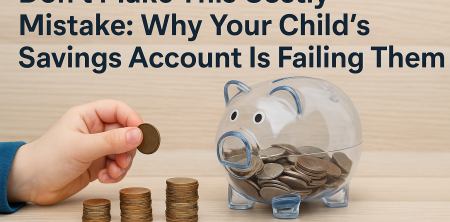
It's a perplexing paradox, isn't it? We live in an age brimming with more financial tools, apps, and digital banking options than ever before. Yet, despite this technological bounty, a recent Wealth Enhancement survey from August 2026 dropped a bit of a bombshell: over half of American parents and grandparents are convinced that today's kids are actually *less* prepared to manage money than earlier generations. That's a pretty stark finding, and it really hits home for me as an educator. It highlights a gaping chasm between simply having access to financial resources and truly understanding how to wield them responsibly.
Parents often tell me their biggest struggles when it comes to teaching kids about money. They worry about impulse purchases, the inability to budget, a lack of understanding about how money is actually earned, and, crucially, the lost art of consistent saving. This isn't just about pocket money; it's about setting a foundation for lifelong financial health. And that's where the age-old debate of custodial investment accounts vs traditional savings accounts comes into play. Which path offers the better vehicle for your child's financial journey? Let's break it down.
1. Traditional Savings Accounts: The Familiar Starting Line
For most of us, a traditional savings account is our first introduction to banking. It's safe, predictable, and pretty straightforward. You deposit money, it sits there, and you earn a tiny bit of interest. For a child, especially a younger one, this simplicity can be a real asset. It teaches the fundamental concept of saving: putting money aside instead of spending it immediately. The physical act of going to the bank, depositing a birthday check, and seeing the balance grow (even if slowly) can be a powerful, tangible lesson.
These accounts are typically FDIC-insured, meaning your money is protected up to $250,000 per depositor, per bank, in case the bank fails. This offers a level of security that's hard to beat, particularly for funds you absolutely can't afford to lose. They're also incredibly accessible; most banks offer accounts specifically for minors, often requiring a parent or guardian as a joint owner until the child reaches the age of majority. This joint ownership means parents retain control and oversight, which can be comforting.
2. Custodial Investment Accounts (UGMA/UTMA): Beyond Basic Saving
Now, let's talk about custodial investment accounts. These are often referred to as UGMA (Uniform Gift to Minors Act) or UTMA (Uniform Transfers to Minors Act) accounts, and they represent a significant step up from a basic savings account. Instead of just holding cash, these accounts allow you to invest on behalf of a minor. We're talking stocks, bonds, mutual funds, ETFs – a whole world of potential growth that cash in a savings account simply can't offer.
The key here is the 'custodial' aspect. You, as the parent or guardian, are the custodian. You manage the investments, but the assets legally belong to the child. This is a crucial distinction from a traditional savings account where you might be a joint owner. With a UGMA/UTMA, the funds are an irrevocable gift to the minor. Once money goes in, it's theirs, though you control it until they reach the age of majority, which is typically 18 or 21, depending on your state.
3. The Power of Compounding: An Investment Account's Secret Weapon
One of the most compelling arguments for custodial investment accounts vs traditional savings accounts, especially when considering a child's long-term financial future, is the power of compounding. Albert Einstein supposedly called compound interest the eighth wonder of the world, and for good reason. When you invest money, not only do your initial contributions grow, but the earnings from those contributions also start earning returns. Over decades, this can lead to truly exponential growth.
Think about it: a dollar invested today for a newborn has 18 to 21 years to grow before they even access it, and potentially many more years if they keep it invested. A traditional savings account offers minimal interest, barely keeping pace with inflation, if at all. An investment account, while carrying risk, offers the potential for significantly higher returns, allowing that money to work much harder for your child's future, whether it's for college, a first home, or starting a business.
4. Teaching Financial Literacy: More Than Just Deposits
While a savings account teaches the discipline of saving, a custodial investment account opens the door to a much broader financial education. As the custodian, you have the opportunity to involve your child (age-appropriately, of course) in understanding how investments work. You can explain what a stock is, how companies earn money, why diversified portfolios are important, and the concept of risk versus reward. This hands-on, real-world learning can be far more impactful than abstract lessons.
Imagine showing your teenager a graph of their investment portfolio's performance, explaining market fluctuations, or discussing why you chose certain funds. These aren't just theoretical concepts; they're directly tied to money that is *theirs*. This kind of engagement can foster a deeper understanding of economic principles and responsible money management, addressing some of those parental concerns about kids being less money-ready.
5. Tax Implications: A Key Differentiator in Custodial Investment Accounts vs Traditional Savings Accounts
The tax treatment of these two account types is another significant point of comparison. For traditional savings accounts, any interest earned is taxable income to the account holder (or joint holder). While the interest rates are typically so low that the tax burden is minimal, it's still income.
With UGMA/UTMA accounts, the tax rules are a bit more nuanced. The 'kiddie tax' rules apply, meaning a certain amount of unearned income (like investment gains) for a child is tax-free. For 2023, the first $1,250 of a child's unearned income is tax-free, and the next $1,250 is taxed at the child's tax rate. Any unearned income above $2,500 is taxed at the parents' marginal tax rate. This can offer a tax advantage compared to the parents holding the investments in their own names, as some of the gains are taxed at potentially lower rates. However, it's important to consult with a tax professional, as these rules can be complex and change. (See: financial literacy resources from CDC.)
6. Control and Age of Majority: The Irrevocable Gift
Here's where the rubber really meets the road for many parents debating custodial investment accounts vs traditional savings accounts. With a traditional savings account, if you're a joint owner, you generally maintain control over the funds indefinitely or until you decide to remove yourself from the account. You can withdraw money if needed (though it's generally not advisable to dip into a child's savings unless absolutely necessary).
UGMA/UTMA accounts are different. As mentioned, the money is an irrevocable gift. Once the child reaches the age of majority (18 or 21, depending on the state), they gain full, unrestricted control of the assets. This means they can use the money for anything they want – college, a car, a lavish trip, or even something less prudent. There's no parental veto power once they hit that age. This can be a significant concern for parents who worry their child might not be mature enough to handle a substantial sum of money responsibly at that age, especially given the survey findings about financial preparedness. For more context, see transitioning to higher education.
7. Impact on Financial Aid: A College Planning Consideration
For families planning on their child attending college and potentially needing financial aid, the type of account matters. Assets held in a traditional savings account, if jointly owned with a parent, are generally assessed at the parent's asset rate (typically 5.64% in the FAFSA calculation). Assets held directly in the child's name, including UGMA/UTMA accounts, are assessed at a much higher rate (typically 20%).
This means that a substantial UGMA/UTMA account could significantly reduce the amount of need-based financial aid your child qualifies for. If college funding is a primary goal, and you anticipate needing financial aid, this is a critical factor to weigh. Alternatives like 529 college savings plans, which are designed specifically for education expenses and are typically assessed at the parent's asset rate, might be a more suitable option if college is the main objective.
8. When a Traditional Savings Account Shines: Short-Term Goals and Young Children
Despite the long-term growth potential of investment accounts, there are definitely scenarios where a traditional savings account is the superior choice. For very young children, say under 8 or 10, the abstract nature of investments might be too complex. A savings account provides a concrete, easy-to-understand way to grasp basic financial concepts like saving for a toy, understanding interest (even if it's minimal), and seeing a balance grow.
It's also ideal for short-term savings goals. If your child is saving for something specific they want to buy in the next year or two – a new bicycle, a game console, a special trip – the volatility of the stock market makes an investment account a poor choice. You don't want the value of their savings to suddenly drop right before they're ready to make their purchase. A savings account offers stability and guaranteed principal, making it perfect for these immediate or near-term objectives.
9. When Custodial Investment Accounts Take the Lead: Long-Term Growth and Financial Education
For parents looking to truly build wealth for their child's distant future – think college, a down payment on a house, or a nest egg for their adult life – custodial investment accounts are generally the clear winner in the custodial investment accounts vs traditional savings accounts debate. The extended time horizon allows investments to weather market fluctuations and capitalize on the power of compounding.
Furthermore, if your goal is to provide a robust financial education that goes beyond basic saving, an investment account offers unparalleled teaching opportunities. It's a living, breathing example of how capital markets work, how businesses grow, and how patience and long-term thinking can lead to significant rewards. For parents who are comfortable with market risk and want to empower their children with a deeper understanding of investing, a UGMA/UTMA can be an invaluable tool.
10. A Hybrid Approach and the Role of Financial Education: The Best of Both Worlds?
Sometimes, the best solution isn't an either/or but a 'both/and.' Many families find success by utilizing both a traditional savings account and a custodial investment account. A savings account can be used for shorter-term goals and as a practical tool for younger children to learn basic saving habits. Meanwhile, a custodial investment account can be established early on, perhaps with gifts from grandparents or a portion of allowance, specifically for long-term growth.
Ultimately, no matter which account type you choose, the most crucial element is the ongoing financial education you provide. The survey's findings are a stark reminder that tools alone aren't enough. We, as parents and educators, have a responsibility to bridge that gap. We need to actively teach budgeting, the value of earning money, the dangers of impulse spending, and the profound benefits of long-term planning. Whether it's through regular conversations, engaging with financial literacy apps, or even involving them in family budgeting decisions, our active participation is what truly prepares them for financial independence. It's not just about the money in the account; it's about the knowledge and habits they develop along the way.
11. Exploring Alternatives: Beyond UGMA/UTMA and Savings Accounts
While we've focused on custodial investment accounts vs traditional savings accounts, it's worth noting that these aren't the only options for saving for a child's future. The financial landscape is quite diverse, offering specialized accounts that might better suit specific goals or family situations.
529 College Savings Plans
As briefly mentioned, 529 plans are specifically designed for education expenses. Contributions grow tax-free, and withdrawals are also tax-free if used for qualified education expenses. This includes tuition, fees, books, supplies, and even room and board for college. Some states also offer tax deductions or credits for contributions. Unlike UGMA/UTMA accounts, the parent maintains control over the funds, and they have a more favorable impact on financial aid calculations because they are considered a parental asset, not a child's. This control means you can change the beneficiary or even reclaim the funds (though non-qualified withdrawals are subject to taxes and a penalty). This flexibility is a huge plus for many families.
Roth IRAs for Minors
If your child earns income from a job (think babysitting, mowing lawns, or a part-time job), they can contribute to a Roth IRA. The maximum contribution is either their earned income for the year or the annual IRS limit (which was $6,500 for 2023), whichever is less. The incredible benefit here is that contributions grow tax-free, and qualified withdrawals in retirement are also tax-free. While the primary purpose is retirement, children can withdraw their contributions (not earnings) tax- and penalty-free at any time for any reason. After five years, earnings can be withdrawn penalty-free for qualified education expenses or a first-time home purchase (up to $10,000). This offers an amazing head start on retirement savings and a flexible pool of money for other major life events, all while teaching about the power of tax-advantaged growth. (See: importance of teaching kids financial literacy.)
Custodial Roth IRAs
Similar to a regular Roth IRA, but established by a parent or guardian for a minor. The same rules about earned income apply. This is an often-overlooked gem because of its dual benefits: long-term tax-free growth for retirement and the flexibility to access contributions for other needs. It truly gives a child a massive advantage by starting to save for retirement decades earlier than most people.
12. The Behavioral Economics of Saving: Making it Stick
It's not just about which account you pick; it's about how you encourage consistent saving and investing. Behavioral economics offers some fascinating insights into making good financial habits stick. For kids, this often means making it visible, tangible, and rewarding.
Gamification
Turning saving into a game can be incredibly effective. Many apps now allow children to set goals, track progress, and earn virtual rewards for reaching milestones. This immediate feedback loop can be more engaging than simply seeing a number on a bank statement. For more context, see health and mental health.
Matching Contributions
Just like employers match 401(k) contributions, parents can match their child's savings. If a child saves $10, the parent matches it with $5 or $10. This dramatically accelerates their progress towards a goal and reinforces the idea that saving leads to greater wealth. It's a powerful incentive that teaches leverage.
Visual Aids
For younger children, a clear jar or a visual chart where they can see their money accumulate or mark off progress towards a goal can be far more impactful than a digital balance. The tangible growth makes the abstract concept of saving real.
Involving Them in Decisions
As kids get older, involving them in investment decisions for their custodial account (age-appropriately, of course) can be a profound learning experience. Researching companies, understanding market trends, and seeing how their choices play out gives them ownership and a deeper understanding of financial markets. It's one thing to be told about diversification; it's another to help choose different types of funds for your own portfolio.
13. The Role of Technology in Financial Literacy for Kids
Today's kids are digital natives, and leveraging technology can be a powerful way to teach financial literacy. Many apps are specifically designed for children and teenagers to help them manage money, track spending, and even invest small amounts.
Budgeting Apps
Apps like Greenlight, FamZoo, or even simplified versions of adult budgeting tools can help kids visualize their income, expenses, and savings goals. They can categorize spending, set budgets for different areas (entertainment, clothes), and see where their money goes. This practical application of budgeting is far more engaging than just talking about it.
Simulated Investing Platforms
Before diving into a real custodial investment account, consider using a simulated investing platform. Many brokerage firms and educational websites offer paper trading accounts where kids can practice buying and selling stocks with fake money. This allows them to experience market volatility and the impact of their decisions without any real financial risk, building confidence and understanding.
Online Banking for Minors
Many banks now offer online portals for minor accounts, allowing children (with parental oversight) to check balances, transfer money between savings goals, and track transactions. This familiarizes them with the digital tools they'll use as adults and demystifies banking.
14. Expert Perspectives: Educators and Financial Planners Weigh In
As an educator myself, I've seen firsthand the impact of early financial education. The consensus among financial literacy advocates and planners is clear: start early, make it experiential, and tailor the approach to the child's age and understanding.
Financial planners often emphasize the irreversible nature of UGMA/UTMA accounts as both a strength and a potential weakness. It's a strength because it truly commits funds to the child's future, preventing parents from dipping into it. It's a weakness if the child is not mature enough at the age of majority. This is why the active education piece is so vital. It's not just about the money; it's about raising a financially responsible adult who can handle that money wisely. For more context, see finding part-time work.
Educators often highlight the importance of connecting financial concepts to real-world experiences. Allowance tied to chores, saving for a specific item, or even participating in family budget discussions are all mini-lessons in economics. The goal isn't to turn every child into a stock market guru, but to equip them with the foundational knowledge and habits to make informed decisions throughout their lives.
Frequently Asked Questions About Custodial Investment Accounts vs Traditional Savings Accounts
Q1: Can I open both a traditional savings account and a custodial investment account for my child?
Absolutely, and many financial experts recommend a hybrid approach. A traditional savings account is excellent for younger children learning basic saving and for short-term goals. A custodial investment account can be established for long-term growth and more advanced financial education.
Q2: What's the main difference between a UGMA and a UTMA account?
The core difference lies in the types of assets they can hold. UGMA accounts are generally limited to cash, securities (stocks, bonds, mutual funds), and insurance policies. UTMA accounts are broader and can hold almost any type of property, including real estate, art, and even intellectual property. Most brokerages primarily offer UGMA accounts for simplicity, but it's worth checking state-specific rules.
Q3: What happens if my child isn't financially responsible when they reach the age of majority?
This is a valid concern for many parents. Unfortunately, with UGMA/UTMA accounts, once your child reaches the age of majority (18 or 21, depending on your state), they gain full control of the assets, and you have no legal say over how they use the money. This underscores the critical importance of continuous financial education throughout their childhood and adolescence. If this is a major concern, alternatives like a 529 plan (where you retain control) or a trust (which offers more tailored control, but is more complex and costly to set up) might be more suitable.
Q4: Are there minimum contribution requirements for these accounts?
For traditional savings accounts, minimums are usually very low, sometimes just a few dollars to open. For custodial investment accounts, minimums can vary widely by brokerage. Some robo-advisors or online brokerages might have low or no minimums, while others might require $500 or $1,000 to start. Many allow for recurring small contributions, which is a great way to build up the account over time.
Q5: How do I choose between a 529 plan and a UGMA/UTMA account for college savings?
If college is the *primary* goal, and you anticipate needing financial aid, a 529 plan is generally preferred because it has a lower impact on financial aid calculations and offers tax-free growth and withdrawals for education. You also retain control. A UGMA/UTMA account offers more flexibility in how the money can be used (not just education) but has a higher impact on financial aid and transfers control to the child at the age of majority. For a blend, some families use both: a 529 for the bulk of college savings and a UGMA/UTMA for other life goals or a portion of college expenses.
Q6: Can grandparents or other family members contribute to these accounts?
Yes! This is one of the great benefits. Anyone can contribute to a traditional savings account, a UGMA/UTMA, or a 529 plan. For UGMA/UTMA accounts and 529 plans, gifts are generally considered gifts to the minor, and annual gift tax exclusions apply (e.g., $17,000 per donor per recipient in 2023). This is a fantastic way for extended family to contribute to a child's financial future.
Q7: What kind of investments should I consider for a custodial investment account?
Since these accounts are typically for long-term growth, a diversified portfolio of low-cost index funds or ETFs is often recommended. These offer broad market exposure and can be less volatile than individual stocks. As the child gets closer to the age of majority, you might consider gradually shifting to more conservative investments to protect the accumulated gains. However, this is where consulting a financial advisor can be incredibly helpful to tailor an investment strategy to your specific goals and risk tolerance.
Trending Now
Frequently Asked Questions
What is the best savings account for children?
Traditional savings accounts are often considered the best starting point for children. They provide a safe and straightforward way to learn about saving money, as they are FDIC-insured and allow kids to see their savings grow over time.
Why are kids today less prepared to manage money?
A survey indicated that many parents believe children today are less prepared to manage money due to a lack of financial education and experience. Despite access to modern financial tools, the foundational understanding of money management is often missing.
What is the difference between custodial accounts and traditional savings accounts?
Custodial accounts are managed by an adult for a minor and typically offer investment options, while traditional savings accounts are straightforward and focus on saving with minimal risk. Each serves different purposes in a child's financial education.
How can parents teach kids about saving money?
Parents can teach kids about saving by encouraging them to use traditional savings accounts, where they can deposit money and watch their savings grow. Involving them in budgeting discussions and setting savings goals can also enhance their understanding.
What are the benefits of a traditional savings account for children?
Traditional savings accounts offer safety, simplicity, and a tangible way for children to learn about saving. They are FDIC-insured, which adds a layer of security, and help instill the habit of saving money for future needs.
Have you experienced this yourself? We'd love to hear your story in the comments.

