```html
This Unprecedented Wave of Youth Protests in India Is Reshaping Education's Future
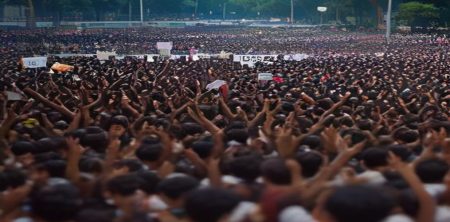
When we think of social movements, often our minds conjure images of university students or seasoned activists taking to the streets, articulating complex political demands. But in India, something truly distinctive is unfolding. We're witnessing a burgeoning wave of youth protests in India, not just from college campuses, but from an even younger demographic: schoolchildren. These aren't abstract policy debates; these children are demanding fundamental rights that many of us take for granted – a safe, functional place to learn. Their campaign has quickly gone viral, fueled by raw, unfiltered photos and videos that lay bare the shocking reality of deteriorating government school facilities across the nation.
This isn't just another news story; it’s a powerful narrative that intertwines the undeniable force of youth activism with the stark realities of education inequality. The visual evidence, spreading like wildfire across social media platforms, creates an urgent public conversation. Are governments truly failing basic education infrastructure? What does it say about a society when its youngest citizens must resort to protest just to access clean water, working toilets, or a classroom that isn't falling apart? This movement is more than just a cry for help; it's a powerful indictment and a potential catalyst for long-overdue change.
The Unvarnished Truth: What Sparked This Outcry?
The genesis of this current wave of youth protests in India is rooted in the abysmal conditions plaguing many government-run schools. For years, reports have surfaced about crumbling infrastructure, lack of basic amenities, and an overall neglect that leaves millions of children learning in environments that are, frankly, hazardous. Imagine a classroom where the roof leaks incessantly, forcing students to huddle under umbrellas during monsoons. Picture a school without functioning toilets, compelling young girls to drop out due to a lack of privacy and dignity. Envision a learning space devoid of clean drinking water, where children risk illness every day just by attending.
These aren't isolated incidents; they are widespread realities. The tipping point seems to have arrived as students, empowered by mobile phones and social media, began documenting their daily struggles. It started with individual complaints, then small groups, and now it's coalescing into a nationwide movement. The sheer volume of visual evidence – a broken window here, a flooded classroom there, a wall with gaping holes – creates an undeniable picture of systemic failure. This isn't theoretical; it's tangible, immediate, and profoundly impactful, particularly because it's being presented by the very individuals suffering most.
Beyond the Classroom: The Broader Implications of Education Inequality
The conditions sparking these youth protests in India extend far beyond just uncomfortable learning environments. Education inequality in India is a deep, structural issue that has profound long-term consequences for individuals and the nation as a whole. When children in government schools are denied basic facilities, it's not just an inconvenience; it's a direct impediment to their ability to learn, thrive, and ultimately, break cycles of poverty.
Think about it: how can a child concentrate on algebra when they're worried about the roof collapsing? How can they absorb a history lesson if they're constantly thirsty or need to relieve themselves without a proper facility? This lack of basic infrastructure directly impacts attendance, retention rates, and academic performance. It widens the chasm between those who can afford private education and those who rely on the state, perpetuating a two-tiered system where opportunities are dictated by socio-economic status. This isn't just about school buildings; it's about the fundamental right to an equitable future. See also social media and mental health.
The Power of the Image: How Visuals Ignite Action
What makes this particular iteration of youth protests in India so potent and rapidly spreading is its highly visual nature. In an era dominated by social media, a picture truly is worth a thousand words, and a short video clip can galvanize millions. Students are not just complaining; they are showing the world precisely what they endure. Imagine seeing a photo of a young child studying under a tarp because their classroom roof has caved in. Or a video of students attempting to cross a muddy, unpaved path to reach their school after heavy rains.
These images bypass lengthy reports and abstract statistics, hitting viewers with an immediate, emotional impact. They are undeniable evidence, difficult for authorities to dismiss or downplay. The authenticity of these student-generated visuals fosters a strong sense of empathy and urgency among the public, making it harder for the issue to be ignored. This direct, unfiltered documentation is the engine driving the viral spread of this campaign, compelling people to share, discuss, and demand accountability.
A New Generation of Activists: Why Youth Are Leading the Charge
It’s fascinating, isn't it, to see schoolchildren become the vanguard of such a critical movement? This isn't entirely new, as youth have historically played pivotal roles in social change, but the scale and focus of these particular youth protests in India are noteworthy. What compels these young people to speak up?
Part of it is sheer necessity. They are the ones directly experiencing these deplorable conditions, so the motivation is intensely personal. But it's also a testament to a generation that has grown up with immediate access to information and communication tools. They understand the power of collective action, even if it starts with a single shared photo. Furthermore, there's a growing awareness among young Indians about their rights and the responsibility of the state to provide quality public services. They aren't just passive recipients of education; they are active stakeholders demanding what is rightfully theirs. This generation isn't waiting for adults to fix things; they're taking matters into their own hands, with an unprecedented level of digital savvy. (See: Adolescent health and education.)
Government Response: Promises, Politics, and Potholes
Whenever significant youth protests in India emerge, particularly on issues as fundamental as education, the government's response becomes a focal point. Historically, initial reactions can range from dismissive to defensive, sometimes followed by promises of action. In this instance, the widespread visual evidence makes it particularly challenging for authorities to simply ignore the complaints.
We've seen various patterns: some local officials might quickly address immediate, highly visible problems to quell public outrage. State governments might announce new infrastructure projects or allocate funds for repairs. However, the real challenge lies in systemic change. Will these be band-aid solutions, or will they signify a genuine commitment to overhauling education infrastructure nationwide? The political landscape in India is complex, and resource allocation often becomes entangled with competing priorities and bureaucratic hurdles. The true test will be whether these promises translate into sustained, tangible improvements that reach even the most remote and underserved schools, or if they're simply temporary appeasements until the next wave of protests inevitably rises.
Beyond the Headlines: The Role of NGOs and EdTech
While the youth protests in India are rightfully drawing attention to government shortcomings, it's also worth acknowledging the broader ecosystem working towards improving education. Non-governmental organizations (NGOs) have long played a crucial role, often stepping in where the state has faltered. They provide everything from supplemental learning materials and teacher training to direct infrastructure support, building new facilities or renovating existing ones in underserved areas. Their work is often critical in providing a safety net for students in dire conditions.
Furthermore, the rise of educational technology (EdTech) presents a fascinating dimension. While EdTech can't fix a collapsing roof, it can offer alternative learning pathways and supplementary resources, especially for students whose physical schools are inadequate. Imagine a child whose school lacks basic science labs, but can access virtual experiments through a tablet. This isn't a replacement for robust physical infrastructure, but it highlights how innovation can mitigate some of the learning gaps created by poor facilities. The challenge, of course, is ensuring equitable access to these technologies, as the digital divide remains a significant barrier for many of the same students affected by poor school infrastructure. (impact of social media limits)
Comparing the Current Wave to Past Youth Movements
India has a rich history of student and youth activism, from its role in the independence movement to various socio-political upheavals. However, these current youth protests in India exhibit some distinct characteristics. Unlike the protests of the 1970s, which were often centered around political corruption or unemployment and led by university students, this movement is driven by a younger demographic focused on fundamental educational rights.
The tools and tactics are also markedly different. While past movements relied on traditional forms of protest – rallies, sit-ins, and pamphlets – this new wave leverages digital platforms for rapid dissemination and mobilization. The immediacy and visual nature of social media give it a different kind of power and reach. Furthermore, the issue itself, while seemingly basic, cuts across class and caste lines in a way that some previous movements, which might have been more regionally or ideologically specific, did not. The universal appeal of a child's right to a safe school taps into a deep societal concern that resonates broadly.
What Happens Next? Sustaining the Momentum for Change
The critical question now is how this momentum can be sustained. Protests, by their nature, often create a surge of attention, but lasting change requires more. For these youth protests in India to truly transform the educational landscape, several elements will be crucial. First, continued documentation and advocacy are essential. The viral images need to keep flowing, reminding the public and politicians that the problem hasn't magically disappeared.
Second, the movement needs to translate online visibility into organized, on-the-ground action. This could involve parents, community leaders, and civil society organizations joining forces with the students to pressure local and state governments. Third, there needs to be a clear articulation of demands, moving beyond simply highlighting problems to proposing concrete, actionable solutions for infrastructure upgrades, maintenance, and accountability mechanisms. Finally, the role of media, both traditional and digital, will be paramount in keeping this issue in the public consciousness, ensuring that these young voices are not just heard, but acted upon. This isn't just a fleeting moment; it's a profound opportunity for India to re-evaluate its commitment to its youngest citizens and their future.
The Economic Toll of Neglected Education Infrastructure
When we talk about crumbling schools and absent facilities, it's easy to focus on the immediate humanitarian crisis. But let's also consider the substantial economic impact of this neglect. The lack of proper education infrastructure isn't just a social issue; it's a significant drag on India's economic potential. A poorly educated populace translates directly into a less skilled workforce. Children who drop out because of unsafe or unsanitary conditions are less likely to secure stable, well-paying jobs, contributing to cycles of intergenerational poverty.
Economists often point to human capital as a key driver of growth. When a nation underinvests in its human capital – especially its youngest citizens – it's essentially hamstringing its future productivity. Studies from organizations like the World Bank consistently show a strong correlation between educational attainment and economic prosperity. India, with its vast youth population, has a demographic dividend that could propel it to new economic heights. However, if these millions of young people aren't receiving a foundational education in a conducive environment, that dividend quickly turns into a liability. The cost of renovating every dilapidated school, while significant, pales in comparison to the long-term economic losses incurred by a generation denied quality education. It's an investment with guaranteed returns, not just a charitable act. (See: Youth protests in India.)
Expert Perspectives: What Educators and Sociologists Say
To really grasp the depth of this issue, it's helpful to hear from those who spend their lives studying education and society. Many leading educators in India have been vocal about the systemic issues for years. They often highlight the disproportionate impact on marginalized communities, where government schools are often the only option. Sociologists, meanwhile, point to the widening gap between urban and rural education, and between public and private institutions, as a critical factor in social stratification.
One prominent education policy expert, Professor Anita Sharma, recently noted, "These protests aren't just about toilets or leaky roofs. They're a cry for dignity, for equal opportunity, and for the recognition that every child, regardless of their background, deserves a fighting chance. When children themselves are demanding these basics, it reflects a deep-seated failure of the state to uphold fundamental rights." Another sociologist, Dr. Rajesh Kumar, emphasized the psychological impact: "Learning in a decrepit environment tells a child they are not valued. It erodes self-esteem and ambition, making it harder for them to envision a brighter future. The protests are a reclamation of that self-worth." These insights underscore that the problem isn't superficial; it's deeply ingrained in the fabric of Indian society and its education system.
Case Studies: Glimmers of Hope and Persistent Challenges
While the overall picture painted by the youth protests in India is grim, it's important to recognize that there are pockets of success and dedicated efforts making a difference. For example, in certain states, local communities, often supported by NGOs, have taken it upon themselves to adopt and renovate government schools. We've seen instances where village elders, parents, and even former students have pooled resources, labor, and expertise to repair classrooms, build new sanitation facilities, and ensure access to clean water. These community-led initiatives, while not a substitute for state responsibility, demonstrate the immense power of collective local action.
However, these successes are often localized and struggle to scale. The challenge lies in replicating such efforts nationwide, especially in regions lacking strong community leadership or external support. Moreover, even a beautifully renovated school building needs qualified teachers, adequate learning materials, and consistent funding for maintenance. A shiny new coat of paint doesn't solve the deeper pedagogical issues or the problem of teacher absenteeism, which are also critical concerns in India's public education system. The protests are highlighting the infrastructure, but this is just one piece of a much larger, complex puzzle that includes teacher training, curriculum development, and administrative accountability. We covered teen social media concerns in more detail.
The Role of International Bodies and Global Comparisons
India's education challenges, while unique in their scale, aren't entirely isolated. Many developing nations grapple with similar issues of inadequate school infrastructure and education inequality. International organizations like UNICEF, UNESCO, and the World Bank have long been involved in advocating for and supporting educational improvements in India. They often publish reports, provide funding, and offer technical expertise aimed at strengthening education systems.
For instance, global data from UNESCO often highlights how critical basic infrastructure like separate, functional toilets for girls is to school enrollment and retention, particularly in rural areas. India can also learn from other countries that have successfully transformed their public education systems. Nations like Finland and Singapore, for example, are often cited for their strong commitment to public education, including excellent infrastructure, well-trained teachers, and equitable access regardless of socio-economic background. While direct replication might not be feasible given India's unique context, their underlying principles of prioritizing education, investing heavily, and fostering a culture of excellence offer valuable lessons. The youth protests in India serve as a stark reminder that the country is still far from meeting these global benchmarks for quality education.
A Deeper Look at Accountability Mechanisms
One of the most frustrating aspects for citizens, and certainly for the protesting students, is the perceived lack of accountability when it comes to education infrastructure. Who is responsible when a school roof collapses or when funds allocated for repairs simply disappear? This is where the issue gets particularly thorny.
India has a multi-layered governance system, with education being a concurrent subject, meaning both central and state governments have a role. Funds are allocated, but their utilization and oversight can be opaque. Bureaucratic delays, corruption, and a lack of transparency often hinder effective implementation. The youth protests are, in essence, demanding greater accountability from all levels of government – from the local panchayat (village council) that oversees a specific school to the state education department and even the central government that sets national policies and allocates major funds. Establishing clear grievance redressal mechanisms, conducting regular independent audits of school infrastructure, and empowering local communities with greater oversight could be crucial steps. Without robust accountability, promises of reform often remain just that – promises.
FAQ: Understanding Youth Protests in India
Q1: What exactly are the youth protests in India about?
A1: These protests are primarily driven by schoolchildren and young students demanding fundamental improvements in government school infrastructure. They're calling for basic amenities like safe buildings, functioning toilets, clean drinking water, and overall hygienic and conducive learning environments, highlighting the widespread neglect of public education facilities across the nation. (See: CDC on youth health and education.)
Q2: Why is this wave of protests considered "unprecedented"?
A2: It's unprecedented because it's largely led by a younger demographic – schoolchildren – rather than just university students or established activist groups. Also, its rapid spread and impact are fueled by the immediate, visual evidence shared directly by students on social media, making the scale and reach of their message unique.
Q3: How are students organizing and spreading their message?
A3: Students are leveraging mobile phones and social media platforms extensively. They're documenting the deplorable conditions in their schools through photos and videos, sharing them online, and using hashtags to amplify their voices. This digital activism is quickly garnering national and even international attention.
Q4: What are the main issues with government school infrastructure?
A4: The issues are wide-ranging and include crumbling classroom walls, leaky roofs, lack of functional toilets (especially separate ones for girls), absence of clean drinking water, insufficient ventilation, unsafe electrical wiring, and a general state of disrepair that makes learning environments hazardous and undignified. Related reading: new research on adolescent well-being.
Q5: What are the long-term consequences of this education inequality?
A5: The long-term consequences are severe. They include lower attendance and retention rates, poor academic performance, widening disparities between rich and poor, increased dropout rates, limited opportunities for higher education and employment, and ultimately, a less skilled workforce, hindering national development and perpetuating cycles of poverty.
Q6: How has the government responded to these protests?
A6: Government responses have varied. Some local authorities have quickly addressed immediate issues in specific schools. State governments have sometimes announced infrastructure projects or allocated funds. However, critics argue that these are often temporary fixes, and a comprehensive, systemic overhaul of education infrastructure and accountability mechanisms is still largely awaited.
Q7: Can NGOs and EdTech solve the problem?
A7: NGOs play a crucial role by providing support, resources, and sometimes directly renovating schools, offering a safety net where the state fails. EdTech can offer alternative learning pathways and supplementary resources. However, neither can fully replace robust, well-maintained physical infrastructure and a fully functional public education system provided by the state. They are complementary, not substitutes.
Q8: What can ordinary citizens do to support the movement?
A8: Citizens can support by sharing the students' stories and visuals, raising awareness, engaging in local community efforts to improve schools, demanding accountability from their elected representatives, and advocating for increased government investment in public education infrastructure and maintenance.
```
Trending Now
Frequently Asked Questions
What are the main demands of schoolchildren in the recent protests in India?
Schoolchildren in India are demanding better facilities in government schools, including clean water, functional toilets, and safe classrooms. Their protests highlight the dire conditions many children face in educational institutions, pushing for fundamental rights that ensure a conducive learning environment.
Why are youth protests gaining momentum in India?
Youth protests are gaining momentum in India due to widespread dissatisfaction with deteriorating education infrastructure. Schoolchildren are using social media to share their experiences, which has galvanized public support and created urgency around the need for government accountability in providing basic educational facilities.
How are social media influencing schoolchildren's protests in India?
Social media plays a crucial role in amplifying schoolchildren's protests in India by allowing them to share raw and unfiltered images and videos of their conditions. This viral content has sparked widespread public discourse and increased awareness about the urgent need for improved educational facilities.
What issues are highlighted by the youth protests in India?
The youth protests in India highlight significant issues such as crumbling school infrastructure, lack of basic amenities, and government neglect. These protests serve as a powerful indictment of the current state of education and a call for urgent reforms to ensure safe and functional learning environments for all children.
What impact could the youth protests have on India's education system?
The youth protests could potentially catalyze significant changes in India's education system by drawing attention to critical issues of infrastructure and resource allocation. As public awareness grows, there may be increased pressure on government authorities to prioritize and invest in improving school facilities and ensuring quality education.
What did we miss? Let us know in the comments and join the conversation.


0 Responses