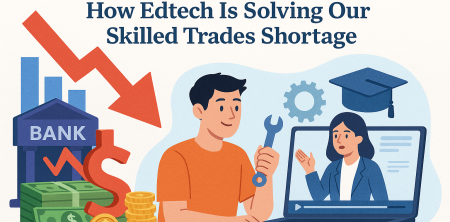
You know, for years, the narrative pushed on our young people was pretty straightforward: go to a four-year university, get a degree, and secure your future. It’s a nice thought, a tidy package. But what if I told you that this very narrative has contributed to a looming crisis, one that’s costing our economy a staggering amount of money and leaving millions of vital jobs unfilled? We’re talking about the skilled trades gap, a chasm that’s growing wider by the day, particularly in fields like HVAC, plumbing, and electrical work. By 2030, experts project we'll have about 2.1 million unfilled positions in these critical areas. That's not just a number; it's a huge problem, impacting everything from infrastructure projects to the basic services we all rely on. The good news? Edtech is stepping up, offering some truly innovative solutions for skilled trades workforce development.
This isn't just about a lack of workers; it's about a fundamental shift in how we approach education and career paths. The cost of this shortage is immense, estimated to be up to $1 trillion annually in delayed projects and higher service costs. Think about that for a moment – a trillion dollars. That's not pocket change. It means your new build takes longer, your repairs cost more, and essential services might just be harder to come by. But here's where it gets interesting: the very technology that some might argue distracts our youth is now becoming the cornerstone of a solution. Edtech, with its virtual training, simulations, and accessible platforms, is proving to be a powerful tool for rebuilding our skilled trades workforce development pipeline. It's an exciting time to be in education, watching these innovations unfold and seeing real-world problems get tackled with smart, forward-thinking approaches.
1. The Deepening Chasm: Understanding the Skilled Trades Gap
Let's be blunt: the skilled trades gap isn't some abstract economic theory; it's a very real, very tangible issue impacting communities and economies across the nation. We're talking about a deficit of hands-on workers in essential fields like plumbing, electrical work, welding, carpentry, and HVAC. These aren't just jobs; they're the backbone of our infrastructure, the people who keep our homes running, our businesses operating, and our economy moving. The projection of 2.1 million unfilled positions by 2030 isn't just a forecast; it's a warning signal that we absolutely cannot afford to ignore.
Why has this gap become so pronounced? Part of it stems from a societal push for four-year degrees as the singular path to success, often at the expense of highlighting the lucrative and stable careers available in the trades. We've seen a generation steered away from vocational training, leading to an aging workforce in these critical sectors with too few young people entering to replace them. The economic consequences are severe: projects are delayed, costs increase due to scarcity of labor, and innovation can slow down. This isn't just about individual career choices; it's about national economic health and the stability of our communities. Addressing this gap requires a multifaceted approach, and a significant part of that approach, thankfully, is emerging from the Edtech sector, driving new strategies for skilled trades workforce development.
2. The Trillion-Dollar Drain: Economic Impact of the Shortage
When we talk about a 'gap' in the workforce, it might sound like a minor inconvenience to some. But let me tell you, when that gap translates to an economic cost of up to $1 trillion annually, it's far from minor. This isn't just a number plucked from the air; it represents tangible losses: delayed construction projects, increased maintenance costs for homes and businesses, slower adoption of new technologies because there aren't enough trained professionals to install or service them, and ultimately, a drag on overall economic growth. Imagine the ripple effect when a major infrastructure project, like a new bridge or a critical data center, faces significant delays because there aren't enough skilled electricians or welders to get the job done on time.
This immense cost isn't just borne by large corporations or government entities; it trickles down to every single one of us. As a homeowner, you might find yourself waiting longer for an HVAC repair, or paying a premium for a plumber because demand far outstrips supply. Businesses struggle to expand or even maintain operations efficiently when they can't find qualified technicians. This economic drain highlights the urgency of the situation and underscores why effective skilled trades workforce development isn't just a nice-to-have; it's an absolute necessity for our collective prosperity and stability. We need to invest in solutions that rapidly train and deploy skilled workers, and Edtech is proving to be a powerful ally in this fight.
3. Industry Responds: Employers Fund the Future
It’s often said that necessity is the mother of invention, and in the face of this critical skilled trades shortage, employers are certainly getting inventive. We're seeing a significant shift where companies, once perhaps more hands-off, are now actively partnering with educational institutions and, crucially, funding training programs. This isn't just about corporate social responsibility; it's a pragmatic business decision. They understand that waiting for a solution to magically appear isn't an option when their bottom line, and frankly, their ability to operate, is directly threatened by the lack of skilled labor. (See: skills shortage in the UK.)
These partnerships take many forms: direct financial contributions to vocational schools, creation of apprenticeship programs, offering paid internships, and even developing their own in-house training academies. The goal is clear: to build a sustainable pipeline of talent that meets their specific needs. This proactive approach by employers is a game-changer for skilled trades workforce development. It ensures that training programs are aligned with current industry demands, that students gain real-world experience, and that there's a clear path from graduation to employment. It’s a symbiotic relationship, benefiting both the students seeking meaningful careers and the companies desperate for skilled hands. This direct investment signals a profound understanding of the problem and a commitment to being part of the solution.
4. Edtech's Role: Virtual Training and Simulations Take Center Stage
Here's where Edtech truly shines as a beacon of hope in the skilled trades crisis. Traditional vocational training often requires expensive equipment, large physical spaces, and a significant time commitment. While hands-on experience remains invaluable, virtual training and simulations are dramatically lowering the barriers to entry and accelerating the learning process. Imagine being able to practice complex wiring diagrams or troubleshoot a sophisticated HVAC system in a completely safe, virtual environment, making mistakes without real-world consequences, and repeating the process until mastery is achieved. This is precisely what Edtech is bringing to the table. For more context, see The Unseen Crisis: How We’re Failing Our Kids and What We Must Do Now.
Companies like Interplay Learning are at the forefront of this revolution, leveraging immersive technologies to create realistic training scenarios. Their platforms offer virtual labs and simulations that mimic real-world job sites and equipment, allowing aspiring technicians to develop critical skills, build confidence, and gain a deep understanding of trade principles. This isn't just about passively watching a video; it's about active engagement, problem-solving, and practical application, all without the need for physical equipment that might be costly or in limited supply. This approach is not only cost-effective but also incredibly scalable, making it possible to train far more individuals in a shorter amount of time, a crucial factor in addressing the urgent need for skilled trades workforce development.
5. America's Mission Critical Workforce: A Case Study
Let's look at a concrete example of how this is playing out. Interplay Learning's 'America's Mission Critical Workforce' initiative is a prime illustration of Edtech's power to address specific, high-demand areas within the skilled trades. This program focuses particularly on preparing workers for the rapidly expanding data center industry. If you think about it, data centers are the nervous system of our digital world, and they require a highly specialized workforce to build, maintain, and operate them. We're talking about complex electrical systems, sophisticated cooling technologies, and intricate network infrastructure – all areas where skilled technicians are in incredibly high demand.
The initiative utilizes virtual reality (VR) and 3D simulations to train individuals in these highly technical roles. This means future data center technicians can learn to diagnose and repair critical equipment, understand complex schematics, and even practice safety protocols in a simulated environment before ever stepping foot in a live facility. This targeted approach is brilliant because it addresses a very specific and rapidly growing need, providing a clear pathway to high-paying jobs in a sector that's only going to expand. It's a fantastic example of how Edtech, through focused programs, can significantly impact skilled trades workforce development by aligning training directly with critical industry needs.
6. High-Earning Paths Beyond the Traditional Degree
One of the most important aspects of tackling the skilled trades gap, and something that Edtech platforms effectively highlight, is the incredible career potential that doesn't necessarily involve a four-year university degree. For too long, there's been a societal bias suggesting that a bachelor's degree is the only route to a successful, high-earning career. This simply isn't true, and it's a narrative we desperately need to change if we're serious about skilled trades workforce development.
Many skilled trades offer excellent wages, strong benefits, and genuine job security. Plumbers, electricians, HVAC technicians, and welders can easily earn salaries comparable to, or even exceeding, those of many college graduates, often without accumulating the crippling student loan debt. The path to becoming a master in a trade often involves a combination of vocational training, apprenticeships, and certifications, which are typically far less expensive and time-consuming than a traditional four-year degree. Edtech solutions make these paths even more accessible, allowing individuals to gain foundational knowledge and practice skills from anywhere, often on their own schedule, making these high-earning careers more attainable for a broader demographic. It's about opening eyes to viable, rewarding alternatives that provide immediate value to the economy and a secure future for individuals.
7. Boosting Accessibility: Training for Everyone, Everywhere
The beauty of Edtech, particularly in the context of skilled trades workforce development, lies in its inherent accessibility. Think about the traditional model: you need to live near a vocational school, fit into their fixed schedule, and often have access to transportation. For many, especially those in rural areas, individuals with family responsibilities, or those already working to make ends meet, these requirements can be insurmountable barriers. Edtech shatters these barriers. (See: importance of vocational training.)
With virtual training platforms, all you really need is an internet connection and a device. This means someone in a remote town can access the same high-quality training as someone in a major city. It means a parent can learn new skills after their kids are in bed, or someone working a day job can retrain for a new career in their evenings. This flexibility and reach are absolutely critical for scaling up our skilled workforce development efforts. It democratizes access to valuable training, opening doors to careers that might have previously seemed out of reach. This isn't just about convenience; it's about equitable access to opportunity, which is a core tenet of effective education.
8. The Data Center Boom: A Specific Driver for Edtech Innovation
I mentioned data centers earlier, but it's worth drilling down on just how significant this sector is for driving Edtech innovation in skilled trades workforce development. We are living in an increasingly digital world, and every click, every stream, every online transaction relies on these massive, energy-hungry facilities. The demand for data storage and processing is exploding, meaning new data centers are being built at an unprecedented rate, and existing ones are constantly being upgraded and expanded. This isn't a temporary trend; it's a foundational shift in our infrastructure. For more context, see Trump administration guts data collection on US education as math and reading scores plummet.
Each of these data centers requires a specialized army of technicians: HVAC specialists to manage the immense heat generated by servers, electricians to handle the colossal power demands, network technicians to ensure seamless connectivity, and general maintenance staff to keep everything running smoothly. The specific, high-stakes nature of this work makes it an ideal candidate for virtual training. Mistakes in a data center can be incredibly costly, leading to downtime that impacts millions. Therefore, the ability to practice complex procedures and troubleshoot issues in a simulated, risk-free environment, as offered by Edtech, is not just beneficial but essential. This boom is compelling Edtech providers to create highly tailored, sophisticated training modules, pushing the boundaries of what virtual learning can achieve for the trades.
9. Future-Proofing Careers: Adapting to Evolving Technologies
The skilled trades aren't static; they're constantly evolving with new technologies, materials, and regulations. Think about the shift to smart home systems, energy-efficient HVAC units, or advanced electrical grids. Workers in these fields need to continually update their skills to remain competitive and effective. This is another area where Edtech provides an indispensable advantage for skilled trades workforce development. Traditional professional development can be time-consuming and expensive, often requiring travel to workshops or seminars.
Edtech platforms, however, can deliver continuous, on-demand training modules that address the latest industry advancements. A plumber can quickly learn about new water-saving technologies, an electrician can get up to speed on solar panel installation, or an HVAC technician can master the intricacies of a new smart thermostat system, all from their tablet or computer. This ability to rapidly disseminate updated information and provide interactive practice for new techniques ensures that the skilled workforce remains agile and adaptable. It’s about building careers that aren’t just about today’s needs, but are truly future-proof, equipped to handle whatever technological advancements come next. This adaptability is key to maintaining a robust and relevant skilled trades sector for decades to come.
10. Government Initiatives and Policy Support
It's not just employers and Edtech companies recognizing the urgency; governments at federal, state, and local levels are also stepping up with initiatives and policy support for skilled trades workforce development. They understand that a robust skilled workforce is critical for economic stability, national security, and even global competitiveness. We're seeing an increase in funding for vocational programs, tax incentives for companies offering apprenticeships, and streamlined certification processes.
For example, some states are implementing "free tuition" programs for community colleges focusing on trades, while the federal government has increased grants for workforce development programs. These policies often work in tandem with Edtech solutions, providing the financial backing and regulatory frameworks that allow innovative training methods to thrive. The aim is to make trade careers more appealing and accessible by reducing financial barriers and ensuring clear pathways to employment. This multi-pronged approach, combining private sector innovation with public sector support, is absolutely essential for creating the kind of systemic change needed to truly close the skilled trades gap. (See: impact of labor shortages.)
11. Bridging the Generational Divide: Attracting Younger Talent
One of the biggest hurdles in skilled trades workforce development has been the generational gap. Many seasoned tradespeople are nearing retirement, and for a long time, there wasn't enough younger talent lining up to replace them. The perception of trades as "dirty" or "low-tech" careers, unfortunately, stuck for too long. Edtech is playing a crucial role in changing this narrative and attracting a new generation.
Young people today are digital natives; they grew up with screens, simulations, and interactive experiences. Edtech platforms speak their language. When they see a VR simulation that allows them to "build" a complex electrical circuit or "repair" a virtual engine, it immediately feels more engaging and relevant than a dusty textbook. This interactive, gamified approach can spark interest and demonstrate the sophisticated, problem-solving nature of modern trades. It helps shift the perception from manual labor to highly skilled, technologically advanced professions. By leveraging tools that resonate with younger demographics, Edtech is proving to be an effective bridge, drawing fresh talent into these vital careers and ensuring the future of our skilled workforce.
12. The Role of AI and Predictive Analytics in Training
Beyond simulations, the next frontier for Edtech in skilled trades workforce development involves leveraging artificial intelligence (AI) and predictive analytics. Imagine a training program that not only teaches you but also learns from you, adapting its curriculum to your specific strengths and weaknesses. That's where AI comes in.
AI-powered platforms can analyze a learner's performance in simulations, identify areas where they struggle, and then recommend personalized exercises or modules to target those specific gaps. This kind of adaptive learning ensures that every minute of training is optimized for the individual, making the learning process far more efficient and effective. Predictive analytics can even go a step further, identifying which learners might be at risk of dropping out or struggling with certain concepts, allowing instructors to intervene early. This tailored approach isn't just about faster learning; it's about deeper understanding and higher retention rates, ultimately producing more competent and confident tradespeople. It's a game-changer for how we approach vocational education, moving away from one-size-fits-all models to highly personalized, data-driven instruction.
The skilled trades gap is a formidable challenge, but the innovative spirit of Edtech is providing some truly powerful solutions. From virtual simulations that teach complex skills to employer-funded programs creating direct pathways to employment, we're seeing a genuine transformation in how we approach skilled trades workforce development. It’s not just about filling jobs; it’s about recognizing the incredible value and potential in these careers, making them accessible to a broader audience, and ensuring our economy has the skilled hands it needs to thrive. This isn't just a temporary fix; it's a long-term investment in our collective future.
Trending Now
- this guide on the brutal truth about your child’s meltdowns: it’s not misbehavior, it’s their brain
- The Unseen Crisis: How We’re Failing…
- this guide on tom brady’s ‘screw these kids up’ stance: 10 uncomfortable truths about modern parenting
Frequently Asked Questions
What is causing the skilled trades shortage?
The skilled trades shortage is primarily caused by the traditional narrative that encourages young people to pursue four-year degrees, which has led to a decline in interest in vocational training. This shift has resulted in millions of unfilled positions in critical fields like HVAC, plumbing, and electrical work, contributing to a growing skills gap.
How does edtech help with the skilled trades shortage?
Edtech addresses the skilled trades shortage by providing innovative solutions like virtual training, simulations, and accessible online platforms. These technologies make vocational education more engaging and effective, helping to attract and train a new generation of skilled workers, thus rebuilding the workforce pipeline.
What are the economic impacts of the skilled trades gap?
The skilled trades gap has significant economic impacts, costing the economy an estimated $1 trillion annually. This includes delays in infrastructure projects, increased service costs, and challenges in accessing essential services, which all stem from the shortage of skilled workers in vital trades.
What industries are most affected by the skilled trades shortage?
Industries most affected by the skilled trades shortage include construction, HVAC, plumbing, and electrical work. These sectors are experiencing a growing number of unfilled positions, which hampers project timelines and increases costs for consumers and businesses alike.
What is the projected number of unfilled skilled trades jobs by 2030?
By 2030, experts project that there will be approximately 2.1 million unfilled skilled trades jobs. This alarming statistic highlights the urgent need for effective workforce development strategies to address the growing skills gap in essential areas.
Have you experienced this yourself? We'd love to hear your story in the comments.

