```html
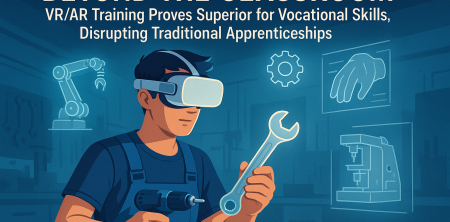
When we talk about the future of education, it's easy to get caught up in the abstract — personalized learning paths, AI tutors, and the like. But what if I told you that one of the most significant revolutions happening right now isn't in some distant theoretical realm, but right down in the trenches of vocational training? We're talking about virtual reality (VR) and augmented reality (AR), and they are absolutely disrupting traditional apprenticeship models in ways that are, frankly, astonishing. This isn't just about making learning 'cooler'; it's about making it demonstrably better, more efficient, and more accessible. The data coming out of pilot programs is compelling enough to make any educator, employer, or policymaker sit up and take notice. VR training for vocational skills is proving to be a game-changer, offering an immersive, repeatable, and often safer environment for mastering complex, hands-on trades.
For years, the gold standard in vocational education has been the apprenticeship: learning by doing, under the watchful eye of a seasoned expert. It's a method steeped in history, proven over centuries. But even the best traditions have their limits, especially in a world that demands speed, scalability, and safety. This is where VR and AR step in, not to replace the human element entirely, but to supercharge it. These technologies are providing cost-effective alternatives that lead to significantly better performance and, crucially, higher employment rates. Imagine a world where trainees can practice high-stakes procedures hundreds of times without risk, without wasting expensive materials, and without needing a physical mentor present for every single repetition. That world is here, and it's powered by VR training for vocational skills.
1. The Unquestionable Performance Leap: More Than Just a Simulation
Let's cut right to the chase with some hard numbers, because that's what truly grabs attention. A pilot study, which really needs to be replicated on a larger scale to confirm these findings widely, reported something quite extraordinary: students undergoing VR training performed a staggering 75% better than their counterparts in traditional programs. Think about that for a moment. Seventy-five percent! We're not talking about a marginal improvement; we're talking about a monumental leap in skill acquisition and proficiency. This isn't just a win for the students; it's a win for the industries they enter, the employers who hire them, and ultimately, the economy as a whole. Better-trained workers mean higher productivity, fewer errors, and a more robust workforce.
What's behind this dramatic performance difference? It’s not magic, it’s immersion. VR environments allow trainees to focus entirely on the task at hand, free from real-world distractions or the pressure of making costly mistakes on actual equipment. They can practice intricate maneuvers, troubleshoot complex systems, and refine their techniques in a consequence-free zone. This iterative practice, combined with immediate feedback often built into VR simulations, creates a learning loop that accelerates mastery far beyond what's typically possible in traditional settings. When you can fail safely and learn instantly from that failure, your progress skyrockets. This is the core advantage of VR training for vocational skills.
2. The Employment Advantage: A Direct Path to the Workforce
The success stories don't stop at just better performance; they extend directly into employment. That same pilot study, which showed a 75% performance increase, also reported a 100% employment rate for its VR-trained graduates. Now, again, we're talking about a pilot, so we need to be careful about extrapolating too broadly. But if these kinds of results can be replicated, even partially, it speaks volumes about the efficacy of VR training for vocational skills. In an era where vocational schools often face scrutiny over graduate job placement rates, a 100% employment figure is nothing short of revolutionary. It suggests that these programs aren't just teaching skills; they're teaching job-ready skills that employers desperately need.
Why would VR trainees be so much more employable? My hypothesis is multi-faceted. First, the depth of practical experience gained in a VR environment, even if simulated, translates directly to real-world competence. Employers aren't just getting someone who knows the theory; they're getting someone who has 'done' the work, albeit virtually, hundreds of times. Second, these trainees are often quicker to adapt to new technologies, given their comfort with VR, making them more agile and valuable in a rapidly evolving industrial landscape. Finally, the sheer confidence that comes from mastering tasks in a safe, repeatable virtual environment likely makes them more assertive and capable during job interviews and on the job itself. It's a virtuous cycle that begins with effective VR training for vocational skills.
3. Safety First: Mastering High-Risk Trades Without the Danger
One of the most immediate and undeniable benefits of VR training for vocational skills lies in its ability to simulate high-risk environments safely. Think about welding, construction, or even certain aspects of healthcare. These are fields where a single mistake can lead to severe injury, costly damage, or even loss of life. Traditional training often involves supervised practice on real equipment, which, while necessary, carries inherent risks and requires significant safety protocols. VR eliminates much of that risk.
Trainees can practice intricate welding seams, operate heavy machinery, or perform delicate surgical procedures in a virtual world where mistakes have no real-world consequences. This allows for fearless experimentation and repetition, which are crucial for true mastery. Imagine a construction worker learning to operate a crane in VR; they can practice countless lifts, navigate complex building sites, and even simulate equipment failures without ever endangering themselves or others. This not only makes training safer but also accelerates the learning curve by removing the psychological barrier of fear that often accompanies real-world high-risk tasks. It's a win-win for both the trainee and the employer.
4. Cost Reduction: Saving Big on Materials and Equipment
Beyond safety, the economic advantages of VR training for vocational skills are substantial. Traditional vocational training, especially in trades like welding, automotive repair, or advanced manufacturing, often requires significant investment in materials, tools, and specialized equipment. Consumables like welding rods, sheet metal, and even diagnostic tools can add up quickly, especially when trainees are still in the early stages of learning and making frequent mistakes. VR dramatically cuts these costs. (See: Virtual reality training in education.)
In a virtual environment, welding rods are infinite, sheet metal is always pristine, and expensive engine parts can be disassembled and reassembled countless times without wear or breakage. This allows for extensive, uninhibited practice that would be prohibitively expensive in the real world. Think of the savings for schools and training centers, and how those savings can be reinvested into other areas, or even passed on to students in the form of lower tuition. This cost-effectiveness makes high-quality vocational training more accessible and scalable, democratizing access to valuable skills. It's a smart investment for any institution looking to optimize its vocational programs. For more context, see the importance of college education.
5. Skill Retention: Making Knowledge Stick for the Long Haul
It's one thing to learn a skill; it's another to retain it, especially complex procedural knowledge that isn't used every day. Traditional methods often rely on rote memorization or limited practical application, which can lead to rapid skill degradation if not constantly reinforced. VR training for vocational skills, however, seems to offer a more robust solution for long-term retention.
The immersive nature of VR creates stronger neural pathways. When you're actively engaged in a realistic simulation, using your hands, making decisions, and seeing immediate visual and auditory feedback, your brain processes and stores that information more effectively. It's not just abstract knowledge; it's experiential learning. This means trainees are more likely to remember how to perform a task months or even years down the line, reducing the need for costly refresher training and ensuring a more consistently competent workforce. The 'muscle memory' developed in VR translates surprisingly well to real-world tasks, making skills more ingrained and resilient over time.
6. Repeatable & Standardized Training: Ensuring Consistency Across the Board
One of the quiet challenges of traditional apprenticeship models is the inherent variability. The quality of training can depend heavily on the specific mentor, their teaching style, and even the projects they're working on. While invaluable, this variability can lead to inconsistencies in skill sets across graduates. VR training for vocational skills offers a powerful antidote to this.
With VR, every trainee can experience the exact same high-quality training scenario, regardless of location, time of day, or the availability of a specific expert. This standardization ensures that everyone meets a consistent benchmark of competence. Moreover, these simulations can be repeated endlessly. Need to practice a tricky pipe fitting fifty times? Go for it. Want to perfect a complex diagnostic procedure? No problem. This unlimited, consistent repetition is a luxury that traditional training simply cannot afford, and it’s a major factor in the superior performance we're seeing. It means every graduate leaves with a baseline of proficiency that is reliably high.
7. Accessibility and Scalability: Reaching More Learners, Faster
Traditional vocational training often faces significant barriers to entry: limited physical space, expensive equipment, and a scarcity of qualified instructors. These factors restrict the number of students who can be trained at any given time and often confine programs to specific geographic locations. VR training for vocational skills completely upends these limitations.
A VR headset and a compatible program can turn almost any space into a fully equipped training facility. This means vocational schools can enroll more students without needing to expand their physical footprint or buy duplicate sets of expensive machinery. Furthermore, training can be delivered remotely, opening up opportunities for individuals in rural areas or those with mobility challenges who might otherwise be unable to access specialized instruction. Imagine a future where a vocational student in a remote town can receive the same world-class welding instruction as someone in a major industrial hub, all through their VR headset. This scalability is crucial for addressing skilled labor shortages and making quality education available to a much broader population.
8. Real-Time Feedback and Analytics: Precision Learning for Every Trainee
One of the most powerful pedagogical features of VR training for vocational skills is the ability to provide immediate, granular feedback and collect detailed performance analytics. In a traditional setting, an instructor can observe a trainee, but their feedback is inherently subjective and limited by their own capacity to monitor multiple variables simultaneously. VR, however, can track every movement, every decision, and every error with pinpoint accuracy.
Imagine a welding simulation that not only tells you if your weld was good or bad but shows you precisely where your angle was off, your travel speed was inconsistent, or your arc length was incorrect. This kind of precise, objective feedback allows trainees to understand exactly what went wrong and how to correct it, accelerating the learning process. Moreover, the data collected can be used by instructors to identify common weaknesses across a cohort, tailor personalized learning paths, and even refine the training modules themselves. This data-driven approach moves vocational education into an entirely new era of efficiency and effectiveness.
9. Engagement and Motivation: Making Learning Exciting Again
Let's be honest: some aspects of vocational training, while essential, can be a bit dry or repetitive. Maintaining trainee engagement and motivation over long periods is a constant challenge for educators. This is another area where VR training for vocational skills truly shines. The immersive and interactive nature of VR inherently makes learning more exciting and engaging. (See: Impact of AR and VR in vocational training.)
Stepping into a virtual environment feels less like 'school' and more like an interactive experience or even a game. This heightened engagement leads to better focus, increased persistence, and a deeper desire to master the skills presented. When learning feels fun and challenging in a positive way, students are more likely to invest their time and energy, leading to better outcomes. This isn't just about entertainment; it's about harnessing the power of intrinsic motivation to drive superior educational results. For the current generation of learners who grew up with digital interfaces, VR feels intuitive and natural, making the transition to complex vocational skills smoother and more enjoyable. For more context, see ditching traditional schools.
10. The Future of Apprenticeships: Blending Tradition with Innovation
It's important to clarify that VR training for vocational skills isn't necessarily about completely replacing traditional apprenticeships. Instead, it's about augmenting and enhancing them, creating a hybrid model that leverages the best of both worlds. Imagine a future where the initial, high-risk, and repetitive skill acquisition happens largely in VR, allowing apprentices to arrive at their real-world placements with a solid foundation of practical competence.
This approach would allow traditional mentors to focus on higher-level problem-solving, nuanced decision-making, and the invaluable soft skills that can only be taught through real-world interaction and mentorship. It could dramatically shorten the time it takes for an apprentice to become truly productive, reduce the burden on experienced tradespeople, and ultimately produce a more well-rounded and capable workforce. The disruption isn't an outright overthrow; it's an evolution, a powerful technological infusion that promises to elevate vocational training to unprecedented levels of effectiveness and accessibility. We're on the cusp of a true revolution in how we prepare individuals for the skilled trades, and VR is leading the charge.
11. Navigating Challenges and Overcoming Hurdles: The Road Ahead for VR in Vocational Training
While the benefits of VR training for vocational skills are crystal clear, it's not all smooth sailing. Implementing VR on a wide scale comes with its own set of challenges that we need to be realistic about. One major hurdle is the initial investment in hardware and software. High-quality VR headsets and sophisticated simulation programs aren't cheap, and scaling this up for an entire student body can be a significant financial undertaking for vocational schools, especially those with tighter budgets. We're also talking about the need for technical expertise to set up, maintain, and troubleshoot these systems. Schools might need to hire new staff or provide extensive training to existing IT personnel.
Another challenge is the development of truly effective and realistic VR content. A mediocre VR simulation won't deliver the same performance gains as a well-designed one. This requires collaboration between educators, industry experts, and VR developers to ensure the simulations are accurate, pedagogically sound, and reflect real-world working conditions. We also need to consider the potential for "motion sickness" in some users, though this is becoming less common with advancements in VR technology. Finally, there's the human element: getting both instructors and students to embrace a new way of learning. Change can be uncomfortable, and successful adoption will require thoughtful integration strategies and clear communication about the benefits. These are not insurmountable obstacles, but they do require strategic planning and investment to overcome.
12. Case Studies and Real-World Examples: Where VR is Already Making a Difference
It's one thing to talk about the theoretical advantages; it's another to see VR training for vocational skills in action. Companies and educational institutions are already demonstrating its power across various sectors. For instance, Walmart has deployed VR training for its employees across thousands of stores, covering everything from customer service scenarios to preparing for Black Friday rushes. While not strictly vocational in the traditional sense, it shows the power of VR for large-scale, standardized skill development. In the medical field, institutions like Stanford University are using VR to train surgeons on complex procedures, allowing them to practice in a risk-free environment before ever touching a real patient. This significantly reduces surgical errors and improves patient outcomes.
In the skilled trades, companies like Transfr VR are creating modules for welding, advanced manufacturing, and even truck driving. Their simulations allow trainees to experience the sights, sounds, and physical demands of these jobs, building muscle memory and decision-making skills in a controlled environment. For example, a VR welding simulator can provide haptic feedback, mimicking the vibrations of a real weld, and visual cues that show exactly how the weld bead is forming. These tangible examples prove that VR isn't just a gimmick; it's a practical, impactful tool that's already reshaping how we teach and learn vocational skills. The results from these early adopters are creating a blueprint for wider implementation.
13. The Role of Augmented Reality (AR): Enhancing, Not Just Simulating
While VR offers full immersion, we shouldn't forget about its cousin, Augmented Reality (AR), which plays a complementary but equally powerful role in vocational training. Unlike VR, which transports you to a completely virtual world, AR overlays digital information onto your real-world view. Think of it as enhancing your reality rather than replacing it. For vocational skills, AR can be incredibly useful for on-the-job training and real-time assistance. For more context, see AI in education. (See: Virtual reality in occupational training.)
Imagine a mechanic wearing AR glasses that display a digital overlay of an engine, highlighting specific parts for repair, providing step-by-step instructions, or even showing real-time diagnostic data. Or a construction worker using AR to visualize a building's blueprints directly on the construction site, ensuring accurate placement of components. AR can provide context-aware information, guiding trainees through complex tasks in their actual work environment. This blended approach, combining immersive VR for initial skill acquisition and AR for practical application and support, offers a comprehensive training solution that bridges the gap between simulated practice and real-world performance. It allows for performance support exactly when and where it's needed, making workers more efficient and reducing errors in the field.
Frequently Asked Questions About VR Training for Vocational Skills
Q1: Is VR training suitable for all vocational skills?
While VR is incredibly versatile, it's most impactful for vocational skills that involve complex manual dexterity, require understanding of spatial relationships, or are performed in high-risk environments. Think welding, operating heavy machinery, medical procedures, or intricate assembly tasks. For skills that are primarily cognitive or involve extensive interpersonal interaction, VR might play a supporting role rather than being the primary training method.
Q2: How expensive is it to implement VR training programs?
The cost can vary significantly. It depends on the number of headsets needed, the complexity of the simulations, and whether you're developing custom content or using off-the-shelf solutions. Initial investment can be substantial, but the long-term savings on materials, equipment wear, safety incidents, and improved trainee performance often justify the cost. Many providers also offer subscription models or scalable solutions to help manage budgets.
Q3: How do instructors adapt to teaching with VR?
Instructors transition from being the sole source of knowledge to facilitators and coaches. They analyze the performance data from VR simulations, provide personalized feedback, and guide students through challenging scenarios. It requires a shift in pedagogy, often involving training for the instructors themselves on how to leverage VR technology effectively and integrate it into their curriculum.
Q4: Can VR training fully replace traditional apprenticeships?
No, not entirely. VR training is best seen as a powerful augmentation to traditional apprenticeships. It excels at foundational skill acquisition, safe practice of high-risk tasks, and standardized repetition. However, the nuanced social skills, problem-solving in unpredictable real-world situations, and mentorship that come from working alongside experienced professionals are still invaluable and best learned through traditional apprenticeship elements. The optimal model is a hybrid one.
Q5: What are the main challenges for VR training adoption in vocational education?
Key challenges include the initial cost of hardware and software, the development of high-quality and industry-relevant content, the need for technical support, and ensuring buy-in from both educators and students. Addressing potential motion sickness and integrating VR seamlessly into existing curricula are also important considerations.
```
Trending Now
Frequently Asked Questions
How is VR and AR changing vocational training?
VR and AR are revolutionizing vocational training by providing immersive, repeatable, and safer environments for mastering hands-on skills. These technologies enhance traditional apprenticeship models, allowing trainees to practice complex procedures without the risks associated with real-life scenarios.
What are the benefits of using VR for vocational skills training?
The benefits of using VR for vocational skills training include improved performance, higher employment rates, and cost-effectiveness. Trainees can practice high-stakes tasks repeatedly without wasting materials or needing constant supervision, making learning more efficient and accessible.
Can VR training replace traditional apprenticeships?
While VR training enhances traditional apprenticeships, it doesn't completely replace them. Instead, it complements the human element by providing additional practice opportunities and improving skill acquisition, thus making the apprenticeship process more effective.
What evidence supports the effectiveness of VR training?
Pilot programs have shown compelling data indicating that VR training leads to significantly better performance outcomes in vocational skills. Studies demonstrate that trainees using VR technologies excel in skill mastery compared to those relying solely on traditional methods.
Is VR training safe for vocational education?
Yes, VR training is considered safe for vocational education as it allows trainees to engage in high-stakes learning without the inherent risks of real-life practice. This controlled environment helps in developing skills while minimizing the potential for accidents or mistakes.
Have you experienced this yourself? We'd love to hear your story in the comments.

