```html
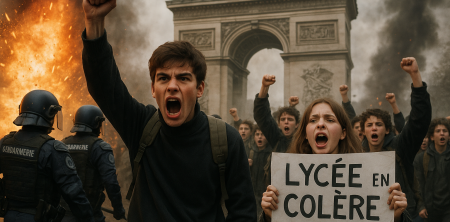
When we think of student protests, our minds often jump to university campuses, to seasoned activists debating policy and global issues. But what happens when the very foundations of learning—the high schools themselves—become the battleground? What if the grievances aren't abstract political ideologies, but the crumbling walls, the missing teachers, and the sheer impossibility of learning in overcrowded classrooms? That's precisely what ignited a national movement in France, starting in the often-overlooked, deprived suburbs of Paris, and quickly spreading across the entire country.
It's a story that escalated dramatically in early October 2026, turning education infrastructure into a potent symbol of broader societal frustrations. The images were stark: school blockades, clashes with authorities, and hundreds of young people, some barely out of their mid-teens, leading the charge. These weren't just isolated incidents; they represented a deep vein of discontent, a collective cry for attention from a system many felt had long neglected them. The initial spark, often overlooked by mainstream media, came from the high school students in Paris's 'banlieues'—the suburban areas that, despite their proximity to the capital, often feel a world away in terms of resources and opportunities. Their anger over dilapidated schools and inadequate conditions didn't just fizzle out; it became the catalyst for a national reckoning, demanding that the government address issues long swept under the rug. This wasn't just about school; it was about dignity, equity, and the future of an entire generation.
The Genesis of Discontent: Crumbling Infrastructure and Overcrowding
To truly understand the fervor behind the Paris high school protests, you've got to look beyond the headlines and into the daily realities faced by thousands of French students. Imagine trying to learn in a classroom where the paint is peeling, the heating barely works, and the ceiling looks like it might give way at any moment. This wasn't hyperbole for many; it was their everyday environment. We're talking about schools where basic maintenance had been deferred for so long that the buildings themselves became symbols of neglect.
Beyond the physical decay, there was the sheer crush of bodies. Overcrowding wasn't just an inconvenience; it was a fundamental impediment to learning. Picture 35, even 40 students crammed into a room designed for 25. How do you concentrate? How does a teacher manage to give individual attention? The answer, often, is that they can't. This isn't just about comfort; it's about pedagogical effectiveness. Studies consistently show that smaller class sizes correlate with better academic outcomes, particularly for students from disadvantaged backgrounds. When these students are instead subjected to the largest classes, the disparity only widens, creating a vicious cycle of underachievement and frustration. These issues weren't new; they were chronic, festering problems that had been discussed in hushed tones for years, but never adequately addressed by successive governments.
The Silent Crisis: Teacher Shortages and Poor Classroom Conditions
But the problems didn't stop at crumbling walls and overflowing classrooms. A critical, often less visible, aspect of the crisis fueling the Paris high school protests was the severe shortage of qualified teachers. Imagine starting a new school year, only to find out that your crucial math or science class won't have a permanent teacher for weeks, or even months. Instead, you get a string of substitutes, some unqualified, others simply struggling to keep pace in an unfamiliar environment. This instability is devastating for continuity and learning, especially in subjects that build progressively.
And when teachers were present, the conditions they faced were often just as demoralizing. Beyond the structural issues of the buildings, many classrooms lacked essential resources. Outdated textbooks, insufficient technology, and a general lack of pedagogical support made their already challenging jobs even harder. It's a tough ask to inspire students when you yourself feel unsupported and undervalued. This crisis of resources and staffing wasn't just an administrative hiccup; it was a direct assault on the quality of education being offered, particularly in the schools serving the most vulnerable communities. Students recognized this disparity; they saw that schools in more affluent areas often had better facilities, more teachers, and a wider range of opportunities. This glaring inequality only deepened their sense of injustice and fueled their collective anger.
From Local Grievances to National Outcry
What started as localized discontent in the ‘banlieues’ of Paris quickly transcended regional boundaries. The power of social media, coupled with a palpable sense of shared injustice, played a crucial role in transforming isolated complaints into a national movement. Students, initially from schools like Lycée Bergson or Lycée Saint-Exupéry in Seine-Saint-Denis, began sharing their experiences online—photos of leaking roofs, videos of overcrowded hallways, personal testimonies of classes without teachers. These raw, unfiltered accounts resonated deeply with peers across France.
It was a textbook example of how a grassroots movement can snowball. One school would blockade, and within hours, news would spread, inspiring students in other cities—Marseille, Lyon, Bordeaux—to do the same. The issues, it turned out, weren't unique to the Parisian suburbs; they were systemic problems affecting the entire French public education system. This collective realization that 'we are not alone' provided immense solidarity and momentum. What began as specific demands for better conditions at individual schools rapidly evolved into a broader call for increased educational funding, better teacher recruitment, and a fundamental re-evaluation of how France prioritizes its young people's future. The Paris high school protests became a symbol, an emblem for a wider discontent that had been simmering for years.
The Escalation: Blockades, Clashes, and Mass Detentions
As the protests gained traction, their methods became more assertive. School blockades became a common tactic, with students using barricades of bins, furniture, and even their own bodies to prevent access to campuses. The aim was clear: disrupt the status quo, force attention, and make it impossible for authorities to ignore their demands. These blockades weren't always peaceful; they often led to tense standoffs with school administrators and, increasingly, with law enforcement.
The situation reached a flashpoint in early October 2026. As blockades spread across the country, police intervention became more frequent and, in many cases, more forceful. The images that emerged were deeply unsettling: young students being physically removed from school gates, tear gas being deployed, and clashes breaking out in the streets surrounding schools. The most alarming statistic from this period was the detention of 625 people. Think about that number for a moment: six hundred and twenty-five individuals, many of them minors, arrested in connection with these protests. This mass detention didn't quell the anger; if anything, it intensified it, drawing condemnation from human rights groups and further galvanizing public support for the students. It turned a protest about school conditions into a broader debate about policing, youth activism, and the state's response to dissent. (See: BBC coverage of French protests.)
Beyond the Classrooms: Linking Student Anger to Broader Political Frustration
While the immediate triggers for the Paris high school protests were undeniably specific to education—dilapidated buildings, absent teachers, packed classrooms—the movement quickly tapped into a much deeper well of political and social frustration. For many of these young people, particularly those in the marginalized suburbs, their experiences in school were just one facet of a broader feeling of being left behind. They live in areas often characterized by higher unemployment, fewer public services, and a pervasive sense of social exclusion.
The students’ anger wasn't just about budget cuts to education; it was about years of austerity measures that had chipped away at public services across the board. It was about a perceived indifference from the central government towards the plight of their communities. They saw their schools as a microcosm of a larger societal problem, where the wealthy continued to prosper while essential services for the working class and the poor withered. This made the protests inherently political, connecting the dots between their classroom struggles and the broader economic policies being pursued by the government. When students chanted about their schools, they were also, implicitly, chanting about social justice, equality, and the future of their neighborhoods.
The Role of Social Media: Amplifying Voices and Mobilizing Action
It's hard to imagine a modern protest movement reaching national scale without the catalytic power of social media. For the Paris high school protests, platforms like X (formerly Twitter), Instagram, and TikTok weren't just tools for communication; they were essential arteries for mobilization and narrative control. Students used these channels to share real-time updates from blockades, post defiant messages, and expose instances of police brutality.
Crucially, social media allowed students to bypass traditional media gatekeepers and speak directly to each other, to parents, and to the wider public. A photo of a crumbling ceiling posted by a student in Saint-Denis could instantly be seen by a student in Marseille, fostering a sense of shared experience and solidarity. Hashtags like #LycéensEnColère (High Schoolers in Anger) or #PasDeProfPasDeCours (No Teacher No Class) became rallying cries, transforming individual grievances into a collective voice. This digital amplification was vital in sustaining momentum, organizing spontaneous actions, and ensuring that the narrative wasn't solely controlled by official sources or mainstream news outlets. It gave agency to young people who often feel voiceless, transforming their personal struggles into a powerful, visible movement.
Government Response and Public Reaction
The government's initial response to the escalating Paris high school protests was a mix of appeals for calm and stern warnings against disruption. Education Minister, Gabriel Attal, who was a prominent figure during this period, initially tried to downplay the extent of the crisis, suggesting that issues were localized and being addressed. However, as the blockades spread and the number of detentions mounted, this narrative became increasingly difficult to maintain. The sight of hundreds of students, some as young as 15 or 16, being arrested, drew significant public condemnation and put immense pressure on the authorities.
Public opinion was divided, but leaned significantly towards sympathy for the students. Many parents, teachers' unions, and civil society organizations voiced their support, arguing that the students' concerns were legitimate and long overdue for attention. The images of young people standing up for their right to a decent education resonated deeply in a country that prides itself on its public services. The government eventually had to shift its tone, promising reviews of school infrastructure, increased funding, and more robust teacher recruitment drives. However, these promises were met with skepticism by many students and activists, who demanded concrete action rather than just rhetorical assurances. The credibility gap between government pledges and lived realities remained a significant challenge.
The Long-Term Impact on French Education and Youth Activism
The Paris high school protests, while intense and at times chaotic, are likely to leave a lasting legacy on French society. For starters, they forced a national conversation about the state of public education in a way that years of reports and advocacy had failed to do. The sheer scale of the blockades and detentions made it impossible for the government or the public to ignore the systemic issues plaguing schools, particularly in deprived areas.
Beyond specific policy changes, these protests also highlighted the enduring power of youth activism. They demonstrated that young people, even those without voting rights, can be a potent force for change when they organize and articulate their grievances effectively. This movement might very well inspire future generations of students to speak out and demand accountability. It also laid bare the deep inequalities that persist within the French education system, challenging the republican ideal of equal opportunity for all. While the immediate storm may pass, the fundamental questions raised by these students—about investment in public services, equity, and the future of France's youth—will continue to reverberate. It's a stark reminder that neglecting the foundations of education isn't just an administrative oversight; it's an investment in future instability, and these students, through their passionate outcry, made that abundantly clear.
Comparing French Student Protests to Global Youth Movements
The Paris high school protests aren't an isolated phenomenon. Across the globe, young people are increasingly at the forefront of social and political change. Think about the climate strikes initiated by Greta Thunberg, or the student-led movements for gun control in the United States. What sets the French protests apart, and what common threads do they share?
One key difference lies in the specific focus. While global movements often tackle broad issues like climate change or human rights, the French high schoolers initially centered their demands squarely on tangible, immediate educational conditions. This specificity, paradoxically, made their message incredibly relatable and powerful. Everyone understands a crumbling building or an absent teacher. It's a universal symbol of neglect. However, like many youth movements, the Paris protests quickly broadened their scope, linking educational disparities to larger systemic inequalities, much like how climate strikes connect environmental justice to economic policy.
A common thread is the innovative use of digital tools. From Hong Kong's pro-democracy movement to Black Lives Matter, social media has proven indispensable for organizing, disseminating information, and shaping public perception. The French students leveraged these platforms to create a unified voice, bypassing traditional media filters and directly challenging official narratives. This digital fluency is a hallmark of modern youth activism, allowing for rapid mobilization and sustained engagement in ways previous generations couldn't dream of. (See: New York Times article on student protests.)
Another similarity is the inherent vulnerability of young activists. The mass detentions in France echo the arrests of student leaders in other countries, highlighting the risks young people take when they challenge authority. Yet, this vulnerability often galvanizes further support, turning state repression into a potent symbol of injustice that draws more people to their cause. The Paris high school protests, therefore, stand as a powerful example within a wider global trend of youth-driven resistance, demonstrating that age is no barrier to demanding a better future.
The Economic Underpinnings: Austerity, Regional Disparity, and Education Funding
Let's take a closer look at the economic forces at play. The discontent didn't emerge in a vacuum; it was a direct consequence of years of austerity policies and a shifting economic landscape that disproportionately affected specific regions and communities. France, like many European nations, has faced pressure to reduce public spending, leading to cuts across various sectors, including education. These cuts rarely fall evenly.
The 'banlieues' of Paris, where the protests began, have long struggled with underinvestment. These areas often have higher concentrations of immigrant populations and lower-income families, making them particularly susceptible to the negative impacts of reduced public services. When school budgets are tightened, it's these schools that often bear the brunt, leading to delayed maintenance, fewer resources for extracurricular activities, and less competitive salaries for teachers, making it harder to attract and retain talent.
Official statistics often reveal a stark picture. While national education budgets might appear stable, the per-student spending in deprived areas can lag significantly behind more affluent districts. This disparity isn't just about money; it translates directly into the quality of education. A school with a leaky roof might struggle to attract a top-tier science teacher, while a well-funded school can offer state-of-the-art labs. The students in the Paris high school protests were acutely aware of this economic injustice. They saw their dilapidated schools as a tangible outcome of broader economic policies that, in their view, prioritized fiscal discipline over the well-being and future prospects of an entire generation, especially those from less privileged backgrounds. This economic context is crucial for understanding the depth of their frustration.
Expert Perspectives: Sociologists, Educators, and Policy Makers Weigh In
To fully grasp the complexities of the Paris high school protests, it helps to hear from different perspectives. Sociologists often point to the concept of "social reproduction," arguing that educational inequalities perpetuate broader societal hierarchies. They'd say the crumbling schools and teacher shortages in the banlieues aren't just accidents; they're symptoms of a system that, perhaps unintentionally, reproduces disadvantage.
Educators, particularly those working in these challenging environments, often speak of a profound sense of burnout and disillusionment. They echo the students' frustrations, highlighting the daily struggles of trying to teach effectively in inadequate conditions. Many teachers' unions supported the protests, emphasizing that their calls for better resources and working conditions had gone unheeded for years. They'd tell you that the students were simply amplifying what they, the teachers, had been saying all along.
Policy makers, on the other hand, often frame these issues through the lens of budget constraints and complex administrative challenges. They might argue that addressing infrastructure takes time and significant capital investment, or that teacher shortages are a nationwide problem not easily solved. However, the intensity of the Paris high school protests forced them to acknowledge that the problem wasn't just administrative; it was deeply political and urgent. The student movement effectively shifted the debate from a technical problem to a moral imperative, compelling a more immediate and robust response than previously offered.
FAQs About the Paris High School Protests
Q1: What were the primary causes of the Paris high school protests?
The protests primarily stemmed from a combination of chronic issues within the French public education system. Students were fed up with crumbling school infrastructure, including leaky roofs, broken heating systems, and general disrepair. Additionally, severe overcrowding in classrooms and persistent teacher shortages, leading to unstaffed classes or reliance on unqualified substitutes, fueled their anger. These conditions were particularly acute in the deprived suburbs of Paris, known as the 'banlieues'.
Q2: When did the protests take place and how widespread were they?
The protests escalated dramatically in early October 2026. While they originated in the high schools of Paris's banlieues, they quickly spread nationwide. Students in major cities like Marseille, Lyon, and Bordeaux adopted similar tactics, indicating that the issues were systemic across the French public education system rather than isolated incidents.
Q3: What methods did students use to protest?
Students primarily employed school blockades, using barricades of bins, furniture, and even their own bodies to prevent access to school campuses. They also organized demonstrations and utilized social media extensively to share their experiences, mobilize peers, and spread their message. These tactics aimed to disrupt the status quo and force government attention. (See: Research on education and social movements.)
Q4: How did the authorities respond to the protests?
The government initially tried to downplay the crisis and called for calm. However, as the protests intensified and blockades became more widespread, police intervention became more frequent and forceful. This led to clashes between students and law enforcement, with reports of tear gas being deployed. A notable outcome was the mass detention of 625 people, many of whom were minors, in connection with the protests.
Q5: What was the role of social media in the protests?
Social media platforms like X (formerly Twitter), Instagram, and TikTok were crucial for the protests' success. Students used them to share real-time updates, photos of school conditions, videos of clashes, and personal testimonies. Hashtags became rallying cries, fostering solidarity, enabling rapid mobilization, and allowing students to bypass traditional media to control their own narrative and amplify their voices nationally.
Q6: Were the protests purely about education, or were there broader political motivations?
While the immediate triggers were educational, the protests quickly tapped into deeper political and social frustrations. Many students, especially those from marginalized suburbs, felt neglected by the government. Their anger over school conditions was linked to broader concerns about years of austerity measures, perceived government indifference, and systemic inequalities affecting public services, employment, and social justice in their communities.
Q7: What was the public's reaction to the Paris high school protests?
Public opinion was largely sympathetic to the students. Many parents, teachers' unions, and civil society organizations expressed strong support, viewing the students' concerns as legitimate and long overdue. The images of young people being arrested for demanding better education resonated deeply, increasing pressure on the government to address the issues.
Q8: What was the government's ultimate response?
Under significant public pressure, the government eventually shifted its tone. It promised reviews of school infrastructure, increased funding for education, and more robust teacher recruitment drives. However, these promises were often met with skepticism by students and activists, who demanded concrete action and tangible results rather than just verbal assurances.
Q9: What is the long-term impact of these protests on French education and youth activism?
The protests forced a national conversation about the state of public education in France, making it impossible to ignore systemic issues. They also showcased the enduring power of youth activism, demonstrating that young people can be a potent force for change. The movement laid bare deep inequalities within the French education system and will likely inspire future generations of students to speak out and demand accountability for their future.
Q10: How do the Paris high school protests compare to other global youth movements?
Like many global youth movements (e.g., climate strikes, gun control activism), the Paris protests effectively utilized social media for mobilization and narrative control. They share a common thread of young activists taking risks to challenge authority. However, the French protests initially distinguished themselves with a very specific focus on tangible educational conditions, before broadening to encompass wider social justice issues, a pattern seen in many successful youth-led movements.
```
Trending Now
Frequently Asked Questions
What are the reasons behind the Paris high school protests?
The Paris high school protests stem from students' frustrations over crumbling infrastructure, overcrowded classrooms, and a lack of resources. Students in the suburbs, known as 'banlieues,' feel neglected by the education system, prompting them to demand better conditions and equitable opportunities.
How many students were detained during the protests in Paris?
During the recent protests in Paris, approximately 625 students were detained. The protests escalated as students rallied against inadequate learning environments and sought to bring attention to their grievances.
What impact did the protests have on the education system in France?
The protests sparked a national movement that highlighted deep-rooted issues within the French education system. They brought attention to the need for urgent reforms to address infrastructure problems and ensure equitable access to quality education for all students.
Where did the Paris high school protests start?
The protests began in the deprived suburbs of Paris, where students faced significant challenges related to their educational environment. These areas, often referred to as 'banlieues,' served as the initial spark for a broader national movement.
What do the Paris protests signify for the future of students?
The Paris protests signify a collective cry for dignity and equity among students. They reflect a generation's demand for better educational conditions and opportunities, highlighting the need for systemic change to address longstanding issues within the education system.
Have you experienced this yourself? We'd love to hear your story in the comments.

