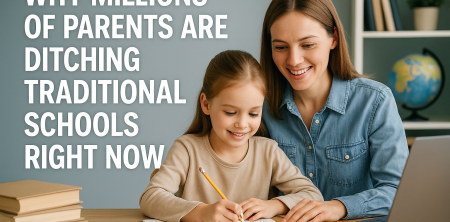
As a veteran educator, I've seen firsthand how much the landscape of schooling has shifted over the years. From my days as a K-12 teacher to my time as a Dean of Education, I've watched parents grapple with an increasingly complex set of choices when it comes to their children's learning environments. And let's be honest, the conversation around education today is more charged than ever.
We're seeing a full-blown societal debate unfolding, with initiatives like Washington State's Initiative 2081 pushing for a "Parents' Bill of Rights." This isn't just some dry policy discussion; it's deeply personal, touching on everything from curriculum transparency to a parent's fundamental right to know what's happening with their child's academic and medical records. On one side, you have parents, like many I've spoken with, who feel strongly that they have an inherent right and duty to be involved in every aspect of their child's education. They want to understand the curriculum, be notified about health services, and have a say in the technology their kids are exposed to. And frankly, who can blame them?
But then there's the other side, raising legitimate concerns about student privacy and the potential for political agendas to creep into the classroom. It's a tricky balance, and it's made even more volatile by proposed federal changes, like the FCC's review of school internet subsidies. When you combine parental worries about screen time, the impact of technology on learning, and the broader push for parental rights, it's clear why so many families are looking for alternatives to traditional schools for parents. The stakes feel incredibly high, and for many, the conventional school system just isn't cutting it anymore. So, what are the options? Let's explore some of the most compelling paths available today.
1. Homeschooling: The Ultimate Personalized Learning Environment
Homeschooling isn't a new concept, but it's experiencing a massive resurgence, especially in the wake of recent educational upheavals. For many parents, it represents the ultimate freedom and control over their child's education. When you homeschool, you become the primary educator, or you curate a team of educators and resources, tailoring every aspect of the learning experience to your child's unique needs, interests, and pace. This level of personalization is simply impossible in a traditional classroom setting, where a single teacher is often responsible for 20, 30, or even more students.
The beauty of homeschooling lies in its flexibility. You can choose from a vast array of curricula, from classical education models that emphasize logic and critical thinking to more unschooling approaches that allow learning to be driven by the child's natural curiosity. Parents can integrate real-world experiences, like museum visits, travel, or apprenticeships, directly into their educational plan. This hands-on, experiential learning often fosters a deeper understanding and appreciation for subjects than rote memorization ever could. Plus, it allows families to instill their own values and beliefs directly into the curriculum, which is a significant draw for many who feel the public school system no longer aligns with their family's ethos.
2. Private Schools: Curated Environments and Specialized Focus
For families seeking a departure from public schools but who prefer a structured, institutional setting, private schools offer a compelling alternative. These institutions typically operate independently of government funding and oversight, which allows them a great deal of autonomy in curriculum design, teaching methodologies, and even student body selection. This independence often translates into a more specialized educational experience, whether that's a focus on academic rigor, arts, sciences, religious instruction, or a particular pedagogical approach like Montessori or Waldorf.
One of the primary draws of private schools is often smaller class sizes, which can lead to more individualized attention for students. Teachers in these environments often have more freedom to innovate and delve deeper into subjects without the constraints of standardized testing mandates that often burden public school educators. Furthermore, private schools often boast superior facilities, a wider range of extracurricular activities, and a strong sense of community. Parents are often willing to pay tuition for these benefits, viewing it as an investment in their child's future, especially if they are looking for a specific type of environment or a particular academic or social outcome that traditional public schools cannot provide.
3. Online Education Platforms: The Digital Classroom Revolution
The rise of online education platforms has truly revolutionized the concept of schooling, particularly in recent years. What was once a niche option for a select few has blossomed into a mainstream alternative, offering unparalleled flexibility and access to diverse educational resources. These platforms range from fully accredited virtual schools that provide a complete K-12 curriculum to supplemental courses, tutoring services, and specialized programs that can complement a child's existing education. For parents exploring alternatives to traditional schools for parents, online learning offers a dynamic, often self-paced, and highly customizable experience.
One of the significant advantages of online education is its geographical independence. A student can access high-quality instruction from anywhere with an internet connection, opening up opportunities that might not exist locally. This is particularly beneficial for students in rural areas, those with unique learning needs, or those pursuing demanding extracurricular activities like elite sports or performing arts. Moreover, many online platforms offer a vast array of courses, allowing students to explore subjects that might not be available in a traditional school and move through material at a pace that suits them, whether they need more time or are ready to accelerate. (See: CDC Youth Risk Behavior Survey.)
4. Micro-Schools and Pods: Small-Scale, High-Impact Learning
A newer, but rapidly growing, trend in educational alternatives is the emergence of micro-schools and learning pods. These are essentially small, often parent-led, educational groups that typically consist of a handful of students, usually no more than 10-15, learning together in a non-traditional setting. This could be a rented space, a community center, or even rotating homes. The appeal here is the blend of personalized attention found in homeschooling with the social interaction and structured environment of a small classroom. It's a fantastic option for parents who want more control over curriculum and environment without taking on the full burden of homeschooling themselves.
Micro-schools and pods thrive on collaboration. Parents often pool resources, hiring a tutor or a credentialed teacher to lead the group, or taking turns facilitating lessons themselves. This model allows for incredibly flexible curricula, often incorporating project-based learning, interdisciplinary studies, and community engagement. Because of their small size, these groups can quickly adapt to student interests, dive deep into specific topics, and even adjust their schedule to accommodate field trips or special projects. It's a highly agile and responsive form of education, providing a strong sense of community and individualized learning that many families find incredibly appealing as alternatives to traditional schools for parents. For more context, see smart ways to slash your child care costs.
5. Charter Schools: Public Funding, Private Flexibility
Charter schools represent a unique hybrid in the educational landscape, offering some of the flexibility and innovation typically associated with private schools while remaining part of the public school system. They are publicly funded but operate under a charter or contract, often granted by a state or local school board. This charter gives them a significant degree of autonomy over their curriculum, staffing, and operations, freeing them from many of the bureaucratic rules that govern traditional public schools. This freedom allows them to experiment with different educational approaches and focus on specific areas of interest.
Many charter schools are founded with a particular mission or educational philosophy in mind. You might find charter schools specializing in STEM, arts integration, dual-language immersion, or specific pedagogical models like project-based learning or expeditionary learning. They often aim to serve specific student populations or address particular educational challenges. While they are still accountable for student outcomes and must adhere to certain public school regulations, their operational independence can lead to innovative programs, strong school cultures, and often, highly engaged parent communities. They are tuition-free, making them an accessible alternative for many families seeking something different within the public system.
6. Montessori and Waldorf Schools: Holistic, Child-Centered Approaches
When we talk about alternatives to traditional schools for parents, it's impossible to overlook established pedagogical models like Montessori and Waldorf education. These aren't just types of schools; they are complete philosophies of education that offer a stark contrast to conventional teaching methods. Both emphasize a holistic approach to child development, focusing not just on academic learning but also on social, emotional, physical, and spiritual growth.
Montessori education, founded by Dr. Maria Montessori, centers on self-directed activity, hands-on learning, and collaborative play within a carefully prepared environment. Children are given freedom within limits, choosing activities that interest them and working at their own pace. The multi-age classrooms foster peer learning and mentorship, and the curriculum emphasizes practical life skills, sensorial exploration, language, mathematics, and cultural studies. Waldorf education, developed by Rudolf Steiner, focuses on fostering imagination, creativity, and a lifelong love of learning through an integrated curriculum that weaves together academics, arts, crafts, and practical skills. It emphasizes storytelling, movement, and a deep connection to nature, often delaying formal academic instruction until later grades to allow for more imaginative play and exploration. Both models prioritize the child's natural development and intrinsic motivation over standardized testing and rote memorization.
7. Democratic and Free Schools: Student Voice at the Core
For parents who prioritize student autonomy, self-direction, and democratic principles, democratic and free schools offer a radical departure from traditional education. These schools operate on the belief that children are inherently capable of directing their own learning and that a truly empowering educational environment is one where students have a significant, often equal, say in their education and the governance of the school. Think of it as a micro-democracy where children and adults are equal citizens.
In a democratic school, students often choose what, when, and how they learn, with adult facilitators acting as guides and resource providers rather than traditional teachers. Decisions about school rules, curriculum offerings, and even disciplinary actions are often made through direct democracy, with students and staff having equal votes. This model fosters incredible self-motivation, critical thinking, problem-solving skills, and a deep understanding of civic responsibility. It's not for every family, but for those who believe in empowering children to take ownership of their learning journey and thrive in an environment built on trust and respect, these schools offer a truly unique and transformative alternative.
8. Hybrid Homeschooling Programs: Blending the Best of Both Worlds
Hybrid homeschooling programs are gaining popularity as an appealing middle ground for families who want the personalization of homeschooling but also desire some of the structure, specialized instruction, and social opportunities that a school setting provides. These programs typically involve students attending a physical campus for a few days a week, often two or three, and then completing their learning at home under parental guidance for the remaining days. It's an innovative approach that provides genuine alternatives to traditional schools for parents.
The beauty of hybrid models is their ability to leverage the strengths of both environments. Students get direct instruction from credentialed teachers in core subjects, access to specialized facilities like science labs or art studios, and crucial social interaction with peers during their on-campus days. Then, at home, parents can tailor the curriculum, explore passion projects, and provide individualized support without the full-time commitment of traditional homeschooling. This structure allows for greater flexibility in scheduling, can reduce the financial burden compared to full-time private school, and offers a balanced approach that many families find incredibly effective for fostering a supportive and comprehensive learning environment. (See: U.S. Department of Education for Parents.)
9. The Rise of Learning Cooperatives and Co-ops: Community-Driven Education
Beyond the formal structures, a significant movement among parents looking for alternatives to traditional schools is the formation of learning cooperatives, or "co-ops." These are often parent-run, volunteer-driven groups that come together to share resources, expertise, and responsibilities in educating their children. Imagine a group of families who pool their talents – one parent might be great at science, another at history, and another at art – and they collaboratively create a learning environment for their kids. It's a powerful way to build community and customize education.
Learning co-ops can take many forms. Some might meet once a week for enrichment classes, focusing on subjects like foreign languages, drama, or advanced science experiments that individual families might find difficult to provide alone. Others operate more like a full-fledged school, with parents rotating teaching duties throughout the week. The curriculum often emerges organically from the interests and skills of the participating families, leading to a highly dynamic and relevant educational experience. This model offers a fantastic solution for parents who want the social benefits of a group setting and shared workload, without the institutional feel of a traditional school. It also helps alleviate the isolation some homeschooling families might feel, creating a supportive network for both students and parents. For more context, see how states are fighting back against child care costs.
10. Unschooling and Self-Directed Learning: Trusting the Child's Inner Drive
While homeschooling allows for significant parental control over curriculum, unschooling takes a step further, placing the child's natural curiosity and intrinsic motivation at the absolute center of the learning process. It's a philosophy, rather than a method, where formal lessons and structured curricula are largely abandoned in favor of an environment rich with opportunities, resources, and experiences that allow children to learn what they want, when they want, and how they want. This approach truly challenges the conventional wisdom about how learning happens.
Proponents of unschooling believe that children are natural learners and that their innate desire to understand the world around them is the most powerful educational tool. Parents act as facilitators, providing access to books, mentors, field trips, conversations, and real-world problems, allowing the child to pursue their interests deeply. If a child becomes fascinated by dinosaurs, an unschooling family might visit museums, read every book on paleontology, watch documentaries, and even try to excavate a mock dig in their backyard. The learning isn't dictated by a textbook or a lesson plan; it's driven by the child's passionate engagement. This approach fosters incredible self-awareness, problem-solving skills, and a lifelong love of learning, as children are always in pursuit of knowledge that genuinely excites them. It requires a significant leap of faith for parents, trusting that their child's interests will lead them to a comprehensive education, but for many, the results are profoundly rewarding.
11. Project-Based Learning (PBL) Schools: Real-World Engagement
For families who feel traditional schools often lack practical application and engagement, schools that specifically embrace a Project-Based Learning (PBL) philosophy offer a powerful alternative. PBL isn't just an occasional project; it's the core pedagogical approach. Students learn academic content by actively investigating real-world problems and challenges, designing solutions, and creating tangible products or presentations. This moves away from isolated subjects and towards integrated, meaningful learning experiences.
In a PBL school, instead of simply reading about environmental science, students might work on a project to design a sustainable garden for the school or community, researching native plants, soil composition, and water conservation methods. They'd collaborate, conduct interviews, apply math to measure plots, use language arts to write reports, and present their findings. This approach naturally fosters critical thinking, collaboration, communication, and creativity – skills often called the "4 Cs" and highly valued in today's world. PBL schools often have a strong community focus, partnering with local organizations and experts, which gives students authentic audiences for their work. This method helps students see the relevance of their learning, making it deeper, more memorable, and far more engaging than traditional lectures and tests.
Expert Perspective: Dr. Matthew Lynch on Choosing the Right Path
From my vantage point as a long-time educator, former Dean, and founder of platforms like The Edvocate and The Tech Edvocate, I've witnessed the profound impact that the right educational environment can have on a child's development. The shift we're seeing, with more parents actively seeking alternatives to traditional schools, isn't a fad; it's a fundamental re-evaluation of what constitutes effective education in the 21st century.
Parents are increasingly aware that a one-size-fits-all approach simply doesn't work for every child. We have students with diverse learning styles, unique talents, varying emotional needs, and different family values. The "Parents' Bill of Rights" movement, while sometimes controversial, underscores a legitimate desire for greater agency and transparency in their children's schooling. My advice to parents is this: become an informed consumer of education. Don't simply accept the default option. Research each alternative thoroughly, visit schools, talk to other parents, and most importantly, deeply consider your child's personality and learning preferences. A child who thrives on structure might do well in a Montessori environment, while a highly independent child might flourish in a democratic school or even unschooling. The goal isn't to find the "best" school in an objective sense, but the "best fit" for your unique child and family. The educational landscape is richer and more varied than ever before, and that's ultimately a good thing for our kids.
Comparing the Alternatives: A Quick Glance
To help you navigate these options, here's a brief comparison of some key aspects across different models: For more context, see the staggering crisis hitting families hard. (See: New York Times on Parents' Rights in Education.)
| Alternative Model | Key Benefit | Primary Challenge | Parental Involvement | Social Interaction |
|---|---|---|---|---|
| Homeschooling | Maximum personalization & flexibility | High parental time commitment & responsibility | Extensive (primary educator) | Requires active effort to arrange |
| Private Schools | Specialized curriculum, smaller classes, resources | Tuition costs, potential for limited diversity | Moderate to High (supportive role) | Built-in school community |
| Online Education | Geographical independence, self-paced learning | Requires self-discipline, screen time concerns | Moderate (facilitator, monitor) | Primarily virtual; some programs offer meetups |
| Micro-Schools/Pods | Personalized learning in a small group, community | Logistical organization, resource pooling | High (often co-founder/educator) | Intimate group interaction |
| Charter Schools | Innovative programs, public funding, specialized focus | Lottery system for entry, can still have large classes | Moderate (engaged community member) | Built-in school community |
| Montessori/Waldorf | Holistic development, child-centered approach | Tuition costs, specific philosophy may not suit all | Moderate (philosophical alignment) | Structured peer interaction |
| Democratic/Free Schools | Student autonomy, self-direction, civic engagement | Requires strong belief in student-led learning | Low to Moderate (participatory citizen) | High, through shared governance |
| Hybrid Homeschooling | Blends structure & personalization | Scheduling complexity, finding compatible programs | High (co-educator) | Regular on-campus interaction |
| Learning Cooperatives | Shared resources, community, diverse expertise | Requires significant parental collaboration & commitment | High (active participant/educator) | Strong peer and family interaction |
| Unschooling | Child-led, passion-driven learning | Requires immense trust in child, can feel unstructured | High (resource provider, facilitator) | Requires intentional effort to create |
| PBL Schools | Real-world application, critical thinking, collaboration | Can be challenging for students who prefer traditional methods | Moderate (supportive role) | High, through collaborative projects |
Frequently Asked Questions About Alternatives to Traditional Schools
Q1: Is it hard for homeschooled children to get into college?
Not at all. In fact, many colleges and universities actively recruit homeschooled students because of their often strong self-motivation, independent learning skills, and unique experiences. The key is to maintain thorough records of their learning, coursework, and achievements, and to ensure they meet standard admissions requirements like standardized tests (SAT/ACT) if required. Many homeschooling organizations and online platforms offer guidance on creating transcripts and portfolios that colleges understand and appreciate.
Q2: How do I ensure my child gets enough socialization in non-traditional settings?
This is a common concern, but it's often a misconception that non-traditional learners are socially isolated. Homeschooling families, micro-schools, and learning co-ops typically create or join various groups for social interaction. This can include sports leagues, art classes, theater groups, community service projects, local homeschooling groups, and even online communities. The difference is often that their socialization is more diverse, interacting with people of various ages and backgrounds, rather than just peers from a single classroom.
Q3: What are the legal requirements for homeschooling or starting a micro-school in my state?
Legal requirements vary significantly by state and even by local district. For homeschooling, some states require parents to notify the school district, submit curriculum plans, or participate in annual assessments. Others are much less regulated. For micro-schools or learning pods, the legal status can be complex, sometimes falling under homeschooling regulations, or needing to meet specific private school criteria depending on structure and state law. It's absolutely crucial to research your specific state's Department of Education website or consult with a local homeschooling advocacy group to understand the legal landscape before making any decisions.
Q4: Are alternatives to traditional schools only for struggling students or those with special needs?
While many alternatives can be incredibly beneficial for students who struggle in traditional settings or have specific learning needs, they are absolutely not limited to these groups. Many high-achieving students, gifted learners, or children with specific passions (like aspiring athletes or artists) thrive in these environments because of the personalization and flexibility they offer. The reasons parents choose alternatives are as diverse as the families themselves, ranging from academic rigor preferences to alignment with family values, or simply seeking a different pace and style of learning.
Q5: How expensive are private schools or other tuition-based alternatives?
The cost of private schools can vary dramatically based on location, reputation, and specialization. Tuition can range from a few thousand dollars a year to upwards of $50,000 annually. However, many private schools offer scholarships, financial aid, or payment plans. Some charter schools and democratic schools are tuition-free. Learning co-ops and unschooling can be very inexpensive, often just covering materials or shared resources. Online education platforms also vary widely, from free courses to comprehensive accredited programs costing several thousand dollars a year. It's important to investigate the specific costs and financial aid options for any alternative you consider.
Ultimately, the decision about where and how your child learns is one of the most significant you'll make as a parent. With the ongoing debates around curriculum transparency, technology's role, and parental rights, it's more important than ever to explore all the options. From the deeply personal journey of homeschooling to the innovative structures of hybrid programs, there's a rich and diverse landscape of alternatives to traditional schools for parents out there. My hope is that by understanding these choices, you'll feel empowered to find the perfect fit that truly supports your child's growth and aligns with your family's values.
Trending Now
Frequently Asked Questions
Why are parents choosing to leave traditional schools?
Many parents are leaving traditional schools due to concerns about curriculum transparency, student privacy, and the desire for more involvement in their children's education. Initiatives like Washington State's Initiative 2081 highlight the growing demand for parental rights in education, prompting families to seek alternatives that align more closely with their values.
What are the alternatives to traditional schooling?
Alternatives to traditional schooling include homeschooling, online education, and hybrid models that combine in-person and remote learning. These options allow for a more personalized education that can cater to a child's unique needs and parental preferences regarding curriculum and technology use.
What is the Parents' Bill of Rights?
The Parents' Bill of Rights, like Washington State's Initiative 2081, aims to empower parents by ensuring they have access to information about their children's education, including curriculum details and health services. It reflects a growing movement for greater parental involvement and transparency in schools.
How does technology impact education today?
Technology plays a significant role in modern education, raising concerns about screen time and its effects on learning. Parents are increasingly worried about how technology is integrated into the classroom, prompting some to seek alternatives that offer a more balanced approach to digital exposure.
What are the benefits of homeschooling?
Homeschooling offers a personalized learning environment tailored to a child's individual needs and interests. It allows for flexible scheduling, a customized curriculum, and the opportunity for parents to be directly involved in their child's education, which many families find appealing amidst concerns about traditional schooling.
What's your take on this? Share your thoughts in the comments below — we read every one.


0 Responses