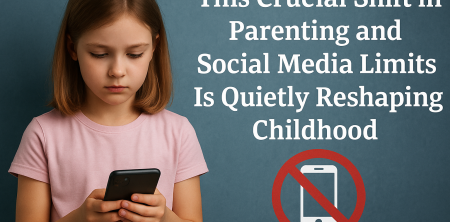
It’s no secret that the digital landscape has transformed childhood, bringing both incredible opportunities and significant anxieties. For years, parents have grappled with screen time, online safety, and the ever-present allure of social media. But something fundamental is shifting. A growing number of parents aren't just adjusting screen time; they're making a decisive retreat, pulling back the reins on their children's access to social media and increasingly, to artificial intelligence. It's a move born of distrust, fueled by legal battles, and underscored by a profound concern for the developmental well-being of the next generation.
This isn't just about a few concerned individuals. A recent Guardian survey painted a clear picture: the vast majority of parents who responded no longer want their children engaging with social media. Many are also actively steering their kids away from AI tools like ChatGPT. This trend points to a collective awakening, a widespread realization that the digital playgrounds children inhabit are often designed with profit, not protection, in mind. The conversation around parenting and social media limits has moved beyond mere moderation to a more fundamental questioning of the technology itself.
Take Caroline Gray Ford, for instance. Like many parents, she voices a deep-seated suspicion that tech companies are primarily motivated by the desire to monetize children’s attention and data, rather than fostering healthy interactions or learning. This sentiment resonates across countless dinner tables and playground conversations, highlighting a growing chasm of trust between families and the tech industry. It’s a critical juncture, forcing us to re-evaluate the digital rites of passage we’ve come to accept as inevitable.
The Erosion of Trust: Why Parents Are Pulling Back
The current climate of parental concern isn't a sudden storm; it's the result of years of accumulating evidence and frustrating experiences. Parents, once perhaps cautiously optimistic about the educational and social benefits of technology, have witnessed firsthand the downsides. We've seen the rise of cyberbullying, the relentless pursuit of likes and validation, and the insidious creep of addictive design elements. This isn't just anecdotal; regulators and advocacy groups have increasingly accused tech giants like Meta of deliberately crafting products that hook young users, prioritizing engagement metrics over mental health.
For many, the breaking point comes from a growing understanding of how these platforms operate. It's not just about what children see, but how their attention is captured and held. Algorithms are designed to maximize time spent on the app, often by feeding users content that triggers strong emotions or reinforces existing biases. This isn't neutral; it’s a sophisticated manipulation of human psychology, and when applied to developing minds, the ethical implications are staggering. Parents are realizing that their children aren't just users; they're the product, their attention and data mined for profit.
This erosion of trust extends beyond social media to the newer frontier of artificial intelligence. While AI holds immense promise, the lack of robust safety guardrails for chatbots like OpenAI’s ChatGPT has become a significant concern. Legal challenges are mounting, with lawsuits alleging that these powerful tools were released without adequate consideration for potential harms, particularly to younger users. The rapid pace of AI development, coupled with an apparent 'move fast and break things' mentality, has left many parents feeling that their children are guinea pigs in an uncontrolled experiment.
The Addictive By Design Debate: When Engagement Becomes Exploitation
One of the most potent accusations against social media companies is that their platforms are intentionally designed to be addictive. This isn't hyperbole; it's a claim backed by former tech executives, whistleblowers, and a growing body of research. Think about it: infinite scroll, push notifications, variable reward schedules (the unpredictable likes and comments) – these are all psychological tactics borrowed from the gambling industry, engineered to keep users coming back for more. For adults, these features can be hard to resist; for children and adolescents whose brains are still developing impulse control and self-regulation, they can be nearly impossible to overcome.
The consequences of this 'addictive by design' approach are well-documented. Studies have linked excessive social media use to increased rates of anxiety, depression, body image issues, and sleep disturbances among young people. The constant comparison to curated, often unrealistic, online personas can foster feelings of inadequacy and loneliness. The pressure to maintain an online presence, to be 'always on,' adds another layer of stress to an already challenging period of development. This is why conversations about parenting and social media limits are no longer just about 'how much screen time?' but 'what kind of screen time, and for what purpose?'
Critics argue that companies like Meta (Facebook, Instagram) have long known the potential harms their platforms pose to young users but have prioritized growth and profit over safety. The legal challenges currently facing these companies often hinge on this very point: that they knowingly created products that were detrimental to children's mental health. This perspective shifts the blame from individual parents struggling to manage their children's usage to the corporations that profit from it, fundamentally altering the narrative around digital well-being.
AI's Uncharted Territory: New Frontier, Same Parental Fears
Just as parents began to get a handle on the complexities of social media, artificial intelligence emerged as the next digital frontier. While AI tools offer incredible potential for learning and creativity, they also introduce a new set of concerns, many of which echo the anxieties first raised by social media. The speed at which AI has been integrated into daily life, often without clear ethical guidelines or safety protocols, has left many parents feeling overwhelmed and unprepared.
Consider the rise of sophisticated chatbots like ChatGPT. While they can assist with homework or offer creative writing prompts, their potential for misuse or for generating inappropriate content is a significant worry. There are also concerns about data privacy – what information do these AI models collect, and how is it used? For parents already wary of tech companies' data practices, the opaque nature of many AI systems only exacerbates their distrust. The idea of a child interacting with an AI that might subtly influence their worldview or expose them to biased information is deeply unsettling. (See: Adolescent mental health resources.)
The lawsuits against AI firms like OpenAI highlight a critical systemic issue: the race to innovate often outpaces the development of ethical frameworks and safety guardrails. When companies prioritize competition and rapid deployment over thorough vetting and impact assessments, children often bear the brunt of the unforeseen consequences. This mirrors the early days of social media, where platforms scaled rapidly before the full scope of their psychological and social impacts were understood. For parents, this history serves as a cautionary tale, making them even more determined to implement robust parenting and social media limits when it comes to AI.
The Call for Regulation: Shifting Responsibility to Big Tech
It's increasingly clear that parents alone cannot shoulder the burden of protecting children in the digital age. The scale and complexity of modern technology demand a more systemic approach. This is where calls for stronger regulation come into play. Many parents and advocacy groups believe that tech companies, left to their own devices, will continue to prioritize profit over safety, making government intervention essential.
Regulators are beginning to take notice. We're seeing more legal actions and legislative proposals aimed at holding tech companies accountable for the design and impact of their products on minors. These efforts range from mandating age verification and stricter privacy protections to forcing platforms to redesign features deemed addictive or harmful. The goal is to shift some of the immense responsibility from individual families to the powerful corporations that create and control these digital environments. This isn't about stifling innovation entirely, but about ensuring that innovation is conducted ethically and with the well-being of the most vulnerable users in mind.
The push for regulation also extends to transparency. Parents want to know how algorithms work, how data is collected and used, and what measures are in place to protect children from harmful content or interactions. Without this transparency, it's impossible to make informed decisions about what technology is appropriate for their children. The current opacity of many tech platforms leaves parents feeling powerless, hence the growing demand for external oversight and accountability. Effective parenting and social media limits can only go so far without a foundational change in how tech companies operate.
Practical Strategies for Establishing Parenting and Social Media Limits
Given the landscape, what's a parent to do? The growing consensus among concerned parents isn't to ban technology outright, but to approach it with extreme caution and intentionality. Implementing effective parenting and social media limits requires a multi-faceted approach, tailored to each child's age, maturity, and specific needs. It's about proactive engagement, not just reactive policing.
Starting Early with Digital Literacy
The foundation of good digital habits is laid long before a child gets their first phone or social media account. Start conversations about technology early, treating it like any other aspect of safety and healthy living. Discuss what information is safe to share online, the permanence of digital footprints, and the importance of critical thinking when encountering online content. Teach them to question what they see and hear, and to understand that not everything online is real or true. This isn't just about rules; it's about fostering an internal compass for navigating the digital world.
Establishing Clear Boundaries and Expectations
Rules are crucial. This might mean no social media until a certain age (many parents are now pushing for 14 or even 16), or strict limits on screen time for younger children. Use parental control apps and device settings to enforce these boundaries, but also engage in open dialogue. Explain why these limits are in place – focusing on brain development, mental health, and safety – rather than simply dictating them. Create 'tech-free zones' in the home, like bedrooms or the dinner table, to encourage face-to-face interaction and other activities.
Modeling Healthy Tech Use
Children are master imitators. If you're constantly glued to your phone, they'll learn that this behavior is normal and desirable. Be mindful of your own screen habits. Put your phone away during family meals, engage in conversations without interruption, and demonstrate a balanced approach to technology. Show them that there's a rich world beyond the screen, filled with books, outdoor play, creative pursuits, and real-life connections. Your actions speak louder than any lecture about parenting and social media limits.
Fostering Open Communication
The digital world is constantly evolving, and your child will inevitably encounter things you haven't anticipated. Create an environment where they feel comfortable coming to you with questions, concerns, or even mistakes they've made online. Emphasize that you're a team, and your goal is to help them navigate these challenges, not to punish them. Regular check-ins, asking about their online experiences, and staying informed about the platforms they use are all vital components of this ongoing dialogue.
The Age Question: When is 'Too Young' for Social Media?
One of the most contentious aspects of parenting and social media limits revolves around age. Officially, most major social media platforms require users to be at least 13 years old. However, this age limit is notoriously easy to circumvent, and many children are accessing these platforms long before their teenage years. The growing sentiment among parents, as highlighted by The Guardian survey, is that 13 is far too young.
Why the push for older age limits? For starters, brain development. The prefrontal cortex, responsible for impulse control, critical thinking, and understanding long-term consequences, isn't fully developed until the mid-20s. Adolescents are particularly vulnerable to peer pressure, social comparison, and the immediate gratification offered by likes and followers. Placing them on platforms designed to exploit these developmental vulnerabilities seems, to many, irresponsible and potentially harmful.
Furthermore, the social and emotional landscape of early adolescence is already complex. Introducing the added pressures of maintaining an online persona, dealing with cyberbullying, and navigating often-toxic online trends can exacerbate existing anxieties and hinder healthy identity formation. Many parents are now advocating for 14, 16, or even later as a more appropriate age, allowing children more time to develop resilience, self-esteem, and a stronger sense of self before stepping into the demanding world of social media.
The Broader Societal Impact: A Generation Reclaiming Childhood
The collective shift in parental attitudes towards social media and AI isn't just about individual family choices; it represents a broader societal movement. It's a quiet revolution, a reclamation of childhood from the clutches of omnipresent digital engagement. If enough parents push back, if enough children are raised with stronger parenting and social media limits, the long-term impact could be profound. (See: CDC's youth media guidelines.)
Imagine a generation of children who spend more time playing outdoors, engaging in creative activities, reading books, and fostering real-world relationships. Imagine them developing stronger critical thinking skills without the constant distraction of notifications and algorithm-driven feeds. This isn't a nostalgic fantasy; it's the conscious choice many parents are making today, hoping to provide their children with a childhood less dictated by screens and more defined by genuine human experience and personal growth.
This movement also sends a powerful message to tech companies: parents are no longer passive recipients of their products. They are informed, concerned consumers demanding safer, more ethical alternatives. If the market shifts, if parents actively choose to delay or deny access, it could force a fundamental re-evaluation of how these companies design and market their services to young people. It's a long game, but the increasing distrust and proactive measures being taken by families suggest that the tide is indeed turning.
Looking Ahead: The Future of Digital Parenting
The journey of parenting in the digital age is far from over. As technology continues to evolve, so too must our strategies for raising resilient, well-adjusted children. The current trend of increased caution and stronger parenting and social media limits is a vital step, but it's an ongoing process of learning, adapting, and advocating.
The future of digital parenting will likely involve a continued push for regulation, greater transparency from tech companies, and a sustained focus on digital literacy education. It will also require an unwavering commitment from parents to prioritize their children's well-being over convenience or the fear of missing out. This means being comfortable saying 'no,' even when it's unpopular, and consistently reinforcing the value of offline experiences.
Ultimately, the goal isn't to demonize technology, but to master it, to wield it as a tool for good rather than allowing it to master us or our children. It's about intentionality, balance, and a clear understanding of the profound impact these digital forces have on developing minds. The current wave of parental concern isn't a fleeting trend; it’s a foundational shift, signaling a more protective, proactive approach to raising children in an increasingly connected world.
Expert Perspectives: What Psychologists and Educators Say
It's not just parents raising alarms; a significant number of child psychologists, developmental pediatricians, and educators are echoing these concerns about the impact of social media and AI on young minds. Many point to the critical developmental windows that occur during childhood and adolescence, periods where foundational skills like empathy, problem-solving, and self-identity are being formed primarily through real-world interactions.
Dr. Jean Twenge, a psychology professor and author, has extensively researched generational differences and the rise of mental health issues in adolescents, directly linking them to increased smartphone use and social media engagement. She highlights the displacement effect: time spent online often replaces time spent on crucial activities like sleep, face-to-face social interactions, and outdoor play, all of which are vital for healthy development. Psychologists often emphasize that while online connection can feel real, it rarely offers the depth of emotional processing and genuine connection found in in-person relationships, which are essential for building robust social skills and resilience.
Educators, too, are grappling with the fallout. They report decreased attention spans, challenges with critical reading comprehension due to constant digital distractions, and a rise in anxiety and social comparison among students. Many schools are now implementing 'no phone' policies during the school day, recognizing that even the presence of a smartphone can be a significant impediment to learning and social engagement. Their collective insight reinforces the idea that an unrestricted digital upbringing carries substantial risks for academic success and emotional well-being.
The Global Picture: International Approaches to Digital Safety
While the conversation around parenting and social media limits is robust in places like the US and UK, it's also a global issue, with different countries adopting varied strategies. Some nations have taken a more proactive regulatory stance, offering insights into potential paths forward.
For example, in countries like France, there's been a strong push for "digital detox" initiatives in schools, with laws prohibiting phone use during school hours. This reflects a cultural emphasis on protecting childhood from pervasive digital influence. China has implemented strict rules on gaming time for minors, limiting online game access to a few hours per week, often in response to concerns about gaming addiction and academic performance. While these measures can be controversial and raise questions about individual freedoms, they demonstrate a willingness by governments to intervene more directly in children's digital lives. (See: Associated Press news articles.)
These international examples highlight a spectrum of approaches, from soft recommendations and educational initiatives to hard legal restrictions. They show that regulation isn't just a hypothetical; it's being implemented in various forms around the world. Understanding these different models can inform discussions about what effective parenting and social media limits might look like on a larger scale, and what role governments should play in safeguarding the next generation.
Navigating the "Fear of Missing Out" (FOMO)
One of the biggest hurdles parents face when trying to implement parenting and social media limits is their child's "Fear of Missing Out" (FOMO). This isn't just a minor annoyance; it's a powerful psychological pull, especially for adolescents who are acutely sensitive to peer dynamics and social acceptance. When a child sees their friends posting about activities, parties, or even just daily interactions, and they aren't part of it or can't engage online, it can trigger intense feelings of exclusion and anxiety.
Addressing FOMO requires a multi-pronged approach. Firstly, open communication is key. Acknowledge and validate your child's feelings of missing out – tell them you understand it's tough. Secondly, emphasize the benefits of their offline life: the deeper friendships, the improved sleep, the focus on hobbies, and the development of self-worth not tied to external validation. Help them cultivate a rich offline life that fills the void. Thirdly, you can discuss the curated nature of social media – remind them that what they see is often only the highlight reel, not the full, messy reality of anyone's life. Finally, building resilience and a strong sense of self-esteem outside of digital platforms is crucial. When children feel secure in who they are and their real-world connections, the pull of online FOMO lessens significantly.
Frequently Asked Questions About Parenting and Social Media Limits
Q1: At what age should a child get their first smartphone?
There's no single "right" answer, but many experts and a growing number of parents are advocating for later ages, often 14 or even 16. The key is to assess a child's maturity, impulse control, and their ability to understand the responsibilities that come with a smartphone, rather than just going by an arbitrary age. Consider if they truly *need* it for safety or communication, or if it's primarily for social media access.
Q2: How can I talk to my child about why we have social media limits without them feeling punished or isolated?
Frame the conversation around their well-being, brain development, and your love for them. Explain that these limits are in place because you care about their mental health, sleep, and ability to focus, not to control them. Use analogies they can understand about developing self-control. Involve them in setting some boundaries where appropriate, making them feel like part of the solution. Emphasize that many other families are doing the same.
Q3: What are some effective parental control tools or apps?
Many options exist, like Apple's Screen Time, Google's Family Link, Bark, and Qustodio. These tools can help set time limits, filter content, track location, and monitor activity (with varying degrees of invasiveness). However, remember that no app is a substitute for open communication and active parenting. They are tools to support your rules, not replace them.
Q4: How do I manage my own screen time to be a better role model?
Lead by example. Set your own 'tech-free' times, like during meals, before bed, or when engaging in family activities. Put your phone away and be present. Talk about your own struggles with screen use and how you manage it. This shows your children that it's a challenge for everyone and that intentional habits are important for adults too.
Q5: Is it realistic to completely ban social media for teenagers?
While some families choose a complete ban, for many, it becomes increasingly challenging as children reach adolescence, given peer pressure and social norms. A more sustainable approach for some might be significant delay and highly structured, monitored access, perhaps to specific platforms or for limited times, combined with robust digital literacy education. The goal is to equip them to navigate the digital world responsibly, not just avoid it.
Trending Now
- the complete explanation
- our breakdown of unbelievable: this is the only way insurance pros will thrive by 2026
- the complete explanation
- our breakdown of unbelievable: this tech promises 219% roi & cuts corporate training time by 75%
- our breakdown of this one tactic is delivering a mind-blowing 219% roi for businesses
Frequently Asked Questions
Why are parents limiting their children's social media use?
Parents are increasingly limiting their children's social media use due to concerns about online safety, mental health, and the potential negative impacts of technology. Many feel that tech companies prioritize profit over children's well-being, leading to a collective retreat from digital platforms.
What are parents concerned about regarding social media and AI?
Parents express concerns about the effects of social media and AI on their children's development. Issues such as privacy, mental health risks, and the commercialization of children's data are driving parents to reconsider their children's engagement with these technologies.
How has the digital landscape changed childhood?
The digital landscape has transformed childhood by providing new opportunities for learning and connection while also introducing significant anxieties. Increased screen time and exposure to social media have raised concerns about children's mental health and overall development.
What trends are emerging in parenting and technology use?
A notable trend is the growing reluctance among parents to allow their children access to social media and AI tools. This shift reflects a broader questioning of technology's role in childhood and a desire for safer, healthier digital environments for children.
What is driving the erosion of trust between parents and tech companies?
The erosion of trust stems from a perception that tech companies prioritize profit over children's well-being. Parents are increasingly aware of the potential risks associated with social media and AI, leading to heightened skepticism and demands for better protections.
Agree or disagree? Drop a comment and tell us what you think.


0 Responses