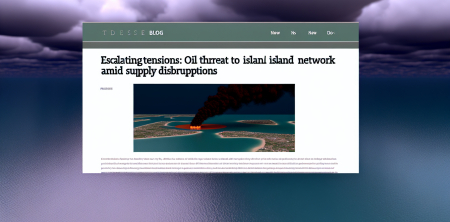
In a striking announcement that has sent shockwaves through global markets, U.S. President Donald Trump issued a stern warning to Iran on March 14, 2026, threatening military action against the oil infrastructure at Kharg Island. This warning comes in the wake of escalating tensions in the Middle East, particularly concerning Iran's recent attacks on vessels transiting through the strategically vital Strait of Hormuz.
The Geopolitical Landscape
The Strait of Hormuz, a narrow waterway connecting the Persian Gulf to the Arabian Sea, is one of the world's most crucial maritime corridors. Approximately 20% of the global oil supply passes through this region, making it a focal point for international trade and energy security. With rising tensions between the United States, Israel, and Iran, the threat of disruption to this vital route can have far-reaching implications.
Trump's Ultimatum
President Trump’s remarks came during a press briefing where he expressed frustration over Iran's increasing aggression in the region. He emphasized that unless Tehran ceased its attacks on commercial vessels, the U.S. would consider striking the oil infrastructure at Kharg Island, which serves as a significant hub for Iran’s oil exports.
“We are not going to stand idly by while Iran threatens the safety and security of international shipping. Kharg Island is a critical node in their oil supply chain, and we will take necessary actions to protect our interests and those of our allies,” Trump stated.
Implications for Global Oil Markets
The potential for military action targeting Kharg Island raises alarms within global oil markets already grappling with significant supply disruptions. Analysts warn that such an escalation could lead to a further spike in oil prices, which have already seen volatility due to recent geopolitical events.
- Historical Context: The region has a long history of conflict and is prone to rapid escalations. The last significant conflict involving Iran and its neighbors led to soaring oil prices and extensive economic repercussions.
- Current Disruptions: Recent attacks on vessels have already contributed to a precarious situation, and any military action could exacerbate these supply chain issues.
- Market Reaction: Following Trump’s announcement, oil prices experienced an immediate increase, signaling traders' concerns over potential supply shortages.
Iran's Response
In response to Trump's threats, Iranian officials have condemned the U.S. stance, claiming it is an attempt to bully and destabilize the region. Iranian Foreign Ministry spokesman Saeed Khatibzadeh stated, “Threats and intimidation will not deter Iran from defending its sovereignty and interests. We will respond firmly to any acts of aggression.”
This rhetoric further highlights the growing divide between Iran and the U.S., with both sides appearing entrenched in their positions. The Iranian military has also indicated that it is prepared to protect its maritime routes and has conducted military exercises in the region as a show of strength.
The Broader Context of U.S.-Israel-Iran Relations
This latest episode is not merely a bilateral issue between the U.S. and Iran; it also reflects the ongoing complexities of U.S.-Israel relations. Israel has long viewed Iran as a significant threat, particularly concerning its nuclear ambitions and regional influence. The U.S. has historically aligned itself with Israel, and this alignment has intensified under the Trump administration.
With Trump’s warning, there is a palpable concern that military action could potentially lead to a broader conflict involving multiple nations in the region, raising the stakes for all parties involved.
Potential Outcomes
The ramifications of these developments could be profound. Several potential scenarios could unfold:
- Military Engagement: An attack on Kharg Island could trigger a military response from Iran, leading to direct conflict.
- Diplomatic Efforts: Alternatively, the threat may lead to renewed diplomatic negotiations, as both sides might seek to avoid an outright war.
- Market Reactions: Continued uncertainty could result in sustained volatility in oil prices, affecting global economies.
Conclusion
The threat to Iran’s Kharg Island oil network marks a significant escalation in U.S.-Iran relations and reflects the broader geopolitical tensions in the Middle East. As the situation continues to evolve, global markets and diplomatic channels will be closely monitored for signs of either conflict or resolution.
As we navigate this precarious landscape, the global community remains hopeful for a peaceful solution that prioritizes stability in one of the world’s most volatile regions.

