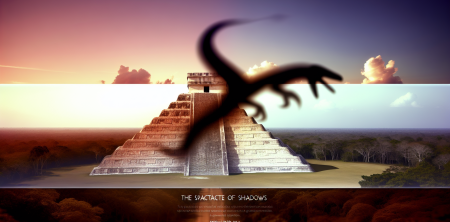
The Enigmatic Equinox at El Castillo
As the equinox approaches, a breathtaking phenomenon captivates visitors and astronomers alike at the Pyramid of Kukulkan, also known as El Castillo, in Mexico's Yucatán Peninsula. This ancient structure, built by the Maya civilization between the 9th and 12th centuries, serves not only as a testament to architectural ingenuity but also as a sophisticated astronomical calendar. During the equinox, the interplay of sunlight and shadows creates a mesmerizing illusion that has drawn attention for centuries.
A Marvel of Engineering and Astronomy
El Castillo rises approximately 30 meters tall and spans 55 meters in width, showcasing the Mayans' engineering prowess. The pyramid is intricately designed with 365 steps, correlating to the number of days in a year. This deliberate construction aligns with solar events, particularly the equinoxes, when day and night are of equal length.
The structure's design allows the sun to cast shadows that mimic a serpent descending the stairs. This phenomenon occurs during the late afternoon around the equinox, creating the illusion of a feathered serpent slithering down the pyramid’s side. This imagery is particularly significant, as the serpent is a vital symbol in Mayan mythology, representing the god Kukulkan, a deity of wind and rain.
The Equinox: A Time of Balance
The equinox, occurring twice a year in March and September, is a moment when the Earth’s tilt is such that sunlight shines directly on the equator. This event signifies a time of balance, where day and night are approximately equal in length. The March equinox, also known as the vernal equinox, heralds the arrival of spring in the Northern Hemisphere, while the September equinox marks the onset of autumn.
At El Castillo, the equinox is not just an astronomical event; it is a cultural celebration. Every year, thousands of visitors gather to witness this unique shadow play, capturing images and experiencing the rich history that the pyramid represents. The alignment of the structure with celestial events reflects the Mayans' deep understanding of astronomy and their reverence for the cosmos.
Capturing the Moment: A Photographic Journey
The stunning imagery associated with this event often includes celestial bodies such as Jupiter and Saturn in the night sky. A remarkable photograph taken by Robert Fedez in 2019 showcases the Pyramid of Kukulkan against the backdrop of the Milky Way, emphasizing the connection between ancient architecture and modern astronomy. Such images illustrate the duality of the pyramid as both an earthly monument and a gateway to the stars.
The Milky Way, with its shimmering expanse, adds to the otherworldly experience, providing a canvas where the ancient and the modern converge. As stargazers look up, they can appreciate not only the celestial bodies but also the legacy of the Mayans, who were able to predict and celebrate these astronomical events with remarkable accuracy.
Understanding the Cultural Significance
The Pyramid of Kukulkan is more than just a structure; it is a symbol of the Mayan civilization's advanced understanding of astronomy and their rich mythology. The serpent imagery linked to Kukulkan encapsulates the connection between the earth and the heavens, demonstrating the Mayans' belief in the cyclical nature of life and the universe.
- Kukulkan: The feathered serpent god, central to Mayan mythology, representing the intersection of earth and sky.
- Architectural Precision: The pyramid’s design reflects an intimate knowledge of solar patterns, lunar cycles, and celestial movements.
- Cultural Legacy: The traditions surrounding the equinox are still celebrated today, highlighting the enduring impact of Mayan culture.
The Future of Equinox Observations
As we look to the future, the significance of the equinox at the Pyramid of Kukulkan continues to inspire both scientific inquiry and cultural appreciation. With advancements in technology and photography, more people can capture and share this stunning spectacle, bridging the gap between ancient history and contemporary understanding.
Institutions and researchers are increasingly recognizing the value of such events in promoting interest in astronomy and cultural heritage. Educational programs and workshops centered around these equinox celebrations can foster a deeper understanding of the cosmos and our place within it.
Conclusion
The equinox at the Pyramid of Kukulkan is a brilliant display of ancient knowledge, architectural skill, and cultural significance. As shadows dance across its steps, they tell a story that transcends time, connecting us to the celestial rhythms that govern our world. Whether you are a seasoned astronomer or a curious traveler, witnessing this phenomenon is a reminder of humanity's enduring fascination with the skies above.

