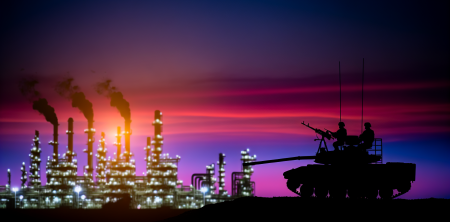
The political landscape in the Middle East has been shaken by a series of military escalations, following recent U.S. bombings of military sites on Iran's Kharg Island. In a bold statement, President Donald Trump has threatened to target Iranian oil infrastructure should tensions continue to rise, prompting urgent warnings from United Arab Emirates (UAE) ministers about the economic implications of Iran’s actions.
Background of the Conflict
The volatile situation escalated when U.S. forces conducted airstrikes on multiple military sites located on Kharg Island, which is significant due to its strategic position in the Persian Gulf and its role in Iran's oil export operations. This military action was reportedly a response to Iran's recent missile strikes against Gulf states, which had raised alarms throughout the region.
Trump's Threats and International Reactions
In light of the recent developments, President Trump stated that the U.S. is prepared to take further action against Iran’s oil infrastructure if necessary. His remarks reflect a tough stance on Iran, suggesting that the U.S. would not tolerate any threats to its allies or to global oil markets. The President emphasized the need for a robust response to safeguard international interests.
The rhetoric from the UAE government has also intensified, with officials warning that Iran must not be allowed to hold the global economy hostage through its military actions. The UAE ministers articulated concerns that the ongoing conflict could disrupt oil supplies and destabilize the broader economic landscape in the region.
Iran’s Retaliation
In reaction to the U.S. strikes, Iran launched retaliatory attacks on several Gulf states, demonstrating its willingness to engage militarily and escalate the situation. These strikes have raised fears of a broader conflict in an already tense region, where diplomacy seems to be fading into the background.
Calls for Diplomacy
The escalating hostilities have prompted a renewed call for diplomatic engagement among regional powers and international stakeholders. In an effort to de-escalate the situation, leaflets were reportedly dropped over Beirut urging Hezbollah to disarm. This move suggests a desire among some factions for a peaceful resolution to the crisis, although the effectiveness of such initiatives remains uncertain.
- U.S. Airstrikes: Targeted military sites on Kharg Island.
- Iran's Response: Retaliatory strikes on Gulf states.
- Trump's Position: Threatened further strikes on Iranian oil infrastructure.
- UAE Concerns: Warned against letting Iran disrupt the global economy.
- Diplomatic Efforts: Leaflets urging Hezbollah's disarmament.
The Global Economic Implications
The potential for conflict between the U.S. and Iran raises serious concerns regarding global oil prices and economic stability. Iran's role as a significant oil exporter means that any disruption in its production or exports could have far-reaching consequences, not just for the region but for the global economy as a whole.
Analysts suggest that sustained military action could lead to increased oil prices, further exacerbating inflationary pressures in economies around the world. The interconnectedness of global oil markets means that even a temporary disruption in supply could have lasting effects on economic growth and stability.
Future Outlook
The situation remains fluid, with both diplomatic and military options on the table. As tensions escalate, the need for a balanced approach that prioritizes dialogue alongside security measures becomes increasingly apparent. The international community is watching closely, hoping for a resolution that prevents further conflict and maintains stability in the region.
In conclusion, the recent military actions and subsequent threats represent a critical juncture in U.S.-Iranian relations. With the stakes high, the actions taken in the coming days will likely have profound implications for both regional stability and the global economy.

