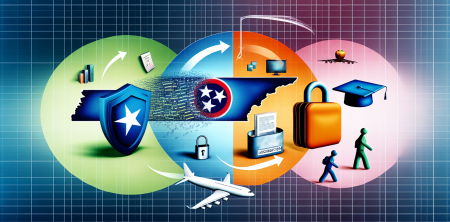
On March 17, 2026, a revised bill in Tennessee requiring public schools to collect and report data on students without legal immigration status advanced in a House committee. This development has sparked significant concern among educators, immigrant advocates, and lawmakers about the potential implications of such data collection on student privacy and access to education.
Details of the Bill
The bill, which has undergone several amendments, initially included provisions that would deny admission to students without legal immigration status or impose tuition fees on them. However, these controversial aspects were removed as the bill made its way through the legislative process. Despite the alterations, the core requirement to gather and report immigration status remains, raising alarms among various stakeholders.
Concerns from Advocates and Educators
Opponents of the bill, including Lisa Sherman Luna of TIRRC Votes, have expressed fears that the data collected could lead to exclusionary policies reminiscent of historical government practices targeting immigrants. Luna noted that the bill could undermine the educational opportunities for many students, particularly those already vulnerable due to their immigration status.
“The collection of such data can create an atmosphere of fear and distrust among immigrant communities,” Luna stated. “We have seen how data has been misused in the past, and this bill risks perpetuating that cycle.”
Impact on Federal Funding
Another pressing concern is the potential impact of the bill on the state’s federal funding. Last year, Tennessee faced the risk of losing $1.1 billion in federal funding due to similar legislative initiatives. This financial threat looms large over the current proposal, as the bill continues to be scrutinized for its implications on public education funding.
National Context and Educational Policy
The discussion surrounding this bill is part of a broader national debate about immigration policies and their intersection with public education. As states across the U.S. grapple with how to address the presence of undocumented students in schools, Tennessee’s approach has become a focal point for discussions on educational equity and access.
Many educators argue that schools should be safe havens for all students, regardless of their immigration status. They emphasize that education is a fundamental right and that policies aimed at tracking or excluding students based on their immigration status could have detrimental effects not only on the individuals involved but also on society as a whole.
Educators’ Perspectives
- Access to Education: Educators assert that all students, regardless of immigration status, should have access to quality education. The fear is that collecting immigration data could deter families from enrolling their children in schools.
- Equity in Education: Many educators advocate for equity and inclusion in the classroom, believing that diverse student populations enrich the learning environment.
- Potential Misuse of Data: Concerns about how the data might be used or misused by government agencies or other entities are prevalent among educators.
Political Landscape
The bill has sparked a divide among lawmakers, with some supporting the measure as a necessary step toward understanding the demographic makeup of students, while others vehemently oppose it for the potential harm it could inflict on immigrant communities. This divide reflects larger national tensions surrounding immigration policy, with education serving as a battleground for these discussions.
As the bill progresses, it remains to be seen how it will ultimately shape Tennessee's educational landscape and the lives of countless students. With many advocates urging lawmakers to reconsider the implications of such data collection, the future of this bill remains uncertain.
Call to Action
The ongoing debate around the Tennessee bill is a critical reminder of the importance of safeguarding the rights of all students. As advocates for education and equity continue to push back against policies that may harm vulnerable populations, it is essential for communities to engage in dialogue and advocate for inclusive educational practices.
In a rapidly changing political and social landscape, it is vital that we prioritize the well-being and education of all students, ensuring that every child has the opportunity to succeed, regardless of their background.

