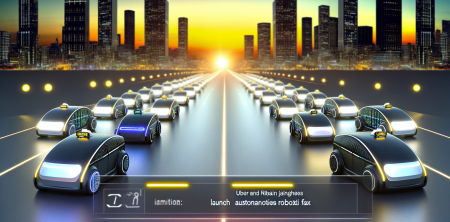
In a groundbreaking move set to revolutionize the transportation landscape, Uber Technologies and Rivian Automotive have announced a strategic partnership aimed at deploying up to 50,000 fully autonomous R2 robotaxis. This ambitious initiative is expected to reshape urban mobility, beginning with an initial fleet of 10,000 units that will operate exclusively on the Uber platform.
Initial Deployment Plans
The partnership is set to kick off in 2028 with initial deployments planned for two major cities: San Francisco and Miami. These cities have been selected due to their tech-savvy populations and existing infrastructure that supports the integration of autonomous vehicles. Following the initial rollout, the plan includes expanding the robotaxi service to approximately 25 cities by 2031.
Investment and Financial Commitment
As part of this partnership, Uber has committed to investing up to $1.25 billion in Rivian through 2031. This investment will be phased, with an initial commitment of $300 million, contingent upon regulatory approval and the achievement of specified autonomous milestones. This substantial financial backing underscores Uber's confidence in Rivian's technology and the future of autonomous transportation.
Technological Advancements
Rivian, known for its electric vehicles, is making significant strides in the autonomous vehicle sector. The R2 robotaxi is designed to operate without human intervention, utilizing advanced sensors, machine learning, and artificial intelligence to navigate complex urban environments. This technology not only aims to enhance safety but also to improve the efficiency of ride-sharing services.
Regulatory Hurdles and Market Readiness
Despite the promising outlook, the deployment of autonomous vehicles is not without its challenges. Regulatory approval is a significant hurdle that must be overcome before the robotaxis can hit the streets. Both Uber and Rivian are working closely with regulators to ensure compliance with safety standards and to address public concerns regarding the safety and reliability of autonomous technology.
Public Perception and Acceptance
Public perception plays a crucial role in the success of autonomous vehicles. Surveys have indicated that while there is a growing interest in self-driving technology, many consumers remain hesitant about relinquishing control to a machine. Uber and Rivian are aware of this challenge and are likely to implement extensive public education campaigns to familiarize potential riders with the technology and its benefits.
Competitive Landscape
The partnership between Uber and Rivian positions them strategically within a highly competitive market. Other companies, including Waymo and Lyft, are also investing heavily in autonomous vehicle technology. By aligning with Rivian, Uber aims to leverage Rivian’s expertise in electric vehicle design and manufacturing, potentially giving them an edge over competitors.
Future Implications for Urban Mobility
The deployment of autonomous robotaxis could have far-reaching implications for urban mobility. As cities continue to grapple with traffic congestion and environmental concerns, the introduction of self-driving electric vehicles could help alleviate some of these issues. With the potential for reduced emissions and improved traffic flow, autonomous robotaxis may contribute to more sustainable urban environments.
Potential Benefits
- Reduced Traffic Congestion: Autonomous vehicles can optimize routes and reduce the number of cars on the road.
- Lower Emissions: Electric robotaxis can significantly decrease greenhouse gas emissions, contributing to cleaner air.
- Increased Accessibility: Robotaxis can provide transportation options for those unable to drive, including the elderly and disabled.
Conclusion
The partnership between Uber and Rivian represents a significant step forward in the evolution of urban transportation. With plans to deploy a fleet of autonomous robotaxis, the collaboration aims to not only enhance the ride-sharing experience but also to contribute to a more sustainable future. As the launch date approaches, industry observers will be watching closely to see how this ambitious project unfolds and its impact on the future of transportation.

