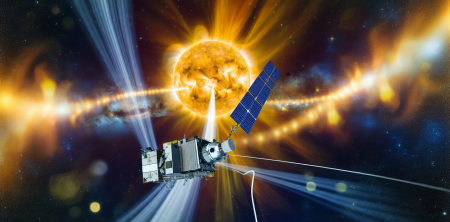
The solar wind, a continuous stream of charged particles emitted by the Sun, plays a crucial role in shaping the space environment around Earth and across the solar system. Recent research by PhD student Jordi Boldú at the Swedish Institute of Space Physics and Uppsala University offers groundbreaking insights into the complex behavior of plasma waves within the solar wind, particularly focusing on how these waves interact with our planet's atmosphere.
Understanding Plasma Waves in the Solar Wind
Plasma waves, essentially ripples of energy generated in charged particles, are a vital component of the solar wind. These waves can influence a variety of phenomena, from the auroras we see near the poles to the overall stability of satellite communications. Boldú’s research utilizes data collected from the European Space Agency's Solar Orbiter, a pioneering mission designed to study the Sun and its effects on the heliosphere.
Key Findings from the Solar Orbiter Data
The Solar Orbiter has provided unprecedented data, allowing researchers to observe the solar wind's behavior closer to its source—the Sun itself. Boldú's findings indicate that these plasma waves behave differently in the vicinity of the Sun compared to their behavior further out in space, particularly near Earth. This discrepancy is significant for understanding how energy is transmitted through the solar wind and how it impacts the space environment.
The Behavior of Plasma Waves
According to Boldú’s research, plasma waves near the Sun exhibit greater variability than those observed at larger distances. This variability is primarily attributed to the Sun's magnetic field and its dynamic nature. For instance, as solar activity increases during solar flares or coronal mass ejections, the resulting plasma waves can become more intense, leading to stronger interactions with the solar wind.
Implications for Space Weather
The implications of these findings extend beyond academic interest. Understanding how solar wind plasma waves behave is critical for predicting space weather, which can have profound effects on satellite operations, telecommunications, and even power grids on Earth. Severe space weather events can lead to geomagnetic storms that disrupt satellite functionality and cause electrical outages.
Linking Solar Activity to Earth’s Environment
Boldú’s study emphasizes how conditions near the Sun influence the space environment far beyond its influence, including Earth. The data suggests that the turbulent nature of the solar wind, shaped by plasma waves, contributes to the overall dynamics of the heliosphere—a vast bubble surrounding the solar system that protects Earth from cosmic radiation.
- Solar Flares: Sudden bursts of energy that can enhance plasma wave intensity.
- Coronal Mass Ejections: Large expulsions of plasma and magnetic fields from the solar corona that can significantly affect space weather.
- Geomagnetic Storms: Disturbances in Earth's magnetosphere caused by solar wind interactions that can lead to disruptions in technology.
The Future of Solar Research
As our understanding of the solar wind continues to evolve, Boldú’s research marks a pivotal point in solar physics. The Solar Orbiter will continue to provide vital data, helping scientists unravel the complexities of solar phenomena. Future missions and studies are likely to build upon these findings, further enhancing our ability to forecast space weather and mitigate its impacts.
Conclusion
Jordi Boldú's research highlights the intricate relationship between solar activity and the resulting effects on the solar wind, providing a clearer picture of how these processes interact with Earth's environment. As we advance our capabilities in space observation and research, the insights gained from studies like these will be crucial in safeguarding our technology and understanding our place within the cosmos.

