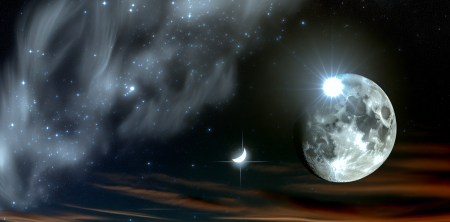
As spring settles in and the nights grow warmer, skywatchers are in for a treat on March 29, 2026. On this day, the Moon will pass in close proximity to Regulus, the brightest star in the constellation Leo. This unique event offers an excellent opportunity for both amateur and seasoned astronomers to observe and appreciate the beauty of our night sky.
The Moon's Position and Timing
At precisely 4 P.M. EDT, the Moon will be located just 0.3° north of Regulus. This close encounter means that as darkness falls, the Moon will appear about 3.5° east of Regulus, providing a stunning sight as both celestial bodies will be visible in the same field of view for observers.
Understanding Regulus: The Heart of Leo
Regulus, known as the alpha star of Leo, shines brightly with a magnitude of 1.4, making it one of the most prominent stars in the night sky. Positioned at the base of the Sickle of Leo asterism, Regulus serves as a key marker for this recognizable constellation. The Sickle itself is a notable feature, resembling a lion's head and mane, and is made up of several other notable stars:
- Eta Leonis (magnitude 3.5)
- Gamma Leo (magnitude 2.0)
- Epsilon Leo
These stars, along with Regulus, outline the sickle shape that is easily identifiable to stargazers, tracing a line that follows the path of the ecliptic.
What to Expect When Observing
As the Sun sets and darkness envelops the sky on March 29, observers can expect to see the Moon and Regulus positioned beautifully against the backdrop of the cosmos. The Moon will be in its waxing phase, which means that it will appear brighter and larger than during other lunar phases. This is an ideal time for viewing, as the contrast between the glowing Moon and the twinkling stars will enhance the overall experience.
For those with telescopes or binoculars, this alignment can further enhance the observation. The details of the lunar surface, along with the vibrant blue-white hue of Regulus, will create a captivating display. In addition, the surrounding stars of Leo will shine brightly, making this a vibrant celestial event.
Why This Event Matters
Events like the Moon's passage near Regulus are not just visually stunning; they also provide valuable opportunities for education and engagement with astronomy. They remind us of the dynamic nature of our universe and the intricate movements of celestial bodies. For educators, this occasion presents a chance to inspire interest in the sciences, particularly in astronomy and physics.
Moreover, such events encourage communities to come together for stargazing gatherings, fostering a shared appreciation for the night sky. Whether through organized events at local observatories or informal meet-ups at parks, the thrill of observing celestial bodies can unite individuals from all walks of life.
How to Prepare for the Event
To make the most of this astronomical event, here are some tips for preparation:
- Check the Weather: Clear skies are essential for optimal viewing. Keep an eye on the weather forecast leading up to the event.
- Find a Dark Spot: Light pollution can hinder your ability to see faint stars. Seek out a location with minimal artificial light.
- Bring Binoculars or a Telescope: While the Moon and Regulus can be seen with the naked eye, optical instruments can enhance the viewing experience.
- Study the Constellation: Familiarize yourself with Leo and its prominent stars beforehand to appreciate the alignment fully.
By following these steps, you can ensure a rewarding experience while observing this beautiful celestial phenomenon.
Conclusion
The Moon’s close approach to Regulus on March 29, 2026, is a remarkable event that no skywatcher should miss. As these two brilliant celestial bodies grace the night sky, they remind us of the wonders of the universe and our place within it. Mark your calendars, prepare your viewing equipment, and get ready to be awed by the beauty of the cosmos!

