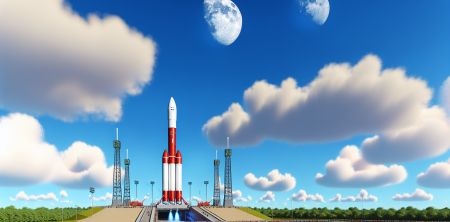
Countdown to Artemis II: A New Era in Lunar Exploration
As excitement builds for NASA's Artemis II mission, forecasters are predicting favorable weather conditions ahead of the scheduled launch on Wednesday, April 1, 2026. This mission marks a significant milestone in human spaceflight, as it will be the first crewed lunar flight since the Apollo program, transporting four astronauts on a journey around the Moon.
Weather Forecasts and Launch Preparations
According to CBS News space consultant Bill Harwood, updates from the Kennedy Space Center indicate that all systems are go for the upcoming launch, with a promising weather outlook. The forecast is particularly encouraging after a series of delays that had previously pushed back the launch date. After encountering technical issues and facing unfavorable weather in earlier preparations, the Artemis II rocket was rolled back to the launch pad on March 20, 2026, signaling renewed readiness for the upcoming mission.
Historical Significance of Artemis II
The Artemis II mission is poised to reignite humanity's presence on the lunar surface, aiming to pave the way for future exploration. This mission will carry a diverse crew of astronauts, marking a significant step in NASA's long-term goal of establishing a sustainable human presence on the Moon and eventually sending humans to Mars.
Meet the Artemis II Crew
- Commander: A veteran astronaut with extensive experience in spaceflight.
- Pilot: A skilled aviator and mission specialist.
- Mission Specialist 1: An expert in scientific research and technology.
- Mission Specialist 2: A renowned astronaut with a focus on exploration.
The crew's diverse backgrounds and expertise will play a crucial role in the mission's success, enabling them to tackle the challenges of space travel while conducting scientific research to further advance humanity's understanding of the Moon.
The Journey Ahead
The Artemis II mission is part of NASA's broader Artemis program, which aims to land the first woman and the next man on the lunar surface by 2025. This ambitious initiative seeks to utilize the Moon as a stepping stone for future missions to Mars, providing essential insights into sustainable living and exploration beyond Earth's orbit.
Launch Day: What to Expect
On launch day, the Artemis II mission will employ the Space Launch System (SLS), NASA's most powerful rocket to date, designed to carry astronauts beyond low Earth orbit. The spacecraft, Orion, will be equipped with advanced systems to support the crew during their mission.
The launch will be broadcast live, allowing space enthusiasts and the general public to witness this historic event. NASA is anticipating a large viewership, reflecting the renewed interest in lunar exploration and the excitement surrounding the Artemis program.
Challenges Overcome
The path to the Artemis II launch has not been without its hurdles. Technical issues and adverse weather conditions had previously delayed the mission, raising concerns among the NASA team and the public. However, the successful roll of the rocket back to the launch pad on March 20, 2026, has reinvigorated efforts to ensure the mission proceeds as planned.
NASA's commitment to rigorous testing and safety protocols has been paramount in addressing these challenges. Engineers and technicians have been working diligently to ensure that the rocket and spacecraft are fully operational and ready for the demands of the mission.
The Broader Impact of Artemis II
Artemis II is not just a mission to the Moon; it represents a broader commitment to international collaboration in space exploration. NASA has partnered with various space agencies and private companies, fostering a spirit of cooperation that extends beyond national borders. This collaborative approach will be essential as humanity prepares for the next giant leap into deep space.
Moreover, the mission aims to inspire a new generation of scientists, engineers, and explorers. By demonstrating the potential of human spaceflight and showcasing advancements in technology, Artemis II hopes to ignite interest in STEM fields and encourage young minds to pursue careers in space exploration.
Conclusion: A New Chapter in Space Exploration
As the countdown to Artemis II continues, the excitement surrounding this historic mission is palpable. With favorable weather conditions anticipated and the crew poised for launch, NASA is on the brink of a new chapter in space exploration. The success of Artemis II will not only advance our understanding of the Moon but will also lay the groundwork for future missions to Mars and beyond.
Stay tuned for updates and prepare to witness a momentous occasion in the annals of space history as humanity takes another significant step towards the stars.

