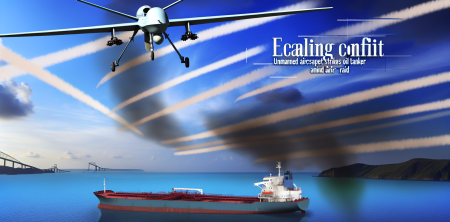
Strait of Hormuz, March 31, 2026 – A significant escalation in tensions in the Middle East occurred when an Iranian drone targeted a massive oil tanker near the strategic Strait of Hormuz. This incident comes on the heels of a series of U.S. airstrikes aimed at Iran's military capabilities, raising concerns about further conflicts in the region.
The Incident
The oil tanker, which remains unnamed, was struck by the drone while navigating through the vital waterway that accounts for a significant portion of the world's oil trade. The Strait of Hormuz is a crucial maritime chokepoint, with a daily transit of approximately 21 million barrels of oil, representing about 20% of the global oil supply.
Details surrounding the drone strike remain limited, but the attack highlights the ongoing tensions between Iran and Western nations, particularly the United States. Experts suggest that Iran's use of drones is a strategic move to assert its influence and capabilities in the region, particularly in light of recent U.S. actions against its military infrastructure.
U.S. Airstrikes on Iranian Military Targets
In a related development, the U.S. launched devastating airstrikes on an ammunition depot in Isfahan, Iran, which is believed to contain enriched uranium and other critical military resources. President Donald Trump shared a video on social media platform Truth Social, showcasing the impact of the 2,000-pound bombs used in the operation, emphasizing the scale of destruction.
An American official confirmed to The Wall Street Journal that the strikes were executed following intelligence reports indicating imminent threats posed by Iranian military assets. However, specific details regarding the targets and the operational strategy have not been disclosed by the U.S. government.
Reactions and Implications
The drone strike on the oil tanker and the subsequent U.S. airstrikes have drawn sharp reactions from various stakeholders:
- Iranian Government: Iranian officials condemned the U.S. airstrikes, labeling them as acts of aggression that would not go unanswered. Iran has vowed to protect its national interests and may respond to these provocations.
- International Community: The international community, particularly nations dependent on oil imports, has expressed concern over the increased instability in the region. Analysts warn that such conflicts could disrupt oil supplies, leading to a spike in global oil prices.
- Market Reactions: Financial markets reacted swiftly to the news, with oil prices experiencing fluctuations. Investors are closely monitoring the situation, as any escalation could have far-reaching implications for the global economy.
The Broader Context
This incident is a continuation of a long-standing pattern of confrontation between Iran and the U.S., alongside its allies in the region. Tensions have been on the rise since the U.S. withdrawal from the Iran nuclear deal in 2018, which was followed by a series of sanctions aimed at crippling Iran's economy and military capabilities.
Iran has since sought to demonstrate its resilience and technological advancements in warfare, particularly through the development of drone technology. The use of drones allows Iran to engage in asymmetric warfare, enabling it to strike at distant targets while minimizing the risk to its personnel.
Looking Ahead
As both nations navigate this precarious situation, the risk of miscalculations leading to a broader conflict remains high. Analysts urge for diplomatic solutions to be prioritized, emphasizing that continued military engagements could spiral into a full-scale war.
In conclusion, the drone strike on the oil tanker and the U.S. airstrikes represent a critical juncture in U.S.-Iran relations. The unfolding events in the Strait of Hormuz could have significant implications not only for regional stability but also for global oil markets, international relations, and the future of diplomacy in the Middle East.

