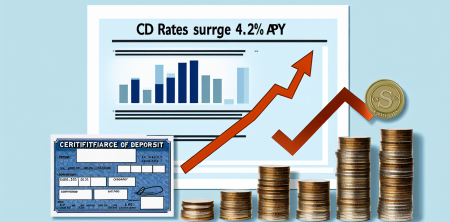
As of March 31, 2026, the landscape for certificates of deposit (CDs) has become increasingly appealing for savers, with some of the most competitive rates in years now reaching up to 4.20% annual percentage yield (APY). This surge in rates comes at a time when economic uncertainty looms, prompting many individuals to seek stable and reliable investment options.
Top Contenders in the CD Market
Among the various financial institutions offering attractive CD rates, Newtek Bank stands out with its 9-month CD, which boasts the highest APY of 4.20%. This rate is not just a marginal increase; it represents a significant opportunity for savers looking to maximize their returns in a fluctuating economic environment.
Close behind is Bread Savings, which offers a 9-month CD with a competitive rate of 4.15% APY. These offerings reflect a broader trend in the financial sector where banks are striving to attract depositors by providing higher yields.
Understanding Certificates of Deposit
Certificates of deposit are time-bound savings accounts that typically offer higher interest rates than regular savings accounts, in exchange for the depositor agreeing to leave their money untouched for a specified period. The appeal of CDs lies in their ability to provide a guaranteed return, making them a low-risk investment option.
- Fixed Income: CD rates are fixed for the duration of the term, offering predictable returns.
- FDIC Insurance: Most CDs are insured by the Federal Deposit Insurance Corporation (FDIC) up to $250,000, providing peace of mind for savers.
- Variety of Terms: CDs come in various terms, from a few months to several years, allowing individuals to choose what best fits their financial goals.
Why the Surge in CD Rates?
The recent rise in CD rates can be attributed to several factors:
- Economic Conditions: With inflation rates fluctuating and economic growth showing signs of uncertainty, banks are incentivizing savers to deposit their money by offering higher rates.
- Increased Competition: As financial institutions seek to bolster their deposit bases, competition has intensified, leading to more attractive offerings for consumers.
- Interest Rate Hikes: The Federal Reserve's monetary policy decisions have also played a crucial role, as rising benchmark interest rates have allowed banks to offer higher yields on their savings products.
Considerations for Savers
While the allure of high CD rates is undeniable, savers should consider a few key factors before committing their funds:
- Liquidity Needs: CDs require funds to be locked in for the term duration. Savers should assess their liquidity needs to ensure they will not need access to these funds prematurely.
- Interest Rate Risk: If interest rates continue to rise, those locking in a lower rate may miss out on better returns available in the future.
- Early Withdrawal Penalties: Most CDs impose penalties for early withdrawal, which can significantly diminish the effective yield if access to funds is required before maturity.
The Future Outlook for CD Rates
Looking ahead, the trajectory of CD rates will depend heavily on economic indicators and the Federal Reserve's monetary policy. Should inflation remain a concern and the Fed continue to adjust interest rates, savers might see further fluctuations in CD yields.
For now, however, the current offerings provide a robust opportunity for those seeking stability and a guaranteed return on their investments. Institutions like Newtek Bank and Bread Savings are leading the charge in providing these competitive rates, ensuring that savers have a viable option to grow their funds in a low-risk environment.
Conclusion
In a time when economic uncertainty can make investing feel daunting, the rise of competitive CD rates to 4.20% APY provides a beacon of hope for savers. With institutions like Newtek Bank and Bread Savings leading the way, individuals looking to secure their financial future have a compelling reason to consider these fixed-income products. As always, potential investors should conduct thorough research and consider their financial situations before diving into any investment.

