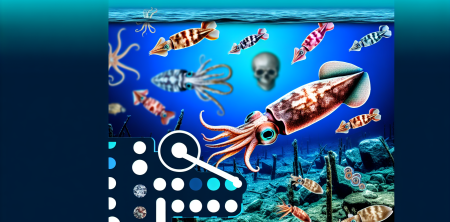
Squid and cuttlefish, fascinating members of the cephalopod family known as decapodiforms, have a remarkable evolutionary history that has allowed them to survive and thrive following one of the most catastrophic events in Earth's geological timeline: the Permian-Triassic extinction event, often referred to as the Great Dying. Recent research from the Okinawa Institute of Science and Technology (OIST) sheds new light on how these creatures adapted and evolved through this tumultuous period, offering insights into the resilience of life in the face of mass extinction.
The Permian-Triassic Extinction: A Brief Overview
The Permian-Triassic extinction, which occurred approximately 252 million years ago, is considered the most severe extinction event in Earth’s history. It is estimated that around 90% of marine species and 70% of terrestrial vertebrate species perished during this period. The causes of this mass extinction are believed to be linked to a combination of volcanic activity, climate change, and ocean anoxia—where water bodies become depleted of oxygen, making them inhospitable for most marine life.
Cephalopods: A Resilient Lineage
In the aftermath of the Great Dying, some species managed to endure these extreme environmental changes. According to the new findings published in Nature Ecology & Evolution, the decapodiform cephalopods, which include squid and cuttlefish, found refuge in deep-sea environments that were rich in oxygen. This adaptation played a crucial role in their survival, allowing them to not only persist through the extinction event but to flourish in the changing oceanic landscape.
Research Insights from OIST
The research team at OIST utilized large genomic datasets and sequenced three new squid genomes to construct the first comprehensive evolutionary tree for decapodiforms. This groundbreaking work revealed a 'long fuse' pattern of evolution, suggesting that the diversity of squid and cuttlefish observed today stems from a gradual evolutionary process that continued over millions of years.
Decoding the Evolutionary Tree
The evolutionary tree developed by the researchers highlights several key findings:
- Extended Evolutionary Timeline: The study indicates that the diversification of cephalopods did not happen abruptly but was a prolonged process, with various lineages evolving at different rates over time.
- Genetic Adaptations: The genomic analysis provides evidence of specific genetic changes that facilitated the adaptation of these creatures to deep-sea environments, which were less affected by the catastrophic conditions on the surface.
- Oxygen-Rich Refuges: The ability to inhabit oxygen-rich refuges in the deep sea allowed for a stable environment where these cephalopods could thrive, contributing to their eventual dominance in marine ecosystems.
Squid and Cuttlefish Today
Today, squid and cuttlefish are among the most diverse and adaptable marine organisms. They have evolved a range of traits, including advanced camouflage capabilities, complex nervous systems, and unique reproductive strategies. Their ability to adapt to various marine environments has enabled them to occupy a multitude of ecological niches, from coastal waters to the deep ocean.
Ecological Importance
Squid and cuttlefish play a vital role in marine ecosystems. They are key players in the food web, serving as prey for numerous larger marine animals, including fish, seabirds, and marine mammals. Moreover, they are also important predators themselves, helping to control populations of smaller marine organisms.
Future Research Directions
The findings from the OIST study open new avenues for research into the evolutionary history of cephalopods and their ecological roles in marine environments. By continuing to explore the genetic underpinnings of their adaptations, scientists hope to gain a deeper understanding of how these animals can respond to current and future environmental changes, such as ocean acidification and climate change.
Conclusion
The survival of squid and cuttlefish through one of Earth's most severe extinction events serves as a testament to the resilience of life. Their evolutionary journey, now illuminated by cutting-edge genomic research, underscores the complex interplay between environmental changes and biological adaptation. As we continue to study these remarkable creatures, we not only learn about their past but also gain insights into the future of marine biodiversity in an ever-changing world.

