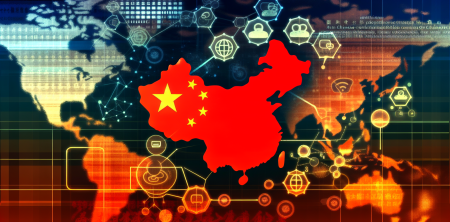
In an era where information is as potent as weaponry, China's Communist government has embarked on an ambitious campaign to shape its global narrative through the use of social media and artificial intelligence. This strategy not only seeks to promote China's viewpoints on international matters but also often features pointed critiques of the United States and its leadership.
Harnessing Technology for Propaganda
On April 11, 2026, it was reported that Chinese state media has increasingly turned to social media platforms and AI technologies to amplify its messages. The shift comes after the government successfully navigated the complexities of domestic internet censorship, allowing for a more aggressive global outreach.
One notable example of this new approach is a five-minute AI-generated animation produced by China Central Television (CCTV). The animation, reminiscent of martial arts films, allegorizes the ongoing conflict in Iran. In this animated short, the United States is depicted as a white eagle attacking a group of Persian cats, symbolizing the Iranian people. This creative use of storytelling has resonated with viewers, leading to over one million views internationally after it was subtitled and shared on platforms like X.
The 'Matrix' of Influence
China's strategy involves a vast network of social media accounts, often referred to as a 'matrix.' This matrix comprises diplomats, state media personnel, social media influencers, and even bots, all working together to promote Chinese narratives on platforms like X and Facebook. This multifaceted approach allows for a wide-ranging influence, targeting various demographics across the globe.
Experts note that this 'infotainment' strategy is particularly effective in engaging younger audiences, especially members of Generation Z. According to Professor Shi Anbin, a noted expert in media and communication, this demographic is crucial for shaping future perceptions of China and its role in global affairs. By framing its messages in entertaining formats, the Chinese government is attempting to capture the attention of a generation that consumes information in vastly different ways than previous cohorts.
Targeting Global Audiences
China's use of social media is not merely a domestic affair; it is designed to reach international audiences, particularly those in Western nations. The government aims to challenge the dominant narratives that often portray China in a negative light. By leveraging engaging content, the state seeks to reshape perceptions of China’s policies and initiatives.
- Engagement through Humor and Satire: The animated short about the Iran conflict is just one instance of how humor and satire are employed. By using allegorical storytelling, China can convey complex political messages in a more palatable form.
- Utilizing Influencers: The government has enlisted various influencers who resonate with younger audiences to disseminate its messages. This method not only increases reach but also lends a sense of authenticity to the content.
- AI as a Tool for Creativity: The integration of AI in content creation allows for rapid production of engaging material. The technology can analyze trends and audience preferences, enabling the government to tailor its messaging accordingly.
Criticism and Challenges
Despite the sophisticated nature of this strategy, it has not been without its challenges. Critics point out that the content often lacks depth and can seem overly simplistic or propagandistic. Moreover, the reliance on AI-generated content raises questions about authenticity and the potential for misinformation.
Furthermore, while the animated short went viral, it also sparked discussions about the implications of such portrayals. Critics argue that using satire to depict international conflicts may trivialize serious issues and undermine the gravity of geopolitical tensions.
The Future of China's Digital Diplomacy
As China continues to refine its approach to digital diplomacy, the balance between entertainment and informative content will be crucial. The goal is to foster a more favorable international image while countering perceived Western biases. In doing so, China is not only engaging in a battle of narratives but also attempting to redefine its role on the world stage.
In conclusion, China's use of AI and social media represents a significant evolution in state-sponsored communication strategies. By creatively engaging with global audiences, the Chinese government is striving to ensure that its message resonates, especially among the younger generations who will shape the future of international relations.

