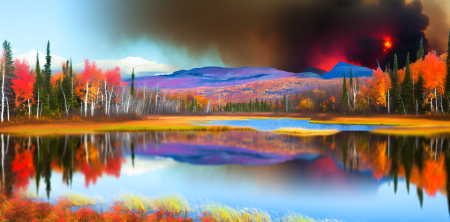
In recent years, the United States has witnessed a staggering increase in the frequency and intensity of wildfires, traditionally a hallmark of the Western states. However, a recent wildfire in Georgia has illuminated an alarming trend: the Eastern U.S. is experiencing its own wildfire crisis, exacerbated by the effects of climate change.
The Georgia Wildfire: A Case Study
In April 2026, a devastating wildfire swept through parts of Georgia, resulting in the destruction of over 50 homes and forcing numerous residents to evacuate. The blaze is more than just a local disaster; it serves as a stark illustration of how climate change is radically altering fire dynamics across the country, particularly in regions that have historically been less affected by wildfires.
Understanding the Shift: Eastern Wildfires on the Rise
Wildfire scientists have noted that the typical profile of wildfires is changing. The Eastern U.S., with its more humid climate and dense forests, has not been accustomed to wildfires of the scale seen in the West. However, several key factors contribute to the increasing incidence of wildfires in this region:
- Climate Change: The primary driver behind the increase in wildfires is climate change, which is drying out vegetation and making it more flammable.
- Drought Conditions: Record drought conditions have become more prevalent, creating an environment ripe for wildfires.
- Hurricane Aftermath: The aftermath of hurricanes, particularly Hurricane Helene, has left tens of millions of dead trees that serve as fuel for wildfires.
- Urban-Wildland Interface: The coexistence of dense forests close to populated areas increases the risk of wildfires impacting human communities.
Statistics Paint a Grim Picture
As of 2026, wildfires have already consumed approximately 2,802 square miles of land across the United States, marking an 88% increase compared to the 10-year average for the same time period. This alarming statistic raises concerns about the evolving nature of fire behavior in the Southeast and other Eastern states.
Emerging Hotspots
Interestingly, while states like California and Oregon often dominate headlines concerning wildfires, unusual hotspots are emerging in places like Nebraska. This indicates a broader pattern, suggesting that the factors leading to wildfires are not confined to traditionally fire-prone areas.
Research Insights: Trends in Southeastern Fires
Research conducted by fire ecologists at the University of Florida reveals a troubling trend: from 1984 to 2020, the number of large fires, the likelihood of their occurrence, and the amount of land burned have all increased significantly across the Southeastern U.S. This is a wake-up call for residents and policymakers alike.
The 'Ticking Time Bomb'
Experts have begun to describe the situation as a "ticking time bomb." The buildup of combustible materials, particularly in areas recovering from hurricanes, presents a significant risk for future wildfires. As these dead trees and dense underbrush accumulate, the likelihood of severe fires rises dramatically.
Climate Change and the Fire Cycle
The connection between climate change and wildfires is well-established. Rising temperatures, shifting precipitation patterns, and prolonged droughts all contribute to a fire-prone environment. In the context of the Eastern U.S., these changes mean a rethinking of fire management strategies that have traditionally focused on prevention and suppression.
Forest Management and Mitigation Strategies
To address the growing risk of wildfires, experts advocate for innovative forest management and mitigation strategies that incorporate climate realities. This could include:
- Controlled Burns: Implementing prescribed burns to reduce fuel loads and create firebreaks.
- Community Engagement: Educating communities about fire risk and encouraging them to create defensible spaces around their properties.
- Policy Reform: Advocating for policies that address land management and fire response in a changing climate.
The Human Element: Lives and Livelihoods at Risk
Wildfires do not only threaten the environment; they also pose significant risks to human lives and livelihoods. The destruction of homes and displacement of families can have long-lasting economic and emotional impacts.
Case Studies of Affected Communities
In the wake of the recent Georgia wildfire, many residents find themselves grappling with the loss of their homes and the uncertainty of rebuilding. Community support and resources will be crucial in helping these families recover.
Looking Ahead: Preparing for the Future
As climate change persists, the Eastern U.S. must brace for more frequent and intense wildfires. Preparing for this reality involves a multifaceted approach:
- Research and Monitoring: Continued research into fire behavior and climate impacts is essential for developing effective response strategies.
- Infrastructure Improvements: Investing in infrastructure that can withstand wildfires, including fire-resistant building materials.
- Increased Funding: Allocating more resources for wildfire preparedness and response.
A Call to Action
The recent wildfire in Georgia serves as a crucial reminder of the shifting landscape of wildfire risk in the Eastern United States. As climate change continues to alter the environment, it is imperative for communities, policymakers, and scientists to work together proactively to mitigate the risks associated with wildfires. Understanding the factors at play and implementing robust strategies will be vital in protecting both the environment and human lives from the devastating effects of wildfires.
Conclusion
As we navigate the complexities of climate change, the rise of wildfires in the Eastern U.S. demands our attention. By recognizing the convergence of climate factors, land management challenges, and the human element at play, we can better prepare for the future and safeguard our communities against the growing threat of wildfires.

