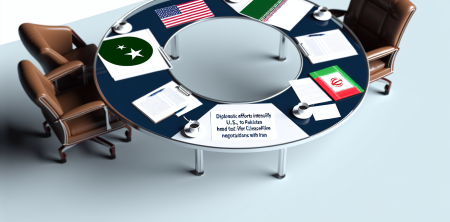
The geopolitical landscape is shifting as U.S. President Donald Trump has announced the deployment of two key envoys, Steve Witkoff and Jared Kushner, to Pakistan for critical negotiations aimed at establishing a ceasefire with Iran. This decision, confirmed by the White House on April 25, 2026, marks a significant escalation in diplomatic efforts to address ongoing tensions in the region.
Background of the Conflict
The conflict involving Iran has roots that stretch back decades, influenced by various factors including territorial disputes, political ideologies, and regional power dynamics. The current situation has escalated into a broader confrontation that has drawn in various international stakeholders, including the United States, Pakistan, and Egypt.
U.S. Involvement
Historically, U.S. foreign policy has aimed to limit Iranian influence in the Middle East, often leading to military and economic interventions. In recent years, the Trump administration has shifted towards a diplomatic approach, recognizing that a military resolution may not be viable. By sending envoys to Pakistan, the U.S. aims to leverage Pakistan's unique position as a mediator and ally in the region.
Details of the Negotiations
Witkoff and Kushner’s mission is to engage in a second round of ceasefire discussions with Iranian officials, following initial talks that reportedly took place earlier this month. These negotiations seek to establish a framework for ending hostilities and paving the way for a more stable regional environment.
Meeting in Islamabad
Iran's Foreign Minister, Abbas Araghchi, arrived in Islamabad ahead of the U.S. envoys, indicating the urgency of the discussions. Araghchi met with Pakistan's Foreign Minister Ishaq Dar and Army Chief Field Marshal Asim Munir, emphasizing Pakistan's vital role as a facilitator in these talks.
Multilateral Diplomatic Efforts
In addition to U.S.-Iran negotiations, Egypt's Foreign Minister Badr Abdelatty also engaged with Pakistan's leadership. Their discussions revolved around the necessity of a collaborative approach to peace, highlighting the importance of multilateral diplomacy in resolving the conflict.
Potential Implications of the Talks
The outcome of these negotiations could have profound implications not only for Iran and the U.S. but for the entire region. A successful ceasefire could lead to:
- Increased Stability: A halt in hostilities may contribute to a more stable Middle East, fostering an environment conducive to economic growth and cooperation.
- Enhanced Diplomatic Relations: Improved relations between the U.S. and Iran could open doors for future negotiations on a range of issues, from nuclear proliferation to trade agreements.
- Broader Regional Cooperation: Other nations, including Pakistan and Egypt, may find new avenues for collaboration, strengthening regional alliances.
Challenges Ahead
Despite the optimistic outlook, several challenges remain. Key obstacles include:
- Distrust: Long-standing mistrust between Iran and the U.S. may hinder meaningful progress in negotiations.
- Internal Pressures: Both Iran and the U.S. face domestic political pressures that could impact their negotiating stances.
- Regional Dynamics: The involvement of other regional powers could complicate the negotiation process, as differing interests may clash.
Conclusion
The dispatch of U.S. envoys to Pakistan marks a pivotal moment in the pursuit of peace and stability in the Middle East. As negotiations unfold, the international community will be closely watching the developments, hoping for a resolution that ends the ongoing conflict and sets the stage for a more collaborative future.
In a world where diplomatic relations are often fraught with tension, the current dialogue between the U.S. and Iran, facilitated by Pakistan, offers a glimmer of hope. The success of these talks could redefine relationships across the region and beyond, underscoring the importance of dialogue in resolving even the most entrenched conflicts.

