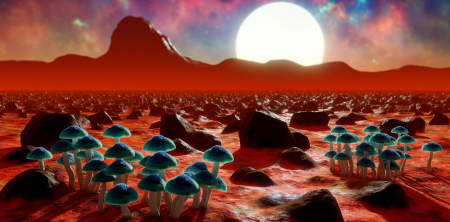
As humanity stands on the brink of a new era in space exploration, the quest for understanding life beyond Earth has taken an intriguing turn. A recent study published on April 26, 2026, sheds light on the resilience of certain fungi under conditions that closely resemble those found on Mars. This groundbreaking research not only enhances our understanding of extremophiles—organisms that thrive in extreme environments—but also opens new avenues for life support systems and contamination risk assessments for future Mars missions.
The Context of Space Exploration
With space agencies like NASA and private enterprises ramping up efforts to send humans to Mars, the need for sustainable life support systems has never been more critical. As part of these preparations, scientists are investigating various biological entities that might contribute to human survival on the Red Planet. This includes not only the cultivation of plants but also the study of microorganisms, particularly fungi, which have shown exceptional resilience in hostile environments.
Fungi: Nature's Resilient Organisms
Fungi are a diverse group of organisms that include yeasts, molds, and mushrooms. They play crucial roles in ecosystems on Earth, such as decomposing organic matter and forming symbiotic relationships with plants. One of the most fascinating aspects of fungi is their ability to survive in extreme conditions, from deep-sea vents to arid deserts. This resilience makes them ideal candidates for survival studies in extraterrestrial environments.
Previous Research on Extremophiles
Over the years, various studies have documented the survival capabilities of extremophiles, including fungi, in extreme conditions. For example, Aspergillus niger has been shown to thrive in high-radiation environments, while Pleurotus ostreatus, commonly known as the oyster mushroom, has exhibited resistance to desiccation and temperature fluctuations. These findings provide a foundation for understanding how fungi might fare in Mars-like conditions, characterized by low temperatures, high radiation levels, and limited water availability.
The Recent Study: Key Findings
The recent study that was reported by the Times of India marks a significant milestone in our understanding of fungal resilience. While specific species and detailed statistics were not disclosed in the preview, the implications of the findings are profound. Researchers aimed to simulate the Martian environment in controlled laboratory settings to observe how different fungi would respond to the harsh conditions.
Simulating Martian Conditions
To mimic the Martian atmosphere, researchers recreated several of its key characteristics:
- Low Atmospheric Pressure: Mars has an atmospheric pressure less than 1% of Earth’s, which can create challenges for biological organisms.
- Extreme Temperatures: Temperatures on Mars can plummet to -125 degrees Celsius, making it one of the coldest places in the solar system.
- Radiation Levels: The lack of a protective magnetic field exposes the Martian surface to higher levels of cosmic radiation, which can be harmful to living organisms.
- Scarcity of Water: Water is a critical component for all known life forms. Mars has very little accessible liquid water, posing a significant challenge for survival.
Fungal Survival Mechanisms
While the study did not specify the fungi species tested, researchers noted that many fungi exhibit unique survival mechanisms that may allow them to withstand extreme conditions:
- Desiccation Tolerance: Some fungi can enter a dormant state during periods of extreme dryness, allowing them to survive until conditions improve.
- Radiation Resistance: Certain fungi possess DNA repair mechanisms that enable them to recover from damage caused by high radiation levels.
- Metabolic Flexibility: Fungi can adapt their metabolic processes based on available resources, allowing them to utilize alternative energy sources.
- Symbiotic Relationships: Mycorrhizal fungi form symbiotic relationships with plants, helping them absorb nutrients and water, which could be advantageous in Martian soil.
Implications for Mars Missions
The findings from this study carry significant implications for future Mars missions. As researchers delve deeper into the resilience of fungi, several key areas of interest emerge:
Life Support Systems
One of the most pressing challenges for human missions to Mars is establishing sustainable life support systems. The ability to cultivate fungi could play a pivotal role in food production and waste recycling. For instance, edible fungi can provide essential nutrients, and their ability to break down organic waste could contribute to a closed-loop life support system.
Contamination Risks
As humans prepare to explore Mars, concerns about contamination—both from Earth to Mars and vice versa—become paramount. The survival of terrestrial fungi in Martian conditions raises questions about their potential to thrive on Mars and impact its environment. Understanding these risks is crucial for maintaining the integrity of Martian ecosystems and preventing unintended consequences.
Future Research Directions
Given the promising results of this study, future research is likely to focus on identifying specific fungal species and their mechanisms of survival. In-depth studies could include:
- Exploration of genetic adaptations that enable fungi to survive in extreme conditions.
- Field studies to observe fungal behavior in simulated Martian environments.
- Investigations into the potential for bioengineering fungi to enhance their resilience further.
Conclusion
The discovery that certain fungi can survive in Mars-like conditions not only enriches our understanding of life's resilience but also has far-reaching implications for future space missions. As we prepare to embark on the journey to Mars, the role of fungi in supporting human life and safeguarding Martian ecosystems cannot be overstated. This study marks a significant step forward in our quest to uncover the secrets of life beyond our planet and highlights the incredible adaptability of life in the face of adversity.
A Call to Action
As the scientific community continues to explore the potential of extremophiles in space exploration, it is essential for researchers, policymakers, and the public to engage in discussions about the ethical implications of our endeavors. How we approach the discovery and utilization of life forms, both on Earth and beyond, will shape the future of space exploration and our understanding of life itself.
In conclusion, the resilience of fungi serves as a reminder of the tenacity of life, urging us to consider the broader implications of our search for extraterrestrial life and the responsibilities that come with it.

