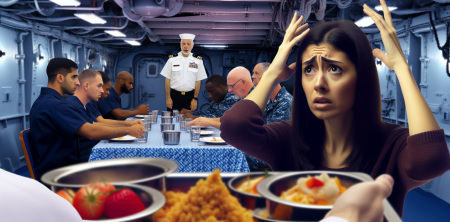
The United States Navy is once again under scrutiny as leaked images from the USS Abraham Lincoln, a prominent warship stationed in the Middle East, have surfaced, revealing what many are calling unacceptable food quality served to sailors. The images, shared by retired US Air Force member Gerald D. Givens Jr. and originating from a serving officer aboard the ship, highlight a disturbing trend in military logistics that has sparked a wave of criticism aimed at the Pentagon.
Leaked Images Raise Concerns
The controversy began when Givens shared the images on social media, showcasing meals that many have criticized for their poor quality and lack of nutritional value. According to the officer who provided the photos, the meals served aboard the USS Abraham Lincoln fall far below the standards expected for military personnel, particularly those deployed in high-stress environments like the Middle East.
The Importance of Nutrition in Combat Zones
Nutrition plays a critical role in maintaining troop morale and operational readiness. As tensions in the region continue to escalate, the necessity for well-fed and healthy sailors cannot be overstated. Poor-quality food can lead to decreased morale, which in turn can affect performance and effectiveness in the field. Critics have pointed out that the military must prioritize the well-being of its personnel, especially in challenging deployments.
Public Reaction and Criticism
The leaked images have prompted a swift response from the public and military advocates. Many have taken to social media to express their outrage, emphasizing that service members deserve better treatment and conditions. The hashtag #BetterFoodForSailors has been trending on various platforms, with thousands calling for immediate action to improve food quality in military operations.
- Veterans' Voices: Many veterans have shared their own experiences regarding food quality during their service, recounting instances of subpar meals that they endured during deployments.
- Military Advocates: Advocacy groups have chimed in, asserting that the military's logistical practices must be reevaluated to ensure that personnel are adequately supported in all aspects, including nutrition.
Logistical Challenges in Military Operations
Providing quality meals to military personnel in combat zones presents unique logistical challenges. Supply chain issues, limited resources, and the harsh realities of deployment can complicate food service operations. However, critics argue that these challenges should not excuse the delivery of low-quality meals.
The Pentagon's Response
In response to the backlash, the Pentagon has stated that they are investigating the claims surrounding the food quality aboard the USS Abraham Lincoln. A spokesperson for the Navy emphasized that they take such matters seriously and are committed to ensuring that all service members receive the best support possible during their deployments.
Historical Context of Military Food Quality
This incident is not the first time the military has faced criticism over food quality. Over the years, various reports and studies have highlighted concerns about the nutritional standards and preparation of meals served to service members. In 2017, a survey conducted by the Navy found that more than half of sailors were dissatisfied with the quality of food provided on ships, leading to calls for reform.
Importance of Meal Quality in Enhancing Morale
Food is more than just sustenance; it is a crucial component of morale for service members. A well-fed sailor is more likely to perform optimally in high-stress situations. The camaraderie built around shared meals can greatly enhance unit cohesion and overall morale. Thus, the quality of food served should be a priority for military logistics.
Expert Opinions on the Issue
Experts in military logistics and nutrition have weighed in on the importance of providing high-quality meals to service members. Dr. Sarah Mitchell, a nutrition expert who has worked with military organizations, stated, "Food quality is directly linked to performance. When soldiers are well-nourished, they are more alert, capable, and ready to face the challenges ahead."
Furthermore, military psychologist Dr. James Carter emphasized that poor food can lead to psychological stress, which can impair decision-making and effectiveness in the field. "Increased stress levels can lead to decreased morale, which poses risks not only to the individual but also to the entire unit's mission success," he explained.
Recommendations for Improvement
In light of the recent controversy, several recommendations have emerged for improving food quality in the military:
- Regular Quality Audits: Implementing more frequent inspections of food service operations to ensure adherence to nutritional standards.
- Feedback Mechanisms: Establishing channels for service members to provide feedback on food quality, allowing for real-time adjustments and improvements.
- Collaboration with Nutritionists: Partnering with nutrition experts to design menus that are not only appealing but also nutritionally adequate.
- Enhanced Training for Food Service Personnel: Providing better training and resources for those responsible for preparing and serving food on military vessels.
Conclusion: A Call to Action
The leaked images from the USS Abraham Lincoln serve as a stark reminder of the challenges faced by service members in maintaining their well-being during deployment. As public outcry grows, it is clear that the Pentagon must take decisive action to address food quality issues and ensure that sailors receive the support they require to excel in their duties.
As the military continues to navigate complex global challenges, prioritizing the welfare of service members—starting with their nutrition—will be crucial in maintaining operational readiness and morale. The time for change is now, and the voices advocating for better food for sailors must not be ignored.
In conclusion, ensuring that all service members have access to quality meals during their deployments is not only a matter of logistical efficiency but also a moral obligation. The health and morale of our troops depend on it, and the Pentagon must rise to the occasion.

