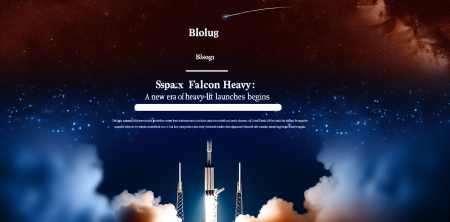
On April 27, 2023, SpaceX embarked on a significant milestone in space exploration with the scheduled liftoff of its Falcon Heavy rocket. This launch, taking place at 10:21 a.m. ET, marks not only the 12th flight of the Falcon Heavy but also its first mission in 18 months. As one of the most powerful rockets in the world, the Falcon Heavy is poised to demonstrate its heavy-lift capabilities once again, reinforcing SpaceX's position as a leader in the aerospace industry.
The Significance of the Falcon Heavy
The Falcon Heavy, which made its debut in February 2018, has since been recognized for its impressive capacity to lift large payloads into orbit. With the ability to carry over 140,000 pounds (63,000 kg) to low Earth orbit, it is a powerful tool for both commercial and governmental space missions. The rocket’s construction features three Falcon 9 first stage cores, which are augmented with a total of 27 Merlin engines, producing a combined thrust of over 5 million pounds at liftoff. This extraordinary capability allows the Falcon Heavy to undertake missions that were previously considered impossible for commercial rockets.
A Look Back at Previous Launches
Before this recent mission, the last Falcon Heavy launch occurred in June 2021, when it delivered the US Space Force's STP-2 mission to orbit. Over its history, the Falcon Heavy has completed an array of missions, including the iconic launch of Elon Musk's Tesla Roadster into space, which captured the public's imagination and showcased the rocket's potential.
Viasat-3 F3 Mission
The April 27 launch is particularly significant as it carries the Viasat-3 F3 satellite, the third in a series of advanced communication satellites designed to provide high-speed internet services globally. This satellite aims to enhance Viasat’s broadband network capabilities, which are crucial for various sectors, including telecommunications, military, and commercial industries.
What the Viasat-3 F3 Satellite Offers
- Global Coverage: The satellite is designed to deliver high-speed internet access to underserved and remote regions worldwide.
- Advanced Technology: Viasat-3 F3 incorporates the latest advancements in satellite technology, ensuring robust performance and reliability.
- Increased Capacity: The satellite is expected to significantly expand Viasat's bandwidth, allowing for more users and higher data speeds.
The Importance of Heavy-Lift Rockets
Heavy-lift rockets like the Falcon Heavy play a crucial role in advancing space exploration and technology. They enable the launch of larger payloads, including satellites, scientific instruments, and even crewed missions. As humanity pushes further into space, the need for such powerful vehicles becomes increasingly vital.
Applications of Heavy-Lift Launches
- Satellite Deployment: Heavy-lift rockets can place multiple satellites into orbit, facilitating improved communication and data collection.
- Interplanetary Missions: These rockets are essential for launching missions to Mars, the Moon, and beyond, carrying the necessary equipment for exploration.
- Space Station Resupply: Heavy-lift capabilities allow for the transport of large cargo to the International Space Station (ISS), supporting ongoing research and international cooperation.
SpaceX's Role in the Future of Space Exploration
SpaceX's advancements in rocket technology and its commitment to reducing launch costs have transformed the aerospace industry. The Falcon Heavy's return to flight represents not only a technical achievement but also a renewed commitment to the future of space exploration. As the company continues to innovate, it paves the way for new missions, partnerships, and opportunities in space.
Future Missions on the Horizon
With the Falcon Heavy back in action, SpaceX has ambitious plans for its future missions, including:
- NASA Collaborations: Future missions may involve collaboration with NASA for crewed and uncrewed missions beyond low Earth orbit.
- Commercial Launches: SpaceX aims to secure more contracts for commercial payload launches, particularly for telecommunications companies.
- International Partnerships: The company is exploring opportunities for international missions, working with other space agencies and private enterprises.
The Road Ahead
The Falcon Heavy's first launch in 18 months is a testament to SpaceX's resilience and innovation in the face of challenges. As the aerospace industry continues to evolve, the importance of reliable heavy-lift rockets cannot be overstated. The Falcon Heavy will not only support commercial endeavors but also play a crucial role in scientific exploration and discovery.
Conclusion
The April 27 launch of the Falcon Heavy rocket signifies a new chapter for SpaceX and the broader space community. As we watch this powerful vehicle take to the skies, we are reminded of the limitless potential of space exploration and the importance of ongoing investment in technology and innovation. With the Falcon Heavy, SpaceX is not just launching payloads into orbit; it is launching the future of space exploration.

