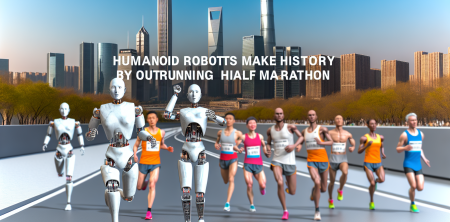
The world of technology took a remarkable leap forward during the Beijing Half Marathon, where humanoid robots not only participated but also outpaced human runners. This unprecedented event has raised eyebrows and sparked discussions about the future of robotics and artificial intelligence (AI) in sports and beyond.
The Race That Redefined Possibilities
On a sunny day in Beijing, the half marathon transformed from a traditional athletic competition into a showcase of cutting-edge technology. Developers from leading tech firms unveiled their latest creations—humanoid robots engineered for bipedal locomotion. These advanced machines did not just participate; they completed the race faster than some of the most skilled human athletes, marking a significant milestone in robotics.
The Robots Behind the Revolution
These humanoid robots were developed through collaborative efforts between robotics engineers and AI specialists, utilizing years of research and testing. The robots featured:
- Advanced Sensors: Equipped with state-of-the-art sensors, these robots could navigate the course, avoid obstacles, and adapt to changes in terrain.
- Artificial Intelligence: The integration of AI allowed for real-time decision-making, enabling the robots to optimize their speed and endurance during the race.
- Bipedal Locomotion: Cutting-edge algorithms facilitated smoother and more efficient movement, mimicking human running patterns.
Performance Metrics: A Closer Look
The results from the marathon were astounding. The humanoid robots not only finished the race but did so in record times that surpassed many elite human runners. While the specifics of their times vary, some robots completed the half marathon in under 90 minutes, an impressive feat for machines that have only recently begun to master the art of running.
Comparative Analysis: Robots vs. Humans
To understand the significance of this event, it's essential to look at the performance of both robots and human participants. The elite human runners, typically clocking in at under 70 minutes for a half marathon, found themselves outpaced by machines designed specifically for speed and endurance. This performance disparity highlights the advancements in technology that have propelled robotics into new realms of capability.
The Implications for Sports and Beyond
The implications of humanoid robots outperforming humans in a competitive setting extend far beyond the realm of sports. Experts are beginning to speculate about the potential integration of robots in various industries, including:
- Logistics: Robotics technology could revolutionize warehouse operations, optimizing delivery systems and inventory management.
- Healthcare: Humanoid robots may assist in patient care, rehabilitation, and even surgery, offering precise capabilities that could enhance human efforts.
- Fitness and Training: The insights gained from these robots can be utilized to improve human athletic performance, providing data-driven analysis and training regimens.
The Future of Robotics in Society
As humanoid robots continue to improve, their potential applications in everyday life are vast. The event in Beijing serves as a critical point of discussion regarding how society will adapt to these advancements. Will robots become commonplace in sports, logistics, and healthcare? How will they coexist with humans, and what ethical considerations will arise?
Ethical Considerations
The integration of robots into society brings forth numerous ethical considerations, including:
- Job Displacement: As robots take on roles traditionally held by humans, concerns about job loss and economic impact arise.
- Fair Competition: In sports, the presence of robots raises questions about the integrity of competition and the definition of athleticism.
- Dependence on Technology: An increasing reliance on robots could lead to a decline in human skills and capabilities.
Public Perception and Acceptance
The public's perception of humanoid robots will significantly influence their acceptance and integration into society. The Beijing Half Marathon showcased these robots in a positive light, highlighting their capabilities and potential benefits. However, acceptance will largely depend on how well society perceives the advantages and drawbacks of robotic technology.
Innovations in Robotics
The technology demonstrated during the marathon is only the tip of the iceberg. Future innovations may include:
- Enhanced Mobility: Continued improvements in bipedal locomotion could lead to robots that can navigate varied terrains with ease.
- AI Advancements: As AI continues to evolve, robots will become more autonomous and intelligent, opening up new possibilities for their application.
- Collaboration with Humans: The future may see humans and robots working side by side, enhancing productivity and efficiency in numerous fields.
Conclusion: A New Era of Robotics
The Beijing Half Marathon marked a pivotal moment in the history of robotics, illustrating the capabilities of humanoid robots in a competitive setting. Their ability to outperform human runners raises significant questions about the future of technology in sports, logistics, healthcare, and daily life.
As we stand on the brink of a new era defined by advanced robotics and AI, society must grapple with the implications of this technology. The potential benefits are immense, but so too are the challenges that lie ahead. The journey of humanoid robots is just beginning, and as they continue to evolve, they will undoubtedly shape the future in ways we are only beginning to understand.

