Introduction
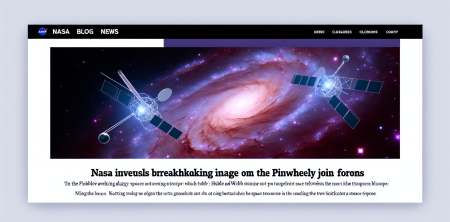
NASA has recently unveiled a stunning new image of the Pinwheel Galaxy, also known as Messier 101, merging the advanced capabilities of two of its premier space observatories: the Hubble Space Telescope and the James Webb Space Telescope (JWST). This unprecedented collaboration not only showcases the breathtaking beauty of the galaxy but also highlights the complementary strengths of these two observatories in exploring the cosmos. The intricate details revealed in this image provide valuable insights into the galaxy's structure, star-forming regions, and stellar populations, offering researchers around the globe new avenues for studying galactic evolution.
The Pinwheel Galaxy: An Overview
The Pinwheel Galaxy, located approximately 21 million light-years away in the constellation Ursa Major, is one of the largest and most striking spiral galaxies visible from Earth. With a diameter of about 170,000 light-years, it contains over a trillion stars and is renowned for its well-defined spiral arms that are rich in gas and dust, making it a prime target for astronomical study.
- Distance: Approximately 21 million light-years from Earth
- Diameter: About 170,000 light-years
- Star Count: Contains over a trillion stars
- Location: Constellation Ursa Major
The Hubble Space Telescope: A Legacy of Discovery
Launched in 1990, the Hubble Space Telescope has revolutionized our understanding of the universe. With its powerful optical instruments, Hubble has captured some of the most iconic images of space, including those of distant galaxies, nebulae, and exoplanets. Its ability to observe in visible and ultraviolet wavelengths has made it an invaluable tool for astronomers.
Hubble's Contribution to the Pinwheel Galaxy Image
In the recent image of the Pinwheel Galaxy, Hubble's high-resolution capabilities were instrumental in capturing detailed views of the galaxy's spiral arms and the intricate structures contained within them. The telescope's observations reveal the swirling patterns of dust and gas that characterize Messier 101, providing a glimpse into the processes that govern star formation and galactic evolution.
The James Webb Space Telescope: The Next Frontier
Launched in December 2021, the James Webb Space Telescope has been heralded as the successor to Hubble, designed to observe the universe in infrared wavelengths. This capability allows Webb to peer through cosmic dust clouds, revealing phenomena that are often invisible to optical instruments. Its advanced technology is enabling astronomers to explore the early universe, study the atmospheres of exoplanets, and investigate the formation of stars and galaxies.
Webb's Unique Observational Strengths
In the collaboration with Hubble, Webb's infrared observations complement those of its predecessor by highlighting regions of intense star formation within the Pinwheel Galaxy. By detecting heat emitted by young stars and identifying the chemical compositions of various galactic components, Webb provides a more comprehensive view of the galaxy's life cycle.
A Collaborative Effort: Merging Observations
The combination of Hubble and Webb's data in the new Pinwheel Galaxy image exemplifies the power of collaboration in astronomical research. By merging the distinct strengths of both telescopes, scientists can achieve a more complete understanding of the galaxy's structure and dynamics.
Advanced Imaging Techniques
The stunning image released by NASA is the result of sophisticated imaging techniques that merge data from both telescopes. These techniques allow astronomers to create a composite image that showcases the full range of wavelengths observed. The result is a breathtaking portrayal of the Pinwheel Galaxy, revealing intricate details and varying colors that represent different elements and processes within the galaxy.
Insights into Galactic Evolution
The new image of the Pinwheel Galaxy not only captivates the eye but also serves as a valuable resource for researchers studying galactic evolution. The intricate structures within the galaxy's spiral arms, as observed through the combined data, provide clues about the processes that influence star formation and the overall life cycle of galaxies.
The Role of Star Formation
Star formation is a fundamental aspect of galaxy evolution, and the Pinwheel Galaxy is a prime example of this process in action. The new observations highlight areas within the galaxy where stars are being born, illuminating the mechanisms that lead to the creation of new stellar populations. Understanding these processes is crucial for astronomers as they seek to unravel the complexities of how galaxies develop over time.
Conclusion: A New Era of Astronomy
The collaboration between the Hubble Space Telescope and the James Webb Space Telescope marks a significant milestone in the field of astronomy. The breathtaking image of the Pinwheel Galaxy serves as a testament to the advancements in technology and imaging techniques that have transformed our understanding of the universe. As researchers continue to analyze the data captured by these observatories, new discoveries are likely to emerge, shedding light on the mysteries of galactic evolution and the cosmos as a whole.
In an era where collaboration and technological innovation are increasingly intertwined, the combined efforts of Hubble and Webb not only enhance our understanding of individual galaxies but also pave the way for future astronomical explorations. The Pinwheel Galaxy, with its stunning beauty and rich scientific potential, will undoubtedly remain a focal point for astronomers for years to come.

