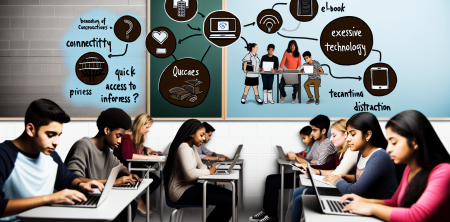
The rise of educational technology (ed tech) in schools across the United States has prompted discussions that are as heated as they are polarizing. While many advocate for the benefits that digital tools and resources bring to learning environments, there is a growing concern that the ed tech disadvantages might overshadow these advantages. As educators, parents, and students navigate this digital landscape, several alarming trends have emerged, revealing that screens might do more harm than good.
The Surge of Screens in the Classroom
Over the past decade, schools have increasingly integrated digital technology into their curricula. From interactive displays to online learning platforms, technology is now commonplace in classrooms. The convenience of accessing information at the click of a button is undeniable, making it easier for students to engage with content and collaborate with peers.
However, this proliferation of screens has also drawn significant backlash. Many states are now enacting bans on student cell phones, citing concerns about distractions and the detrimental effects on mental health. These legislative actions reflect a rising apprehension among parents and educators who fear that the constant connectivity may be harming children more than helping them.
Growing Backlash Against Ed Tech
The backlash against educational technology is evident in various ways. Parents and teachers are voicing their concerns about the potential negative impacts of excessive screen time, particularly in younger students. A growing body of research suggests that increased exposure to screens can lead to a range of issues, including reduced attention spans, poor academic performance, and heightened feelings of isolation.
Social media has become a battleground for these discussions, with memes and heated debates circulating about the need for 'screen-free' school policies. The fear of missing out (FOMO) has also played a role in shaping these conversations. Parents worry that their children might fall behind their peers in an increasingly digital world, yet they are also alarmed at the prospect of technology compromising their kids' mental well-being.
The Impact on Attention Spans
One of the most troubling ed tech disadvantages is the effect on students' attention spans. Numerous studies suggest that the constant exposure to digital devices and their inherent distractions can lead to shorter attention spans and difficulty concentrating. This is particularly concerning in a learning environment where sustained focus is crucial for understanding complex concepts.
According to research published by the American Psychological Association, children who spend more time on screens tend to exhibit lower levels of attention and increased impulsivity. Educators have noted that students who are accustomed to instant gratification—like that provided by smartphones and video games—often struggle to engage with traditional learning methods that require patience and prolonged concentration.
Social Isolation and Mental Health Concerns
Another significant issue is the potential for social isolation among students. While technology can facilitate communication, it can also lead to a decline in face-to-face interactions. The reliance on digital communication may hinder the development of essential social skills, which are crucial for building relationships and navigating the complexities of interpersonal interactions.
Moreover, studies have linked excessive screen time with increased mental health issues, such as anxiety and depression. The pressures of social media, combined with the addictive nature of digital devices, can create a toxic environment for students. Parents are increasingly concerned about their children's well-being, prompting a re-evaluation of the role of technology in education.
Contrasting Approaches: Bans vs. Adoption of AI
The current landscape of ed tech is characterized by a stark contrast between the rejection of certain technologies and the adoption of others. On one hand, many districts are implementing bans on cell phones to mitigate distractions and promote a healthier learning environment. On the other hand, there is a push towards integrating artificial intelligence (AI) into educational settings, which presents its own set of challenges and concerns.
While the AI movement aims to personalize education and streamline administrative tasks, critics caution against potential pitfalls. The use of AI can inadvertently further exacerbate existing inequalities and may lead to a loss of human connection in the educational process. As districts roll out ambitious AI action plans, educators and parents are left grappling with the implications of such technologies.
Emerging Studies Supporting Concerns
As the debate around ed tech continues to grow, new studies are emerging that support the concerns voiced by parents and educators. Research has indicated that the long-term effects of excessive screen time can manifest in developmental delays, particularly in young children. Early exposure to screens may hinder cognitive development, affecting critical thinking and problem-solving skills.
Additionally, a study conducted by the National Institute of Health highlighted the correlation between screen time and the development of mood disorders in adolescents. These findings underscore the need for a balanced approach to technology in education, one that prioritizes mental health and well-being alongside academic achievement.
The Future of Ed Tech: Finding a Balance
As conversations around the ed tech disadvantages intensify, it is crucial for educators, policymakers, and parents to engage in a dialogue that seeks to find a balance between technological integration and the well-being of students. The goal should not be to completely ban technology, but rather to implement thoughtful guidelines that foster healthy usage.
Schools can initiate programs that educate students about responsible technology use, emphasizing the importance of taking breaks from screens and engaging in offline activities. Furthermore, fostering an environment that encourages collaboration and interpersonal communication can mitigate some of the social isolation associated with digital learning.
Conclusion: A Critical Crossroads
The debate over educational technology is at a critical crossroads. As schools increasingly depend on digital tools to enhance learning, the accompanying ed tech disadvantages cannot be overlooked. It is imperative for stakeholders to reflect on the current trajectory of technology usage in education and work towards strategies that prioritize the developmental needs of children.
Ultimately, the goal should be to harness the benefits of technology while minimizing its adverse effects. Striking this balance requires vigilance, continuous research, and a commitment to holistic education that prepares students not only academically but also socially and emotionally for the challenges of the future.

