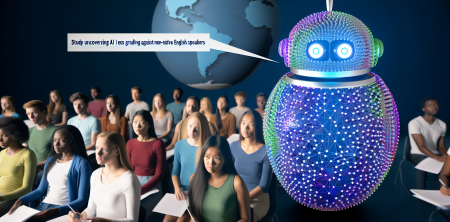
In an era where technology is rapidly transforming the educational landscape, a recent study has unveiled a troubling issue: AI essay grading bias against non-native English speakers. This research highlights significant algorithmic discrimination within Automated Essay Scoring (AES) systems, raising pressing questions about equity in education and the fairness of artificial intelligence in academic settings. As educational institutions increasingly adopt AI tools to streamline assessments, the implications of these findings could reshape our understanding of educational equity amidst a digital revolution.
The Rise of AI in Education
Artificial Intelligence has made significant inroads into various aspects of education, from personalized learning experiences to administrative efficiencies. One of the most discussed applications has been in grading essays, where AI systems promise to provide quick feedback and standardize evaluations. Advocates argue that these systems can help alleviate the workload of educators, enabling them to focus on more nuanced aspects of teaching.
However, the potential for bias within these systems raises a red flag. The study conducted by researchers delves into the efficacy and fairness of AI grading systems, particularly as they pertain to students from diverse linguistic backgrounds. This growing body of evidence points to a broader issue that could adversely affect the academic careers of non-native English speakers.
Understanding the Study
The comprehensive research highlights that while AI graders excel in administrative tasks, they often falter when it comes to evaluating complex argumentative structures and creative synthesis. These are crucial elements of effective essay writing, and their mismanagement can lead to severe consequences for students who rely on fair assessments to demonstrate their capabilities.
One of the core findings of the study is that AI systems tend to penalize non-native speakers more harshly than their native counterparts. This bias stems not from the quality of the arguments presented but rather from an overemphasis on language proficiency. Consequently, students who may have deeply insightful ideas but struggle with language intricacies are often rated poorly, which does not reflect their true academic merit.
The Implications of AI Essay Grading Bias
As AI tools become more prevalent in educational settings, the ramifications of this bias could be profound. Non-native English speakers may find themselves at a disadvantage, which could ultimately widen the existing educational gap. The potential for AI essay grading bias raises several critical issues:
- Equity in Assessment: Fair assessments are foundational to educational equity. If non-native speakers are consistently graded lower due to biases within the grading algorithms, this could result in systemic disadvantages.
- Impact on Academic Opportunities: Poor grading could hinder non-native speakers' chances of receiving scholarships, admissions into prestigious programs, or even job placements that rely on academic performance.
- Perpetuation of Discrimination: Relying heavily on AI for grading could perpetuate existing biases in educational institutions. This echoes broader societal issues related to linguistic discrimination.
Examining Language Proficiency vs. Academic Merit
The research highlights a critical flaw inherent in AES systems: the conflation of language proficiency with academic merit. Students from diverse backgrounds often possess unique perspectives and innovative ideas, but these may be overshadowed by linguistic challenges. The study underscores that AI essay grading bias does not reflect the true abilities of these students and that educational institutions must recognize this disparity.
Furthermore, the study discusses how traditional grading methods, while not without their flaws, may offer a more holistic view of a student’s capabilities. Experienced educators often take into account the nuances of language use and the context of a student's background, enabling a more tailored assessment. In contrast, AI systems tend to apply rigid criteria that can overlook the creative essence of student writing.
Voices from the Educational Community
The findings of this research have sparked a heated debate among educators, parents, and policymakers. Many are calling for immediate regulatory oversight regarding the use of AI in high-stakes academic assessment. The concerns center around the implications of deploying these grading systems without addressing their inherent biases.
Social media has become a platform for educators and students to share personal experiences related to AI grading failures. Stories of misgraded essays have flooded online forums, amplifying calls for a reevaluation of AI's role in educational assessments. Many educators argue that while AI can offer valuable insights, it should not replace the human element in grading.
Calls for Regulatory Oversight
The urgency of the situation is apparent, with various stakeholders advocating for strict guidelines surrounding AI in education. These calls for regulatory oversight center on several key areas:
- Transparency: Educators and students demand transparency in how AI systems arrive at their grading decisions. Understanding the algorithms and data sets used is essential to identify potential biases.
- Accountability: Educational institutions need to establish accountability measures for AI grading systems. Who is responsible when an algorithm misjudges a student's capabilities?
- Human Oversight: Many experts advocate for a hybrid approach that combines AI grading with human oversight to ensure a fair assessment process. Human graders can provide the context and nuance that AI may overlook.
The Future of AI in Education
As the educational landscape continues to evolve, the role of AI must be carefully considered. While there are undeniable benefits to incorporating AI, the risks associated with AI essay grading bias cannot be ignored. The findings from the recent study serve as a stark reminder that advancing technology must not come at the cost of fairness and equity in education.
Moving forward, educational institutions must engage in proactive discussions about the integration of AI tools. This includes continuous monitoring and evaluation of AI systems to ensure they are inclusive and equitable. The conversation must also involve non-native speakers, whose voices and experiences are crucial in shaping a system that truly represents and accommodates all students.
Encouraging Inclusive Practices
While it is clear that AI has the potential to enhance education, it's equally important to focus on cultivating inclusive practices that support diverse learners. Institutions can implement several strategies to address the challenges posed by AI essay grading bias:
- Customized Feedback: Providing personalized feedback for non-native speakers can help bridge the gap between language proficiency and academic performance.
- Professional Development: Educators should receive training on the implications of AI grading and how to support students from diverse linguistic backgrounds effectively.
- Engagement with Linguistic Diversity: Encouraging dialogues about linguistic diversity within the classroom can foster understanding and promote a more inclusive learning environment.
Conclusion
The findings from the study on AI essay grading bias against non-native English speakers raise significant concerns that resonate beyond academia. They invite a broader examination of the intersection between technology and education, urging stakeholders to prioritize equity and fairness in all assessment methods. As we navigate this digital frontier, it is crucial to advocate for systems that genuinely reflect the diverse capabilities of all learners, ensuring that technology serves as a tool for empowerment rather than a barrier to success.
In summary, as AI continues to evolve, it presents both exciting opportunities and formidable challenges. Addressing the biases inherent in these systems is not just about improving grading accuracy; it is about safeguarding the future of education for all students, ensuring that every voice is heard and valued in the pursuit of knowledge.

