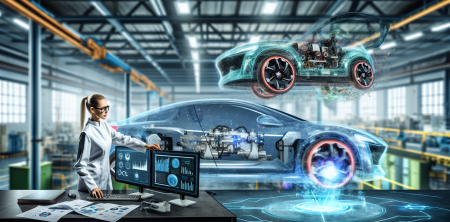
The automotive industry is undergoing a seismic shift as it embraces the era of high performance computing (HPC). This evolution is not just a passing trend; it's a critical component that is reshaping how vehicles are designed, manufactured, and ultimately driven. With the market for high performance computing automotive projected to reach USD 5.12 billion by 2025, and expected to grow to USD 9.06 billion by 2030, the implications of this technology are profound and far-reaching.
The Rise of High Performance Computing in Automotive
High performance computing refers to the use of supercomputers and advanced computing capabilities to solve complex computational problems. In the context of the automotive sector, HPC is becoming increasingly vital for several reasons:
- Autonomous Driving Systems: The demand for self-driving vehicles is surging, necessitating advanced computational capabilities to process data from countless sensors in real-time.
- AI-Enabled Architectures: Artificial intelligence is at the forefront of automotive innovation, allowing for smarter vehicle designs and enhanced user experiences.
- Connected Mobility Platforms: The rise of connected vehicles means data is constantly shared and analyzed, requiring robust computing power.
- Advanced Simulation Technologies: HPC enables more accurate simulations in vehicle testing and design, reducing time-to-market and enhancing safety.
Market Projections and Growth Rate
According to Data Bridge Market Research, the high performance computing automotive market is set to experience a compound annual growth rate (CAGR) of 12.1%. This growth indicates a significant technological revolution within the automotive industry, driven primarily by the need for more sophisticated vehicle systems and an increased emphasis on safety and efficiency.
The breakdown of projections is staggering:
- USD 5.12 billion in 2025
- USD 5.74 billion in 2026
- USD 9.06 billion by 2030
These figures reflect a burgeoning market where the integration of HPC is becoming non-negotiable for automotive manufacturers aiming to stay competitive.
Driving Factors Behind HPC Growth
The expansion of the high performance computing automotive market is not happening in a vacuum. Several key drivers are fueling this growth:
1. Autonomous Driving Demand
With the promise of fully autonomous vehicles on the horizon, companies are investing heavily in technologies that enable self-driving capabilities. This includes not only the software that interprets data from sensors but also the hardware that can process this information at lightning speed. As automotive manufacturers gear up for widespread adoption of autonomous technology, the need for HPC becomes increasingly critical.
2. Advancements in Artificial Intelligence
AI is revolutionizing many sectors, and the automotive industry is no exception. AI algorithms are being integrated into vehicle systems to enhance decision-making processes, optimize driving behaviors, and personalize user experiences. The high computational demand of AI applications necessitates high performance computing to operate effectively.
3. The Shift Towards Connected Vehicles
The trend towards connected mobility platforms necessitates extensive data analysis. Vehicles are now equipped with an array of sensors and connectivity features that allow for real-time data sharing. HPC facilitates the processing of this data, enabling features like predictive maintenance, over-the-air updates, and advanced driver-assistance systems (ADAS).
4. Enhanced Simulation Capabilities
As vehicle manufacturers seek to innovate while ensuring safety and regulatory compliance, advanced simulation technologies become indispensable. HPC allows for detailed simulations that can predict vehicle performance under various scenarios, which significantly reduces the costs and time associated with physical testing.
The Competitive Landscape
The competitive landscape of the high performance computing automotive market is diverse and dynamic. Key players include major automotive manufacturers, tech companies, and specialized HPC service providers. These entities are constantly collaborating and competing to deliver cutting-edge solutions that address the evolving needs of the automotive sector.
Some notable companies making strides in HPC for automotive applications include:
- NVIDIA: Known for its GPU technology, NVIDIA is driving advancements in AI and machine learning, which are critical for autonomous vehicle development.
- Intel: Intel's processors are used in various automotive applications, providing the computing power necessary for real-time data processing.
- Siemens: Siemens offers a suite of software tools that utilize HPC for simulation and design optimization in automotive engineering.
- Google: With its Waymo division, Google is at the forefront of developing technology for autonomous vehicles, heavily relying on HPC for processing large datasets.
Impact on Automotive Manufacturing
The integration of high performance computing into automotive manufacturing processes is transforming traditional methodologies. By leveraging HPC, manufacturers can streamline production lines, enhance quality control, and reduce waste.
One significant impact is the ability to optimize supply chain management. HPC enables real-time tracking and analysis of inventory levels, production schedules, and logistics, which can minimize delays and reduce costs.
Enhanced Design Processes
With HPC, automotive design teams can simulate and test thousands of design variations in a fraction of the time it would take using conventional methods. This capability allows for rapid prototyping and design iterations, facilitating faster innovation cycles.
Quality Assurance and Safety
High performance computing plays a critical role in quality assurance by enabling more rigorous testing protocols. Manufacturers can simulate crash tests, analyze structural integrity, and assess performance metrics under various conditions, all contributing to safer vehicles.
Consumer Implications
The shift towards high performance computing in the automotive industry has profound implications for consumers. As manufacturers adopt these technologies, the vehicles produced will become increasingly capable, efficient, and safe.
Moreover, the integration of AI and HPC will pave the way for enhanced features such as:
- Advanced Safety Systems: Vehicles will be equipped with enhanced safety features powered by AI, including automatic braking, collision avoidance, and adaptive cruise control.
- Smart Navigation: HPC will enable real-time traffic analysis and route optimization, making travel more efficient.
- Personalized Experiences: As vehicles become smarter, they will learn driver preferences, making adjustments to enhance comfort and convenience.
Challenges Facing High Performance Computing in Automotive
Despite the promising outlook for high performance computing automotive, several challenges remain that could impact its adoption:
1. Cost of Implementation
Integrating HPC systems can be expensive. For smaller manufacturers, the initial investment required to upgrade infrastructure may pose a significant barrier. However, as the technology matures, costs are expected to decrease.
2. Data Security Concerns
The interconnected nature of modern vehicles raises important questions regarding data security. As vehicles become more reliant on data, manufacturers must prioritize cybersecurity measures to protect sensitive information.
3. Regulatory Hurdles
As the automotive industry transitions towards more advanced technologies, regulatory frameworks must also evolve. Striking a balance between innovation and compliance will be critical for manufacturers.
The Future of High Performance Computing in Automotive
The future of the automotive industry is inextricably linked to advancements in high performance computing. As the demand for autonomous driving systems, AI architectures, and connected mobility platforms continues to grow, the HPC market will evolve to meet these needs.
In conclusion, the high performance computing automotive sector is poised for remarkable growth, fueled by technological advancements and changing consumer expectations. For industry stakeholders and consumers alike, understanding this trend will be crucial as we navigate the future of mobility.
As the automotive landscape shifts towards greater automation and connectivity, staying informed about the developments in HPC will empower both consumers and manufacturers to make smarter decisions in this rapidly evolving market.

