Introduction
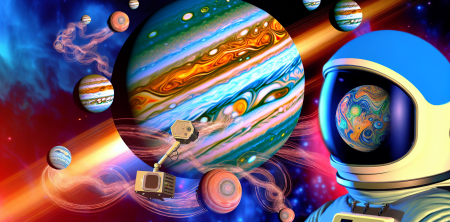
As of March 2026, Jupiter has officially been recognized to have 101 moons, a staggering increase from the previous counts of 80 to 95. This monumental announcement, made by the International Astronomical Union (IAU), not only signifies a remarkable expansion of our understanding of the Jovian system but also intensifies interest in the myriad possibilities of extraterrestrial life. With advances in astronomical technology and methodologies, the discovery of new moons around the largest planet in our solar system is reshaping our knowledge of celestial mechanics and the potential for life beyond Earth.
The Growing Family of Jupiter Moons
The latest count of Jupiter moons has captivated astronomers and space enthusiasts worldwide. The dynamic nature of the Jovian system reflects ongoing research and exploration. The count jumped from 95 to 101 in a matter of months, driven primarily by the discovery of small, irregular satellites. These findings underscore the complexity of Jupiter’s gravitational influence, which extends far beyond its immediate vicinity.
Recent Discoveries and Technological Advances
The surge in Jupiter's moon count can be attributed to advanced observational techniques employed by astronomers. Utilizing powerful telescopes and innovative imaging techniques, researchers have been able to detect these small celestial bodies that were previously overlooked. Key players in this ongoing exploration include scientists from NASA's Jet Propulsion Laboratory, who have been at the forefront of confirming these moons via meticulous observational campaigns.
The Role of the International Astronomical Union
The IAU plays a crucial role in the official recognition and classification of astronomical bodies. Their confirmation process involves rigorous scrutiny and validation of discoveries before granting official status. The recent acknowledgment of Jupiter's 101 moons illustrates the IAU's commitment to providing accurate and up-to-date information, which is essential for both scientific communities and the general public.
Understanding the Jovian System
Jupiter, known for its immense size and striking features, is not just a giant planet; it is also a hub of activity in our solar system. Its moons vary widely in size, composition, and geological characteristics, contributing to a rich tapestry of celestial phenomena. The newfound moons are expected to include a mix of irregular satellites, which are generally small and have eccentric orbits, indicating a history of capture rather than formation.
Characteristics of Jupiter's Moons
- Galilean Moons: The four largest moons—Io, Europa, Ganymede, and Callisto—discovered by Galileo Galilei in 1610, are the most studied and have unique geological features.
- Irregular Moons: Many of Jupiter's newly identified moons are classified as irregular satellites, meaning they have highly elliptical orbits and are often thought to be remnants of captured asteroids or fragments from larger bodies.
- Rings and Asteroids: Jupiter’s system is not solely composed of moons. The planet also possesses faint rings and numerous asteroids, further enriching its complex environment.
The Significance of These Discoveries
The rapid increase in Jupiter's moon count raises intriguing questions about the formation and evolution of celestial bodies in the solar system. It suggests that there may be many more undiscovered moons, urging astronomers to continue their exploration efforts. Furthermore, the ongoing search for moons intensifies debates about the potential for life, particularly on moons like Europa, which is widely considered a prime candidate for harboring extraterrestrial life due to its subsurface ocean.
The Search for Extraterrestrial Life
With the discovery of these new moons, the conversation surrounding the potential for life beyond Earth has expanded significantly. Jupiter’s moons, especially Europa, have long been considered possible hotspots for alien life due to their unique environments.
Europa: A Prime Candidate
Europa, one of Jupiter's largest moons, has garnered significant attention due to evidence suggesting the presence of a vast ocean beneath its icy crust. This ocean could potentially harbor conditions suitable for life. Researchers are eager to explore Europa further, considering missions such as NASA's upcoming Europa Clipper, which aims to investigate the moon’s habitability through detailed reconnaissance of its ice shell and subsurface ocean.
Other Moons of Interest
While Europa takes the spotlight, several other moons also warrant attention. For instance, Ganymede, the largest moon in the solar system, has its own magnetic field and evidence of an underground ocean. Similarly, Io is the most volcanically active body in the solar system, presenting a unique environment that researchers are keen to understand better.
The Impact on Astronomy and Public Interest
The revelation of 101 Jupiter moons has led to a surge in public interest and engagement with scientific content, particularly on social media platforms. Memes and discussions about Jupiter's ever-growing family of moons have gone viral, leading to an increase in search queries and a heightened curiosity about the possibilities of life in our solar system.
Social Media Buzz and Public Engagement
Platforms like TikTok and X have seen a flurry of activity as users share memes and facts about Jupiter's moons, joking about the planet's expanding family: 'Jupiter's family is growing faster than mine!' This playful engagement reflects a broader trend of interest in space exploration and astronomy, encouraging a new generation of scientists and enthusiasts.
Challenges and Future Explorations
While the count of Jupiter moons continues to rise, the journey to explore them is fraught with challenges. The vast distances, harsh environments, and technical limitations present hurdles that must be overcome for future missions.
Upcoming Missions
NASA’s Europa Clipper is just one example of the upcoming missions set to explore the Jovian system. This mission aims to conduct detailed reconnaissance of Europa’s ice crust and subsurface ocean, potentially paving the way for future lander missions that could sample the moon’s environment directly.
The Role of International Collaboration
The quest to explore Jupiter and its moons will require international collaboration, pooling resources and expertise from various space agencies around the world. This collaboration not only enhances the scientific output but also fosters a sense of global unity in the pursuit of knowledge about our universe.
Conclusion
The acknowledgment of 101 moons orbiting Jupiter is a humbling reminder of how much there is yet to discover within our solar system. With each new moon discovered, we gain insights into the complex dynamics of celestial bodies and are continually reminded of the potential for life beyond our planet. As we advance our technologies and methodologies in astronomy, the future promises exciting revelations about Jupiter's moons and the mysteries they may hold.
Continued exploration of these moons is not just about counting celestial bodies; it is about understanding the fundamental principles of our universe and our place within it. Whether these moons harbor life or merely tell us more about the history of our solar system, they play an essential role in the grand narrative of space exploration and the search for extraterrestrial life.

