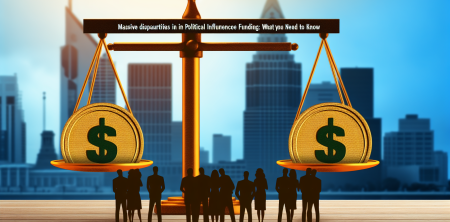
The landscape of American politics is shifting dramatically, with a significant report from the Urban Institute exposing alarming trends in political influence funding. Released on May 8, 2026, this report reveals how dark money in politics has surged by an astonishing 40% since 2024. The implications of this surge are far-reaching, particularly for rural communities and marginalized groups, as it disproportionately favors conservative districts while sidelining urban and minority voices.
The Rise of Dark Money
Dark money refers to political spending by organizations that are not required to disclose their donors. This form of funding has become a powerful force in shaping political outcomes across the nation. According to the Urban Institute's findings, over $2.3 billion has been funneled into political campaigns from these undisclosed sources, raising concerns about the integrity of democracy.
Disproportionate Funding in Rural Conservative Districts
One of the most striking revelations from the report is the concentration of political influence funding in rural conservative districts. While urban areas often face challenges with representation, the influx of money into rural regions underscores a growing trend where these areas receive substantial financial backing. In particular, 78% of super PAC funds are directed toward swing states such as Pennsylvania and Georgia, which have become battlegrounds for political power.
Key Players in the Funding Game
The report identifies major players in this funding landscape, including billionaire donors and lobbyists from sectors like technology and energy. These entities play a crucial role in directing funds to candidates and causes that align with their interests, effectively skewing the political playing field. The involvement of wealthy individuals and organizations raises questions about who truly controls elections and to what extent democracy is influenced by money.
Impacts of Recent Supreme Court Precedents
Significant legal rulings, particularly those from the Supreme Court regarding campaign finance, have facilitated the rise of dark money. The Urban Institute report ties the spikes in funding to these precedents, illustrating how legal frameworks have evolved to favor increased financial influence in politics. As a result, the disparity in funding between urban and rural districts has widened, exacerbating the challenges faced by underrepresented communities.
Social Media Engagement and Public Outcry
The findings from the Urban Institute have ignited a wave of engagement on social media platforms like TikTok and X (formerly Twitter). Users are sharing memes and commentary that highlight the inequality in political influence funding, tapping into a broader public anxiety about fair representation in democracy. This grassroots mobilization reflects a significant moment in the ongoing discourse surrounding campaign finance and its implications for the future of American politics.
Understanding the Implications
The implications of these disparities in funding are profound. As political influence funding becomes increasingly concentrated in the hands of a few, the voices of ordinary citizens are drowned out. This not only undermines the democratic process but also fosters an environment where policy decisions may be more reflective of elite interests than the needs of the general populace.
Future of Political Representation
As the Urban Institute report indicates, the fight for political representation is becoming more contentious. The skewed funding landscape poses significant challenges for candidates seeking to represent diverse communities. In this environment, the question arises: how can democracy remain intact when financial influence is allowed to dictate political outcomes?
Call to Action
The report serves as a critical reminder of the importance of campaign finance reform. Advocates argue for greater transparency in political influence funding to ensure that all voices are heard and represented in the political sphere. As public awareness grows, so does the urgency to address these systemic issues that threaten the foundation of democracy.
Conclusion
The Urban Institute's findings concerning political influence funding are both eye-opening and alarming. As dark money continues to surge, the need for reform and transparency in campaign financing becomes increasingly pressing. To protect the integrity of democracy, it is essential that individuals remain informed and engaged in the political process, advocating for a system that honors the principles of representation and equality.
As we move forward, the conversation surrounding political influence funding must continue. Understanding the dynamics at play will empower citizens to challenge the status quo and demand a fairer political landscape, where every voice has the opportunity to be heard and valued.

