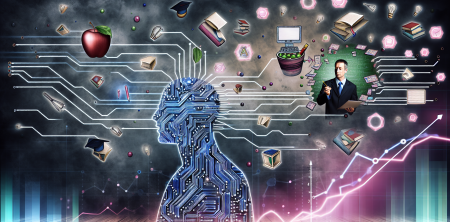
The rapid evolution of artificial intelligence (AI) is shaking up educational landscapes, particularly in the training of future educators. A recent study published in Frontiers in Education outlines critical shifts in pre-service teacher competencies that are necessary for effectively navigating bilingual and content-integrated classrooms in this new era. With AI tools increasingly becoming integral to personalized learning experiences, it's crucial to understand how these technologies are reshaping the competencies expected of pre-service teachers.
Understanding the Shift: AI's Role in Education
AI is not just a buzzword; it is a transformative force in education. As AI applications become more prevalent, they create a dual challenge for educators: to harness these tools effectively while upholding traditional pedagogical values. According to the study, AI can facilitate customized learning experiences that cater to individual student needs, thus potentially improving educational outcomes. Nevertheless, this shift also raises concerns about the traditional roles of teachers and the skills they need to develop.
Why Pre-Service Teacher Competencies Must Evolve
Historically, pre-service teacher competencies focused on pedagogical skills, subject matter knowledge, and classroom management. However, the integration of AI necessitates a radical reframing of these competencies. The authors of the study suggest that pre-service teachers must now also develop a strong foundation in AI literacy and the ethical use of AI in education. This includes:
- Understanding AI Technologies: Future educators should be familiar with various AI tools that can aid in instructional design and student assessment.
- Data Literacy: Teachers must be equipped to analyze data generated through AI systems to inform instructional practices.
- Ethical Considerations: Understanding the implications of AI in education, including issues of bias, privacy, and equity, is essential for responsible teaching.
- Human-AI Collaboration: Educators should cultivate skills for effective collaboration with AI, recognizing the strengths of both human instruction and machine learning.
This expanded view of pre-service teacher competencies is critical not only for the integration of AI but also for maintaining the human element in education, which technology cannot replicate.
The Controversial Debate: Will AI Replace Teachers?
The study also delves into a controversial aspect of AI's integration into education: the fear that AI could replace teachers. This anxiety is palpable among educators, leading to widespread discussions about job security and the future of teaching. However, the authors argue against a binary perspective where AI replaces human instructors. Instead, they emphasize the need for a hybrid approach, where both teachers and AI work together to enhance learning experiences.
In fact, rather than diminishing the role of educators, AI can augment their capabilities, allowing them to focus more on nurturing critical thinking and emotional intelligence among students. As educators adapt to this hybrid model, the competencies they develop will need to reflect this new reality.
Recent Studies on Pre-Service Educators' Adaptation
The article highlights various recent studies that examine how pre-service educators are currently adapting to the introduction of AI in their training programs. Many teacher preparation programs are beginning to incorporate AI training into their curricula, focusing on both theoretical and practical applications. This hands-on experience is vital for future teachers to feel confident and competent in utilizing AI effectively.
Moreover, as AI tools become increasingly user-friendly and embedded into classroom practices, pre-service teachers must learn to navigate these changes while still engaging with students authentically. This balance is where the new competencies will shine, as teachers become facilitators of learning who can leverage AI rather than simply consumers of technology.
Conclusion: Preparing for the Future of Education
As AI continues to reshape the educational landscape, the urgency to reframe pre-service teacher competencies has never been greater. Educators of tomorrow will not only need to master traditional teaching methods but also embrace AI literacy, ethical practices, and collaborative skills that allow them to thrive alongside technology.
The call to action for teacher preparation programs is clear: adapt or fall behind. By prioritizing these competencies, we can ensure that future educators are prepared to meet the challenges and opportunities of an increasingly AI-driven world. The goal is not to replace teachers but to enhance their roles, making them indispensable guides in an education system transformed by technology.

