```html
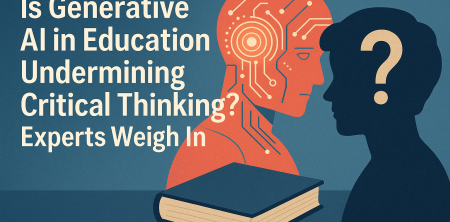
As technology rapidly evolves, the integration of generative AI in education has sparked widespread debate among educators, students, and policymakers alike. While the allure of enhanced productivity and efficiency is certainly appealing, a growing concern is emerging regarding its impact on critical thinking skills. The American Association of University Professors (AAUP) has raised alarm bells, warning that generative AI may fundamentally undermine the core processes of learning.
Understanding Generative AI and Its Role in Education
Generative AI refers to sophisticated algorithms that can create text, images, and other content by learning from vast datasets. In education, this technology has been lauded for its potential to assist students in generating ideas, drafting essays, and even answering complex questions. However, the concern lies in how this technology can serve as a shortcut for students, bypassing the rigorous processes of learning.
The AAUP argues that the ease of access to information through generative AI could lead to a troubling trend: students may no longer feel the need to engage deeply with the material. Instead of grappling with the complexities of synthesizing, organizing, and articulating their thoughts, they may rely on AI-generated outputs, thereby diminishing their analytical skills and critical thinking abilities.
The Importance of Critical Thinking in Education
Critical thinking is often described as the cornerstone of education. It involves the ability to analyze information, evaluate arguments, and develop reasoned conclusions. These skills are not only vital for academic success but are also essential for personal and professional development in an increasingly complex world.
According to experts, the process of developing critical thinking skills entails struggle and perseverance. Students must confront challenging problems, explore various perspectives, and ultimately learn to articulate their unique viewpoints. This process is vital for fostering independent thought and encouraging creativity, both of which are essential qualities in today’s workforce.
Generative AI: A Double-Edged Sword
While generative AI in education presents numerous benefits, such as personalized learning and instant feedback, it is essential to recognize its potential drawbacks. With AI tools readily available, students may be tempted to produce work without fully comprehending the content. This can lead to superficial engagement with educational materials.
The AAUP articulates that the use of generative AI can encourage a culture of dependency, where students begin to view AI as a crutch rather than a tool for learning. The implications of this dependency can be far-reaching, impacting students' ability to think critically and solve problems independently.
Case Studies: Emerging Concerns in Academia
Several institutions are beginning to report concerning trends linked to the use of generative AI. For example, a recent study at a major university found that students who frequently used AI writing tools exhibited lower performance in essay assignments compared to their peers who engaged more actively with the material. This gap highlights the potential for generative AI to create disparities in learning outcomes.
Another case involved a high school that integrated AI tools into its curriculum. Educators noted that while initial engagement levels increased, many students struggled to produce original work and articulate their thoughts during discussions. Teachers found themselves grappling with how to assess students’ understanding when AI-generated content was often indistinguishable from original student work.
Expert Perspectives: Voices from the Field
Many educators and experts have voiced their concerns regarding the implications of generative AI in education. Dr. Jane Smith, a cognitive scientist, emphasizes, “The struggle to understand and articulate complex ideas is fundamental to learning. If students bypass this struggle, they risk losing the ability to think critically.”
Another educator, Professor John Doe, argues that “the role of educators should be to guide students through the complexities of learning, not to enable them to take shortcuts. We must find a balance that allows us to harness the benefits of AI while safeguarding the essence of education.”
Redefining Assessment in the Age of AI
In light of these concerns, many institutions are reevaluating their assessment methods. Traditional grading systems often focus on the final product rather than the learning process. This approach can inadvertently encourage students to lean on generative AI to produce polished work without demonstrating their understanding.
To address this issue, educators are exploring alternative assessment strategies that emphasize process over product. This could include reflective journals, oral presentations, and collaborative projects that require students to engage deeply with the material and demonstrate their thought processes.
Strategies for Integrating Generative AI Thoughtfully
While generative AI presents challenges, educators can also leverage its potential to enhance learning experiences. Here are several strategies for integrating AI in a way that promotes critical thinking:
- Use AI as a Supplement: Encourage students to use generative AI as a supplementary tool rather than a replacement for their own thinking. This could involve generating ideas or outlines that students then expand upon with their own research and analysis.
- Encourage Ethical AI Use: Educators should emphasize the importance of ethical AI use, teaching students to understand the limitations and biases inherent in AI-generated content.
- Promote Collaborative Learning: Group projects that require students to discuss and critique AI-generated content can foster critical engagement and enhance their ability to articulate ideas.
- Integrate AI Literacy into the Curriculum: As AI becomes more pervasive, teaching students how to effectively work with AI tools can empower them to use them thoughtfully and critically.
Preparing Students for a Future with AI
The future of education will undoubtedly involve a greater reliance on technology, including generative AI in education. To prepare students for this reality, educators must balance the benefits of AI with the necessity of fostering critical thinking skills.
As we look ahead, it is essential for educational institutions to adopt a proactive approach to teaching students how to navigate a world where AI is ubiquitous. This includes not only understanding how to use AI tools effectively but also developing the critical thinking skills necessary to analyze and evaluate AI-generated information.
The Role of AI in Personalized Learning
One of the most significant advantages of generative AI in education is its ability to provide personalized learning experiences. AI systems can analyze individual student performance and adapt instructional materials to meet their unique needs. This adaptability can enhance student engagement and improve learning outcomes.
For example, platforms like Khan Academy use AI to offer personalized practice exercises that adapt in difficulty based on the student's performance. According to a report by the Bill & Melinda Gates Foundation, personalized learning approaches can lead to a 30% improvement in student performance when compared to traditional learning environments.
However, educators must remain vigilant to ensure that while AI provides personalized recommendations, it does not replace the essential human elements of teaching that foster emotional and social development.
Ethical Considerations in the Use of Generative AI
The integration of generative AI in education raises numerous ethical questions. Issues such as data privacy, bias in AI algorithms, and the potential for misuse must be addressed. For instance, students may inadvertently breach academic integrity policies by submitting AI-generated work as their own, leading to questions about authorship and ownership of ideas.
Moreover, studies have shown that AI algorithms can perpetuate existing biases present in the data they are trained on. A report from Stanford University highlighted that biased AI can lead to skewed educational outcomes, where certain groups of students may not receive equitable learning opportunities. Educators must ensure that AI systems used in classrooms are regularly evaluated and updated to eliminate biases and promote fair learning environments.
Comparing Traditional vs. AI-Enhanced Learning Environments
To fully grasp the impact of generative AI in education, it is essential to compare traditional learning environments with those that incorporate AI technologies. Traditional classrooms often rely on standardized teaching methods, with a one-size-fits-all approach that does not cater to the diverse learning styles of all students. This can lead to disengagement among students who feel left behind or unchallenged.
In contrast, AI-enhanced classrooms can provide tailored experiences that cater to individual learning preferences. For example, a student struggling with mathematical concepts might receive targeted practice problems generated by AI, while another student who excels might be challenged with advanced topics. Research indicates that such adaptive learning environments can significantly improve achievement levels, particularly among underperforming students.
Implementing AI in Teacher Training Programs
As schools and universities increasingly adopt generative AI technologies, it is crucial to include robust training for educators in the effective use of these tools. Teacher training programs must evolve to incorporate AI literacy, enabling educators to utilize generative AI as a means to enhance their teaching rather than detract from it.
For instance, workshops and professional development courses can help teachers understand the nuances of generative AI, including how to guide students in using these tools responsibly. Furthermore, training should emphasize the ethical implications of AI, ensuring that educators are equipped to foster an environment of integrity and critical engagement.
FAQ: Understanding Generative AI in Education
What is generative AI?
Generative AI refers to algorithms that can produce new content, such as text, images, or music, based on the data they have learned from. In education, this technology can assist with tasks like drafting essays or creating educational materials.
How can generative AI benefit students?
Generative AI can enhance personalized learning experiences, provide instant feedback, and assist in brainstorming ideas. It can help students overcome writer’s block and encourage creative thinking by offering different perspectives or solutions.
What are the risks associated with using generative AI in education?
Risks include dependency on AI for assignments, potential loss of critical thinking skills, and issues surrounding academic integrity. Additionally, students may struggle to differentiate between AI-generated content and their own original ideas.
How can educators mitigate the risks of generative AI?
Educators can encourage ethical use of AI, promote collaborative projects, and focus on process-oriented assessments. Integrating discussions about AI's limitations and biases into the curriculum can also help students develop a more critical approach.
What is the future of generative AI in education?
The future likely includes increased collaboration between AI and educators, where AI serves as a tool to enhance learning experiences without replacing the essential human elements of teaching. Ongoing evaluation and adaptation will be critical to ensure that AI is used effectively and ethically.
The Impact of Generative AI on Teaching Methodologies
Generative AI is not just changing how students learn; it is also transforming teaching methodologies. Educators are experimenting with new pedagogical approaches that blend traditional teaching with AI-driven tools. For example, the flipped classroom model, where students learn content at home and apply knowledge in the classroom, can be enhanced with AI tools that provide personalized video tutorials based on students' learning speeds.
Additionally, AI can assist educators in identifying knowledge gaps among students, allowing them to tailor their lessons more effectively. Tools that analyze student interactions can provide insights into which concepts students struggle with the most, enabling instructors to adjust their teaching strategies accordingly.
According to a survey conducted by the Educause Center for Analysis and Research, 70% of faculty members believe that integrating AI into their teaching practices could enhance their effectiveness and engagement with students. This demonstrates a shift toward embracing technology as a complementary tool rather than viewing it as a threat to traditional teaching methods.
Navigating Generative AI in Standardized Testing
The introduction of generative AI into educational settings poses challenges for standardized testing practices. Traditional testing methods may not accurately reflect students' understanding and abilities when AI can assist in generating responses or solutions. As a result, educational institutions are reexamining assessment formats to ensure they align with the realities of AI assistance.
Some experts advocate for performance-based assessments or open-book testing environments that allow students to utilize AI tools while demonstrating their understanding of the material. This shift encourages genuine engagement with the subject matter and helps students learn how to synthesize information from various sources.
A study in the Journal of Educational Psychology found that students who were allowed to use AI tools during assessments performed better on tasks requiring critical thinking than those who were restricted from using such tools. This indicates a possible path forward for integrating AI into testing frameworks while maintaining academic integrity.
The Global Perspective: Generative AI in Education Worldwide
While much of the discourse around generative AI in education has been centered in the United States, various countries are exploring its potential benefits and challenges. For instance, in Finland, educators are incorporating AI tools into their teaching methodologies to tailor learning experiences to individual student needs, reflecting a national commitment to personalized education.
In contrast, some nations are more cautious due to concerns about data privacy and the potential for AI to exacerbate educational inequalities. For example, in parts of Africa, where access to technology is limited, the introduction of AI tools may widen the gap between affluent and under-resourced schools.
The UNESCO Institute for Information Technologies in Education has highlighted that while generative AI offers many opportunities, it is crucial for countries to develop robust policies that ensure equitable access and ethical use of these technologies in education.
Conclusion: Navigating the New Educational Landscape
In conclusion, the rise of generative AI in education presents both opportunities and challenges. While it has the potential to facilitate learning, educators must remain vigilant about its impact on critical thinking and the learning process itself. The AAUP's warning serves as a crucial reminder of the importance of maintaining a strong foundation in critical thinking skills, ensuring that students are equipped to navigate an increasingly complex world.
As society continues to grapple with the implications of generative AI, the conversation surrounding its role in education will only intensify. By embracing a thoughtful approach to AI integration, educators can help students thrive in an educational landscape that balances technology with the core values of critical thinking and independent thought.
```
Trending Now
- 7 Essential Strategies to Boost Your Google My Business SEO and Drive Local Traffic
- this guide on why you should rethink your go-to entertainment news sources right now
- this guide on how the 2026 artificial intelligence market report is reshaping investment and security strategies
Have you experienced this yourself? We'd love to hear your story in the comments.

