```html
Introduction: The Allure of Saturn
Saturn, the majestic sixth planet from the Sun, has captivated the imagination of humankind for centuries. Known for its stunning rings and gaseous composition, it is the second-largest planet in our solar system, following Jupiter. This article explores Saturn facts that not only highlight its physical characteristics but also delve into its intriguing features, seasonal changes, and the latest discoveries that continue to astound astronomers and enthusiasts alike.
1. The Basics: Size, Distance, and Composition
Saturn is a behemoth, with a diameter of approximately 86,881 miles (139,822 kilometers). To put this in perspective, it is over nine times wider than Earth. Saturn’s vast expanse covers a significant area of our solar system, residing at an average distance of 886 million miles (1.4 billion kilometers) from the Sun. Its gaseous composition primarily consists of hydrogen (about 96%) and helium (around 3%), creating a thick atmosphere that shrouds the planet.
Understanding Saturn’s composition is essential, as it bears similarities to Jupiter, yet it has unique characteristics that set it apart. The planet's atmosphere is marked by strong winds and dynamic weather patterns, which can reach speeds of up to 1,100 miles per hour (1,800 kilometers per hour) at the equator. This rapid rotation also contributes to the planet's noticeable flattening at the poles and bulging at the equator, a phenomenon common to gas giants.
Moreover, the nature of Saturn's atmosphere suggests a complex interplay of physical processes. The high-pressure center is thought to host metallic hydrogen, a state of hydrogen that exhibits conductivity due to the extreme pressures and temperatures found deep within the planet. This aspect is vital in understanding both Saturn's magnetic field and its overall heat output, which is greater than the energy it receives from the Sun, hinting at internal heat sources that are not yet fully understood.
2. The Enigmatic Rings of Saturn
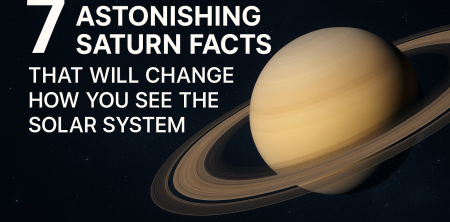
Perhaps the most iconic feature of Saturn is its rings, which are composed of billions of particles made of ice and rock, varying in size from microscopic grains to massive boulders. These rings extend outward from the planet but are remarkably thin, measuring only about 30 feet (10 meters) thick on average. The formation of these rings is still a topic of research among scientists. New data suggests that they could be remnants from comets, asteroids, or even moons that were shattered by Saturn's gravitational pull.
Interestingly, Saturn's rings are not a permanent fixture. They are believed to be ephemeral, possibly existing for only a few hundred million years before dissipating. This transient nature adds a layer of urgency to ongoing research efforts, as scientists race against time to understand their evolution and eventual fate.
The rings are divided into several distinct sections, named alphabetically in the order they were discovered. The largest and brightest ring is the A ring, followed by the B ring, while the C ring is much fainter. In addition to these main rings, there are also several fainter rings known as the D, E, F, and G rings. The dynamics within the ring system are fascinating; for example, the gravitational influence of Saturn's moons creates gaps in the rings, such as the Cassini Division, which is a gap between the A and B rings.
Recent studies have revealed that the rings are not uniform; they consist of intricate structures and patterns, including spiral density waves caused by gravitational interactions with Saturn's moons. Observations made by the Cassini spacecraft have shown that the rings are alive, undergoing changes that reveal more about their history and the forces acting upon them. Scientists are continuing to investigate whether these rings may harbor the building blocks for moons that could form in the future. (See: Wikipedia article on Saturn.)
3. Seasonal Changes and Their Impact
Saturn experiences seasons much like Earth, albeit lasting significantly longer due to its extended orbital period of about 29.5 Earth years. Each season spans approximately 7.5 Earth years. These seasonal changes influence the planet's atmosphere, leading to variations in weather patterns and ring visibility. For instance, as Saturn approaches its equinox, the rings appear edge-on from our viewpoint, making them less visible.
During the solstices, the rings are fully illuminated, presenting a breathtaking view. NASA's Cassini spacecraft provided invaluable insights into these seasonal effects, revealing dynamic weather systems and changes in the ring structures over time. This ongoing research emphasizes the need to monitor Saturn as it transitions through its seasons. Observations from Cassini have shown that storms can emerge suddenly and grow to enormous sizes, dramatically transforming the appearance of the planet's atmosphere.
A fascinating aspect of Saturn's seasonal changes includes the dramatic shifts in the color of its rings and atmosphere. As the seasons change, so too do the chemical reactions in the upper atmosphere, leading to varying hues that captivate astronomers. Scientists believe that these changes may be influenced by the amount of sunlight reaching different parts of Saturn, altering the haze and cloud formations.
Moreover, during the winter solstice, scientists have noted the formation of polar storms that can last for years. These storms are unique to Saturn and often lead to the discovery of new atmospheric phenomena, further enhancing our understanding of how gas giants behave under varying solar conditions and internal dynamics.
4. Moons of Saturn: An Extraordinary Family
Saturn boasts a remarkable retinue of moons, with over 80 confirmed satellites. Titan, the largest of these moons, is particularly fascinating, as it is the second-largest moon in the solar system and is enveloped in a thick atmosphere. Titan is unique in that it possesses lakes and rivers of liquid methane and ethane, making it a prime candidate for astrobiological studies.
Other notable moons include Enceladus, which has been the focus of extensive research due to its icy surface and geysers that spout water vapor and ice particles into space. This discovery has led to hypotheses about the potential for life beneath its icy crust. The diversity and complexity of Saturn's moons continue to intrigue scientists, prompting further investigation into their geological and atmospheric characteristics.
One of the more intriguing moons, Mimas, is often referred to as the "Death Star" moon due to its resemblance to the fictional space station from Star Wars, owing to a large impact crater known as Herschel. Additionally, moons like Rhea and Dione have shown evidence of past geological activity, further enhancing the interest in studying Saturn's moon system.
Furthermore, researchers have identified that some of Saturn’s smaller moons may play a crucial role in the formation and maintenance of the rings. These "shepherd moons" help to control the ring particles' distribution and maintain the structure of the rings. The interactions between these moons and the ring material are an area of active research and could provide insights into the early solar system.
The potential for life in these remote worlds has led to proposals for future missions to Titan and Enceladus, aiming to explore their subsurface oceans and analyze their surfaces for organic compounds. The findings from such missions could reshape our understanding of life's possibilities beyond Earth.
5. Saturn's Atmosphere: A Dynamic Environment
The atmosphere of Saturn is a constantly changing environment, characterized by its striking banded structure and dynamic storm systems. The planet's rotation creates powerful jet streams, causing variations in cloud patterns and colors. These clouds are primarily composed of ammonia ice and other chemicals, leading to a vibrant array of hues ranging from pale yellow to deep orange and brown. (See: NASA overview of Saturn.)
One of the most notable features of Saturn's atmosphere is the Great White Spot, a massive storm system that resembles Jupiter’s Great Red Spot but appears less frequently. The Great White Spot can last for months and showcases the planet's dynamic weather patterns. Observations of these atmospheric phenomena provide critical insight into the behavior of gas giants and their weather systems.
In addition to these storms, Saturn is also home to a variety of other weather events, including high-altitude winds and lightning storms that can be thousands of times more powerful than the strongest storms on Earth. The swirling clouds and different colors can change rapidly, illustrating the complex nature of Saturn’s weather systems.
One remarkable atmospheric phenomenon is the presence of hexagonal clouds at the north pole of Saturn. This geometric feature, observed by Cassini, is a six-sided jet stream that stretches over 13,000 kilometers (8,000 miles) across. The hexagon is a unique feature that has presented scientists with challenges in understanding the atmospheric dynamics that lead to its formation and stability, suggesting complex interactions within Saturn’s atmosphere.
6. Scientific Missions and Discoveries
NASA’s Cassini mission, which spanned over 13 years (2004-2017), revolutionized our understanding of Saturn. The spacecraft provided unprecedented data about the planet, its rings, and moons. Cassini's findings have prompted a reevaluation of many long-held assumptions about Saturn, leading to groundbreaking discoveries regarding its structure and atmospheric dynamics.
In addition to Cassini, the Hubble Space Telescope has played a vital role in monitoring Saturn from afar. By combining data from various missions, scientists continue to piece together the planet's mysteries, revealing not only its grandeur but also the complexities that underpin its existence.
As we look to the future, missions such as the proposed Dragonfly mission, which aims to send a rotorcraft to Titan, hold the promise of further expanding our knowledge of Saturn and its diverse moon system. This mission will allow scientists to study Titan's surface and atmosphere in ways that previous missions could not, opening the door to a deeper understanding of potentially habitable environments.
Additionally, the European Space Agency's planned mission, the Jupiter Icy Moons Explorer (JUICE), while primarily focused on Jupiter, will also provide vital data on Saturn during its flybys, enhancing our comparative understanding of gas giants and their moons. (See: CDC feature on Saturn.)
7. Cultural Significance and Public Fascination
Saturn has held a place of cultural significance across civilizations for millennia. From ancient Babylonians to modern astronomers, the planet has been a subject of fascination and study. Its visually striking appearance and unique features have made it a staple in astronomy education and outreach programs.
Moreover, Saturn's status as a visually captivating planet translates well into social media, where stunning images of its rings and moons often go viral. This public interest in Saturn fosters a sense of urgency around the exploration of our solar system and the quest for knowledge about celestial bodies beyond Earth.
In art and literature, Saturn has been represented in various forms, symbolizing time, knowledge, and mystery. Artists and writers have drawn inspiration from its majestic rings and the enigmatic nature of its moons, integrating these celestial features into their works. This blend of science and art continues to engage the public's fascination with Saturn.
Furthermore, Saturn's influence extends into popular culture, inspiring movies, books, and even music. Its rings and moons have been depicted as settings for narratives exploring themes of exploration and the unknown. This connection to human creativity reinforces the idea that Saturn is not just a scientific subject but a source of inspiration for the human experience.
8. Frequently Asked Questions About Saturn
- What is Saturn primarily made of?
Saturn is largely composed of hydrogen and helium, with trace amounts of other elements and compounds. - How long does it take Saturn to orbit the Sun?
Saturn takes about 29.5 Earth years to complete one orbit around the Sun. - Is Saturn's ring system permanent?
No, Saturn's rings are not permanent and may last for only a few hundred million years. - How many moons does Saturn have?
Saturn has over 80 confirmed moons, with Titan being the largest and most well-studied. - Can we see Saturn's rings from Earth?
Yes, Saturn's rings can be seen through telescopes from Earth, and they are particularly stunning during opposition. - What are Saturn's seasons like?
Saturn experiences seasons similar to Earth, but each season lasts about 7.5 Earth years due to its long orbital period. - How do scientists study Saturn?
Scientists study Saturn through various missions, including the Cassini spacecraft and the Hubble Space Telescope, which provide valuable data about its atmosphere, rings, and moons. - What is the Great White Spot?
The Great White Spot is a massive storm system on Saturn, similar to Jupiter’s Great Red Spot, that can last for months and showcases the planet's dynamic weather. - Why is Titan considered a candidate for life?
Titan is considered a candidate for life due to its dense atmosphere and the presence of liquid methane and ethane, which may provide conditions suitable for organic chemistry. - Are there plans for future exploration of Saturn?
Yes, there are proposals for future missions, such as the Dragonfly mission to Titan, which aims to explore its unique environment and potential for life. - What are the challenges faced in studying Saturn?
Challenges include the vast distances involved, the harsh atmospheric conditions of Saturn, and the complex dynamics of its rings and moons, making it difficult to gather data and make accurate predictions. - How does Saturn's gravity affect its moons?
Saturn's immense gravity influences the orbits of its moons, creating unique interactions that can lead to geological activity and the formation of features like gaps in the rings.
9. Conclusion: The Ongoing Quest for Understanding
Saturn remains one of the most fascinating and studied planets in our solar system. The combination of its impressive size, intricate ring system, and diverse moons offers a wealth of opportunities for scientific discovery. As new missions and studies continue to unfold, the body of Saturn facts will undoubtedly expand, enriching our understanding of this gas giant.
Whether through stunning visuals or groundbreaking research, Saturn continues to inspire curiosity and awe, reminding us of the vastness of the cosmos and our place within it. As we look to the future, the quest for knowledge about Saturn and its wonders will persist, ensuring that this iconic planet remains a focal point in the field of astronomy for generations to come.
```
Trending Now
Frequently Asked Questions
What are some interesting facts about Saturn?
Saturn is known for its stunning rings and is the second-largest planet in our solar system. Its diameter is about 86,881 miles, and it is primarily composed of hydrogen and helium. Saturn's atmosphere features strong winds and dynamic weather patterns, with equatorial winds reaching speeds of up to 1,100 miles per hour.
How far is Saturn from the Sun?
Saturn is located at an average distance of 886 million miles, or approximately 1.4 billion kilometers, from the Sun. This vast distance places it as the sixth planet in our solar system, significantly farther than Earth.
What is Saturn made of?
Saturn's composition is primarily gaseous, consisting of about 96% hydrogen and 3% helium. This thick atmosphere is characterized by strong winds and dynamic weather patterns, making it a fascinating subject of study for astronomers.
Why does Saturn have rings?
Saturn's rings are composed of ice and rock particles that vary in size. They are believed to be remnants of moons or comets that were torn apart by Saturn's strong gravitational pull, creating the stunning ring system we see today.
What makes Saturn unique compared to other gas giants?
While similar to Jupiter in size and gaseous composition, Saturn has distinct features, such as its prominent ring system and a more complex atmosphere with the presence of metallic hydrogen at its core. These characteristics contribute to its unique magnetic field and heat output.
Agree or disagree? Drop a comment and tell us what you think.

