```html
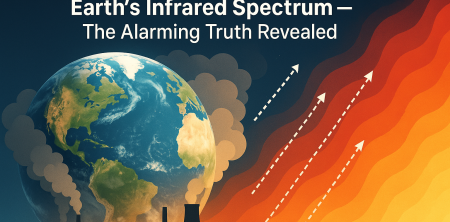
The intricate balance of Earth's energy system is a pivotal factor in understanding climate change. One of the core components in this equation is the planet's outgoing infrared spectrum, which reflects how much energy Earth radiates back into space. A recent study sheds light on how rising greenhouse gas concentrations and global temperatures are affecting this spectrum, ultimately raising critical questions about the implications for our climate and environment.
Understanding Earth's Infrared Spectrum
Earth's infrared spectrum is essentially the measure of the thermal radiation emitted by the planet as it absorbs solar energy. When sunlight reaches the Earth, it gets converted into heat, which is then emitted back into space as infrared radiation. This outgoing infrared radiation plays a crucial role in maintaining the planet's energy balance, and any changes to this spectrum can have significant implications for global temperatures.
Scientists utilize advanced instruments and satellite technology to monitor this outgoing infrared radiation. By analyzing these measurements, researchers can assess how variations in greenhouse gas levels and surface temperatures influence the amount of energy being radiated back into space. Understanding these dynamics is vital in predicting future climate scenarios.
The Impact of Greenhouse Gases
Greenhouse gases like carbon dioxide (CO2), methane (CH4), and nitrous oxide (N2O) trap heat in the atmosphere, leading to a phenomenon known as the greenhouse effect. This effect is a natural occurrence that keeps our planet warm enough to support life. However, human activities, such as burning fossil fuels and deforestation, have substantially increased the concentration of these gases, which in turn is affecting Earth's infrared spectrum.
The new study indicates that higher levels of greenhouse gases are leading to a warming of the lower atmosphere. As the atmosphere heats, it alters the characteristics of outgoing infrared radiation. Specifically, the study found that the energy being emitted by the planet is increasingly concentrated in specific bands of the infrared spectrum. This shift signifies a change in the planet's heat balance—a crucial aspect in understanding ongoing climate change.
Changes Observed in Infrared Radiation
The research highlighted significant shifts in Earth's outgoing infrared spectrum, particularly in the absorption bands associated with greenhouse gases. With the rise in these gases, the wavelengths where energy is absorbed and subsequently emitted have been altered.
For example, the study noted that as CO2 levels rise, the spectral signature of this gas becomes more pronounced in infrared measurements. This indicates that the atmosphere is becoming more effective at trapping heat, which could lead to further temperature increases. The implications of such changes are profound, as they suggest a feedback loop: warming leads to more greenhouse gas emissions, which in turn leads to even more warming.
Linking Climate Models to Real-World Observations
One of the critical contributions of this research is its connection between climate models and real-world observations of Earth's infrared spectrum. Many climate models rely on simulations to predict changes in temperature, precipitation, and other climate variables based on different levels of greenhouse gas emissions. However, translating these models into actionable insights requires alignment with actual observed data.
This study serves as an essential check on climate models, validating their predictions against current observations. By understanding how the outgoing infrared spectrum is changing, scientists can assess whether models accurately reflect observed realities. This alignment is crucial for developing effective strategies to combat climate change and mitigate its impacts on our planet.
Extreme Weather and Climate Anxiety
As our understanding of the changes in Earth's infrared spectrum deepens, so does the connection to extreme weather events. Rising global temperatures have been linked to an increase in the frequency and intensity of extreme weather phenomena, such as hurricanes, floods, and droughts. The linkage between these events and alterations in the outgoing infrared spectrum highlights the urgency of the climate crisis.
For many people, climate change is not just an abstract concept; it manifests in everyday life through devastating natural disasters and erratic weather patterns. The study provides critical insights into how human activity is influencing these trends, which can exacerbate public anxiety about climate change. The rising worry about how climate change might impact future generations underscores the importance of this research in informing policy decisions and guiding public awareness. (See: NASA on Earth's infrared radiation.)
A Call for Action: Understanding Implications for Policy
The implications of changes in Earth's infrared spectrum extend far beyond academic research; they necessitate urgent action at multiple levels. Policymakers need to be informed about the latest findings to formulate effective strategies to curb greenhouse gas emissions. The data emerging from studies like this one can help drive policies aimed at transitioning to renewable energy sources, increasing energy efficiency, and promoting carbon capture technologies.
Moreover, public awareness and engagement are vital. As people become more knowledgeable about the science behind climate change and its tangible effects, they are more likely to support sustainable initiatives and advocate for meaningful change in their communities. This study provides an opportunity to bridge the gap between scientific research and public understanding, fostering a more informed citizenry prepared to tackle these challenges.
Looking Forward: Future Research Directions
The findings from the recent study on Earth's infrared spectrum highlight the need for ongoing research to better understand the nuances of climate change. Future work should focus on refining models that predict how various feedback loops interact with changes in the infrared spectrum. Additionally, researchers should aim to enhance monitoring techniques to provide more granular data about the impacts of human activity.
Moreover, interdisciplinary approaches that incorporate insights from atmospheric science, oceanography, and ecology will be vital in painting a comprehensive picture of the Earth's climate system. Collaborative projects that span international borders may enhance our understanding of global changes and their local impacts, fostering a unified response to climate challenges.
FAQs: Key Questions About Earth's Infrared Spectrum and Climate Change
- What is Earth's infrared spectrum?
Earth's infrared spectrum refers to the range of thermal radiation emitted by the planet, primarily as it reflects the heat absorbed from the sun. - How do greenhouse gases affect Earth's infrared spectrum?
Greenhouse gases trap heat in the atmosphere, altering the wavelengths of outgoing infrared radiation and influencing the planet's energy balance. - Why is the study of Earth's infrared spectrum important?
This research helps validate climate models, informs policy decisions, and raises awareness about climate change's real-world effects. - What role do extreme weather events play in climate change?
Extreme weather events are becoming more frequent and intense due to the warming environment, which is connected to changes in the outgoing infrared spectrum. - How can individuals help address climate change?
Individuals can contribute by reducing their carbon footprint, supporting renewable energy, and advocating for policies that address climate issues.
The Science Behind Infrared Measurements
Understanding how Earth's infrared spectrum is measured involves a combination of physics and remote sensing technologies. Infrared radiation is typically quantified using spectrometers aboard satellites or ground-based observatories. These instruments capture the specific wavelengths of infrared light emitted from the Earth’s surface and atmosphere.
Satellites like NASA's Atmospheric Infrared Sounder (AIRS) play a crucial role in this process. AIRS collects data that helps scientists map out the concentrations of greenhouse gases and their impact on temperature and weather patterns. Such detailed measurements allow researchers to track not only the current state of the atmosphere but also how it is changing over time.
Moreover, advancements in satellite technology continue to improve the accuracy and resolution of infrared measurements. For instance, the European Space Agency's Sentinel missions are designed to provide data that enhance our understanding of the Earth's energy balance and how it influences the climate.
Infrared Spectrum and Oceanic Feedback Loops
The oceans play a significant role in regulating Earth's climate and are closely tied to the infrared spectrum. Approximately 70% of Earth's surface is covered by water, and oceans absorb a significant amount of solar energy. Through processes such as evaporation and ocean heat content changes, the ocean influences atmospheric temperatures and subsequently modifies the outgoing infrared radiation.
As ocean temperatures rise, they can create feedback loops that further accelerate climate change. Warmer oceans lead to increased evaporation, contributing to higher humidity levels, which can enhance the greenhouse effect. Additionally, changes in ocean currents can redistribute heat around the planet, affecting regional climates and weather patterns.
Recent studies indicate that the warming of oceans has resulted in changes to their chemical composition, including ocean acidification. This, in turn, affects marine ecosystems and compounds the challenges posed by climate change. The interplay between the oceans, atmosphere, and Earth's infrared spectrum underscores the complexity of climate systems and the urgent need for comprehensive research.
Case Studies: The Global Impact of Infrared Spectrum Changes
Several case studies illustrate the far-reaching effects of changes in Earth's infrared spectrum. For instance, the Arctic region has been particularly sensitive to warming trends, with significant reductions in sea ice cover observed over the past few decades. The loss of reflective ice surfaces allows more sunlight to be absorbed by the ocean, which in turn warms the water and alters the outgoing infrared radiation profiles.
In regions like the Arctic, the implications of these changes are profound. Local wildlife, including polar bears and seals, depend on stable ice conditions for habitat and hunting. The disruption of these ecosystems not only affects biodiversity but also has cascading effects on Indigenous communities that rely on these natural resources for their livelihoods.
Another example is the increasing frequency of heatwaves in temperate regions, where changes in the infrared spectrum have contributed to record-breaking temperatures. These heatwaves can lead to severe health impacts, energy supply challenges, and increased wildfire risks. Documenting these events highlights the direct human and ecological consequences of shifting infrared emissions. (See: NOAA National Centers for Environmental Information.)
Technological Innovations in Climate Monitoring
The fight against climate change is bolstered by technological innovations that enhance our ability to monitor Earth's infrared spectrum. Emerging technologies like machine learning and artificial intelligence are being employed to analyze vast datasets from satellite observations. These tools can identify patterns and make predictions about climate trends more accurately than traditional methods.
Moreover, advancements in drone technology allow for high-resolution measurements of localized climate conditions, providing invaluable data that can complement satellite-based observations. Drones can assess greenhouse gas concentrations, study microclimates, and gather data in areas that are difficult to reach.
Additionally, citizen science initiatives are gaining traction, enabling individuals to contribute to climate data collection efforts. By using mobile applications and personal sensors, everyday people can help gather data on temperature, humidity, and other climate variables, enriching the scientific community's understanding of local impacts on the infrared spectrum.
Global Collaborations and Climate Change Mitigation
Addressing the challenges posed by changes in Earth's infrared spectrum requires global cooperation and collaboration across nations. International agreements, such as the Paris Agreement, aim to unite countries in their efforts to limit greenhouse gas emissions and curb global warming. Scientists and policymakers are working together to ensure that climate models reflect the latest data on the infrared spectrum and other atmospheric changes.
Furthermore, partnerships among universities, governmental organizations, and private enterprises are essential for fostering innovative solutions to climate challenges. Collaborative research projects can enhance our understanding of Earth's climate systems and develop technologies for carbon capture, renewable energy, and sustainable agriculture.
By pooling resources and expertise, global collaborations can effectively tackle the complex and interconnected issues of climate change, leading to more effective and sustainable outcomes for the planet.
Conclusion: The Urgent Need for Awareness and Action
As we grapple with the realities of climate change, understanding how human activity alters Earth's infrared spectrum is more critical than ever. This research not only connects complex scientific data to pressing societal concerns but also highlights the urgent need for collective action. The interplay between greenhouse gas emissions, temperature rise, and the resulting modifications in outgoing infrared radiation underscores the interconnectedness of our global ecosystem.
In light of the findings, there is a clear call for increased public awareness, thoughtful policy development, and innovative solutions to address the challenges posed by climate change. As we move forward, the insights gained from studying Earth's infrared spectrum will play a vital role in shaping a sustainable future for generations to come.
Further Insights and Implications for Society
Understanding Earth's infrared spectrum isn't just a scientific endeavor; it has far-reaching implications for various sectors of society, including agriculture, urban planning, and public health. For instance, agricultural practices must adapt to changing climate conditions to ensure food security. Changes in temperature and precipitation patterns affect crop yields, necessitating strategies for sustainable farming that align with the realities of climate change.
Urban areas, which contribute significantly to greenhouse gas emissions, must also reevaluate their infrastructure and energy consumption patterns. Implementing green roofs, enhancing public transportation, and adopting energy-efficient technologies can mitigate some of the adverse effects of climate change, reflecting a proactive response to the evolving infrared spectrum.
Public health is another critical area affected by changes in the climate system. Rising temperatures and altered weather patterns can increase the incidence of heat-related illnesses, respiratory diseases, and vector-borne diseases. As researchers continue to study Earth's infrared spectrum, it will be essential to integrate health impact assessments into climate action plans to safeguard communities.
Statistics Highlighting the Urgency
Statistics provide a compelling narrative about the urgency of addressing climate change. For instance, according to the Intergovernmental Panel on Climate Change (IPCC), global temperatures have already risen by approximately 1.1°C since the late 19th century, primarily due to human activities. Furthermore, the last decade was the warmest on record, with 2016 and 2020 being tied for the hottest years globally.
In terms of greenhouse gas concentrations, data from the National Oceanic and Atmospheric Administration (NOAA) showed that atmospheric CO2 levels surpassed 400 parts per million for the first time in millions of years. This alarming statistic indicates the extent to which human activities have altered the natural balance, with profound implications for Earth's infrared spectrum and climate systems.
Moreover, a study published in Nature Climate Change projected that if current trends continue, the world could face an increase in global temperatures of 3°C or more by the end of the century without significant mitigation efforts. Such temperature increases would lead to catastrophic environmental consequences, highlighting the critical need for immediate action.
Expert Perspectives on Climate Action
Experts in climate science emphasize the importance of understanding Earth's infrared spectrum as part of the broader discourse on climate change. Dr. Michael Mann, a renowned climate scientist, argues that addressing climate change is not just about reducing emissions but also about enhancing our understanding of the climate system's feedback mechanisms, including the infrared spectrum.
Similarly, Dr. Katharine Hayhoe, an atmospheric scientist and climate communicator, highlights the role of public engagement in driving climate action. She notes that raising awareness about the science of climate change and the implications of changes in the infrared spectrum can empower individuals to advocate for policy changes that reflect the urgency of the situation.
Moreover, interdisciplinary collaboration is vital. Experts across fields—from climatology to economics—must work together to develop comprehensive solutions that address not only the environmental but also the societal aspects of climate change. This holistic approach can lead to innovative strategies that leverage technological advancements to mitigate greenhouse gas emissions effectively.
Conclusion: A Collective Responsibility
As we navigate the complexities of climate change, it is essential to recognize that understanding Earth's infrared spectrum is a collective responsibility. The knowledge gained from ongoing research provides critical insights that can help society navigate the challenges posed by a changing climate. By fostering collaboration across sectors and engaging the public in meaningful ways, we can drive the necessary changes to ensure a sustainable future.
Ultimately, the path forward requires a commitment to understanding the intricacies of Earth's climate system and a willingness to act decisively. The impact of our actions today will determine the health of our planet and the well-being of future generations. The study of Earth's infrared spectrum serves as a beacon of hope, guiding us toward informed decisions that prioritize the planet's health and resilience in the face of climate change.
```
Trending Now
Frequently Asked Questions
How does human activity affect the Earth's infrared spectrum?
Human activities, particularly the burning of fossil fuels and deforestation, increase greenhouse gas concentrations in the atmosphere. This rise in gases like carbon dioxide and methane alters the Earth's outgoing infrared spectrum, affecting the planet's energy balance and contributing to climate change.
What is the significance of Earth's infrared spectrum?
The Earth's infrared spectrum measures the thermal radiation emitted back into space. It is crucial for maintaining the planet's energy balance. Changes in this spectrum due to greenhouse gases can significantly impact global temperatures and climate conditions.
What role do greenhouse gases play in climate change?
Greenhouse gases such as CO2, CH4, and N2O trap heat in the atmosphere, leading to the greenhouse effect. While this effect is natural and necessary for life, human activities have intensified it, resulting in higher global temperatures and altered infrared radiation patterns.
How do scientists monitor the Earth's infrared radiation?
Scientists use advanced instruments and satellite technology to monitor outgoing infrared radiation. By analyzing these measurements, they can understand how variations in greenhouse gas levels and surface temperatures affect the amount of energy radiated back into space.
What are the implications of changes in the infrared spectrum?
Changes in the Earth's infrared spectrum can lead to significant implications for climate and environmental stability. They can affect global temperatures, weather patterns, and overall climate scenarios, making it crucial to understand these dynamics for future climate predictions.
Have you experienced this yourself? We'd love to hear your story in the comments.

