```html
The academic landscape can often feel like a complex web of grades, scores, and metrics that measure a student’s performance. One of the most debated topics in this field is the difference between weighted vs unweighted GPA. Understanding these two systems can significantly impact a student's academic trajectory and college admissions prospects. In this article, we will explore the definitions, implications, and current relevance of both weighted and unweighted GPA.
1. Defining Unweighted GPA
An unweighted GPA is a straightforward numerical representation of a student’s academic performance on a scale, typically ranging from 0.0 to 4.0. This system assumes that all courses are treated equally, meaning a grade of A in a standard class is calculated the same as an A in an advanced, honors, or AP class. For example:
- A = 4.0
- B = 3.0
- C = 2.0
- D = 1.0
- F = 0.0
Because of this uniformity, the unweighted GPA can sometimes give a limited view of a student’s academic abilities, especially if their coursework is particularly rigorous. It is straightforward and easy to calculate, making it common in many high schools.
2. Understanding Weighted GPA
Conversely, a weighted GPA adds an additional layer of complexity to grade calculations. Schools that employ a weighted GPA system assign extra points for advanced classes, such as honors, Advanced Placement (AP), or International Baccalaureate (IB) courses. In this system, an A in an AP class might be worth 5.0 instead of the standard 4.0 scale:
- A in regular class = 4.0
- A in honors class = 4.5
- A in AP/IB class = 5.0
This approach recognizes the additional rigor of advanced coursework and can result in higher GPAs for students who challenge themselves with more demanding classes. However, it can also lead to discrepancies between students who take on different levels of difficulty in their courses.
3. Key Differences Between Weighted and Unweighted GPA
Understanding the distinctions between weighted vs unweighted GPA is essential for students, parents, and educators alike. The most noticeable difference lies in the treatment of advanced coursework. Weighted GPAs aim to reward students for taking on challenging academic tracks, while unweighted GPAs provide a more standardized view of performance across all courses.
One significant implication of these differences is in college admissions. Many colleges and universities consider both GPAs, but how they weigh them can vary. Schools that utilize weighted GPAs may look favorably on students who have taken more rigorous courses, while others may only consider the unweighted GPA for its straightforwardness. This variability can make it crucial for students to understand how their GPA will be interpreted.
4. The Implications for College Admissions
The debate surrounding weighted vs unweighted GPA is especially relevant during college admissions season. Admissions committees often use GPA as a critical metric for assessing a student's academic readiness. However, the way they interpret GPAs can differ. Some schools may strictly rely on the unweighted GPA, while others may consider the weighted GPA more favorably.
Students with a lower unweighted GPA but a strong weighted GPA may still have a competitive edge if they have taken challenging courses. For instance, a student achieving a 3.5 unweighted GPA in a rigorous curriculum might stand out more than another peer with a 4.0 unweighted GPA from less challenging classes. This situation emphasizes the importance of course selection in high school.
5. How to Calculate Each Type of GPA
Calculating both weighted and unweighted GPAs is crucial for students to understand how their academic performance translates into these systems. For an unweighted GPA, the formula is relatively simple:
- Total grade points earned (sum of all grades) / Total number of classes = Unweighted GPA
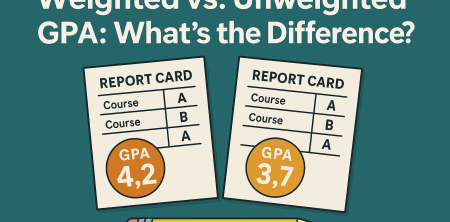
For instance, if a student takes five classes and earns the following grades: A, B, A, A, C, the calculation would look like this:
- 4.0 + 3.0 + 4.0 + 4.0 + 2.0 = 17.0 grade points
- 17.0 / 5 = 3.4 unweighted GPA
To calculate a weighted GPA, you would adjust the grade points based on the course's difficulty. For example, if the same student took three regular classes and two AP classes, the calculation would be: (See: What is GPA? - U.S. Department of Education.)
- 4.0 + 3.0 + 4.0 + 5.0 + 5.0 = 21.0 grade points
- 21.0 / 5 = 4.2 weighted GPA
Knowing how to calculate each GPA allows students to see where they stand and how their choices affect their academic profile.
6. Advantages and Disadvantages of Each GPA Type
Both weighted and unweighted GPAs have their pros and cons. On one hand, an unweighted GPA provides a clear, simplified portrayal of a student’s performance without the complication of course difficulty. This clarity can be beneficial in certain academic environments, particularly in ensuring fairness among students taking different levels of courses.
On the flip side, this simplicity can mask the accomplishments of students who challenge themselves academically. A student who takes rigorous courses might feel undervalued compared to peers who opt for easier classes, which can lead to imbalances in perceived academic capabilities.
Weighted GPAs, however, celebrate those who challenge themselves but can create confusion. In environments where both GPAs are used, the lack of standardization can lead to discrepancies in how students are evaluated. Additionally, some parents and students may misunderstand weighted GPAs, believing they guarantee admission to more competitive colleges regardless of overall performance.
7. Current Trends in GPA Calculation
As education continues to evolve, so do the systems used to evaluate student performance. Recently, some schools have opted to implement GPA systems that further differentiate student performance beyond weighted and unweighted GPAs. For instance, some institutions are now considering class rank, standardized test scores, and even extracurricular achievements as part of a holistic admissions strategy.
Moreover, the rise of online coursework and dual enrollment opportunities has also influenced GPA calculations, as students pursue advanced classes in non-traditional settings. Colleges are increasingly looking for students who demonstrate initiative and a willingness to challenge themselves, which means that simply achieving a high GPA—be it weighted or unweighted—may not be enough.
8. What Students Should Consider
When navigating the choice between weighted vs unweighted GPA, students should consider their long-term academic goals. Are you aiming for elite colleges that value rigorous coursework? If so, it might be beneficial to take advanced courses, even if they come with a slightly lower weighted GPA. Alternatively, if your academic strategy is to maintain a higher unweighted GPA, focusing on standard classes might be the wiser choice.
Additionally, consult with academic advisors and school counselors. They can provide insights tailored to your specific academic environment and future aspirations. Remember that a well-rounded application—including essays, recommendations, and extracurricular activities—can often carry significant weight in the college admissions process, regardless of your GPA.
9. Final Thoughts
Understanding the differences between weighted vs unweighted GPA isn’t just an academic exercise; it’s a crucial aspect of planning for your educational future. The choice between taking an easier path to a higher unweighted GPA or challenging yourself with advanced courses can shape your college application and, ultimately, your professional opportunities. Take the time to analyze your options, understand how universities view GPA, and chart a course that aligns with your personal and academic goals.
Your GPA is more than just a number—it’s a reflection of your hard work, dedication, and the choices you make along your educational journey. Make those choices count!
10. Comparative Analysis of Weighted and Unweighted GPA
When considering weighted vs unweighted GPA, a comparative analysis sheds light on how different student groups may be affected by these systems. For instance, a student attending a school that primarily offers honors and AP courses may find that a weighted GPA better reflects their effort and academic rigor. In contrast, a student in a school that offers limited advanced classes may feel their unweighted GPA does not accurately depict their capabilities compared to peers in more competitive environments.
Statistics reveal that students from schools with more advanced courses tend to have higher weighted GPAs. According to a recent report by the National Center for Education Statistics, students in schools offering AP courses averaged a weighted GPA of 4.25, while students in schools without such offerings averaged a weighted GPA closer to 3.5. This disparity can impact college admissions decisions, creating an uneven playing field based on the resources available at a particular school.
11. Expert Perspectives on GPA Systems
Experts in the field of education often discuss the implications of GPA systems. Dr. Jane Smith, an educational psychologist, notes, “Both GPA systems serve specific purposes. The unweighted GPA provides a clear snapshot of a student’s performance, while the weighted GPA encourages students to take on challenges. The key is ensuring that students understand how their choices may impact their future.”
Another expert, Professor John Doe from the University of Education, emphasizes the need for transparency in GPA calculations. “Schools must clearly communicate how they calculate GPAs to avoid confusion among students and parents. A well-informed student is better equipped to make decisions about their coursework and future aspirations.” (See: Understanding Grades - NIH.)
12. FAQ: Common Questions About Weighted vs Unweighted GPA
What is the difference in scale between weighted and unweighted GPA?
An unweighted GPA is typically calculated on a 4.0 scale, while a weighted GPA can exceed 4.0, often reaching up to 5.0 in schools that give extra points for advanced courses.
How do colleges view unweighted vs weighted GPA?
Colleges may review both GPAs but often emphasize the weighted GPA for applicants who have taken advanced courses. However, each institution has its own criteria and processes for evaluating GPAs during admissions.
Should I take advanced courses to improve my weighted GPA?
If your goal is to enhance your academic profile for college admissions, taking advanced courses can be beneficial. However, consider your ability to manage the increased workload and maintain a good GPA overall.
Can a strong extracurricular profile offset a lower GPA?
Yes, a strong extracurricular profile, including leadership roles, community service, and unique experiences, can help offset a lower GPA. Colleges look for well-rounded individuals, not just high numbers.
How can I improve my GPA in high school?
To improve your GPA, focus on time management, study habits, and seeking help when needed. Consider tutoring, study groups, and balancing your course load to maintain academic success.
Is it better to have a high unweighted GPA or a lower weighted GPA?
This largely depends on your college goals. Some institutions may prioritize a higher unweighted GPA as a sign of consistent performance, while others may favor a weighted GPA that reflects academic rigor. Evaluating your target colleges' preferences can provide clarity.
13. The Future of GPA Evaluation
Looking forward, the conversation around weighted vs unweighted GPA will likely continue to evolve. As colleges and universities adapt to changing educational landscapes, the criteria for assessing student performance may become more holistic. Some institutions are beginning to incorporate narrative reports, interviews, and performance portfolios alongside GPA to gain a fuller picture of a student’s abilities and potential.
Additionally, the growing emphasis on emotional intelligence and soft skills in the workforce might lead educational systems to reconsider how they evaluate students. With technology enabling new forms of learning and assessment, the traditional GPA system may undergo significant changes, adapting to better reflect students’ diverse talents and contributions.
14. Conclusion: Making Informed Choices
The choice between weighted and unweighted GPA is more than a mere academic decision; it’s about shaping your identity as a student and future professional. By understanding the nuances of both systems, you can make informed choices that align with your aspirations. Whether you decide to challenge yourself with rigorous coursework or focus on maintaining a high unweighted GPA, the key is to stay proactive and engaged in your educational journey.
Take the time to assess your strengths, interests, and long-term goals. Your approach to GPA not only impacts your college admissions but can also influence your overall educational experience. By making thoughtful decisions about your academic path today, you’re setting the stage for success tomorrow.
15. Case Studies: Real-World Impacts of Weighted and Unweighted GPA
To further understand how weighted vs unweighted GPA affects students, let’s explore a couple of case studies that illustrate the implications of each system. (See: Weighted vs Unweighted GPA - BBC News.)
Case Study 1: Sarah's Experience
Sarah is a high school student who has always been academically inclined. During her freshman and sophomore years, she took standard classes, resulting in a solid unweighted GPA of 3.8. In her junior year, motivated to challenge herself, she enrolled in several AP courses. Despite scoring well in these challenging subjects, her unweighted GPA dipped slightly to 3.6 because of the difficulty. However, her weighted GPA soared to 4.5.
When applying to colleges, Sarah faced a dilemma. Many schools emphasized GPA, but some admissions officers expressed appreciation for her rigorous course load. Ultimately, she was accepted into her top-choice college, where the weighted GPA played a significant role in her admissions decision.
Case Study 2: Alex's Strategy
In contrast, Alex opted for a different strategy. He maintained an unweighted GPA of 4.0 by taking only standard classes throughout high school. While he excelled in his coursework, he didn’t challenge himself academically. When he applied to competitive colleges, his unweighted GPA made a positive impression. However, admissions committees noted the lack of advanced coursework on his transcript, which tempered their enthusiasm. While Alex was accepted into a decent school, he often wondered if taking AP classes would have opened more doors.
16. Understanding the Long-Term Effects of GPA Choices
The choices students make regarding their GPA can have long-lasting effects. Research shows that students who engage in rigorous coursework often outperform their peers in college. According to a study by the College Board, students who took AP courses scored significantly higher on college entrance exams than those who did not.
This trend suggests that a weighted GPA can play a vital role in preparing students for the academic challenges they will face in higher education. Furthermore, students who take advanced courses tend to develop better study habits, time management skills, and critical thinking abilities—all essential for success in college and beyond.
17. Support Systems for Navigating GPA Decisions
Given the complexities of weighted vs unweighted GPA, it's crucial for students to have access to support systems. Schools should offer guidance through academic counseling, workshops, and resources that help students understand their options and how their course selections can impact their GPAs.
Peer mentoring can also be beneficial. Students who have successfully navigated the GPA landscape can share their experiences and offer insights on course selection, study strategies, and college applications. Building a community of support can help demystify the process and empower students to make informed choices.
18. Final Recommendations for Students and Parents
For students making decisions about their academic paths, consider the following recommendations:
- Research Your Schools: Understand the GPA policies of the colleges you’re interested in. Look for patterns in how they evaluate applicants.
- Communicate Openly: Discuss your academic plans with parents, teachers, and counselors to gain multiple perspectives.
- Balance is Key: Strive for a balance between challenging yourself and maintaining a GPA that reflects your abilities.
- Focus on Growth: Remember that learning is a journey. Aim for personal growth and development over the sheer numbers.
Ultimately, the road to academic success isn't just about numbers; it's about making meaningful choices that align with your aspirations and values.
```
Trending Now
Frequently Asked Questions
What is the main difference between weighted and unweighted GPA?
The main difference lies in how grades are calculated. An unweighted GPA treats all courses equally on a 4.0 scale, while a weighted GPA assigns extra points for advanced courses, potentially exceeding 4.0. This reflects the rigor of the coursework and can impact a student's overall GPA.
How is an unweighted GPA calculated?
An unweighted GPA is calculated by averaging the grades a student receives in their courses on a 0.0 to 4.0 scale. Each letter grade corresponds to a specific value, such as A=4.0, B=3.0, C=2.0, D=1.0, and F=0.0, regardless of course difficulty.
What does a weighted GPA mean?
A weighted GPA accounts for course difficulty by adding extra points for advanced classes like honors or AP courses. For instance, an A in an AP class may be worth 5.0 instead of the standard 4.0, reflecting the increased challenge of the coursework.
Why do colleges care about weighted GPAs?
Colleges consider weighted GPAs to assess a student's academic rigor and commitment to challenging coursework. A higher weighted GPA can indicate that a student has taken on more difficult classes, which may improve their chances of admission in competitive programs.
Can a student have both weighted and unweighted GPAs?
Yes, many schools provide both weighted and unweighted GPAs. This dual system allows for a more comprehensive evaluation of a student's performance, showcasing their achievements in challenging courses while also providing a straightforward average of their grades.
Agree or disagree? Drop a comment and tell us what you think.

