```html
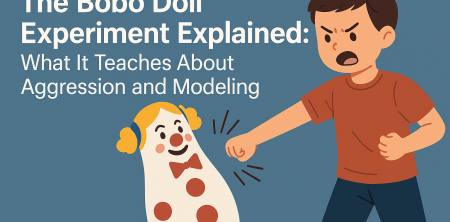
The Bobo Doll Experiment is one of the most significant studies in psychology, shedding light on how behavior is learned through observation. Conducted in the 1960s by psychologist Albert Bandura, this groundbreaking research challenged the then-dominant theories of behaviorism by suggesting that aggression could be learned through modeling rather than just conditioning. This article explores the experiment's background, methodology, key findings, and its ongoing relevance in understanding human behavior.
Background of the Bobo Doll Experiment
Before diving into the details of the Bobo Doll Experiment, it's essential to understand the social context of the time. The early 1960s saw a burgeoning interest in how children learn and adopt behaviors. Behaviorism, led by figures like B.F. Skinner, posited that behaviors were learned solely through reinforcement and punishment. However, Bandura wanted to explore whether children could learn behaviors simply by observing others.
In 1961, Bandura and his colleagues designed an experiment to investigate how children might imitate aggressive behaviors. They focused on the concept of observational learning—the idea that individuals can learn new behaviors by watching others, rather than directly experiencing reinforcement.
The Experiment's Methodology
The Bobo Doll Experiment involved a group of preschool-aged children, typically between three and six years old. These children were divided into three groups to observe different conditions:
- Group 1: Observed an adult behaving aggressively towards a Bobo doll.
- Group 2: Watched an adult who displayed non-aggressive behavior towards the doll.
- Group 3: Served as a control group with no exposure to any adult model.
Each child was placed in a room with a Bobo doll after witnessing the adult's behavior. The researchers then observed how the children interacted with the doll. They recorded the frequencies of aggressive and non-aggressive behaviors displayed by the children.
Key Findings of the Bobo Doll Experiment
The results of the Bobo Doll Experiment were striking. Children who observed the aggressive model were significantly more likely to exhibit similar aggressive behaviors towards the doll. They not only imitated the physical aggression they had seen but also verbalized similar aggressive phrases. Interestingly, children exposed to the non-aggressive model did not show these violent tendencies.
These findings led Bandura to conclude that children learn behaviors through imitation. The children who witnessed aggression were not just mimicking what they had seen; they were also developing a set of expectations about how to handle conflict and express frustration. The experiment demonstrated that behavior is not solely a product of direct reinforcement but can also be acquired through observation.
Understanding Observational Learning
Observational learning, as demonstrated in the Bobo Doll Experiment, emphasizes the importance of social context in behavior development. Bandura identified four key processes involved in observational learning:
- Attention: The observer must pay attention to the model’s behavior.
- Retention: The observer must be able to remember the behavior they observed.
- Reproduction: The observer must have the ability to reproduce the observed behavior.
- Motivation: The observer must have the desire to imitate the behavior.
This model highlights that simply observing a behavior is not enough; several cognitive processes must be engaged for learning to occur. Children may imitate behaviors that they find rewarding or effective, which raises questions about the impact of media and adult behavior on children.
The Impact on Psychology and Society
The implications of the Bobo Doll Experiment resonated beyond academia, influencing various fields, including education, parenting, and media studies. It challenged traditional behaviorism, suggesting that more complex cognitive processes are at play in learning. The experiment emphasized that children are not passive learners; they actively interpret and internalize the behaviors they observe.
Furthermore, the study prompted discussions about the role of media violence. As children increasingly consume media content filled with aggression, questions arise about potential effects on their behavior. Bandura’s findings indicated that exposure to violent behavior could lead to its normalization in children's interactions, making this a crucial point of consideration for parents, educators, and policymakers. (See: Bobo Doll Experiment on Wikipedia.)
Critiques and Limitations of the Experiment
Despite its groundbreaking nature, the Bobo Doll Experiment was not without its critics. Some argued that the controlled lab environment might not replicate real-world contexts. The behavior exhibited by children in the presence of a Bobo doll might not translate to actual social interactions. Critics also pointed out that the aggressive behavior exhibited by children could be attributed to the novelty of the situation rather than a learned response.
Moreover, ethical considerations arose regarding the potential psychological effects of exposing children to aggressive models. While the children were carefully monitored, the long-term consequences of such observations were not fully understood at the time. Today, ethical guidelines in research are more stringent, focusing on the well-being and consent of participants.
Current Relevance in Understanding Behavior
The relevance of the Bobo Doll Experiment persists in today’s discussions about child development and behavior. As the digital landscape evolves, children are exposed to various forms of media that can influence their behavior. From video games to social media platforms, the potential for observational learning is everywhere. Researchers continue to investigate how these new forms of media can shape social behaviors, attitudes, and aggression.
In classrooms, understanding observational learning can enhance teaching strategies. Educators can model positive behaviors and create environments where constructive interactions are encouraged. Recognizing that children can learn both positive and negative behaviors through observation highlights the responsibility of adults to act as role models.
Lessons for Parents and Educators
The Bobo Doll Experiment offers several valuable lessons for parents and educators. Here are a few practical insights:
- Be a Positive Role Model: Children learn from observing adults. Demonstrating positive behaviors in your interactions can help children adopt similar attitudes.
- Limit Exposure to Violent Media: Monitor and limit children's access to violent content, whether in television, video games, or online. Engage in discussions with them about media consumption.
- Encourage Open Dialogue: Foster an environment where children can discuss their feelings and conflicts. Teaching them constructive conflict resolution can counteract aggressive tendencies.
- Teach Empathy: Helping children understand the perspectives of others can mitigate aggressive behavior and promote kindness.
By integrating these lessons, parents and educators can contribute to nurturing a more compassionate generation.
Modern Applications of Bandura's Work
Beyond the initial findings of the Bobo Doll Experiment, Albert Bandura’s broader theories on social learning remain influential in various fields. His concepts of self-efficacy and social cognitive theory have profound implications for psychology, education, and therapy.
In therapy, practitioners often employ modeling techniques to help clients learn new coping mechanisms and social skills. By observing therapists or peers demonstrating desired behaviors, clients can gain confidence and improve their skills. In educational settings, Bandura’s theories have shaped curriculums that promote interactive learning and peer collaboration.
Expanding on Observational Learning: Real-World Examples
Understanding observational learning can be further explored through real-world examples. Consider a child watching their parent cook. The child may pay attention to how their parent uses various kitchen tools, measures ingredients, and follows a recipe. This observation can lead the child to attempt cooking themselves, mimicking the skills they observed. This scenario demonstrates the principle that learning does not solely rely on formal education; real-life experiences significantly contribute to skill acquisition.
Similarly, in sports, young athletes often learn techniques by watching more experienced players. For instance, a youth basketball player may study their favorite professional athlete's moves. By observing their techniques in practice or games, they can replicate those actions in their gameplay, illustrating the power of observation in skill development.
The Role of Technology in Modern Observational Learning
Today, technology plays a substantial role in how children learn through observation. With the rise of platforms like YouTube and social media, children can witness a wider array of behaviors than previous generations. While this exposure can provide valuable learning opportunities, it also raises concerns regarding negative influences. For instance, children might observe risky behaviors, such as dangerous stunts or cyberbullying, which they may then imitate.
Research indicates that children who spend excessive time on screens may be more likely to exhibit aggressive behaviors. A 2020 study published in the journal Pediatrics found a correlation between high screen time and increased aggression in children aged 6 to 12. This highlights the importance of monitoring content and guiding children towards positive references while using technology.
Linking the Bobo Doll Experiment to Modern Issues
The Bobo Doll Experiment has implications that extend into contemporary issues, such as gun violence and the portrayal of aggression in media. For instance, following high-profile incidents of violence, many researchers have revisited Bandura's findings to understand how children might absorb and replicate violent behaviors observed in real-life contexts or through media. This analysis invites parents, educators, and policymakers to reflect critically on the media children consume and its potential effects on behavior. (See: Scientific article on observational learning.)
Moreover, the conversation around violence in video games has been reignited by Bandura's research. While some studies suggest that these games increase aggression in children, others argue that they serve as a safe outlet for aggression. This ongoing debate emphasizes the necessity for a nuanced understanding of how various forms of media can influence behavior.
FAQs about the Bobo Doll Experiment
What was the main purpose of the Bobo Doll Experiment?
The main purpose was to explore whether children could learn aggressive behaviors through observation and imitation rather than solely through direct reinforcement or punishment.
How did Bandura measure aggression in children?
Bandura observed and recorded the frequency and types of aggressive behaviors exhibited by children when interacting with the Bobo doll, including both physical aggression (like hitting the doll) and verbal aggression (such as shouting aggressive phrases).
What are some criticisms of the Bobo Doll Experiment?
Critics argue that the experiment was conducted in a controlled environment, which may not accurately reflect real-life situations. Others have raised ethical concerns about exposing children to aggressive behavior and the potential long-term psychological effects.
Is the Bobo Doll Experiment still relevant today?
Yes, the findings of the Bobo Doll Experiment remain relevant, especially in discussions around media influence on children's behavior, educational strategies, and parenting practices.
What are some practical applications of Bandura's findings?
Bandura's findings can be applied in various fields such as education, where positive modeling is used to encourage constructive behaviors. In therapy, modeling techniques help clients learn new coping mechanisms through observation.
Exploring New Dimensions of Observational Learning
Observational learning is not just limited to children imitating adults; it extends to peer behaviors as well. Research has indicated that children are highly susceptible to peer influence, especially during adolescence. For instance, teenagers may adopt behaviors or attitudes they observe in their peers, whether it's adopting a particular fashion style, experimenting with substances, or engaging in risky behaviors like texting while driving.
This phenomenon is crucial for understanding group dynamics and social influences. Bandura’s theory can help explain why certain trends become popular among youth, as they observe and imitate behaviors that are reinforced within their social circles.
Empathy Development and Observational Learning
Interestingly, observational learning also extends to the development of empathy. Children who observe empathetic interactions are more likely to engage in prosocial behaviors themselves. For example, a child who sees their parent helping a neighbor may be inspired to assist others in need. This connection highlights the dual nature of observational learning—it can be a tool for both aggression and kindness.
Studies have shown that children exposed to examples of compassion and altruism tend to adopt similar behaviors. This suggests that promoting positive models in media and daily life can significantly benefit emotional and social development in children.
The Bobo Doll Experiment in Today's Classroom
In modern classrooms, educators can leverage Bandura's findings to create effective learning environments. Utilizing role-playing scenarios can allow students to observe and practice behaviors in a controlled setting, fostering skills such as conflict resolution and teamwork.
Furthermore, incorporating technology into educational practices can enhance observational learning. Teachers can use video demonstrations to show complex processes, allowing students to learn by watching before attempting tasks themselves. This method can be particularly effective in subjects like science, where practical experiments can mirror the observational learning principles highlighted in the Bobo Doll Experiment.
Addressing Criticism of the Bobo Doll Experiment
While the Bobo Doll Experiment has faced criticism, many psychologists argue that the fundamental principles of observational learning remain robust. Some researchers have sought to replicate Bandura's findings in various contexts and populations, often with consistent results. These replications underscore the importance of observational learning in diverse environments, from schools to homes.
Further studies have also expanded on Bandura’s work by examining the nuances of how gender and cultural factors influence observational learning. For instance, research has highlighted that boys and girls may respond differently to aggressive models, suggesting that societal norms and expectations shape how behaviors are imitated.
Future Directions in Research
The legacy of the Bobo Doll Experiment continues to inspire research into the complexities of human behavior and learning. Future studies may explore the impact of virtual reality (VR) on observational learning, allowing researchers to create immersive environments where behaviors can be modeled more realistically.
Additionally, as artificial intelligence (AI) and machine learning continue to evolve, understanding how these technologies influence observational learning will be vital. For example, AI-driven platforms that recommend content based on viewing history may inadvertently promote certain behaviors, making it necessary to monitor and analyze their long-term effects on children’s learning and behavior.
Conclusion: The Enduring Legacy of the Bobo Doll Experiment
The Bobo Doll Experiment stands as a pivotal moment in psychological research, providing invaluable insights into human behavior and learning. It transformed our understanding of aggression, imitation, and the processes through which behaviors are acquired. As we continue to navigate a world filled with diverse influences on behavior, the lessons from Bandura's work remain more relevant than ever.
Understanding that children learn through observation invites a collective responsibility to model positive behavior and create environments that foster empathy and kindness. In honoring the legacy of the Bobo Doll Experiment, we can work towards a future where healthy behaviors are not only taught but also visualized in our everyday lives.
```
Trending Now
Frequently Asked Questions
What was the purpose of the Bobo Doll Experiment?
The purpose of the Bobo Doll Experiment was to investigate whether children could learn aggressive behaviors through observation rather than direct reinforcement. Conducted by Albert Bandura in the 1960s, the study aimed to challenge behaviorist theories by demonstrating that aggression could be modeled and imitated.
How was the Bobo Doll Experiment conducted?
The Bobo Doll Experiment involved preschool-aged children who were divided into three groups. One group observed an adult behaving aggressively towards a Bobo doll, another saw non-aggressive behavior, while a control group had no exposure. Afterward, the children's interactions with the doll were observed to record their behavior.
What were the key findings of the Bobo Doll Experiment?
Key findings of the Bobo Doll Experiment revealed that children who observed aggressive behavior were more likely to imitate that aggression when playing with the doll. This supported Bandura's hypothesis that behaviors can be learned through observation, highlighting the importance of modeling in child development.
Why is the Bobo Doll Experiment significant in psychology?
The Bobo Doll Experiment is significant because it challenged the prevailing behaviorist perspective by demonstrating that learning occurs through observation and modeling. It laid the foundation for social learning theory, influencing fields such as education, parenting, and media studies in understanding behavior acquisition.
What is observational learning in the context of the Bobo Doll Experiment?
Observational learning, as demonstrated in the Bobo Doll Experiment, refers to the process by which individuals learn behaviors by watching others. Bandura's study illustrated that children could adopt aggressive behaviors simply by observing adults, emphasizing the role of social influences in behavior development.
Have you experienced this yourself? We'd love to hear your story in the comments.

