```html
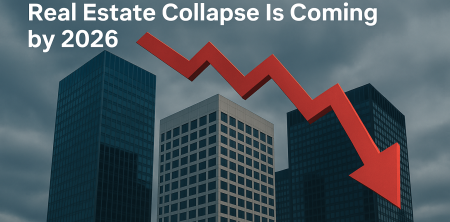
You might think the dust has settled on our recent economic upheavals, but beneath the surface, a truly massive storm is brewing in the world of commercial real estate (CRE). We're talking about a potential commercial real estate collapse that could reshape cityscapes and financial portfolios across America. It's not just a whisper anymore; it's a growing roar, and it’s largely centered on a massive financial hurdle that many property owners simply aren't equipped to clear by the end of 2026.
The core issue? A staggering $1.5 trillion in commercial loans is set to mature in the next couple of years. These aren't just any loans; many were underwritten during a golden age of historically low interest rates. Fast forward to today, and borrowing costs have skyrocketed, often pushing past 7%. This dramatic shift is creating what many in the industry are calling a 'debt wall' – an insurmountable barrier for countless property owners. What happens when you can't refinance your mortgage at an affordable rate? Defaults, foreclosures, and a cascade of problems that could send tremors through our banking system. It’s a situation that combines the lingering effects of the pandemic with a sharp change in monetary policy, creating a perfect, and potentially very painful, storm for commercial real estate.
The Looming Debt Wall: A $1.5 Trillion Headache
Let's get specific about this debt wall. We’re not talking about a small hiccup; this is a monumental financial reckoning. Imagine a scenario where a business owner took out a loan for an office building back in 2020 or 2021, perhaps at an interest rate of 3% or 4%. That seemed like a fantastic deal at the time, a smart move to leverage cheap capital. Now, as that loan approaches its maturity date, they need to refinance. But the economic landscape has fundamentally changed. The Federal Reserve, in its battle against inflation, has aggressively raised interest rates, pushing the prime rate, and by extension, commercial lending rates, to levels not seen in years.
Suddenly, that 3% loan needs to be refinanced at 7% or even higher. For many property owners, particularly those who haven't seen their property values increase significantly or, worse, have seen them decline, this isn't just an inconvenience; it's an existential threat. The cash flow from their properties might not be sufficient to cover these new, much higher debt service payments. This isn't just theoretical; it's a real-world problem facing thousands of businesses. We’re already seeing the early signs of distress, with some smaller regional banks, heavily exposed to CRE loans, feeling the squeeze. The implications for widespread defaults could be severe, impacting not only individual owners but also the financial institutions that hold these loans.
The severity of this debt wall can be visualized when you consider the sheer volume maturing. We're talking about roughly 25% of all outstanding commercial mortgages coming due in a very short window. This isn't spread out over a decade; it's concentrated. This concentration means that banks, already wary, will have limited capacity to extend new favorable terms, even if they wanted to. It creates a bottleneck, where demand for refinancing far outstrips the supply of affordable capital. The higher interest rates also affect property valuations directly. When cap rates (the ratio of a property's net operating income to its market value) rise due to increased borrowing costs, property values tend to fall. So, not only are owners facing higher debt payments, but the collateral backing those loans is often worth less than it was just a few years ago. This double whammy makes refinancing even harder, as lenders might demand more equity or simply refuse to lend against a depreciated asset.
The Remote Work Revolution and Its Impact on Office Space
Compounding the financial pressures is the seismic shift in how we work. The pandemic didn't just temporarily send us home; it fundamentally altered the office landscape. Hybrid and remote work models, once niche concepts, are now mainstream. This isn't a trend; it's a permanent paradigm shift. The result? Record-high office vacancy rates across the nation. As of June 2026, the national office vacancy rate stood at an alarming 17.7%. Think about that for a moment: nearly one-fifth of all office space in America is sitting empty. This isn't just wasted space; it represents a massive drag on property values and rental income.
Empty offices mean less revenue for landlords, making it even harder to justify those higher refinancing costs. Why would a company pay top dollar for a sprawling office floor when a significant portion of its workforce is only in the office two or three days a week, if at all? The demand simply isn't there in the same way it once was. This oversupply, coupled with dwindling demand, creates a vicious cycle. Property owners can’t raise rents, and often have to lower them, further eroding their ability to service debt. It’s a direct hit to the profitability of office buildings, making them far less attractive as investments and pushing many closer to the brink of a commercial real estate collapse.
The impact of remote work isn't uniform, though. Class A office buildings in prime locations, offering top-tier amenities and flexible lease terms, are generally faring better. Tenants who do opt for office space are often seeking quality over quantity, looking for spaces that entice employees back to the office with collaborative zones, wellness facilities, and advanced technology. The real pain is being felt in Class B and C office spaces, particularly those built decades ago without modern amenities or in less desirable locations. These buildings are struggling to attract or retain tenants, leading to protracted vacancies and significant drops in effective rents. In some markets, these older, less appealing buildings are seeing vacancy rates climb past 30% or even 40%. It's a bifurcation of the market, where the best properties might weather the storm, while the rest face an existential crisis. This creates a difficult valuation challenge for lenders, as the perceived value of a building can fluctuate wildly depending on its class and location, making it harder to accurately assess risk.
The Banking Sector's Exposure and Potential Ripple Effects
When we talk about a potential commercial real estate collapse, it’s crucial to understand who holds the bag. It’s not just the individual property owners; it’s the entire banking system. Regional and community banks, in particular, often have a disproportionately high exposure to commercial real estate loans compared to their larger, more diversified counterparts. These banks are the lifeblood of many local economies, funding everything from small businesses to large development projects.
If a wave of defaults hits, these banks will be forced to take significant write-downs on their loan portfolios. This isn't just an accounting entry; it can deplete their capital, restrict their ability to lend, and in severe cases, even threaten their solvency. We saw glimpses of this vulnerability during the regional banking crisis of early 2023, where concerns about balance sheet health and exposure to certain asset classes spooked investors. A widespread commercial real estate downturn could reignite those fears, potentially leading to broader financial instability. The contagion effect is real; a problem in one sector of the economy rarely stays isolated. It can ripple through credit markets, impact consumer confidence, and ultimately slow down economic growth.
The sheer scale of regional bank exposure is startling. Data from the Federal Deposit Insurance Corporation (FDIC) shows that banks with under $100 billion in assets hold roughly 70% of all CRE loans. For some of these smaller institutions, CRE loans can represent more than 300% of their total capital. This level of concentration means that even a moderate downturn in CRE values could have outsized effects on their balance sheets. While regulators are certainly monitoring the situation closely and have encouraged banks to shore up their reserves, there’s a delicate balance. Too much tightening of lending standards could accelerate the downturn, making it even harder for viable projects to get financing. Too little, and banks risk being caught flat-footed when defaults hit. It's a tightrope walk for regulators, trying to ensure stability without choking off the credit that healthy businesses still need. We also can't forget the shadow banking system – non-bank lenders and private credit funds – which have also grown significantly in CRE financing. While they might be more agile, they often operate with less regulatory oversight, adding another layer of complexity and potential risk to the overall financial system during a commercial real estate collapse. (See: impact of economic upheavals on cities.)
Office-to-Residential Conversions: A Glimmer of Hope?
Amidst the gloom, there's a fascinating counter-trend emerging: the conversion of vacant office buildings into residential spaces. This isn't a new idea, but it's gaining unprecedented momentum as developers look for creative solutions to the glut of empty offices. In 2025 alone, a record 11.8 million square feet of office space either completed or began the transformation into residential units. Think about that volume—it's equivalent to dozens of massive office towers being given a new lease on life.
This trend makes a lot of sense, especially in urban centers. Many cities are grappling with housing shortages and affordability crises. Converting old, often well-located office buildings into apartments or condos can address both problems simultaneously. It breathes new life into struggling downtowns, brings residents closer to amenities and public transit, and repurposes structures that might otherwise sit empty for years. However, these conversions aren't simple. They require significant capital, navigating complex zoning laws, and often involve extensive architectural and structural changes. But for developers with the right vision and resources, it presents a compelling opportunity to acquire discounted properties and meet a genuine market need.
The economics of office-to-residential conversions are tricky, though, and often depend heavily on local market conditions and government incentives. While the appeal of creating much-needed housing is clear, the practicalities are substantial. Plumbing, electrical, and HVAC systems in office buildings are designed for commercial use and often need complete overhauls for residential living. Large, deep floor plates common in office towers can make it challenging to bring natural light and ventilation to interior units, requiring creative architectural solutions. The cost per square foot for these conversions can sometimes rival new construction, even with a discounted purchase price for the office building itself. This is why public-private partnerships and local tax abatements often become crucial catalysts, helping to bridge the financial gap and make these projects viable. Without such support, many otherwise promising conversions simply won't pencil out, leaving more office buildings vacant. It's not a silver bullet for the entire office market, but it certainly offers a viable path forward for a segment of the distressed inventory, especially in cities with strong housing demand.
The Rise of 'Shadow Landlords' and Distressed Asset Acquisition
As properties become distressed, another player enters the scene: 'shadow landlords.' These aren't your typical institutional investors or publicly traded REITs. Often, they are private equity firms, hedge funds, or wealthy individuals who specialize in acquiring troubled assets at deep discounts. They thrive in environments of financial distress, seeing opportunity where others see only risk. They're actively hunting for properties that are teetering on the edge of default or have already entered foreclosure, looking to buy low and reposition the assets for future gain.
While some view these 'shadow landlords' with suspicion, seeing them as opportunists capitalizing on others' misfortunes, they also play a crucial role in preventing a complete market seize-up. They provide liquidity to a frozen market, taking on properties that traditional lenders or owners can no longer manage. Their involvement can facilitate the necessary transitions, whether it's through intensive management, redeveloping the property, or indeed, facilitating those office-to-residential conversions. However, their methods can be controversial, often involving aggressive negotiation tactics and a focus purely on profit, which can sometimes clash with broader urban development goals or community interests. It’s a complex dynamic with both potential benefits and drawbacks for the overall health of the real estate market.
The strategy of these 'shadow landlords' is often long-term and value-add. They aren't looking for quick flips. Instead, they acquire properties that are fundamentally sound but financially underwater, then invest significant capital into renovations, re-tenanting, or repositioning the asset. For instance, they might buy a struggling shopping mall, tear down parts of it, and build apartments or medical offices. Or they might acquire an outdated office park, upgrade it with modern amenities, and market it to a different class of tenants. This requires not just capital, but also expertise in development, property management, and market repositioning. Their ability to move quickly and take on higher levels of risk, often using their own private capital rather than relying on traditional bank financing, gives them an advantage in distressed markets. They essentially act as a market clearing mechanism, absorbing the properties that the traditional system can no longer support, and in doing so, they help set new, more realistic price floors for commercial assets. This process can be painful for previous owners and lenders, but it's a necessary step in a market correction, allowing capital to flow to assets that can be revitalized.
Investment Opportunities Amidst the Commercial Real Estate Collapse
It might seem counterintuitive, but a potential commercial real estate collapse actually creates significant investment opportunities. For those with capital and a strong risk appetite, this period of distress can be a once-in-a-decade chance to acquire high-quality assets at significantly reduced prices. The old adage, 'buy when there's blood in the streets,' certainly applies here, though with a heavy dose of caution and due diligence.
Investors are looking at several angles: acquiring distressed debt itself, buying properties outright from owners facing foreclosure, or partnering with developers on conversion projects. The key is identifying properties with strong underlying fundamentals – good locations, solid construction, and potential for repurposing – that are simply suffering from temporary financial strain. This isn't a game for the faint of heart; it requires deep market knowledge, access to capital, and a willingness to take on risk. But for those who can navigate the complexities, the potential returns could be substantial, particularly as the market eventually stabilizes and recovers. Think about the long-term value of prime urban real estate, even if it's currently underperforming.
The Role of Technology and Data in Navigating the Downturn
In a volatile market, information is power. Technology and data analytics are becoming indispensable tools for everyone from struggling property owners to opportunistic investors. For owners trying to avoid default, sophisticated property management software can help optimize operations, track vacancies, and identify cost-saving measures. For developers eyeing conversions, B2B SaaS solutions offer tools for feasibility studies, managing complex construction projects, and even virtual walkthroughs of proposed residential units.
Investors, especially those looking at distressed assets, are leveraging AI and big data to identify undervalued properties, assess market trends, and predict potential areas of growth. This isn't just about spreadsheets anymore; it’s about predictive analytics that can give an edge in a highly competitive and uncertain environment. Legal services, too, are evolving, with tech platforms streamlining the often-arduous process of distressed asset transactions. The right technological tools can mean the difference between making an informed decision and flying blind, which is particularly critical when facing a potential commercial real estate collapse.
Policy Responses and Urban Planning Considerations
Governments and urban planners aren't sitting idly by while their city centers potentially hollow out. There's a growing recognition that policy responses are needed to mitigate the impact of the commercial real estate collapse and encourage positive change. Many cities are re-evaluating zoning ordinances to make office-to-residential conversions easier and more economically viable. This might involve reducing parking requirements, offering tax incentives, or streamlining the permitting process.
Beyond conversions, urban planners are also thinking about how to revitalize downtown areas that rely less on traditional office occupancy. This could mean fostering mixed-use developments, investing in public spaces, or promoting cultural and entertainment venues that draw people back to urban cores, regardless of their work location. The goal is to create vibrant, resilient cities that can adapt to changing economic realities. It's a complex balancing act, ensuring that policies support both economic recovery and the long-term livability of urban environments. The decisions made in the next few years will shape our cities for decades to come. (See: New York State economic reports.)
A crucial aspect of policy response involves the role of public transportation and infrastructure. As cities encourage more residential density downtown through conversions, the existing infrastructure needs to keep pace. This means investing in upgrades to subway systems, bus routes, and even pedestrian and bike-friendly pathways. Without adequate support for daily living—like grocery stores, schools, and parks—simply converting offices to apartments won't create truly thriving communities. There's also the question of environmental sustainability. Older office buildings often have outdated energy systems. Policy can incentivize developers to incorporate green building practices and energy-efficient upgrades during conversions, aligning urban revitalization with broader climate goals. This comprehensive approach, looking at not just zoning but also infrastructure, amenities, and environmental impact, is essential for ensuring that the future of urban commercial real estate is not just economically stable, but also desirable and sustainable for residents.
The Global Context: Is This Just a US Problem?
While our focus here has been on the potential commercial real estate collapse in the United States, it's worth asking: is this a uniquely American issue, or are similar forces at play globally? The answer is nuanced. Many of the underlying drivers – high interest rates, the shift to remote work, and a general tightening of credit – are global phenomena. Major financial hubs like London, Frankfurt, and Sydney are also grappling with rising office vacancies and challenges in their CRE markets.
However, the specific magnitude and timing of the 'debt wall' are particularly acute in the US due to the structure of its commercial mortgage market and the aggressive interest rate hikes by the Federal Reserve. European banks, for example, tend to have more conservative lending practices and longer loan terms, which might spread out the refinancing challenge over a longer period. Asian markets also face their own unique dynamics, including significant exposure to the Chinese property crisis. But the core themes of adapting to a post-pandemic work environment and navigating a higher interest rate world are universal. The US market, being one of the largest and most dynamic, often serves as an early indicator for trends that might eventually play out in other regions, albeit with local variations in intensity and speed. This global interconnectedness means that distress in one major market can certainly send ripples elsewhere, even if other regions aren't facing an identical crisis.
Beyond Office: Other CRE Sectors and Their Resilience
It’s important to remember that commercial real estate isn't just office buildings. While the office sector is undoubtedly facing the most severe headwinds, other CRE sectors are showing varying degrees of resilience, and some are even thriving. For example, industrial real estate, particularly logistics and warehouse space, has seen a boom thanks to the explosion of e-commerce. Even with some recent moderation, demand for well-located distribution centers remains strong, supporting healthy rental growth and valuations.
Retail, while having faced its own 'retail apocalypse' pre-pandemic, is experiencing a nuanced recovery. High-quality, experiential retail centers in affluent areas, or those anchored by essential services, are performing well. Conversely, older, less desirable malls continue to struggle. Multifamily residential, driven by persistent housing shortages, remains a relatively strong sector, although rising interest rates are making new development more challenging and impacting affordability. Data centers are another high-growth area, fueled by the insatiable demand for cloud computing and AI. So, while the term "commercial real estate collapse" often conjures images of empty downtown office towers, it's crucial to disaggregate the market. The pain isn't evenly distributed, and some sectors offer a counterbalance to the distress seen in others, providing diversification for investors and a different set of challenges and opportunities for developers.
The Human Element: Jobs, Communities, and Local Economies
While we often discuss commercial real estate in terms of trillions of dollars and vacancy rates, it's crucial not to lose sight of the human element. A commercial real estate collapse has profound implications for jobs, communities, and local economies. When office buildings empty out, it's not just landlords who suffer. The small businesses that rely on office workers – the coffee shops, dry cleaners, restaurants, and convenience stores – see their customer base vanish. This can lead to widespread business closures and job losses in the service sector.
Moreover, local governments rely heavily on property taxes from commercial properties to fund essential services like schools, police, and public infrastructure. A significant drop in CRE values translates directly into reduced tax revenues, potentially leading to cuts in public services or increased taxes on residents. The hollowing out of downtown cores can also affect civic pride and safety, as vibrant areas become quiet and desolate. The challenges extend beyond economics; they touch on the very fabric of urban life. This underscores why policy responses and urban planning are so critical – it's about preserving not just financial assets, but also the vitality and livability of our cities for the people who call them home.
Looking Ahead: The 2026 Crossroads for Commercial Real Estate
So, where does this leave us? The year 2026 is shaping up to be a critical crossroads for the U.S. commercial real estate market. The convergence of a massive debt maturity wall, persistently high office vacancy rates, and elevated interest rates creates a formidable challenge. While a full-blown commercial real estate collapse might sound alarmist, the signs of significant distress are undeniable. Many property owners will face agonizing decisions, and some will inevitably lose their assets.
However, it's not all doom and gloom. This period of disruption is also a catalyst for innovation and adaptation. The rapid acceleration of office-to-residential conversions demonstrates the market's ability to pivot and find new value. The involvement of specialized investors and the increasing sophistication of technology will help facilitate these transitions, however painful they may be for some. The future of commercial real estate will be different, undoubtedly. It will likely feature fewer dedicated office buildings, more mixed-use developments, and certainly a more cautious approach to lending. The coming years will test the resilience of property owners, banks, and urban centers alike, but they will also open doors to new possibilities for those prepared to embrace change.
Frequently Asked Questions (FAQ) about the Commercial Real Estate Collapse
Q1: What exactly is the "debt wall" in commercial real estate?
The "debt wall" refers to the massive volume of commercial real estate loans, estimated at $1.5 trillion, that are set to mature by the end of 2026. Many of these loans were issued at historically low interest rates. Now, with borrowing costs significantly higher (often above 7%), property owners face a huge challenge in refinancing these debts at affordable rates. This makes it difficult to cover their payments, potentially leading to defaults and foreclosures. (See: latest financial news and analysis.)
Q2: How does remote work contribute to the commercial real estate problem?
Remote and hybrid work models have drastically reduced the demand for traditional office space. Companies are downsizing their physical footprints or opting for more flexible arrangements, leading to record-high office vacancy rates (around 17.7% nationally as of June 2026). Empty offices mean less rental income for landlords, making it harder to service debt and justifying lower property valuations, which further complicates refinancing efforts.
Q3: Which parts of the banking sector are most vulnerable to a commercial real estate collapse?
Regional and community banks are particularly vulnerable. They often have a much higher concentration of commercial real estate loans relative to their total assets compared to larger, more diversified national banks. If a significant number of these loans default, these smaller banks could face substantial losses, depleting their capital and potentially threatening their stability, which could then ripple through local economies.
Q4: Are office-to-residential conversions a viable solution?
Yes, office-to-residential conversions offer a promising way to repurpose vacant office spaces into much-needed housing, especially in urban areas. In 2025, a record 11.8 million square feet began this transformation. However, these projects are complex and expensive, requiring significant capital investment, navigating zoning regulations, and extensive architectural modifications. Government incentives and public-private partnerships often play a key role in making them economically feasible.
Q5: Who are "shadow landlords" and what role do they play?
"Shadow landlords" are typically private equity firms, hedge funds, or wealthy investors who specialize in acquiring distressed commercial real estate assets at deep discounts. They provide liquidity to a struggling market by buying properties that traditional owners or lenders can no longer manage. While sometimes viewed as opportunistic, they play a crucial role in repositioning and revitalizing these assets, often through significant investment and redevelopment, which can ultimately help stabilize the market.
Q6: Are there investment opportunities during a commercial real estate downturn?
Absolutely. For investors with significant capital, deep market knowledge, and a strong risk appetite, a downturn can present opportunities to acquire high-quality commercial properties at reduced prices. This might involve buying distressed debt, purchasing properties from owners facing foreclosure, or partnering on conversion projects. The key is to identify assets with strong underlying fundamentals that are temporarily undervalued due to market conditions, with the expectation of long-term recovery.
Q7: How is technology being used to navigate the commercial real estate challenges?
Technology and data analytics are becoming essential tools. Property management software helps owners optimize operations and track vacancies. Developers use B2B SaaS solutions for feasibility studies and project management of conversions. Investors leverage AI and big data for predictive analytics to identify undervalued assets and assess market trends. These tools help everyone involved make more informed decisions in a volatile and uncertain market.
Q8: Is the commercial real estate problem just in the US, or is it global?
While the "debt wall" and its specific timing are particularly pronounced in the US due to its market structure and the Federal Reserve's interest rate policies, many of the underlying issues like high interest rates and remote work are global. Major cities worldwide are seeing increased office vacancies. However, regional markets have different banking regulations and economic conditions, leading to variations in the severity and speed of the impact compared to the US.
Q9: Are all commercial real estate sectors equally affected by the downturn?
No, the impact is not uniform. While the office sector faces the most significant challenges, other sectors are showing more resilience or even growth. For example, industrial real estate (warehouses, logistics) continues to perform well due to e-commerce. Multifamily residential remains strong due to housing shortages, and data centers are booming. Retail is mixed, with high-quality, experiential centers doing better than older, less appealing malls. So, it's important to differentiate between sectors when discussing the health of the overall CRE market.
```
Trending Now
Frequently Asked Questions
What is causing the potential collapse of commercial real estate by 2026?
The looming collapse is primarily due to $1.5 trillion in commercial loans maturing soon, many of which were secured during periods of low interest rates. As borrowing costs have surged past 7%, many property owners are unable to refinance, leading to defaults and potential foreclosures.
How does the debt wall impact commercial property owners?
The debt wall creates significant financial strain for property owners who need to refinance loans at higher interest rates. This situation can lead to defaults and foreclosures, which may destabilize the commercial real estate market and ripple through the banking system.
What are the consequences of not refinancing commercial loans?
Failure to refinance commercial loans can result in defaults and foreclosures. As property owners face insurmountable debt, the repercussions could extend beyond individual properties, potentially affecting the broader financial system and the economy as a whole.
Why are interest rates important for commercial real estate?
Interest rates are crucial for commercial real estate because they directly affect borrowing costs. When rates rise, as they have recently, it becomes more challenging for property owners to refinance their loans, leading to financial difficulties and potential market instability.
What role did the pandemic play in the commercial real estate market?
The pandemic exacerbated existing vulnerabilities in the commercial real estate market. It contributed to economic upheaval and altered demand for certain properties, combining with rising interest rates to create a precarious situation for many property owners facing maturing loans.
What's your take on this? Share your thoughts in the comments below — we read every one.

