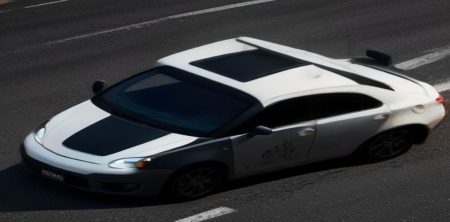
Imagine this: you're cruising down a sunny California highway, perhaps heading to the beach, and you've decided to let your car take the wheel. Literally. Your autonomous vehicle (AV), packed with the latest sensors and AI, is handling everything. Suddenly, there's a jolt, a screech of tires, and the unmistakable sound of metal crumpling. You've been in an accident, and your car was driving itself. Now what? Who's on the hook? This isn't a hypothetical anymore; it's a rapidly emerging reality that's throwing a wrench into our traditional notions of fault and responsibility.
The proliferation of autonomous vehicles on our roads, especially in tech-forward states like California, is ushering in a whole new era of legal and insurance complexities. Gone are the days when determining fault was relatively straightforward, often boiling down to which human driver made a mistake. With AVs, we're talking about a sophisticated dance between human occupants, intricate software, advanced hardware, and the unpredictable variables of the road. Understanding autonomous vehicle accident liability California is becoming a critical piece of knowledge, not just for lawyers and insurers, but for anyone considering stepping into or sharing the road with these futuristic machines.
California, a state that proudly embraces innovation while also being a 'fault-based' jurisdiction for accidents, finds itself at the epicenter of this legal conundrum. This means that after a crash, the legal system diligently works to figure out who was at fault, and that party (or their insurer) is responsible for damages. But when the 'driver' is a computer, the lines blur considerably. Was it a glitch in the code? A sensor malfunction? Or did the human occupant intervene, or fail to intervene, at a critical moment? These are the questions that are pushing legal minds to reconsider centuries-old principles of negligence and product liability, all while keeping pace with technology that seems to evolve at light speed.
The Shifting Sands of Fault: From Human Error to Algorithmic Blame
For decades, accident liability was a relatively simple equation. You had two human drivers, perhaps a pedestrian, and a set of traffic laws. If someone ran a red light, swerved unsafely, or was distracted, the fault was clear. The concept of negligence, a cornerstone of personal injury law, revolved around a human's failure to exercise reasonable care. But when a car drives itself, who is exercising 'reasonable care'? Is it the human occupant who may be reading a book or watching a movie? Or is it the complex algorithms and hardware designed by engineers thousands of miles away?
This fundamental shift is precisely what makes autonomous vehicle accident liability in California such a compelling and challenging area of law. We're moving from a system primarily focused on human agency to one that must account for machine decisions. If an AV makes an 'error' that leads to a collision, is that an inherent flaw in the product? Is it a design defect, a manufacturing defect, or a software bug? Each of these possibilities points to different parties being held responsible, potentially pulling in manufacturers, software developers, and even component suppliers.
Consider the famous Trolley Problem in a real-world scenario: an AV is faced with an unavoidable crash. Should it swerve to hit a group of pedestrians to save its occupant, or sacrifice its occupant to save the pedestrians? While this is an extreme example, it highlights the ethical and legal dilemmas inherent in programming these machines. Every decision an AV makes, or doesn't make, is the result of human programming and design choices, which inevitably brings the product liability framework into play. This means that a manufacturer could be held liable not just for physical defects, but for the very 'intelligence' of their vehicle.
California's Unique Position: A Hotbed for AV Development and Legal Innovation
California isn't just a scenic state; it's a global hub for technological innovation, particularly in the realm of autonomous vehicles. Major players like Waymo, Cruise, Tesla, and countless startups are testing and deploying their AVs on California's diverse roads, from bustling city streets to winding rural highways. This makes California a living laboratory for AV technology, and by extension, for the legal frameworks attempting to keep up.
Because so much AV development happens here, California has also been at the forefront of establishing regulations for these vehicles. One critical aspect of this regulatory environment, particularly relevant to autonomous vehicle accident liability California, is the mandate for manufacturers to report crashes involving their autonomous test vehicles. These reports, often detailed and comprehensive, provide invaluable data. They can include black box information, sensor data, video footage, and detailed logs of the vehicle's state and decisions leading up to and during an accident. This data is absolutely crucial for accident reconstructionists, legal teams, and insurance adjusters trying to piece together what happened and, more importantly, why. (See: National Highway Traffic Safety Administration on AVs.)
The sheer volume of AV testing in the state means that attorneys specializing in personal injury, product liability, and technology law are increasingly finding themselves navigating uncharted waters. They're not just looking at police reports and witness statements; they're sifting through lines of code, analyzing sensor outputs, and understanding complex AI decision-making processes. This requires a new breed of legal expertise, one that blends traditional legal acumen with a deep understanding of advanced technology.
The Intricacies of Negligence and Product Liability in the AV Era
When an autonomous vehicle is involved in a collision, the legal theories traditionally applied to accidents — negligence and product liability — take on new, intricate dimensions. In a conventional accident, proving negligence means showing that a driver owed a duty of care, breached that duty, and that breach directly caused injuries or damages. With an AV, who owes that duty of care?
If the human occupant was supposed to take over but failed to do so, perhaps they were negligent. This is where the concept of 'levels of autonomy' becomes vital. Many AVs currently on the road are not fully autonomous, meaning a human driver is still expected to monitor the vehicle and be ready to intervene. If an accident occurs in such a vehicle, and the human driver was distracted or incapacitated, a case for human negligence could still be made.
However, if the vehicle was operating in a higher level of autonomy, where human intervention is not expected or even discouraged, then the focus shifts dramatically to product liability. This legal theory holds manufacturers responsible for injuries caused by defective products. In the context of AVs, a 'defect' could be a design flaw (the AV's programming inherently makes unsafe decisions), a manufacturing defect (a sensor was incorrectly installed), or a failure to warn (the manufacturer didn't adequately inform users of the system's limitations). Establishing autonomous vehicle accident liability California under product liability often requires extensive expert testimony from engineers, software developers, and safety specialists who can dissect the AV's systems and pinpoint the exact failure.
The challenge here is immense. How do you prove a 'design defect' in an AI's decision-making process? What constitutes a 'manufacturing defect' in software? These questions are pushing the boundaries of legal precedent and forcing courts to interpret existing laws in entirely new contexts. It's a fascinating, if sometimes frustrating, intersection of law and cutting-edge technology.
Comparative Fault: When Everyone Shares a Piece of the Blame
California operates under a system of 'pure comparative fault.' This means that even if you are partially at fault for an accident, you can still recover damages, though your recovery will be reduced by your percentage of fault. For example, if you are found 20% at fault for an accident that caused $100,000 in damages, you can still recover $80,000. This concept adds another layer of complexity to autonomous vehicle accident liability California.
In an AV accident, comparative fault could come into play in numerous ways. Perhaps the AV's software made a questionable decision, but the human occupant, who was supposed to be monitoring, was distracted and failed to take control when they should have. Or maybe another human driver involved in the accident was also partially at fault, making an unsafe lane change that exacerbated the AV's programmed response.
Determining these percentages of fault in an AV collision is incredibly difficult. It requires a forensic analysis of all contributing factors: the AV's performance, the human occupant's actions (or inactions), the actions of other drivers, and even environmental factors like road conditions or weather. Each party's attorney will argue passionately for their client's minimal contribution to the accident, leading to intricate negotiations and often, lengthy litigation. The involvement of multiple parties – the AV manufacturer, the human occupant, other drivers, and their respective insurance companies – makes these cases a tangled web of claims and counterclaims.
The Role of Data and Black Boxes in AV Accident Investigations
One of the most significant differences between investigating traditional accidents and AV accidents lies in the sheer volume and type of data available. Modern AVs are essentially computers on wheels, constantly collecting data from an array of sensors: cameras, radar, lidar, ultrasonic sensors, GPS, and more. This data includes everything from the vehicle's speed and direction to the presence of other vehicles, pedestrians, and road conditions. Think of it as a highly sophisticated 'black box' system, far more comprehensive than what's typically found in a conventional car.
When an autonomous vehicle is involved in a crash, this data becomes the bedrock of any investigation into autonomous vehicle accident liability California. It can provide an almost moment-by-moment replay of what the vehicle 'saw,' what decisions its AI made, and how it reacted. Lawyers and accident reconstructionists will pore over this data, looking for anomalies, system failures, or evidence of improper human intervention. (See: CDC on automated vehicles safety.)
However, accessing and interpreting this data isn't always straightforward. Manufacturers often hold proprietary rights to their vehicle's data, and it can require legal action to compel them to release it. Even once released, understanding the complex algorithms and sensor readings requires specialized technical expertise. This means that AV accident cases often involve a team of experts, including data scientists, software engineers, and automotive specialists, all working to translate raw data into actionable legal arguments. This intricate process underscores why these cases are often so costly and time-consuming.
Insurance Companies in the Crosshairs: New Policies for New Risks
The traditional auto insurance model, built around human drivers and their associated risks, is struggling to adapt to the advent of autonomous vehicles. Who insures the AV? Is it the human occupant's personal auto policy, or a new type of commercial policy taken out by the manufacturer? What happens when a human takes over control briefly, then hands it back to the AI?
The current landscape sees disputes between multiple insurance companies as a common occurrence in AV accidents. You might have the personal auto insurer of the human occupant, the commercial liability insurer of the AV manufacturer, and potentially the insurers of any third-party vehicles involved. Each insurer will naturally try to shift blame away from their policyholder, leading to complex and protracted negotiations.
Some forward-thinking insurance providers are already developing new coverages specifically tailored to AVs, attempting to delineate responsibility based on the level of autonomy engaged at the time of the crash. However, this is still a nascent field, and a universally accepted framework has yet to emerge. The high stakes involved in these legal battles, coupled with the evolving nature of AV technology, mean that insurance companies are playing a critical role in shaping the future of autonomous vehicle accident liability California. They are not just reacting to accidents; they are actively influencing policy and risk assessment for an entirely new paradigm of driving.
The Road Ahead: Evolving Laws and the Quest for Clarity
The legal framework for autonomous vehicle accident liability in California is very much a work in progress. While existing laws like negligence and product liability are being stretched and reinterpreted, there's a growing recognition that specific legislation might be needed to provide greater clarity and predictability. Lawmakers are grappling with tough questions: Should there be a statutory presumption of manufacturer liability when an AV is in fully autonomous mode? How should human monitoring requirements be legally defined across different levels of autonomy?
Many stakeholders, including consumer advocates, AV manufacturers, and legal professionals, are pushing for more explicit guidelines. The goal is to create a system that is fair, predictable, and encourages both innovation and safety. Without clear rules, the legal uncertainty could stifle the adoption of AV technology, or conversely, leave accident victims without adequate recourse. The balance is delicate.
As more AVs hit the roads and more data becomes available, we can expect to see further refinements in both state and federal regulations. Landmark court cases involving autonomous vehicle accident liability California will also play a crucial role, setting precedents that will guide future decisions. It's a dynamic and exciting time for legal development, driven by technological advancement. (See: Research on AV liability and insurance.)
Controversies and the Public Perception of AV Safety
Beyond the legal and technical specifics, autonomous vehicle accidents often spark intense public debate and controversy. Every crash involving an AV, especially those resulting in injuries or fatalities, tends to make headlines. Incidents like the fatal Uber self-driving car crash in Arizona in 2018, or more recent reports of Waymo and Cruise vehicles causing traffic disruptions or minor collisions in San Francisco, fuel public skepticism and concern over safety.
This public perception significantly influences the political and regulatory environment. If people don't trust AVs, there will be greater pressure on lawmakers to impose stricter regulations, potentially slowing down development and deployment. On the other hand, proponents argue that AVs, when fully mature, have the potential to drastically reduce accidents caused by human error, saving countless lives. This dichotomy creates a tension that permeates discussions around autonomous vehicle accident liability California.
The media plays a powerful role in shaping this narrative. Sensational headlines about 'robot cars crashing' can overshadow the often-complex realities of accident causation. It's a challenge for the AV industry and regulators to communicate nuanced information to the public, ensuring that discussions are based on facts and data rather than fear or hyperbole. This ongoing debate ensures that AV safety and liability remain virally potent topics, capturing public attention and driving conversations about the future of transportation.
The Path Forward for Accident Victims and Legal Counsel
For individuals involved in an autonomous vehicle accident in California, the road to recovery and compensation can be particularly challenging. The complexity of these cases demands specialized legal representation. A lawyer handling an AV accident case needs to be more than just a personal injury attorney; they need to understand product liability, intellectual property, data forensics, and the intricacies of automotive engineering and artificial intelligence. They'll need to know how to compel manufacturers to release critical data, how to interpret that data, and how to effectively argue for fault in a multi-party scenario.
Victims of AV accidents should prioritize seeking legal counsel as soon as possible. Early intervention allows attorneys to preserve evidence, access crucial data before it's lost or overwritten, and begin building a robust case. This often involves engaging expert witnesses from various technical fields, a process that can be both time-consuming and expensive, underscoring the high stakes involved. Related reading: Hastings Law School.
The future of driving is undeniably autonomous, and with it comes a profound transformation of our legal and insurance systems. While the journey to clarity on autonomous vehicle accident liability California is ongoing, one thing is certain: the conversation has only just begun, and the precedents set today will shape the roads of tomorrow.
Trending Now
Frequently Asked Questions
Who is liable if a driverless car gets into an accident?
In the event of a driverless car accident, liability can be complex. It may fall on the vehicle's manufacturer, software developers, or even the human occupant, depending on factors like software glitches or user intervention. California's fault-based system adds layers to these determinations, making it essential to analyze each incident carefully.
How does California's fault-based system affect autonomous vehicle accidents?
California's fault-based system means that after an accident, the legal system assesses who is at fault to determine liability. In the case of autonomous vehicles, this can involve evaluating the performance of the vehicle's technology, the actions of the human occupant, and any potential product defects.
What happens if my self-driving car crashes?
If your self-driving car crashes, it's important to gather evidence and report the incident to your insurance company. Liability may not rest solely with you, as manufacturers and software developers could also bear responsibility. Legal outcomes can vary based on the specific circumstances of the crash.
Are driverless cars safe?
While driverless cars are equipped with advanced technology designed to enhance safety, they are not infallible. Accidents can still occur due to software errors, sensor failures, or unexpected road conditions, making ongoing evaluation and regulation crucial to ensure their safety on public roads.
Who pays for damages in an autonomous vehicle accident?
In an autonomous vehicle accident, damages may be covered by the vehicle owner's insurance or the manufacturer's liability insurance, depending on the circumstances. The determination of fault plays a critical role in deciding which party is responsible for covering damages.
Agree or disagree? Drop a comment and tell us what you think.

