```html
As parents, we all want to contribute positively to our children’s education. We want to help them cultivate skills that extend beyond the classroom, fostering a lifelong love of learning. One powerful tool that you can leverage in this pursuit is Bloom's Taxonomy for Parents. This educational framework offers a structured approach to engage your child in deeper thinking and learning. In this article, we’ll explore how to use Bloom's Taxonomy effectively to enhance your child's learning experience at home.
1. Understanding Bloom's Taxonomy
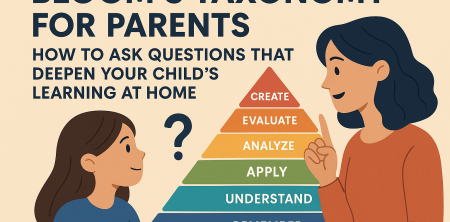
Originating from educational psychologist Benjamin Bloom in 1956, Bloom's Taxonomy is a hierarchical model that categorizes cognitive skills. It ranges from basic knowledge to higher-order thinking skills like evaluation and creation. The taxonomy consists of six levels: Knowledge, Comprehension, Application, Analysis, Synthesis, and Evaluation. In later revisions, these levels were updated to Remember, Understand, Apply, Analyze, Evaluate, and Create.
By understanding these levels, parents can tailor their questions to promote deeper thinking and enhance comprehension. Rather than asking simple yes-or-no questions, parents can engage their children in discussions that challenge them to think critically, fostering a more profound understanding of the material. For instance, instead of asking, "What is the capital of France?" a parent might ask, "Why do you think Paris was chosen as the capital?" This shift in questioning can create meaningful dialogue and enrich your child’s learning experience.
2. The Importance of Questioning
Asking the right questions is vital in nurturing your child’s intellectual growth. Questions can guide children to think more deeply and critically about what they are learning. It’s not just about finding the right answer; it’s about exploring the reasoning behind it.
Research indicates that effective questioning can enhance engagement, comprehension, and retention. When you pose thoughtful questions, you encourage your child to formulate their own thoughts and opinions. This not only benefits academic performance but also boosts self-esteem as they learn to articulate their ideas. Utilizing Bloom's Taxonomy for Parents, you can craft questions that span all levels of thinking, from simple recall to complex analysis.
3. Effective Questioning Techniques
When utilizing Bloom's Taxonomy, it's important to frame your questions appropriately for each cognitive level. Here’s a look at how to effectively engage with your child across the different levels:
- Remember: Ask questions that require recall of facts or basic concepts. Examples include, "What did you learn in school today?" or "Can you list the planets in our solar system?"
- Understand: Encourage your child to explain ideas or concepts. For instance, ask, "Can you summarize what you read?" or "Why do you think the author chose that character?"
- Apply: Prompt your child to use information in new situations. Example: "How would you use what you learned about ecosystems in real life?"
- Analyze: Have your child break down information into parts. Ask, "What are the reasons behind the character's actions in the story?"
- Evaluate: Encourage your child to make judgments based on criteria. An example question could be, "Do you think the ending of the book was effective? Why or why not?"
- Create: Ask your child to generate new ideas or products. Questions like, "Can you come up with an alternative ending?" or "How would you solve this problem in a different way?" stimulate creativity.
By employing these techniques, parents can help cultivate a habit of critical thinking in their children, making learning not only more effective but also enjoyable.
4. Creating a Learning-Friendly Environment
To effectively utilize Bloom's Taxonomy for Parents, it’s crucial to foster an environment conducive to learning. This involves creating a space where questions are encouraged, and discussions can flow freely. Designate a specific area in your home as a learning zone; it could be a cozy corner with books, art supplies, or educational games.
Moreover, consider scheduling regular family discussions on various topics. These discussions can take the form of family dinners, where you delve into subjects your child is studying or current events that spark interest. The more you cultivate a culture of inquiry, the more natural it will become for your child to engage in critical thinking.
5. Real-life Applications of Bloom's Taxonomy
The utility of Bloom's Taxonomy extends far beyond textbooks; it can be applied in everyday situations. Whether it’s cooking, gardening, or even planning a family trip, parents can use this framework to encourage deeper thinking. (See: Bloom's Taxonomy overview.)
For instance, if you’re cooking together, you might ask your child, "What ingredients are needed to make this dish?" (Remember) followed by, "Why do we need to follow these steps?" (Understand). You can continue to build on this by asking, "How would you modify the recipe?" (Create). This approach not only teaches practical skills but also reinforces learning in a fun, engaging manner.
6. Monitoring Progress and Growth
As you implement Bloom's Taxonomy in your home, it's important to monitor your child's progress. Observe how they respond to questions and gauge their level of understanding. Are they merely recalling facts, or are they generating their own interpretations? Keeping track of your child's growth will help you adjust your questioning techniques and ensure they are progressing through the levels of Bloom's Taxonomy.
Consider maintaining a journal or a digital log where you can note significant moments of insight or learning. This record can serve as a valuable tool for both you and your child to reflect on their educational journey, providing insights into their strengths and areas for improvement.
7. Collaborating with Educators
Your involvement in your child's learning doesn't have to stop at home. Collaborating with their teachers can provide additional insights into how you can apply Bloom's Taxonomy effectively. Teachers often have a wealth of resources and strategies that can align with your efforts at home.
Building a partnership with your child’s educators can enhance your understanding of the curriculum and allow you to reinforce what they're learning in school. Attend parent-teacher conferences to ask about specific ways to support your child’s learning, or inquire about additional resources that can supplement their education.
8. Resources for Parents
To deepen your understanding of Bloom's Taxonomy and its applications, there are numerous resources available. Books, online courses, and workshops can provide valuable insights. Some recommended reads include "A Taxonomy for Learning, Teaching, and Assessing" by Lorin W. Anderson and David R. Krathwohl, which offers a detailed explanation of the taxonomy and how to apply it.
Additionally, websites like Edutopia and TeachThought regularly publish articles and resources geared towards parents looking to enhance their child's learning experience. Online forums and community groups can also provide a platform for sharing experiences and strategies with other parents.
9. Final Thoughts
Incorporating Bloom's Taxonomy for Parents into your everyday interactions with your child has the potential to transform their learning experience. By asking thoughtful questions and fostering a supportive environment, you can encourage critical thinking, deeper understanding, and a genuine love for learning. Remember, it's not just about the grades your child earns, but about cultivating a mindset that embraces curiosity and exploration. Empower your child with the tools they need to think independently and engage with the world around them.
10. Deeper Engagement Through Technology
In today's digital age, technology can play a pivotal role in enhancing your child's engagement with Bloom's Taxonomy. There are numerous educational apps and websites that encourage critical thinking and creativity. For example, platforms like Kahoot! allow you to create quizzes that can be used to assess understanding (Evaluate) while making learning fun and interactive.
Additionally, coding games such as Scratch or Tynker encourage children to both apply (Apply) and create (Create) as they build their own games or animations. By integrating technology into learning, you open up new avenues for exploration and understanding that may capture your child's interest in unique ways. (See: Teaching strategies for deeper learning.)
11. Case Studies: Successful Application of Bloom’s Taxonomy
Looking at real-world examples can illuminate the practical benefits of Bloom's Taxonomy. A study conducted in a suburban school district implemented Bloom's Taxonomy in their curriculum, highlighting its effectiveness in enhancing student performance. The school introduced open-ended questions in math classes, urging students to analyze (Analyze) and evaluate (Evaluate) different methods to solve problems.
The results were astounding; not only did grades improve, but students also reported feeling more engaged and excited about learning. This aligns with other research that indicates students participating in inquiry-based learning outperform their peers in traditional settings. By embracing Bloom’s framework, educators and parents alike can foster a more enriching learning environment.
12. FAQ: Bloom's Taxonomy for Parents
Q1: How can I start using Bloom's Taxonomy at home?
A: Begin by familiarizing yourself with the levels of Bloom's Taxonomy. Start incorporating questions from each level into your daily interactions with your child. Focus on asking open-ended questions that require them to think critically.
Q2: Can Bloom's Taxonomy be applied to all subjects?
A: Absolutely! Bloom's Taxonomy is versatile and can be applied across all subjects. Whether your child is studying math, science, literature, or social studies, you can adapt your questioning techniques accordingly.
Q3: What if my child struggles with higher-order thinking questions?
A: It’s normal for children to find higher-order thinking challenging initially. Start with simpler questions and gradually introduce more complex ones as their confidence and understanding grow. Celebrate small successes to encourage them.
Q4: How can I ensure my child is using critical thinking skills in their homework?
A: Encourage your child to explain their thought process when completing assignments. Ask them to explore different solutions to a problem and evaluate which one they believe is the best and why. This not only tests their understanding but also nurtures critical thinking.
Q5: Are there specific resources you recommend to enhance understanding of Bloom's Taxonomy?
A: Yes! In addition to the aforementioned books, there are also online courses available through platforms like Coursera and Udemy. Websites like the American Psychological Association provide helpful resources and articles that dive deeper into cognitive development.
Q6: How can I incorporate Bloom's Taxonomy in family discussions?
A: Choose topics that interest your family and guide discussions using the levels of the taxonomy. For instance, start with basic facts (Remember) and gradually move to deeper analysis (Analyze) and evaluations (Evaluate) of the topic. Encourage everyone to share their thoughts and perspectives.
13. Encouraging Lifelong Learning
Using Bloom's Taxonomy is not just about enhancing your child's academic performance; it’s about fostering a mindset that values lifelong learning. By encouraging your child to ask questions and seek understanding, you’re equipping them with essential skills that will serve them well beyond their school years. (See: Education Department on Bloom's Taxonomy.)
Incorporate discussions about learning experiences from your own life. Share stories about challenges you faced and how critical thinking helped you overcome them. This modeling not only shows your child the importance of these skills but also builds a strong relationship based on shared learning experiences.
14. Promoting Critical Thinking Through Play
Play is an essential avenue for developing critical thinking skills in children. Incorporating Bloom's Taxonomy during playtime can turn a simple game into a rich learning experience. For example, if your child is playing a board game, you can ask them to analyze their strategies (Analyze) and evaluate the outcomes (Evaluate). You might also encourage them to modify the rules or create a new game altogether (Create). This kind of playful engagement nurtures creativity and problem-solving abilities.
Outdoor activities, such as scavenger hunts, can also be aligned with Bloom's Taxonomy. You can start with basic questions (Remember) about the items they find, then ask them to categorize them (Understand) or even create stories about their discoveries (Create). The key is to make learning seamless and enjoyable through play.
15. Community Involvement and Learning
Encouraging your child to participate in community events can also be a powerful way to enhance their learning through Bloom's Taxonomy. Community service projects, for instance, can help develop their understanding of social issues (Understand) while also allowing them to apply their skills in real-world scenarios (Apply).
Consider volunteering as a family in local organizations. Afterward, engage your child in discussions about what they learned and how they felt during the experience. Questions such as, "What was the most surprising thing you learned?" (Analyze) or “How do you think we could improve this service?” (Evaluate) can stimulate critical thinking and reflections on their experiences.
16. Final Thoughts: The Long-Term Benefits of Bloom's Taxonomy
Ultimately, incorporating Bloom's Taxonomy for Parents into your home environment presents an incredible opportunity to enrich your child's educational journey. From simple conversations to complex problem-solving tasks, this framework promotes a culture of inquiry and critical thinking. By utilizing these strategies consistently, you are not only preparing your child for academic success but also instilling a passion for learning that will last a lifetime.
The skills gained through this approach can significantly influence your child's future. As they transition into adulthood, the ability to think critically, analyze information, and create solutions will be invaluable in their personal and professional lives. By fostering these qualities early on, you are setting the foundation for a brighter and more successful future.
```
Trending Now
Frequently Asked Questions
What is Bloom's Taxonomy and how can it help parents?
Bloom's Taxonomy is a hierarchical framework that categorizes cognitive skills, helping parents to ask questions that promote deeper learning. By understanding its levels, parents can tailor their inquiries to encourage critical thinking, enhancing their child's comprehension and engagement with the material.
How can parents use questions to improve their child's learning?
Parents can use questions strategically to deepen their child's understanding. Instead of simple yes-or-no questions, they can ask open-ended ones that encourage critical thinking. For example, asking 'Why do you think this happened?' fosters discussion and exploration of ideas.
What are the levels of Bloom's Taxonomy?
Bloom's Taxonomy consists of six levels: Remember, Understand, Apply, Analyze, Evaluate, and Create. These levels represent a progression from basic knowledge to higher-order thinking, guiding parents in formulating questions that stimulate deeper cognitive engagement.
Why is questioning important in a child's education?
Effective questioning is crucial as it nurtures a child's intellectual growth. It encourages them to think critically and explore reasoning behind answers, enhancing engagement, comprehension, and retention of knowledge, ultimately leading to a more profound learning experience.
How can I ask better questions to my child?
To ask better questions, focus on open-ended inquiries that promote discussion. Use Bloom's Taxonomy as a guide, starting with basic understanding and gradually moving to higher-order questions that challenge your child to analyze and evaluate concepts deeply.
Have you experienced this yourself? We'd love to hear your story in the comments.

