```html
Education has evolved remarkably in the past few decades, with technology integrating itself into nearly every aspect of learning. One of the frameworks that have stood the test of time, even as the landscape shifts, is Bloom's Taxonomy. Originally created in 1956 by Benjamin Bloom and his colleagues, this educational model categorizes cognitive skills and promotes higher-order thinking. But how does this framework hold up in the digital age? Let’s explore how Bloom's Taxonomy is being integrated with technology to enhance higher-order thinking skills.
Understanding Bloom's Taxonomy
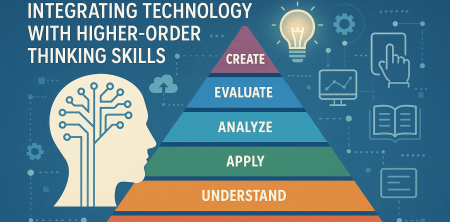
At its core, Bloom's Taxonomy provides a structured way of thinking about learning objectives. The taxonomy is divided into three domains: cognitive, affective, and psychomotor. The cognitive domain, which is most widely referenced, categorizes intellectual skills into six levels, from basic recall of facts (remembering) to more complex skills like creating new ideas (creating).
The six levels of the cognitive domain are:
- Remembering: Recalling facts and basic concepts.
- Understanding: Explaining ideas or concepts.
- Applying: Using information in new situations.
- Analyzing: Drawing connections among ideas.
- Evaluating: Justifying a decision or course of action.
- Creating: Producing new or original work.
This hierarchical structure not only provides educators with a roadmap for designing curriculum but also encourages students to engage in deeper thinking processes. As we delve into the integration of technology with Bloom's Taxonomy in the digital age, it's essential to grasp these foundational concepts that underpin effective teaching strategies.
The Shift to the Digital Age
The digital age has revolutionized how information is accessed and processed. With the internet and various digital devices, learners today are not merely consumers of information; they are creators, analyzers, and evaluators of data. This shift poses questions about traditional educational frameworks and whether they can adapt to modern realities.
Bloom's Taxonomy Digital Age has emerged as an adaptation of the original taxonomy to incorporate technology and digital tools. In 2001, a revision led by Lorin Anderson and David Krathwohl updated the taxonomy to reflect a more dynamic view of learning, placing more emphasis on processes and adding a focus on digital tools. This builds on master curriculum design.
In this updated version, the categories are slightly altered, with 'Creating' moved to the top, recognizing the importance of creativity in learning in our tech-rich environment. This revised taxonomy allows educators to harness technology effectively to foster higher-order thinking skills among students.
Integrating Technology with Bloom's Taxonomy
Integrating technology within the framework of Bloom's Taxonomy encourages educators to utilize digital tools that align with different levels of cognitive processes. Here's how technology can enhance each level:
Remembering
At the remembering stage, technology can assist students in recalling information. Tools such as flashcards, interactive quizzes, and educational apps can facilitate memory retention. For instance, platforms like Quizlet allow students to engage with content through multiple choice quizzes or matching exercises, making learning more interactive and fun.
Understanding
Understanding concepts involves explaining and interpreting information. Technology enhances this stage through instructional videos, online discussions, and interactive simulations. For example, platforms like YouTube and Khan Academy provide resources that clarify complex topics. Students can also use discussion boards to explain concepts to peers, deepening their own understanding while helping others.
Applying
Application of knowledge occurs when students use their skills in real-world situations. Tools like Google Classroom and project management software enable collaborative projects where students apply theoretical knowledge to practical challenges. For instance, students might work together to design a website or create a multimedia presentation, employing their learning in a meaningful way. (See: Bloom's Taxonomy overview.)
Analyzing
Analysis requires students to break down information and identify relationships. Technology provides various analytical tools that help in this process. For example, data analysis software or online databases allow students to examine real data sets, enabling them to identify patterns and make informed decisions based on their findings.
Evaluating
Evaluation involves making judgments based on criteria and standards. Digital tools can support this by allowing peer reviews, reflective blogs, or digital portfolios where students can assess their work and the work of others. Websites like Peergrade facilitate peer feedback, fostering critical thinking and self-evaluation.
Creating
The highest level of Bloom's Taxonomy is creating, where students generate new ideas or products. Technology has significantly expanded the possibilities for creativity. Tools such as digital storytelling software, design platforms like Canva, and programming languages enable students to create unique projects. For example, students might create a video documentary or develop a computer program, showcasing their ability to synthesize information creatively.
Practical Applications in the Classroom
To leverage Bloom's Taxonomy Digital Age effectively, educators must consider practical applications within their classrooms. Here are several strategies:
- Flipped Classrooms: In a flipped classroom model, students first encounter new material through videos or readings at home, then engage in hands-on activities in class. This allows for deeper exploration of topics, aligning well with the higher-order thinking encouraged by the revised Bloom's Taxonomy.
- Project-Based Learning: Implementing project-based learning (PBL) encourages students to explore real-world problems, allowing them to apply their skills at multiple levels of Bloom's framework. Technology can facilitate collaboration and information gathering.
- Interactive Assessments: Use technology to create assessments that challenge students to analyze and evaluate rather than merely recall information. For instance, using online platforms for interactive assessments can provide instant feedback and collaborative opportunities.
By integrating these strategies, educators can create a more engaging and effective learning environment that encourages critical thinking and creativity.
Challenges of Integration
While the benefits of integrating technology with Bloom's Taxonomy are evident, challenges persist. One of the primary obstacles educators face is the digital divide. Not all students have equal access to technology, which can exacerbate existing inequalities. Ensuring that every student has the tools they need is crucial for effective implementation.
Additionally, teacher training is sometimes inadequate. Many educators may not feel comfortable using technology or struggle to align it effectively with Bloom's framework. Professional development opportunities that emphasize the integration of technology into pedagogy are essential for overcoming this challenge.
Current Relevance in Education
As we navigate the post-pandemic education landscape, the relevance of Bloom's Taxonomy in the digital age remains significant. The shift to remote and hybrid learning models has highlighted the need for flexibility and adaptability in teaching strategies. Educators are increasingly called to rethink their approaches, ensuring they foster higher-order thinking skills while accommodating diverse learning environments.
The pandemic has also accelerated the adoption of technology in education. As schools continue to incorporate blended learning models, understanding how to effectively use digital tools within the framework of Bloom's Taxonomy is more critical than ever. This integration can help educators design lessons that not only engage students but also prepare them for a future where critical thinking and creativity are paramount.
Expert Perspectives on Bloom's Taxonomy in the Digital Age
To enrich this discussion, insights from educational experts can provide valuable context. Dr. Marcia Tate, an advocate for active learning, emphasizes that technology should facilitate engagement rather than replace traditional teaching methods. She suggests that educators should combine digital tools with hands-on activities that encourage collaboration and creativity.
Furthermore, Dr. David Merrill, known for his work on instructional design, highlights the importance of aligning technology with pedagogical goals. He urges educators to focus on learning outcomes first and select technology that supports those outcomes. This perspective reinforces the idea that technology is a means to an end, not the end itself.
The Future of Bloom's Taxonomy and Education
Looking ahead, the future of education in the context of Bloom's Taxonomy Digital Age is promising but requires ongoing reflection and adaptation. As technology continues to evolve, so will the ways we teach and learn. It's vital that educators remain flexible and open to new methodologies, continuously assessing how tools and strategies impact student learning outcomes. (See: Harvard University resources.)
Moreover, as artificial intelligence and machine learning become more integrated into educational tools, educators will need to understand how these advancements can support higher-order thinking. For example, AI-driven personalized learning platforms can tailor lessons to individual student needs, aligning with the various levels of Bloom's Taxonomy.
Additional Tools Supporting Bloom's Taxonomy in the Digital Age
As technology continues to advance, a plethora of tools have emerged that further support Bloom's Taxonomy in various educational contexts. Here are some noteworthy digital tools that align with the different tiers of cognitive processes:
- Edpuzzle: This tool allows educators to create interactive video lessons where students can engage with content actively. By embedding questions within videos, teachers can assess understanding at the remembering, understanding, and applying levels.
- Padlet: A collaborative tool that facilitates idea sharing and brainstorming. It’s especially useful for the analyzing and evaluating levels, allowing students to comment on and critique peer contributions.
- MindMeister: A digital mind-mapping tool that helps students visualize ideas and relationships, particularly effective for the analyzing and creating levels.
- Nearpod: This interactive presentation tool can incorporate quizzes, polls, and VR experiences, making it suitable for all levels of Bloom’s Taxonomy while keeping students engaged.
Incorporating these tools into instruction can deepen students' engagement and understanding, allowing them to navigate through the various levels of Bloom's Taxonomy effectively.
Real-World Case Studies
Examining real-world applications can illustrate the impact of Bloom's Taxonomy Digital Age in action. Consider the following case studies:
Case Study 1: A High School History Class
In a high school history class, the teacher adopted a project-based learning approach to explore the American Civil War. Students were divided into groups and tasked with creating a multimedia presentation on different battles. They utilized various digital tools like Google Slides for presentation, Canva for infographics, and primary source databases for research.
This project not only allowed students to apply their learning (applying level) but also required them to analyze the significance of each battle (analyzing level) and evaluate different historical perspectives (evaluating level). By the end of the project, students showcased their work to the class, engaging in peer feedback using Padlet to assess each other’s presentations.
Case Study 2: A University Course on Digital Marketing
In a university digital marketing course, the instructor used case studies and real-time data to teach students about market analysis. Students were challenged to analyze social media campaigns, evaluate their effectiveness, and create new strategies using insights gained from data analysis tools.
This real-world application engaged students at multiple levels of the taxonomy: they remembered marketing concepts, understood their implications, applied theories to case studies, analyzed the data, evaluated the campaigns’ success, and ultimately created their marketing plans.
Frequently Asked Questions (FAQ)
What is Bloom's Taxonomy Digital Age?
Bloom's Taxonomy Digital Age is an adaptation of the original Bloom’s Taxonomy, revised to incorporate technology and digital tools into the framework for teaching and learning. It emphasizes processes such as creativity and engagement in a tech-rich environment.
How can technology enhance higher-order thinking skills?
Technology enhances higher-order thinking skills by providing interactive and collaborative platforms where students can engage with content, analyze information, and create original works. Tools like digital portfolios and collaborative software can facilitate this process.
What are some challenges in integrating technology with Bloom's Taxonomy?
Challenges include the digital divide, where access to technology is unequal among students, and inadequate teacher training in using technology effectively. These barriers can hinder the successful implementation of Bloom’s principles in the classroom.
How does project-based learning align with Bloom's Taxonomy?
Project-based learning aligns with Bloom's Taxonomy by encouraging students to engage in real-world problems that require them to apply, analyze, evaluate, and create solutions. This approach fosters deep learning and connects theory to practice.
What role does artificial intelligence play in education related to Bloom's Taxonomy?
Artificial intelligence can personalize learning experiences, adapting content and assessments based on individual student needs. This capability aligns with Bloom's Taxonomy by promoting mastery at various cognitive levels through tailored instruction.
Strategies for Successful Implementation
Successfully integrating Bloom's Taxonomy in the Digital Age requires intentional planning and execution. Here are some strategies to ensure that educators can effectively use the framework:
- Professional Development: Continuous training helps teachers stay updated on new technologies and methodologies that align with Bloom's Taxonomy.
- Collaborative Learning: Encouraging teamwork in projects fosters a collaborative environment where students can support each other in their learning processes.
- Feedback Loops: Establishing mechanisms for regular feedback can help students learn from their mistakes and improve their work iteratively.
- Assessment Diversity: Utilizing different forms of assessment, such as peer reviews and self-assessments, can provide a more comprehensive evaluation of student understanding.
- Encouraging Reflection: Allowing time for students to reflect on their learning experiences can deepen their understanding and retention of knowledge.
Emerging Trends in Education Technology
As we look to the future, emerging trends in educational technology offer exciting opportunities for enhancing Bloom's Taxonomy in practice. Here are a few noteworthy trends:
- Gamification: Incorporating game design elements into educational contexts can motivate students and make learning more engaging. This approach aligns well with Bloom's Taxonomy by facilitating application, analysis, and creation levels through interactive experiences.
- Virtual Reality (VR) and Augmented Reality (AR): These technologies provide immersive learning experiences that allow students to interact with content in novel ways, aligning with higher-order thinking skills.
- Adaptive Learning Technologies: These systems use algorithms to tailor learning experiences to individual student needs, ensuring that learners engage with material that is appropriately challenging.
- Social Learning Platforms: Online communities that foster peer-to-peer learning and collaboration can amplify the impact of Bloom's Taxonomy by emphasizing collective knowledge construction.
Conclusion: Embracing the Integration
In the digital age, integrating technology with Bloom's Taxonomy offers an exciting opportunity for educators and students alike. By embracing this framework, teachers can foster higher-order thinking skills that are crucial for success in an increasingly complex world. The journey involves navigating challenges, embracing innovations, and committing to continuous improvement in educational practices.
Ultimately, as you consider how to incorporate Bloom's Taxonomy in your teaching, remember that the goal is not merely to use technology for technology's sake. Instead, strive to create thoughtful, engaging, and meaningful learning experiences that empower students to think critically and creatively in all aspects of their lives.
``` For more on this, see encouraging creativity in class.
Trending Now
Frequently Asked Questions
What is Bloom's Taxonomy in education?
Bloom's Taxonomy is an educational framework developed by Benjamin Bloom in 1956 that categorizes cognitive skills into six levels: remembering, understanding, applying, analyzing, evaluating, and creating. It serves as a guide for educators to design curriculum and promote higher-order thinking in students.
How has technology impacted Bloom's Taxonomy?
Technology has transformed Bloom's Taxonomy by enabling learners to engage in higher-order thinking skills more effectively. Digital tools allow students to create, analyze, and evaluate information, moving beyond mere consumption of content to active participation in their learning processes.
What are the six levels of Bloom's Taxonomy?
The six levels of Bloom's Taxonomy are: 1) Remembering, 2) Understanding, 3) Applying, 4) Analyzing, 5) Evaluating, and 6) Creating. These levels represent a hierarchy of cognitive skills, encouraging deeper engagement and critical thinking in learners.
Why is higher-order thinking important in education?
Higher-order thinking is crucial in education as it promotes critical analysis, problem-solving, and creativity. By engaging in higher-order thinking, students develop skills necessary for real-world applications, preparing them for complex challenges in their academic and professional lives.
How can educators integrate technology with Bloom's Taxonomy?
Educators can integrate technology with Bloom's Taxonomy by using digital tools that foster collaboration, creativity, and critical thinking. For example, they can encourage students to use multimedia projects, online discussions, and data analysis tools to enhance their learning experiences at various cognitive levels.
What did we miss? Let us know in the comments and join the conversation.

