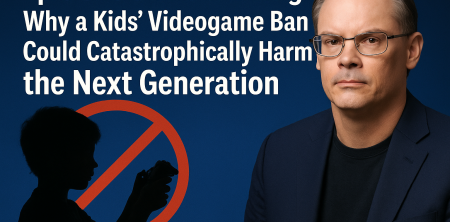
The Looming Threat: A Global Push to Restrict Kids' Digital Lives
As an educator, I've seen firsthand how quickly the digital world has reshaped childhood. It's a landscape teeming with both incredible opportunities and undeniable challenges. So, when prominent figures like Tim Sweeney, the visionary CEO of Epic Games, weigh in on legislative proposals that could fundamentally alter how children interact with technology, it demands our attention. On September 18, 2026, Sweeney issued a powerful, almost apocalyptic, warning against initiatives like the European Commission's proposed KIDS Act. His message was stark: restricting social media and online game access for children under 13 would be “terrible for the next generation of humanity.”
This isn't just a tech executive defending his industry; it's a significant voice in a rapidly escalating global conversation. The debate around children's digital well-being has reached a fever pitch, fueled by growing concerns about mental health and development. Just recently, the US Surgeon General released an advisory highlighting the profound risks associated with excessive screen time and social media use among youth. Now, the European Union is considering legislation that would impose strict bans on platforms like Facebook and TikTok for young children, even going so far as to eliminate features like infinite scrolling and late-night notifications, all in a bid to combat screen addiction and emotional instability. It's clear that policymakers, parents, and industry leaders are grappling with immensely complex questions, and the potential videogame ban impact on children is at the heart of it all.
Understanding the KIDS Act: A Drastic Measure or Necessary Intervention?
To truly grasp the weight of Sweeney's concerns, we need to understand what the KIDS Act, and similar legislative pushes, actually entail. Imagine a world where, if you're under 13, popular social media platforms like Instagram or TikTok are simply off-limits. And it's not just social media; the proposed legislation often extends to online gaming, restricting access to digital spaces where many children now socialize, learn, and play. The intent, on the surface, seems noble: protect children from perceived harms. Lawmakers are responding to a genuine societal anxiety about the mental health crisis among young people, often linking it directly to digital engagement.
Beyond outright bans, these proposals often include specific design mandates. Think about those endless feeds on social media, the ones that keep you scrolling for what feels like hours. Or the notifications that ping your phone late into the night. The KIDS Act aims to eliminate these “addictive” features, arguing they contribute to screen addiction, sleep deprivation, and emotional instability in developing minds. It's a significant intervention, moving beyond mere guidance to outright legal restrictions on how technology companies can design their products and how children can interact with them. But is this the right approach? Will such a broad videogame ban impact on children positively, or are we overlooking crucial aspects of their development?
Tim Sweeney's Stance: Beyond Corporate Self-Interest
When a CEO speaks out against regulation, it's easy to dismiss it as a defense of profits. But Sweeney's argument goes deeper than that. He's not just saying, “Don't hurt my business.” He's articulating a belief that these digital spaces, even with their flaws, are becoming increasingly vital for the social and cognitive development of the next generation. He sees a world where banning access to these platforms for under-13s isn't just an inconvenience; it's a fundamental disservice to their growth.
Sweeney's perspective is rooted in the idea that digital literacy, online collaboration, and virtual socialization are not just optional extras in today's world; they are foundational skills. Consider a child who learns to collaborate with peers in a game like Minecraft, building complex structures and solving problems together. Or a child who connects with friends across geographical boundaries through a safe, moderated online platform. Sweeney believes that denying these experiences, particularly during formative years, could leave children unprepared for a future that will undoubtedly be even more digitally integrated than our present. His warning is about the broader societal implications, arguing that a blanket videogame ban impact on children could stunt their development, rather than protect it.
The Surgeon General's Advisory: A Call for Caution and Action
It's crucial to acknowledge the serious concerns that are driving these legislative efforts. The US Surgeon General's advisory on social media and youth mental health wasn't just a suggestion; it was a clear and urgent call to action. Dr. Vivek Murthy highlighted profound risks, including increased rates of anxiety, depression, and body image issues among young people who spend excessive time on social media. The advisory points to algorithmic feeds that can expose children to harmful content, cyberbullying, and unrealistic comparisons, all of which can severely impact self-esteem and mental well-being.
This advisory provides a stark counterpoint to Sweeney's optimism. It emphasizes that while digital connection has benefits, the current design of many platforms is inherently exploitative of developing brains. The constant dopamine hits from likes and notifications, the pressure to maintain an online persona, and the exposure to curated, often unrealistic, realities can be detrimental. So, while Sweeney focuses on the potential benefits being lost, the Surgeon General focuses on the very real harms being incurred. It's a classic dilemma: how do we harness the good while mitigating the bad? And what is the appropriate role of regulation in striking that balance? The potential videogame ban impact on children is seen by many as a necessary evil to curb these documented harms.
The Real-World Videogame Ban Impact on Children: Beyond the Screen
Let's think about the practical implications of a widespread videogame ban impact on children under 13. First, there's the social aspect. For many children today, online games and social platforms are where friendships are forged and maintained. Take a child who moves to a new town; online gaming can be an immediate bridge to new social circles. Or consider children with niche interests who find their community online, where they might struggle to do so in their immediate physical environment. A ban could isolate these children, hindering their ability to develop crucial social skills in a contemporary context.
Then there's the educational component. I've witnessed how games like Minecraft or educational apps can foster problem-solving, creativity, and even coding skills. These aren't always traditional “educational” tools, but their impact on cognitive development is undeniable. Removing access could stifle these informal learning opportunities. Furthermore, a ban might push children towards less regulated, potentially more dangerous, online spaces as they seek ways to connect. It's a bit like Prohibition: when you ban something outright, you often create an underground market that's far harder to monitor or control. The unintended consequences of a broad videogame ban impact on children could be far-reaching and complex.
Parental Control vs. Legislative Overreach: Who Should Decide?
This debate inevitably brings us to the question of parental responsibility versus government intervention. Many parents feel caught in the middle, struggling to manage their children's screen time and digital interactions. They might welcome legislative support, seeing it as a way to level the playing field against powerful tech companies designed to capture attention. For these parents, a ban offers a clear boundary, a governmental assist in a battle they feel they're losing. (See: CDC Youth Risk Behavior Survey.)
However, others argue that decisions about a child's digital access should primarily rest with parents, not lawmakers. They believe that families are best equipped to understand their child's individual needs, maturity levels, and specific circumstances. Implementing a blanket ban removes this autonomy, treating all children under 13 as a monolithic group, regardless of their developmental stage or the specific content they engage with. This perspective champions digital literacy education for both parents and children, alongside robust parental control tools, as a more nuanced and effective approach than outright prohibition. The discussion around the videogame ban impact on children often becomes a proxy battle over individual liberty versus collective well-being.
Economic Ramifications: An Unseen Cost of a Ban
While the primary focus is on children's well-being, we can't ignore the significant economic implications of such legislation. The tech industry, particularly the gaming and social media sectors, represents a massive global economy. A strict age-based ban could lead to substantial revenue losses for companies, potentially impacting employment, innovation, and even national economies. Think about the thousands of developers, artists, marketers, and support staff whose livelihoods are tied to these platforms. For more context, see the 2026 Screen Time Revolution.
Beyond the direct impact on tech giants, there's a ripple effect. The growth of adjacent industries, like parental control software, online education platforms, and even mental health support apps for teens, is often intertwined with the digital ecosystem. If the foundational platforms are restricted, what happens to these ancillary markets? The debate around the videogame ban impact on children isn't just about ethics; it's also about economics, and the unintended consequences for innovation and job creation could be substantial.
The Path Forward: Education, Moderation, and Digital Literacy
So, if outright bans are potentially problematic, what's the alternative? As an educator, I firmly believe the answer lies in a multi-pronged approach centered on education and digital literacy, for both children and parents. We need to equip young people with the critical thinking skills to navigate the online world safely and responsibly. This means teaching them about privacy, identifying misinformation, understanding cyberbullying, and recognizing the signs of online addiction. It's about empowering them, not simply restricting them.
For parents, the focus should be on providing tools and resources. This includes accessible, effective parental control software that allows for customization based on a child's age and maturity. It also means fostering open conversations within families about online experiences, setting clear boundaries, and modeling healthy digital habits. Instead of a blunt instrument like a comprehensive videogame ban impact on children, we should strive for precision tools that allow for individual tailoring. This approach acknowledges the reality of the digital age and seeks to prepare children for it, rather than shield them entirely.
Beyond the Hype: Finding Balance in the Digital Age
The conversation around a potential videogame ban impact on children isn't going away. It's a complex, emotionally charged issue with valid arguments on all sides. On one hand, we have legitimate concerns about the mental health of our youth, exacerbated by platforms often designed to maximize engagement at any cost. On the other, we have the argument that digital immersion is an inevitable, and often beneficial, part of modern childhood, essential for developing crucial 21st-century skills.
Tim Sweeney's warning, while perhaps hyperbolic to some, serves as a powerful reminder that simplistic solutions often create new problems. A blanket ban, while seemingly protective, could inadvertently deprive children of valuable learning and social opportunities, and perhaps even push them into less visible and regulated corners of the internet. The real challenge, it seems, is not to eliminate the digital world for our children, but to help them, and us, learn how to live within it more wisely. It means investing in digital literacy, fostering critical thinking, and designing platforms that prioritize well-being over endless scrolling. Only then can we truly protect the next generation while preparing them for the world they will inherit.
Exploring the Nuances: Diverse Perspectives on Digital Childhood
It's rare to find a topic with such widespread agreement, and the digital well-being of children is certainly not one of them. While Sweeney and the Surgeon General represent two prominent viewpoints, there's a spectrum of opinions from child development specialists, psychologists, educators, and even young people themselves. Some experts argue for a developmental approach, suggesting that certain digital activities are appropriate at different ages, much like physical play or academic learning. They might point to research indicating that well-designed educational games can enhance cognitive functions in younger children, while overly restrictive policies could hinder these benefits.
Then you have the perspective of children and teenagers. Often, they feel their voices are absent from these debates. For many, online spaces are not just entertainment; they're essential for identity formation, exploring interests, and finding support networks. A videogame ban impact on children, from their point of view, might feel like an unwarranted infringement on their autonomy and a misunderstanding of their lived experiences. Ignoring this perspective risks creating legislation that is out of touch with the very people it aims to protect, potentially leading to resentment or circumvention rather than genuine protection.
Consider the varying cultural contexts too. What might be considered excessive screen time in one culture could be perfectly normal in another, especially in regions where digital access is a primary means of education or connecting with family dispersed globally. A one-size-fits-all legislative approach, like the KIDS Act, struggles to account for these diverse realities, potentially imposing Western-centric views on digital childhood onto a global population. This complexity makes finding truly effective and equitable solutions incredibly challenging.
The Role of Tech Companies: Beyond Blame and Towards Responsibility
While lawmakers debate bans and parents grapple with screen time, it's also important to consider the ongoing responsibility of the tech companies themselves. Many of the concerns driving legislative action stem from product designs that are, undeniably, crafted to maximize engagement. Infinite scrolls, autoplay features, and notification systems are not accidental; they are intentional choices made by designers and engineers. This raises questions about ethical design and the moral obligations of companies creating platforms used by billions, including children.
Some tech advocates argue for self-regulation, suggesting that companies can implement features that promote well-being without government mandates. This could include more transparent data practices, age-appropriate content filters, time-limit settings built directly into platforms, and even "digital detox" modes. However, critics often counter that market forces don't inherently incentivize these well-being features, as engagement often translates directly to revenue. This tension between self-regulation and external mandates is a critical aspect of the debate, and the potential videogame ban impact on children might push companies to innovate in areas of responsible design, rather than just engagement. (See: New York Times on kids and screen time.)
There's also the challenge of age verification. How do these proposed bans actually get enforced? Current age verification methods on many platforms are notoriously easy to bypass, with children simply entering a false birthdate. Any legislation attempting to restrict access for under-13s would need robust, privacy-preserving age verification technologies to be effective. Without this, a ban could easily become a toothless tiger, only serving to push younger users into less monitored corners of the internet where they might be even more vulnerable. This logistical hurdle is often overlooked but is crucial for the practical success of any restrictive measures.
Historical Precedents: Lessons from Past "Moral Panics"
It's worth looking back at history to see how society has reacted to new forms of media and entertainment impacting children. We've seen similar “moral panics” around comic books, rock and roll music, television, and even the early days of video games themselves. In each instance, there were genuine concerns about potential harm to youth, often leading to calls for censorship or strict regulation. For more context, see the 2026 guidelines on screen time.
For example, in the 1950s, comic books were blamed for juvenile delinquency, leading to congressional hearings and the establishment of the Comics Code Authority. While some comics certainly contained mature themes, the widespread fear often exaggerated their direct impact on behavior. Similarly, the initial backlash against video games in the 80s and 90s, particularly around titles like Mortal Kombat, led to the creation of ratings systems like the ESRB. These systems aimed to inform parents without outright banning content.
The lesson from these historical moments isn't that concerns are unfounded, but that outright bans often miss the mark and can stifle artistic or developmental potential. Instead, solutions that focus on informed choice, parental guidance, and age-appropriate content classification have often proven more sustainable and effective in the long run. The current debate around the videogame ban impact on children shares many parallels with these past discussions, suggesting that a nuanced approach, rather than blunt force, might yield better outcomes.
The Digital Divide: Equity and Access Considerations
Any discussion about restricting digital access for children must also consider the potential widening of the digital divide. For many low-income families, public libraries, school computers, or shared family devices are the primary means of internet access. These resources often play a vital role in children's education and social connection.
If platforms become inaccessible due to age restrictions or complex parental controls, children from disadvantaged backgrounds might lose out on valuable learning opportunities or social connections that their more affluent peers still manage to access through private devices or less restricted home environments. This could exacerbate existing inequalities in education and social capital. A videogame ban impact on children, if not carefully implemented, could disproportionately affect those who already have fewer resources.
Furthermore, digital literacy and access to technology are increasingly seen as fundamental rights in many parts of the world. Denying access to younger children, even with good intentions, could be seen as hindering their ability to participate fully in a digitally-driven society. Policy discussions need to address how to protect children without creating new barriers for those who rely on digital tools for upward mobility and engagement.
FAQ: Navigating the Videogame Ban Impact on Children
What is the KIDS Act?
The KIDS Act is a proposed piece of legislation, particularly discussed in the European Union, that aims to restrict children's access to social media and online gaming platforms, often for those under 13. It also seeks to mandate design changes in technology, like eliminating infinite scrolling and late-night notifications, to reduce addictive behaviors.
Why are policymakers considering a videogame ban for children?
Policymakers are responding to growing concerns about youth mental health, screen addiction, cyberbullying, and exposure to harmful content. Reports, like the US Surgeon General's advisory, highlight potential links between excessive screen time and issues like anxiety, depression, and body image problems.
What are Tim Sweeney's main concerns about a videogame ban?
Epic Games CEO Tim Sweeney argues that restricting access to online games and social media for children under 13 would be detrimental to their social and cognitive development. He believes these platforms foster essential 21st-century skills like digital literacy, online collaboration, and virtual socialization, which are crucial for preparing children for the future. For more context, see financial literacy for kids.
How might a videogame ban impact children's social development?
A ban could isolate children by removing key platforms where they currently form and maintain friendships, especially for those with niche interests or who move frequently. It might hinder their ability to develop crucial social skills in contemporary digital contexts.
Are there educational benefits to children playing video games that a ban might remove?
Absolutely. Many games, like Minecraft, are known to foster problem-solving, creativity, and even coding skills. Educational apps and platforms also contribute to informal learning. A ban could stifle these opportunities for cognitive development.
Who primarily supports these legislative bans – parents or tech experts?
Support is varied. Some parents welcome legislative bans as a tool to help them manage their children's screen time against powerful, engaging tech platforms. However, many tech experts, like Tim Sweeney, express strong reservations, arguing for a more nuanced approach centered on education and parental control rather than outright prohibition.
What are the economic implications of a widespread videogame ban?
Such bans could lead to significant revenue losses for the tech industry, impacting employment, innovation, and national economies. It could also have ripple effects on adjacent industries like parental control software and online education platforms.
What are the alternatives to a blanket ban on videogames for children?
Alternatives typically focus on education and digital literacy for both children and parents. This includes teaching critical thinking skills for online navigation, promoting open family conversations about digital habits, and providing effective, customizable parental control tools. Designing platforms that prioritize well-being over engagement is also a key suggested alternative.
How does this debate compare to past “moral panics” about new media?
The current debate shares similarities with historical reactions to comic books, rock and roll, and early video games. Past responses often involved calls for censorship or strict regulation, but frequently evolved into solutions focused on ratings systems, informed choice, and parental guidance, rather than outright bans.
Could a videogame ban disproportionately affect certain children?
Yes, there's concern that a ban could widen the digital divide. Children from low-income families, who often rely on shared devices or public access points, might lose out on essential educational and social opportunities that more affluent peers can still access through private means. This could exacerbate existing inequalities.
Trending Now
- our breakdown of the startling reason millions are turning to gamified finance apps now
- this guide on why financial literacy for kids is plummeting — and 7 free games that can fix it
- read the full story
- our breakdown of the troubling truth about ai in education: what no one is telling you
- this guide on the unseen peril: why these ai tools for teachers could be a double-edged sword
Frequently Asked Questions
What is the KIDS Act proposed by the European Commission?
The KIDS Act is a legislative proposal aimed at restricting access to social media and online gaming for children under 13. It seeks to combat screen addiction and emotional instability by eliminating features like infinite scrolling and late-night notifications on platforms such as Facebook and TikTok.
Why did Tim Sweeney warn against a kids' videogame ban?
Tim Sweeney, CEO of Epic Games, warned that banning kids from accessing social media and online games could have catastrophic effects on the next generation. He believes such restrictions threaten children's digital interactions, which are vital for their development and socialization in today's world.
How does screen time affect children's mental health?
Excessive screen time has been linked to various mental health issues among youth, including anxiety, depression, and emotional instability. The US Surgeon General's advisory emphasizes these risks, highlighting the need for balanced digital engagement to support children's overall well-being.
What are the potential consequences of restricting children's access to digital platforms?
Restricting children's access to digital platforms could limit their social interactions and learning opportunities. It may hinder their ability to navigate the digital world, which is crucial for their development and future success in an increasingly tech-driven society.
What are the arguments for and against the KIDS Act?
Proponents argue the KIDS Act is necessary to protect children from screen addiction and its associated risks. Critics, including industry leaders like Tim Sweeney, warn that it could stifle essential digital interactions that foster social skills and personal growth in today's technology-driven landscape.
Agree or disagree? Drop a comment and tell us what you think.

