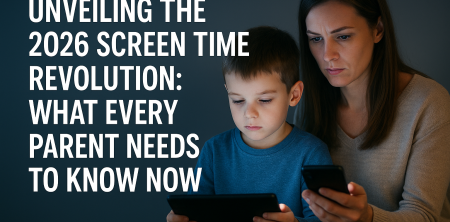
Remember the good old days when 'two hours or less' was the mantra for kids' screen time? Well, as we step into 2026, those days are officially behind us. The American Academy of Pediatrics (AAP) has, for a long time, held that firm line for children aged six and older. But now, it's out. Replaced. Gone. And in its place? A far more nuanced, perhaps even a bit bewildering, framework that shifts the focus dramatically. It's no longer just about the stopwatch; it's about the what and the how. This fundamental change in how to balance screen time for kids 2026 marks a significant turning point for parents everywhere, demanding a fresh look at our digital strategies.
This isn't just an academic shift either. The U.S. Surgeon General weighed in with a stark advisory in 2026, warning parents about the very real dangers of excessive screen time. We're talking about links to developmental issues and long-term health problems – serious stuff that makes you sit up and pay attention. And let's not forget the elephant in the digital room: artificial intelligence in education. The debate around AI is heating up, bringing with it a whole new set of concerns about student privacy, critical thinking, and even the effectiveness of those AI detection tools we’re all trying to figure out. So, if you've been feeling a bit overwhelmed by the ever-evolving digital landscape, you're certainly not alone. This guide is here to help you make sense of it all and empower you with actionable strategies.
1. Understanding the New 2026 AAP Guidelines: Moving Beyond the Stopwatch
The biggest headline of 2026 in pediatric circles has to be the AAP's decision to retire its blanket 'two hours or less' rule for children aged six and up. For years, that simple number was a guiding star for parents, offering a clear, albeit sometimes challenging, benchmark. Now, that star has faded, replaced by a constellation of factors that require much more thoughtful consideration. The AAP isn't saying screens are suddenly harmless; quite the opposite. They're acknowledging that the digital world is too complex for a one-size-fits-all time limit to be truly effective.
Instead, the new guidelines pivot to a framework that emphasizes quality over quantity. This means we need to ask ourselves: What content are our children consuming? Is it educational, interactive, and age-appropriate? Is it fostering creativity or passive consumption? How is that content integrated into their lives? Is it replacing outdoor play, family conversations, or sleep? For children under 18 months, the advice remains steadfast: avoid screen time entirely, except for video calls with family. This early period is crucial for brain development, and direct interaction is irreplaceable. For older children, however, the conversation has officially shifted from 'how much?' to 'what kind?' and 'how does it fit in?'
2. Heeding the Surgeon General's 2026 Warning: The Real Health Risks
As if the AAP's new guidelines weren't enough to make parents pause, the U.S. Surgeon General issued a sobering advisory in 2026, putting a spotlight on the very real, often hidden, dangers of excessive screen time for children. This isn't just about tired eyes or a grumpy mood after too much YouTube; we're talking about serious developmental issues and potential long-term health problems. The advisory highlighted a growing body of research linking prolonged, undirected screen use to a host of negative outcomes that should give every parent pause.
These risks include impaired social-emotional development, as children spend less time engaging in face-to-face interactions critical for learning social cues and empathy. There's also a significant concern about cognitive development, with studies suggesting potential impacts on attention spans, memory, and problem-solving skills when digital consumption replaces more active forms of learning and play. Physical health issues like obesity, poor sleep patterns, and even vision problems are also on the list. The Surgeon General's message is clear: while the AAP is refining its guidance, the underlying need for mindful, limited screen use is more critical than ever. It's a call to action for parents to be vigilant and intentional about their children's digital diet.
3. Quality Over Quantity: The New Mantra for Digital Media
The core of the 2026 shift in screen time guidance is this: quality trumps quantity. This isn't just a catchy phrase; it's a fundamental paradigm shift that demands a much more engaged approach from parents. Instead of simply setting a timer, we now need to become media literacy experts, evaluating the content our children consume with a critical eye. Is that app genuinely educational, or is it just cleverly disguised entertainment? Does that show spark curiosity and promote critical thinking, or is it merely a passive distraction?
Think about 'active' versus 'passive' screen time. Active screen time involves engagement, interaction, and often creation – things like coding games, interactive learning apps, or video calls with grandparents where genuine conversation happens. Passive screen time, on the other hand, is when children are simply absorbing content without much mental effort, like endless scrolling through videos or mindlessly watching cartoons. The new guidelines encourage us to prioritize active, enriching experiences that align with developmental goals, rather than just letting screens be a digital babysitter. This means doing our homework, exploring educational apps, and even co-viewing with our children to discuss what they're seeing.
4. The AI in Education Debate: Privacy, Critical Thinking, and Tools
Beyond the immediate concerns of screen time duration, 2026 has brought the intensifying debate around artificial intelligence in education to the forefront. AI's potential in the classroom is immense – personalized learning paths, instant feedback, and access to vast information – but it also comes with a significant ethical baggage that parents absolutely need to understand. One of the primary concerns is student privacy. As AI tools collect data on learning patterns, performance, and even emotional responses, who owns that data? How is it protected? And how might it be used in the future? (See: CDC on children's media use.)
Then there's the critical thinking aspect. While AI can deliver information efficiently, there's a worry that over-reliance on AI could diminish a child's ability to independently analyze, synthesize, and evaluate information. If AI provides all the answers, are we inadvertently stunting the very cognitive skills we aim to foster? And let's not forget the cat-and-mouse game of AI detection tools. Schools are grappling with how to identify AI-generated student work, leading to debates about academic integrity and the effectiveness (or invasiveness) of these technologies. Parents need to be part of these conversations, asking their schools tough questions and advocating for policies that protect their children while leveraging AI responsibly. For more context, see EU Kids Act Could Finally Make the Internet Safe for Your Children.
5. Co-Viewing and Active Engagement: Making Screen Time a Shared Experience
One of the most powerful strategies for navigating the new screen time landscape in 2026 is co-viewing and active engagement. This isn't about hovering over your child's shoulder, but rather about transforming screen time from a solitary activity into a shared, interactive experience. When you sit down with your child to watch a show, play a game, or explore an app, you open up a world of opportunities for learning and connection that passive viewing simply can't offer.
During co-viewing, you can ask questions that spark critical thinking: 'Why do you think that character made that choice?' or 'How does this game work?' You can connect on-screen content to real-world experiences: 'Remember when we saw a bird like that at the park?' This kind of interaction helps children process what they're seeing, develop media literacy skills, and even learn to discern between healthy and unhealthy content. It's also a fantastic way to bond and understand your child's interests, offering a window into their digital world that you might otherwise miss. Co-viewing transforms screen time from a potential source of isolation into a bridge for communication and shared discovery.
6. Establishing 'Screen-Free' Zones and Times: Protecting Precious Moments
With the new 2026 guidelines emphasizing context, creating clear 'screen-free' zones and times within your home becomes even more crucial. This isn't about punishment; it's about intentional boundaries that protect vital family time, promote healthy habits, and ensure children engage in a diverse range of activities. Think about the dinner table: a sacred space for conversation and connection. Making this a screen-free zone ensures that family meals are about each other, not notifications or digital distractions.
Bedrooms, especially at night, are another prime candidate for screen-free status. The blue light emitted by screens can disrupt melatonin production, making it harder for children to fall asleep. Creating a rule that devices stay out of the bedroom an hour before bedtime can significantly improve sleep quality. Other ideas include designating certain hours of the day, like after-school until dinner, as screen-free to encourage outdoor play, reading, or creative pursuits. These boundaries aren't just about limiting screens; they're about prioritizing face-to-face interaction, physical activity, and imaginative play, which are all foundational for healthy development.
7. Leveraging Educational Technology Smartly: Beyond Entertainment
If we're going to embrace the 'quality over quantity' approach to how to balance screen time for kids 2026, then understanding and leveraging educational technology smartly is paramount. Not all screen time is created equal, and many digital tools and platforms genuinely offer incredible learning opportunities. The key is discerning between truly educational content and cleverly disguised entertainment, or worse, content that offers little to no developmental benefit.
Look for apps and programs that are interactive, adaptive, and provide genuine learning experiences. Think about platforms that teach coding, offer virtual field trips, or provide language learning games. Many educational technologies are designed with pedagogical principles in mind, offering challenges that scaffold learning and provide constructive feedback. Research shows that well-designed educational games can improve problem-solving skills, critical thinking, and even introduce complex scientific concepts in an engaging way. However, it's vital to vet these tools carefully, read reviews, and even try them yourself to ensure they align with your child's learning needs and your family's values. Don't be afraid to unsubscribe or uninstall if an app isn't delivering on its educational promise.
8. Modeling Healthy Digital Habits: Kids Learn by Watching Us
Here's a tough truth for parents in 2026: our children are watching us. And when it comes to digital habits, what we do speaks far louder than anything we say. If we're constantly glued to our phones, checking emails at the dinner table, or scrolling mindlessly while ostensibly spending time with them, we're sending a powerful, if unintended, message. Modeling healthy digital habits is perhaps the most impactful strategy you can employ in teaching your children how to balance screen time for kids 2026.
This means being intentional about your own device use. Can you put your phone away during family meals? Can you designate screen-free hours for yourself? Can you engage in non-digital activities in front of your children, like reading a book, working on a hobby, or simply having a conversation? When you demonstrate self-control and thoughtful engagement with technology, you're providing a concrete example for your children to emulate. It also creates an environment where digital detoxes and screen-free moments feel normal and valued, rather than a punishment or an unusual restriction. Remember, you are your child's first and most influential teacher, even in the digital realm.
9. Open Communication and Digital Literacy Education: Talking About Tech
The new screen time guidelines for 2026 aren't just about rules; they're about fostering critical thinking and open dialogue. In a world saturated with digital media, simply restricting access isn't enough. We need to equip our children with the skills to navigate this complex landscape safely and responsibly. This means engaging in open, honest conversations about their digital lives, rather than just dictating terms. (See: U.S. Surgeon General's advisory on screen time.)
Talk to your children about what they're watching, playing, and experiencing online. Ask them about their favorite games, what they learn from certain videos, and how they feel when they're online. Discuss the concept of digital citizenship, online safety, privacy, and the permanence of digital footprints. Teach them to question what they see online, to identify misinformation, and to understand the persuasive tactics used by advertisers and content creators. These conversations should be ongoing, evolving as your children grow and their digital interactions become more sophisticated. By empowering them with digital literacy, you're giving them the tools to make informed choices, even when you're not around. For more context, see Snapchat's Design Exposes Kids to Predators.
10. Flexibility and Regular Review: The Evolving Digital Landscape
Perhaps the most important takeaway for parents in 2026, especially concerning how to balance screen time for kids, is the need for flexibility and regular review. The digital landscape is not static; it's a rapidly evolving ecosystem. What works today might not work tomorrow, and what's appropriate for a 7-year-old is vastly different from what's suitable for a 13-year-old. The AAP's shift away from a rigid time limit is a clear acknowledgment of this dynamic reality.
This means your family's screen time plan shouldn't be set in stone. Schedule regular family meetings to discuss screen time rules, challenges, and successes. Involve your children in these discussions (age-appropriately, of course) to foster a sense of ownership and responsibility. Be prepared to adjust limits, introduce new educational apps, or even remove certain devices as circumstances change. Pay attention to your child's behavior, mood, sleep patterns, and academic performance. These are often the clearest indicators of whether your current screen time balance is working. The goal isn't perfection, but rather a thoughtful, adaptable approach that prioritizes your child's holistic well-being in an increasingly digital world.
11. The Role of Physical Activity and Outdoor Play: More Crucial Than Ever
In our quest to balance screen time for kids in 2026, we absolutely cannot overlook the fundamental importance of physical activity and outdoor play. As screens become more pervasive, the temptation to stay indoors increases, often at the expense of crucial developmental experiences. The Surgeon General's advisory wasn't just about the harms of screens; it implicitly highlighted the benefits of what screens often displace.
Physical activity is vital for a child's overall health – it strengthens bones and muscles, improves cardiovascular health, helps maintain a healthy weight, and boosts mood by releasing endorphins. Beyond the physical, outdoor play offers unparalleled opportunities for cognitive and social-emotional development. When kids play outside, they're engaging in unstructured exploration, problem-solving, risk-taking, and creativity. They learn to negotiate, cooperate, and resolve conflicts with peers. They connect with nature, which has been shown to reduce stress and improve focus. Setting clear expectations for daily physical activity, whether it's organized sports, a walk in the park, or simply free play in the backyard, is a non-negotiable part of a balanced digital diet. Think of it this way: for every hour of screen time, aim for at least an equal amount of active, physical play. This isn't just about burning energy; it's about nurturing every aspect of their developing minds and bodies.
12. Understanding the Neuroscience Behind Screen Time Impact: What's Really Happening?
To truly grasp how to balance screen time for kids 2026, it helps to understand a little bit about what's happening in their brains. It's not just about content; it's about the neurological responses provoked by constant digital stimulation. Young, developing brains are highly plastic, meaning they're constantly adapting and forming connections based on experiences. Excessive, undirected screen time can literally rewire these pathways.
For example, the rapid-fire changes and constant rewards in many games and social media apps can flood the brain with dopamine, creating a craving for more stimulation. This can lead to issues with attention span, as the brain becomes less accustomed to slower-paced, less immediately gratifying activities like reading or focused play. Blue light from screens, as mentioned, interferes with melatonin production, disrupting crucial sleep cycles which are vital for memory consolidation and emotional regulation. Furthermore, the lack of face-to-face interaction can hinder the development of the brain regions responsible for empathy and understanding non-verbal cues. Understanding these underlying neurological impacts reinforces why mindful screen management isn't just a parental preference, but a developmental imperative. It helps us see that the goal isn't to demonize technology, but to ensure it serves our children's development, rather than hindering it.
Frequently Asked Questions About Balancing Screen Time for Kids in 2026
Navigating the new screen time landscape can bring up a lot of questions. Here are some common ones parents are asking in 2026:
Q1: Since the AAP removed the 'two-hour rule,' does that mean I don't need to limit screen time anymore?
Absolutely not. The removal of the rigid two-hour rule doesn't mean screens are a free-for-all. It signifies a shift from a blanket time limit to a more nuanced approach focusing on the *quality* of content and *how* it fits into your child's life. The U.S. Surgeon General's 2026 advisory still warns of significant health risks from excessive screen use. You still need to set limits, but now those limits should be tailored to your child's age, developmental stage, and the specific content they're engaging with.
Q2: How do I know if the content my child is watching or playing is 'quality' content?
Quality content is typically interactive, educational, age-appropriate, and encourages creativity or critical thinking. Look for apps and shows that have clear learning objectives, provide opportunities for problem-solving, or spark curiosity. Resources like Common Sense Media (though not explicitly mentioned in the original text, a useful practical example) can offer reviews and age recommendations. Ask yourself if the content engages your child actively (like building in Minecraft) versus passively (like mindlessly watching YouTube Shorts). Co-viewing with your child also gives you a direct way to assess quality and discuss what they're seeing.
Q3: My child throws a tantrum every time I take away their device. How can I manage this?
This is a common challenge! Consistency is key. Establish clear rules and boundaries, and stick to them. Use timers to signal the end of screen time a few minutes before it's actually over, giving your child time to transition. Offer alternative activities immediately after screen time, like outdoor play, reading, or a creative project. Validate their feelings ("I know it's hard to stop playing that game") but remain firm on the rules. Over time, and with consistent enforcement, these transitions should become easier. Modeling healthy habits yourself also helps.
Q4: What about screens for educational purposes? Do school assignments on tablets count towards screen time limits?
This is where the new guidelines' nuance really comes into play. Educational screen time, especially for schoolwork, is generally viewed differently from recreational screen time. If your child is using a device for a school project, virtual learning, or an educational app assigned by a teacher, it's considered productive and often necessary. The key is to balance this with non-academic screen time and ensure breaks. Discuss with your child's school their policies on screen use and how they support students in managing their digital learning tools responsibly. It's about intentional use, not just the device itself.
Q5: How can I protect my child's privacy with all the AI tools now being used in education?
Student privacy in the age of AI is a significant concern. Start by understanding what AI tools your child's school is using and what data they collect. Ask about the school's data privacy policies, how they comply with regulations like FERPA (Family Educational Rights and Privacy Act), and who has access to the data. Advocate for transparency and strong data security measures. Teach your child about not sharing personal information online and the importance of strong passwords. Staying informed and engaging in dialogue with school administrators is your best defense.
Navigating the digital world with our children in 2026 feels like a constant tightrope walk, doesn't it? With the AAP's new nuanced guidelines and the Surgeon General's urgent warnings, the old 'two hours or less' rule feels almost quaint. We're called to be more vigilant, more informed, and more engaged than ever before. It's about shifting from simply policing time to curating experiences, fostering critical thinking, and most importantly, connecting with our kids in a way that transcends the glow of a screen. It's a challenge, yes, but also an opportunity to truly prepare them for the digital future.
Trending Now
Frequently Asked Questions
What are the new screen time guidelines for kids in 2026?
In 2026, the American Academy of Pediatrics (AAP) has replaced the strict 'two hours or less' rule with a more nuanced approach. Parents are encouraged to consider not just the quantity of screen time, but also the quality and context of the content, focusing on how it affects their child's development and well-being.
Why did the AAP change their screen time recommendations?
The AAP changed its screen time recommendations to reflect a more comprehensive understanding of children's digital experiences. The shift emphasizes the importance of content and context rather than just limiting hours, addressing concerns about developmental issues and the impact of technology on children's health.
What are the risks of excessive screen time for children?
Excessive screen time can lead to developmental issues and long-term health problems for children, as highlighted by the U.S. Surgeon General's advisory in 2026. Concerns include impacts on mental health, sleep patterns, and social skills, making it crucial for parents to monitor their children's screen use.
How does artificial intelligence affect children's education?
The rise of artificial intelligence in education brings concerns about student privacy, critical thinking skills, and the effectiveness of AI detection tools. As AI becomes more integrated into learning environments, parents must navigate these challenges to ensure their children benefit from technology without compromising their safety and development.
What strategies can parents use to manage their children's screen time?
Parents can manage their children's screen time by focusing on the quality of content, setting clear guidelines, and engaging in discussions about digital literacy. Encouraging outdoor activities, family time, and educational screen use can also help create a balanced approach to technology in their children's lives.
What's your take on this? Share your thoughts in the comments below — we read every one.


0 Responses