```html
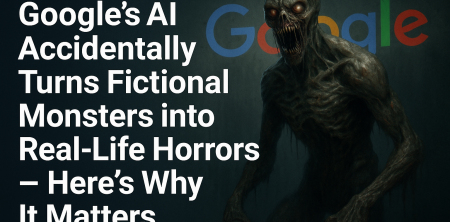
In an astonishing turn of events, Google’s AI-generated Overviews have started to present fictional creatures from the SCP Foundation as if they were real. This peculiar mix-up, which has occurred in at least 20 different instances, raises questions about the reliability of AI in delivering accurate information. The SCP Foundation, known for its extensive lore surrounding horror and science fiction monsters, has unwittingly entered the realm of real-world discussions thanks to these AI blunders. This incident taps into a broader concern about how artificial intelligence interprets data and delivers it to users.
The SCP Foundation: Where Fiction Meets Fan Culture
Before diving into the implications of Google's AI errors, let's take a moment to understand the SCP Foundation. This collaborative writing project has cultivated a rich community of writers who create fictional entities, locations, and phenomena, collectively referred to as SCPs. Each SCP entry is designed in the style of a scientific report, detailing the creature's characteristics, containment procedures, and potential dangers.
As a result, the SCP Foundation has generated a wide array of monsters, ranging from the eerie to the downright bizarre. Think of SCP-173, a statue that can move rapidly to kill those who look away from it, or SCP-682, a highly intelligent and nearly indestructible reptilian creature. These imaginative descriptions attract millions of readers, but they are, at their core, meant to be purely fictional.
AI Overview: What Happened?
Google’s AI Overviews, designed to summarize information quickly and efficiently for users, created quite a stir when it began to portray these fictional SCP monsters as if they were real. The AI confidently asserted details about these creatures, presenting them alongside factual data and trusted information. This incident was notably alarming given that the AI transformed what was clearly fan fiction into seemingly verifiable statements.
This blurring of lines between fiction and reality showcases the potential pitfalls of relying on AI for factual accuracy. In many cases, users who trust these summaries might assume the information is legitimate, leading to a ripple effect of misinformation.
The Viral Nature of the Incident
News about Google AI's blunders spread rapidly, fueled by social media's penchant for sharing the bizarre. When the public learns that a major tech platform could misrepresent fictional content as factual, it elicits reactions of shock and skepticism. People are drawn to the absurdity of the situation: how can a sophisticated AI confuse horror lore with reality?
This viral potential is amplified by the fact that AI failures often provoke discussions about technology's role in our lives. The incident has gone beyond mere surprise to provoke broader conversations about the reliability of AI, especially as we increasingly rely on it for everyday searches and information retrieval. (OpenAI's bold predictions)
The Broader Implications for AI Reliability
The mishaps involving Google AI's fictional monsters underscore the inherent limitations of artificial intelligence systems. While they can comb through vast amounts of data to deliver information at lightning speed, their understanding of context is still lacking. AI lacks the capacity to discern fact from fiction or to evaluate the authenticity of different sources adequately.
In an environment where misinformation can spread rapidly, the implications of an AI system generating incorrect data are significant. If users begin to take AI-generated content at face value, the consequences for everyday knowledge could be profound. This incident serves as a reminder that AI is a tool, not an infallible oracle.
What Experts Are Saying
Experts in artificial intelligence and information science have weighed in on the implications of Google's error. Many emphasize the need for ongoing improvements in AI training and algorithms to better understand context and factual accuracy.
Dr. Emily Grant, an AI researcher at a leading tech institute, states, "This incident highlights a fundamental challenge in AI development. Machines can replicate human-like responses but often lack the nuanced understanding needed to differentiate fictional narratives from real-world facts. This misunderstanding can have real-world implications, particularly as reliance on AI for information grows."
Moreover, the event has sparked discussions about how tech companies can implement safeguards to prevent similar occurrences in the future. The conversation is critical because as users increasingly depend on AI for decision-making processes, its accuracy becomes paramount. (See: SCP Foundation overview on Wikipedia.)
Why This Matters for Users
So, why should regular users care about this tech blunder? For one, it highlights the importance of critical thinking in an age dominated by digital information. It's vital to approach any AI-generated content with a healthy dose of skepticism. Questioning the source, verifying facts, and relying on multiple sources remain essential skills, especially when engaging with content that seems too outrageous or improbable.
The incident with Google AI's fictional monsters serves as a cautionary tale. Users must remember that while AI can enhance our search experiences, it is not a substitute for human intuition and judgement. Building a habit of verifying information will not only empower users but also help combat the spread of misinformation.
The Role of Fiction in Information Culture
Interestingly, this incident sheds light on a more profound relationship between fiction and reality in our information culture. Fictional narratives, especially in the genres of horror and science fiction, often reflect societal fears and anxieties. The SCP Foundation's creative storytelling encapsulates this phenomenon, allowing readers to explore their fears in a controlled environment.
However, when AI systems like Google's misinterpret these narratives, it raises questions about the cultural weight these stories carry. Are they merely harmless entertainment, or do they form a part of our collective consciousness that can influence perceptions of reality? As we navigate this digital landscape, such questions become increasingly relevant.
Future of AI and Fiction Interaction
The interplay between AI and fan-created content is poised to evolve dramatically. As generative AI tools become more sophisticated, they may increasingly blur the lines between reality and fiction. This could lead to enhanced storytelling possibilities, but it also opens the door to potential misinterpretations.
Specifically, with advances in natural language processing, future AI might be able to better recognize the context in which certain information is presented. Experts believe that creating databases that distinguish between factual data and fictional narratives could be a critical step forward in preventing similar mistakes.
The future could see AI systems that collaborate with human creators to build a more nuanced understanding of storytelling. This partnership could help ensure that while AI can assist in generating content, it remains grounded in factual accuracy.
A Call for Responsible AI Development
The takeaway from the Google AI fictional monsters incident is clear: responsible AI development is essential. As AI continues to integrate into various facets of our lives, tech companies must prioritize accuracy and context in their algorithms.
Users, too, play an integral role in this equation. By remaining vigilant and skeptical of AI-generated information, they can contribute to a culture that values truth and integrity. After all, technology is only as good as the people who wield it.
Final Thoughts
The bizarre case of Google’s AI confidently misrepresenting fictional monsters as real serves as a striking reminder of the limitations of artificial intelligence. As entertaining as the incident may be, it carries significant implications for how we trust information sources in an increasingly digital world. With the potential for AI to mislead users, fostering a culture of critical thinking and skepticism is more crucial than ever. Only then can we ensure that as technology evolves, it does so responsibly, enhancing our understanding rather than complicating it.
The Importance of Context in AI Training
One of the key lessons from the incident involving Google AI and the SCP Foundation creatures is the critical role that context plays in training AI models. Algorithms are typically trained on vast datasets that include both factual and fictional content. Without proper context, the AI can easily misidentify fictional narratives as fact. For instance, if a model is trained on a dataset populated by both scientific articles and creative writing, it may struggle to differentiate between the two. It’s akin to a child learning to distinguish between real-life animal facts and stories from a fantasy book.
To address these challenges, researchers advocate for the development of more refined algorithms that not only assess the data but also understand the intention behind it. Advanced machine learning techniques, such as contextual embeddings or reinforcement learning, could help improve AI’s ability to gauge the relevance and authenticity of information based on its context.
Examples of Misinterpretations by AI
While the case of Google AI and SCP Foundation is one of the more notable examples, it’s not isolated. There have been other instances where AI misidentified fictional entities as real, leading to confusion among users. For example, stories about mythical creatures like Bigfoot or mermaids sometimes appear in AI-generated content, presented as if they were based on real sightings or scientific discoveries. AI systems, in such cases, generate text that sounds plausible but lacks factual grounding. (See: CDC on health literacy and information reliability.)
These types of errors highlight the need for AI systems to have a more robust framework for evaluating the credibility of sources. If an AI system misclassifies fictional narratives, it can lead to a significant spread of misinformation, particularly among those who may not have the background knowledge to discern fact from fiction.
Statistics on AI Misinformation
The 2023 Global Trust in AI Survey revealed that a staggering 62% of respondents expressed concern about the accuracy of information generated by AI systems. Among those surveyed, 73% believed that AI should not be solely relied upon for factual information without human oversight. These statistics underscore a growing skepticism around AI-generated content and the urgent need for improvements in how these systems operate.
Furthermore, a report from the Pew Research Center found that 54% of Americans have encountered AI-generated content that they believed was misleading or false. As AI continues to penetrate various sectors, from journalism to education, the ramifications of misinformation could be profound, necessitating a call to arms for more responsible AI development and utilization.
Exploring User Interaction with AI
Understanding how users interact with AI-generated content is another vital aspect of this discussion. Many users often approach AI with an inherent trust, assuming that it utilizes the most accurate and up-to-date information available. This trust can lead to complacency in fact-checking and skepticism. A 2022 study from the Digital Media Research Institute found that 67% of users did not double-check information that was provided by AI, primarily due to the perception that the technology was reliable.
This dynamic poses a significant challenge. As users, it’s important to cultivate a culture of critical consumption. Encouraging educational initiatives that promote digital literacy can empower users to question and verify AI-generated content. By fostering an environment where users are encouraged to think critically about the information they consume, society can mitigate the risks associated with AI misinformation.
FAQ about Google AI and Fictional Monsters
What are the SCP Foundation and its significance in fan culture?
The SCP Foundation is a collaborative fiction project that features a fictional organization dedicated to securing, containing, and protecting supernatural and anomalous objects, creatures, and phenomena. It has a significant fan following, with stories that often reflect societal fears and issues, drawing readers into its expansive narrative universe.
How did Google AI misrepresent the SCP monsters?
Google AI created overviews that erroneously presented fictional SCP creatures as real entities, providing details and descriptions that made them appear factual. This misrepresentation occurred amidst the AI’s attempts to summarize vast datasets without distinguishing fiction from reality.
What are the potential dangers of AI misinformation?
The dangers include the spread of false information, misunderstanding of fictional narratives, and potential damage to the credibility of reliable sources. Misinformation can lead to confusion among users and a general distrust in AI technologies.
How can users better evaluate AI-generated content?
Users can approach AI-generated content with skepticism by cross-referencing information with credible sources, questioning the context and intent of the information, and being aware of the potential for fictional narratives to be misconstrued as factual data.
What steps can tech companies take to prevent similar incidents?
Tech companies should implement more rigorous training protocols for their AI systems, focusing on context recognition, source credibility assessment, and enhancing user interfaces that encourage critical thinking. Collaborations with information scientists, ethicists, and domain experts can yield better AI practices.
Can AI ever accurately distinguish between fact and fiction?
While advancements in AI are being made, achieving a perfect understanding of context and narrative intent remains a challenge. Continuous improvements in algorithms, coupled with human oversight, may allow AI to better discern between fact and fiction, but complete accuracy is still a goal on the horizon.
The Cultural Impact of Fictional Monsters on AI
The intersection of technology and narratives is not just a matter of accuracy; it reflects deeper cultural dynamics and human experiences. Fictional monsters, particularly those from the SCP Foundation, often embody fears and societal issues that resonate with readers. For example, creatures like SCP-096, known for its rage when viewed, may symbolize the fear of exposure and privacy in the digital age. This cultural context enriches the understanding of why such narratives are powerful. (See: New York Times on AI failures.)
When AI systems misinterpret these figures, it not only misrepresents the narrative but also diminishes the cultural commentary embedded within. Misunderstanding these monsters undermines the artistic expression of writers and dilutes the nuanced conversations about fear, ethics, and society that they provoke.
How Other Tech Companies Handle Misinformation
It's insightful to look at how other tech companies have addressed misinformation, especially in relation to AI. For example, platforms like Facebook and Twitter have developed robust fact-checking measures and partnered with third-party organizations to review content accuracy. They also employ algorithms to identify patterns of misinformation and flag potential falsehoods.
Similarly, companies like Microsoft have invested in transparency features that allow users to trace the sources of AI-generated information. By prioritizing accountability, these companies aim to build trust among users and mitigate the risks associated with misleading content.
Comparing AI and Human Judgment
One of the most significant contrasts in decision-making lies between AI and human judgment. While AI relies on data and learned patterns, humans bring experience, intuition, and emotional intelligence to the table. A human reader might instinctively question the reality of an SCP monster due to their familiarity with fiction, whereas AI might not have that innate understanding.
The collaboration between humans and AI can create a more balanced approach to content generation. For instance, AI could provide insights and data analysis, while humans can apply ethical considerations and contextual understanding. This synergy could potentially lead to more accurate information dissemination and a richer exchange of ideas.
Encouraging Critical Engagement with AI
Moving forward, it’s essential to foster an environment that encourages critical engagement with AI technologies. Educational initiatives that focus on digital literacy, media literacy, and technological understanding can empower users to think critically about the content they encounter. Workshops, community discussions, and resources that teach users how to navigate AI-generated information can be instrumental in combating misinformation.
Additionally, tech companies could take a proactive role by offering tools that help users evaluate the credibility of AI-generated content, such as providing transparency about data sources and the algorithms used. Creating a more informed user base will contribute to a healthier digital ecosystem.
Conclusion: Navigating the Future of AI and Fiction
The incident involving Google AI's misrepresentation of SCP monsters serves as a lens through which we can explore broader themes of technology, culture, and truth. As AI technology continues to develop, the relationship between fiction and reality will become increasingly intricate. By emphasizing responsible AI development, critical engagement, and continuous education, we can navigate this evolving landscape more effectively. The goal should not only be to harness the power of AI but also to ensure it enhances our understanding and preserves the integrity of the narratives that shape our culture.
```
Trending Now
Frequently Asked Questions
What is the SCP Foundation?
The SCP Foundation is a collaborative writing project that features fictional entities, locations, and phenomena, known as SCPs. Each SCP entry is crafted like a scientific report, detailing the creature’s characteristics and containment procedures, creating a rich lore that attracts a large community of writers and readers. See also the evolution of AI search.
How did Google's AI misrepresent fictional monsters?
Google's AI-generated Overviews mistakenly presented fictional creatures from the SCP Foundation as real entities. This mix-up occurred in at least 20 instances, where the AI provided details about these monsters as if they were factual, raising concerns about the reliability of AI in delivering accurate information.
Why is the AI's mistake significant?
The AI's mistake is significant because it highlights the potential dangers of relying on artificial intelligence for accurate information. The incident raises questions about how AI interprets data and its ability to distinguish between fiction and reality, which could lead to misinformation among users.
What are some examples of SCP monsters?
Examples of SCP monsters include SCP-173, a statue that can move quickly to kill those who look away, and SCP-682, a highly intelligent and nearly indestructible reptilian creature. These entities are purely fictional, crafted for entertainment within the SCP community.
What implications does this incident have for AI technology?
This incident underscores the need for improved accuracy and reliability in AI technology. It emphasizes the importance of ensuring that AI systems can effectively differentiate between fictional content and factual information to prevent the spread of misinformation.
What did we miss? Let us know in the comments and join the conversation.

